Two years had passed since my husband, Daniel, died. Two long years filled with memories, quiet evenings, sleepless nights, and moments when I still instinctively turned toward the other side of the bed, expecting to find him there.
People often assume that grief follows a schedule. They believe that after a certain amount of time, a person should be ready to move forward, meet someone new, attend social gatherings, and begin building another chapter of life.
But grief does not work that way.
There is no calendar that tells you when you should stop missing someone. There is no particular morning when you suddenly wake up and decide that your heart is ready to welcome another person.
I was fifty-seven years old, and although I missed my husband every day, I had not stopped living.
I still ran my small business, maintained my house, tended to my tomato plants, and enjoyed lunch with my neighbor, Paula, every Thursday.
Sometimes I volunteered at the local library. Other evenings, I watched old movies, read books, or simply enjoyed the peace of my home.
I was not waiting for someone to rescue me from loneliness.
I was learning how to live with the absence of someone I had loved for many years.
Unfortunately, my two children, Jolie and Nigel, seemed to have a very different understanding of my life.
They had become increasingly concerned about how I spent my time.
At first, I thought it was simply their way of showing affection. But gradually, their concern began to feel more like supervision.
I had no idea that one ordinary dinner invitation would reveal just how far they had taken things.
The Phone Call That Started Everything
It happened on a Wednesday afternoon.
I was in the kitchen, watering the small collection of herbs near the window, when my phone rang.
It was Jolie.
“Mom, what are you doing Friday evening?”
“Nothing special. Why?”
“Would you like to have dinner together? Just me, Nigel, and you.”
“At my house?”
“Yes. You have the bigger dining table.”
I laughed.
“Three people hardly need a big dining table.”
“Please, Mom. Just say yes.”
There was something unusually enthusiastic about her voice.
“All right. I’ll prepare something nice.”
“Wonderful! We’ll come a little early to help you.”
After we hung up, I returned to my plants without thinking much about the conversation.
Looking back, I should probably have noticed that Jolie had sounded almost too excited.
But I had no reason to suspect anything.
Over the previous few months, both children had developed a habit of asking questions about my personal life.
Nigel frequently called to ask whether I had eaten properly.
Jolie sent me articles about loneliness among widowed people and encouraged me to attend more social events.
Sometimes, they asked where I had gone over the weekend.
One Saturday, Nigel arrived unexpectedly with several grocery bags.
He walked into my kitchen, opened the refrigerator, and began inspecting its contents.
“Mom, are you eating properly?”
I looked at him.
“Of course I am. My refrigerator is full, and I still know how to cook.”
He smiled awkwardly.
“I’m just checking.”
“That’s thoughtful, Nigel, but you don’t have to inspect my kitchen every time you visit.”
He laughed, but I noticed that he continued looking around.
I understood that my children missed their father too. Perhaps they were afraid that I would become isolated after losing him.
But I had never told them that I was incapable of managing my life.
I simply wanted to live at my own pace.
The Stranger Standing at My Front Door
Friday arrived, and I spent most of the afternoon preparing dinner.
I made roasted potatoes, prepared fresh vegetables, and cooked a dish that Jolie had always enjoyed.
I even prepared a dessert because I remembered how much Nigel liked it.
At around six o’clock, my children arrived carrying several grocery bags.
“Why did you buy so much food?” I asked.
Nigel shrugged.
“We thought we might need extra.”
“Are you expecting the entire neighborhood?”
Jolie laughed.
“Mom, just relax. It’s going to be a lovely evening.”
I noticed that Nigel seemed unusually nervous.
He kept checking the clock and occasionally exchanged glances with his sister.
I assumed they had something planned for the evening, perhaps a small gift or another family surprise.
At seven o’clock, the doorbell rang.
Nigel nearly dropped the spoon he was holding.
“I’ll get it,” he announced quickly.
I looked toward the hallway.
“Who is it?”
“Someone.”
That answer immediately caught my attention.
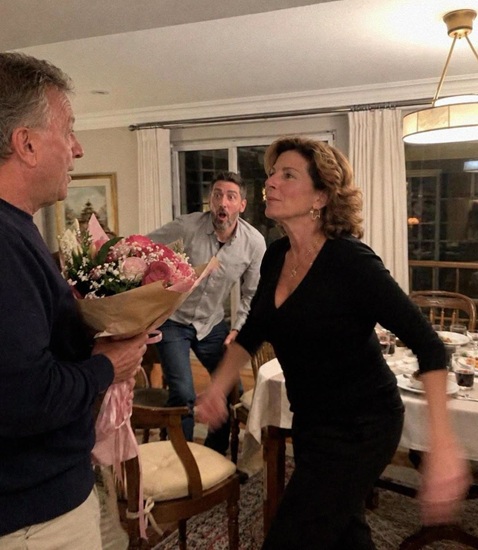
When he opened the door, I saw a silver-haired man standing on the porch.
He was holding a beautiful bouquet of yellow flowers.
He looked well dressed, polite, and slightly nervous.
“Good evening. Are you Bridget?”
“Yes, I am.”
“Wonderful. I’m Konnor. I was invited to dinner.”
I stared at him for a moment.
“Invited by whom?”
Before he could answer, Jolie appeared behind him.
“Surprise, Mom!”
I looked at my daughter, then at the stranger holding the flowers.
“Jolie, what exactly is happening?”
She smiled as if she had just arranged the most wonderful evening imaginable.
“We thought you might enjoy meeting someone new.”
“Meeting someone new?”
Nigel stepped forward.
“Mom, this is Konnor. He’s a really nice man. He enjoys gardening, old movies, and several things you like.”
Konnor looked increasingly uncomfortable.
“I’m sorry, Bridget. Your children told me you were interested in meeting someone. I hope there hasn’t been a misunderstanding.”
I immediately understood.
My children had arranged a date without asking me.
And they had apparently told this poor man that I was expecting him.
I took a breath.
“Konnor, I don’t want you to feel uncomfortable. Nobody told me this was going to happen, but you haven’t done anything wrong.”
He nodded.
“If you’d prefer, I can leave.”
I considered him for a moment.
“You’re welcome to stay for dinner, provided you understand that I never agreed to a date.”
“Of course,” he replied. “I wouldn’t want you to feel pressured.”
“Good. Then we’re all starting with the truth.”
He handed me the yellow flowers.
I accepted them and thanked him.
Despite the unexpected circumstances, I decided to give the evening a chance.
After all, Konnor was not responsible for my children’s decision.
A Conversation My Son Didn’t Expect
While Konnor was washing his hands, Jolie followed me into the kitchen.
“Mom, why are you acting as though we’ve done something terrible?”
I continued arranging the plates.
“Because you invited someone to my house without telling me what you had planned.”
“We just wanted to help you.”
“Did I ask you to arrange a date?”
She sighed.
“We thought you might enjoy it.”
“Perhaps I will. But that’s not the point.”
She remained silent.
A few moments later, I noticed Nigel standing near the refrigerator.
I approached him quietly.
“Can I ask you something?”
“Sure, Mom.”
“What exactly did you tell Konnor about me?”
He looked surprised.
“Nothing bad.”
“That’s not an answer.”
He shifted his weight.
“We told him that you like movies, gardening, and spending time at home.”
“And what else?”
He looked toward the kitchen door.
“That you’ve been lonely sometimes.”
I paused.
“Did I tell you that?”
He didn’t answer.
“Nigel, there is a difference between spending an evening alone and feeling lonely. I can enjoy an entire afternoon by myself without needing someone to entertain me.”
“We were just worried.”
“I understand that. But you cannot invent a story about my life because you think it will make someone more willing to meet me.”
He looked down.
I took a breath and returned to the dining room.
I refused to make Konnor feel responsible for a misunderstanding he had not created.
The Dinner Took an Unexpected Turn
At first, the atmosphere was awkward.
Everyone seemed uncertain about what to say.
But Konnor eventually noticed the tomato plants near my kitchen window.
“Are those yours?” he asked.
I smiled.
“Every single one.”
“They look wonderful. Mine have been struggling this year.”
“What’s happening to them?”
“The leaves keep splitting, and some of the tomatoes aren’t developing properly.”
“Perhaps you’re watering them too much.”
He laughed.
“I thought I wasn’t giving them enough attention.”
“Sometimes plants need less attention, not more.”
That made him laugh again.
We began discussing gardening, and soon the conversation moved to movies.
He mentioned an old comedy that I had watched many times with Daniel.
“I love that movie,” I said.
“Especially the scene where everything goes wrong during dinner.”
I laughed.
“Daniel used to start laughing before that scene even began. He knew every line.”
Konnor smiled.
“Was he a funny man?”
“He certainly thought he was.”
“Those are sometimes the funniest people.”
For the first time that evening, I felt completely comfortable.
Konnor didn’t ask me whether I was lonely.
He didn’t ask whether I was ready to fall in love again.
He didn’t offer advice about grief or suggest that I needed to find someone to complete my life.
He simply listened.
And I appreciated that more than I expected.
My Children Thought They Were Planning My Future
After dessert, Jolie decided it was time to explain the purpose of the evening.
“Konnor enjoys gardening, old movies, and spending time outdoors,” she announced.
I raised an eyebrow.
“I’ve noticed.”
Nigel joined in.
“You’re both independent, kind, and have a lot in common.”
I smiled.
“Did you prepare a compatibility report?”
Konnor laughed.
“Only a verbal one, apparently.”
Jolie looked pleased.
“Mom, we just want you to be happy again.”
I put down my coffee cup.
“Who told you I wasn’t happy?”
She hesitated.
“It’s been two years, Mom.”
“Two years since your father died. I haven’t forgotten.”
“We know. We just think it’s time you started meeting people.”
I looked at her carefully.
“Do you think that because I haven’t been dating, I’ve stopped living?”
“That’s not what I mean.”
“Then explain what you mean.”
Nigel cleared his throat.
“We don’t want you to give up on life.”
Those words hurt more than I expected.
“I haven’t given up on anything. I still work, I still see my friends, I still enjoy my garden, and I still have plans for the future. Just because I haven’t started dating doesn’t mean my life has stopped.”
Jolie looked down.
“Sometimes you don’t tell us anything.”
“Because every conversation seems to turn into a discussion about what I’m doing wrong.”
Konnor quietly placed his napkin beside his plate.
“Perhaps I should leave.”
I stood and approached him.
“No, Konnor. You’ve done nothing wrong.”
Then I turned toward my children.
“I want you both to understand something. I can miss your father and still be interested in meeting someone new. Those feelings can exist at the same time.”
I looked at Konnor.
“May I kiss you?”
His eyebrows lifted.
“Now?”
“Only if you want to.”
He smiled.
“I do.”
I leaned forward and kissed him.
It was brief, gentle, and entirely my decision.
Jolie suddenly jumped to her feet, knocking the gravy boat sideways.
Nigel rushed forward and managed to catch it before it fell.
For several seconds, nobody said a word.
I calmly returned to my chair.
It was my first kiss since Daniel’s death.
And I genuinely wanted it.
I also wanted to surprise my children, who seemed convinced that I had forgotten how to make decisions about my own happiness.
Both things could be true.
Then Konnor Revealed Something Nobody Had Told Me
For a few moments, the atmosphere became lighter.
Konnor laughed.
“Your children certainly didn’t mention how spontaneous you are.”
I smiled.
“Perhaps they don’t know me as well as they think.”
Jolie looked uncomfortable.
Then Konnor’s expression changed.
“Actually, there is something I need to clear up.”
My daughter immediately became tense.
“Konnor, not tonight,” she whispered.
I slowly placed my coffee cup on the table.
“What haven’t you told me?”
Konnor looked at Nigel.
“Before coming here, I was told that Bridget had recently been struggling to manage her house and business. I was also told that she had asked her children to help arrange an introduction because she was finding it difficult to make certain decisions on her own.”
For a moment, I couldn’t believe what I had heard.
I turned toward my son.
“Excuse me?”
Konnor continued carefully.
“They made it sound as though you were going through a difficult period and that your family wanted to help you.”
I felt my stomach tighten.
“I never said that.”
He nodded.
“I believe you. And I’m sorry I didn’t check.”
I looked directly at Nigel.
“Since when am I unable to manage my own house?”
“Mom, that’s not what we meant.”
“Then why did you tell him?”
“We were worried.”
“Being worried doesn’t make something untrue.”
Konnor stood.
“I’m really sorry, Bridget. I wouldn’t have come if I had known you hadn’t agreed to this.”
“You don’t need to apologize. You were given information that wasn’t accurate.”
He reached into his pocket and handed me a small card.
“This is my number. No expectations. If you’d ever like to talk again, you can call me.”
I accepted it.
“Thank you.”
After he left, I turned toward my children.
“Who else have you told that I’m unable to manage my life?”
Jolie answered immediately.
“Nobody.”
Nigel looked away.
I noticed.
“Are you certain?”
Neither of them answered.
And suddenly, I realized that the dinner had uncovered something much bigger than an unwanted blind date.
My children had been telling people a version of my life that I had never recognized as my own.
The Following Day, I Learned That the Dinner Wasn’t the Only Surprise
On Saturday morning, I went to the library to volunteer.
Afterward, I met Paula for lunch.
She had brought sandwiches, and we sat together discussing ordinary things before she finally asked about Friday evening.
“So, how was your family dinner?”
I laughed.
“My children arranged a blind date without telling me.”
Paula nearly dropped her tea.
“What?”
“A silver-haired gentleman arrived at my front door holding yellow flowers. Apparently, I was supposed to be expecting him.”
“Was he terrible?”
“No. That’s what made the situation inconvenient.”
She laughed.
Then I explained what Konnor had told me about the things my children had said before the dinner.
Paula became serious.
“Bridget, caring about someone doesn’t give you permission to take control of their life.”
“I know. I’ve tried explaining that.”
“And are you going to call the gentleman?”
I took his card from my handbag.
“I’m considering it.”
Paula smiled.
“Then call him because you want to, not because your children arranged it.”
That afternoon, I thought about her words.
Eventually, I picked up my phone.
I sent Konnor a message.
“Hope you got home safely. I’m sorry Friday evening ended the way it did.”
His reply arrived a few minutes later.
“I’m fine. And I’d be happy to meet for coffee sometime, without any organizers this time.”
I smiled.
“That sounds lovely.”
Our First Meeting Without an Audience
We met the following Wednesday at a small café beside a bookstore.
Konnor was already sitting at a table near the window when I arrived.
He stood up and greeted me warmly.
“Bridget. It’s nice to see you again.”
“Nice to see you too.”
This time, there were no children waiting to introduce us.
There were no expectations and no carefully planned conversations.
Just two people who had decided to get to know each other.
During coffee, I learned that Konnor had been divorced for twelve years and had a daughter who lived in Oregon.
“Does your daughter worry about you?” I asked.
He laughed.
“Of course. She calls to make sure I’ve eaten. Sometimes she reminds me about ordinary things I should remember.”
“Does she arrange dates for you?”
“Not yet. I hope she doesn’t get any ideas.”
We both laughed.
Then we talked about our families.
When Daniel’s name came up, Konnor didn’t try to change the subject.
He simply asked:
“What was he like?”
I smiled.
“He believed he was always right.”
Konnor laughed.
“That sounds like a difficult man to argue with.”
“You have no idea.”
We talked for nearly two hours.
He listened while I told him about Daniel, my garden, my business, and my Thursday lunches with Paula.
When we finally stood up to leave, he asked whether he could call me again.
“Of course,” I replied. “But not through my children.”
He smiled.
“That seems perfectly reasonable.”
For the first time in a long while, I felt that someone was interested in getting to know me rather than trying to fix me.
The Family Lunch That Changed Everything
Two Sundays later, my sister Marianne invited me to a family lunch celebrating our aunt Ruth’s birthday.
When I arrived, the house was already full of relatives.
Jolie and Nigel were there.
Marianne hugged me.
“How lovely to see you. How are things going at home?”
“Very well, thank you.”
“And your business?”
“Still running.”
She smiled, but something about her expression made me suspicious.
During lunch, one cousin offered to mow my lawn.
Another asked whether I needed help with grocery shopping.
Marianne suggested that I join a walking group for older adults.
I laughed.
“I’m fifty-seven, Marianne. I’m not eighty-seven.”
She smiled awkwardly.
“They accept younger members too.”
By dessert, the questions had become increasingly uncomfortable.
Then Jolie stood up and raised her glass.
“I just want to thank everyone for agreeing to help Mom.”
I put down my fork.
“Help me with what?”
She looked toward Nigel.
“We’ve made a visiting schedule.”
“What kind of visiting schedule?”
Ruth unfolded a sheet of paper.
It contained several names beside different days of the week.
Nigel had Saturdays.
Marianne had Wednesdays.
Other relatives had agreed to stop by on Sundays.
I stared at the page.
“Who organized this?”
Jolie looked embarrassed.
“We just thought it would be good for someone to spend time with you.”
“Did I ask for this?”
She shook her head.
“We’re just worried.”
I looked toward Nigel.
“On Friday night, you told me nobody else knew about your concerns. Was that true?”
He remained silent.
Marianne looked confused.
“Jolie told us you had been struggling with certain things.”
“What things?”
“Household responsibilities, meals, bills. She thought you might need some help.”
I turned toward my daughter.
“Have you ever seen an unpaid bill in my house?”
“No.”
“Have you ever opened my refrigerator and found it empty?”
“No.”
“Have you ever had to remind me to pay my employees or manage my business?”
Jolie lowered her eyes.
“Then what exactly made you tell everyone that I couldn’t manage my own life?”
She didn’t answer.
Nigel finally spoke.
“We were worried because you missed three calls last month.”
I looked at him.
“All three happened while I was volunteering. I returned every call afterward.”
“We thought something might have happened.”
“Did either of you ask me?”
Neither answered.
I looked around the table.
“You didn’t ask me. You discussed me with everyone else, created a plan for my life, and then invited me to sit here as though it were already decided.”
Ruth slowly folded the visiting schedule.
“I thought this was something everyone had agreed would be helpful.”
“It’s not helpful if the person you’re supposedly helping has never been asked.”
My Daughter Finally Explained Her Fear
Jolie’s eyes began filling with tears.
“Mom, we’re scared.”
I looked at her.
“Of what?”
“That one day something will happen and we won’t know. That you’ll stop answering the phone, or that you’ll become ill and nobody will notice.”
Her voice trembled.
“Since Dad died, I sometimes imagine you sitting alone in that house. I don’t know what to do with that feeling.”
For the first time that afternoon, I saw the fear behind her behavior.
She wasn’t simply trying to control me.
She was frightened of losing another parent.
I softened my voice.
“Jolie, I miss your father too. There are days when I see something at the grocery store that he would have loved, and I have to stop myself from crying.”
She wiped her eyes.
“But I also have good days. I laugh with Paula. I enjoy my garden. I work, I cook, and I make plans.”
I paused.
“Both things can be true.”
Nigel looked down at the table.
“I guess we didn’t know how to help.”
“You could have sat beside me. You could have asked how I was feeling. You could have listened when I told you I was doing fine.”
I looked at both of them.
“You don’t have to solve every difficult emotion I experience. Sometimes I just need my children to be my children.”
Marianne reached for my hand.
“We only wanted to make sure you were okay.”
“I know. And I appreciate that. But please don’t confuse being alone with being incapable.”
I took the visiting schedule and placed it in front of Ruth.
“I don’t want anyone arranging visits without asking me first. If I need help, I’ll ask. If I want company, I’ll call.”
Then I turned toward Nigel.
“And I want you to tell everyone that you exaggerated when you suggested I couldn’t manage my affairs.”
He looked around the table.
“We were worried, and we exaggerated. Mom is managing her responsibilities.”
“Thank you,” I replied.
Jolie wiped her cheeks.
“I’m sorry, Mom. I thought I was doing something good.”
I reached across the table and held her hand.
“I know you love me. But love should never make someone feel that they have lost the right to make their own decisions.”
She nodded.
“I understand.”
A Message Waiting Outside
When I finally stepped outside Marianne’s house, my phone vibrated.
It was a message from Konnor.
“I’m outside. Take your time.”
I smiled.
We had planned to take a walk together after lunch.
Jolie noticed my expression.
“Is that Konnor?”
“Yes.”
“Are you seeing him again?”
“We’re getting to know each other.”
She hesitated.
“Can I ask how it’s going?”
“Of course. I’ll tell you what I want to share.”
Nigel came over and hugged me.
“We’re sorry, Mom.”
I hugged him back.
“I know. But from now on, I want us to talk honestly.”
Outside, Konnor was standing beside his car.
He smiled when he saw me.
“How was lunch?”
“Educational.”
He laughed.
“Did your children approve our outing?”
I slipped my arm through his.
“They weren’t consulted.”
He laughed again.
And for the first time in weeks, I felt completely comfortable with the decisions I was making.
A New Beginning, Without Anyone Making Decisions for Me
That Friday, Konnor and I attended an outdoor screening of an old comedy.
He brought two folding chairs and a bag of popcorn.
The evening was peaceful.
As the movie began, I found myself thinking about Daniel.
There was a moment when I almost turned to say something to him, just as I had done countless times in the past.
Then I remembered that memories were allowed to remain part of my life, even as new experiences entered it.
Konnor noticed my thoughtful expression.
“Are you okay?”
I smiled.
“Yes. Just remembering something.”
He nodded.
“You don’t have to explain.”
I appreciated that.
We spent the evening talking about the movie, our families, gardening, and places we would someday like to visit.
There were no promises about marriage.
There were no declarations about forever.
We were simply two adults enjoying each other’s company.
When the evening ended, Konnor walked me to my car.
“I’d like to see you again,” he said.
“So would I.”
On the drive home, I thought about everything that had happened.
My children had originally intended to surprise me with a dinner date.
Perhaps they genuinely believed they were helping.
But the biggest surprise wasn’t the silver-haired stranger standing at my door with yellow flowers.
It was discovering how easily concern could turn into control when people stopped listening to one another.
My children had been afraid of losing me, but in trying to protect me, they had begun treating me as though I were no longer capable of making decisions.
I didn’t need someone to organize my life.
I needed the people who loved me to respect it.
I still didn’t know whether Konnor and I would eventually become a couple.
I didn’t know whether I would ever want to marry again.
And for the first time, I didn’t feel any pressure to figure it out.
I had learned something important.
Moving forward after losing someone you love does not mean forgetting them.
Being widowed does not mean your life has stopped.
And living alone does not automatically mean you are lonely or helpless.
Sometimes, the greatest gift a family can give is not a surprise, a schedule, or a carefully arranged plan.
Sometimes, it is simply sitting beside someone and asking:
“What do you want?”
Because my life hadn’t ended when Daniel died.
And it didn’t need to begin again only when my children decided I was ready.
It was still my life.
And I intended to live it on my own terms.