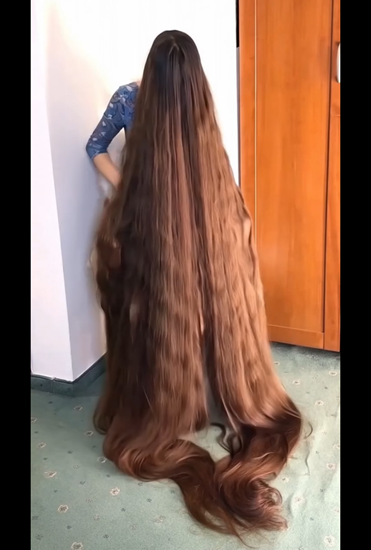
For 25 years, Rosa Ramirez had one particularly recognizable feature: her extraordinarily long hair. It had become such a familiar part of her appearance that friends, neighbors, and relatives had grown accustomed to seeing her with the same remarkable length. Over the years, her hair reportedly grew to more than four feet, making it a distinctive part of the way people remembered her.
Maintaining hair of that length requires considerable time, patience, and consistency. Washing it, brushing it, drying it, and keeping it manageable can become part of a person’s everyday routine. For Rosa, these responsibilities had been familiar for decades. Her long hair was not simply a hairstyle she had chosen for a special occasion. It was a look she had maintained through many years of her life.
Eventually, however, she began considering a change.
Her husband had encouraged her to try a shorter hairstyle, but making such a significant decision was not something Rosa wanted to rush. Cutting hair that had taken decades to grow would mean changing an appearance that people around her had known for years. She needed to feel comfortable with the decision herself.
When she finally decided that the time was right, she had a particular goal in mind. She wanted a shoulder-length hairstyle, a considerable difference from the hair that had extended more than four feet. But her decision involved more than simply choosing a new appearance.
Rosa reportedly also planned to donate the hair removed during the appointment, with the hope that it could be used in making wigs for children experiencing medical hair loss.
A Hairstyle That Had Been Part of Her Life for 25 Years
Long hair can become much more than a personal style. When someone maintains the same distinctive appearance for many years, it can become something that friends and family immediately associate with that person.
That was the case with Rosa Ramirez.
For a quarter of a century, her hair had remained an important part of her recognizable appearance. Its extraordinary length represented years of growth and regular care. While someone seeing it for the first time might have focused primarily on how unusual its length was, Rosa would also have known the everyday effort required to maintain it.
Long hair generally requires additional attention as it grows. Washing can take longer, drying may require more patience, and brushing can become a more demanding task. Even ordinary activities can involve additional considerations when hair extends several feet.
There is also the question of comfort. Longer hair can feel heavier, particularly when it is gathered together or worn in certain styles. Managing it during daily activities may require different habits from those used by someone with shorter hair.
Over time, these responsibilities can become completely familiar. What once required extra attention may eventually become an ordinary part of getting ready each morning.
For Rosa, maintaining her signature length had been part of her routine for many years. That history helps explain why choosing to cut it was a meaningful personal decision rather than an ordinary appointment for a small trim.
Her Husband Had Suggested a Change, but the Decision Was Hers
According to the account of her story, Rosa’s husband had encouraged her to consider a different hairstyle.
Suggestions about changing one’s appearance are common among couples, friends, and family members. Sometimes a person becomes curious about a new look after hearing another person’s opinion. However, a significant haircut is ultimately a personal choice.
Rosa did not immediately decide to remove the length she had spent 25 years growing.
Instead, she waited until she felt ready.
That distinction is important because a dramatic haircut can represent a substantial change in someone’s everyday appearance. Someone who has maintained very long hair for decades may need time to imagine how a shorter style will look and feel.
There are practical questions to consider as well. How short should the new hairstyle be? Will the remaining length be easy to manage? Will the person feel comfortable with the change after leaving the salon?
Rosa eventually reached her own decision. Rather than continuing to maintain the same extraordinary length, she chose to move toward a much shorter style.
Her husband may have encouraged the idea, but the timing and final decision belonged to her.
The Four-Foot Length Made the Transformation Particularly Significant
Hair that grows beyond four feet is considerably longer than the styles most people maintain in everyday life.
Such length can attract attention wherever someone goes. It can also require a different approach to ordinary hair care.
For a person with shoulder-length hair, brushing and washing may be relatively straightforward. With hair extending several feet, those same activities can involve more time and attention.
The length can also influence how the hair is worn. Keeping it loose, gathering it together, or arranging it for daily activities may require different techniques.
After maintaining that kind of hairstyle for 25 years, Rosa had become familiar with the responsibilities associated with it.
Her decision to cut it therefore represented a change in more than appearance. It meant leaving behind a routine that had accompanied her for a substantial part of her life.
Still, the opportunity to try something different offered a new beginning.
She Arrived at the Salon Knowing How Much Length She Wanted to Keep
When Rosa finally made her salon appointment, she had a clear idea of the result she wanted.
Her goal was to have her hair cut to approximately shoulder length.
Having a specific length in mind is helpful when preparing for a dramatic haircut. It gives the client and stylist a shared starting point and makes it easier to discuss the amount of hair that will be removed.
In Rosa’s situation, the difference between her existing hairstyle and the planned result was considerable.
A small trim would have preserved most of the length she had maintained for decades. A shoulder-length cut, on the other hand, would remove a substantial portion of it.
That meant the stylist needed to work toward two different objectives: creating the shorter hairstyle Rosa wanted and preserving the removed hair if it was suitable for donation.
These goals required some planning before the haircut began.
For someone considering a similar transformation, discussing the intended final length and donation requirements in advance can help prevent misunderstandings. It also allows the stylist to understand how much hair the client wants to keep.
In Rosa’s case, the shoulder-length style provided a clear destination for the transformation.
The Haircut Was About More Than a New Appearance
A dramatic haircut often attracts attention because the difference is immediately visible.
When someone goes from exceptionally long hair to a shoulder-length style, the change can be striking. People who have known that person for years may need a moment to become accustomed to the new appearance.
However, Rosa’s story included another important consideration.
She reportedly intended to donate the hair removed during the appointment so that it could potentially contribute to wigs for children experiencing hair loss because of medical conditions or treatment.
This gave the haircut an additional purpose.
Instead of treating the removed length simply as something that would be discarded, Rosa wanted to explore whether it could be useful to someone else.
Hair donation programs collect suitable hair for organizations and manufacturers involved in producing wigs. Depending on the program, donated hair may be used in different ways, and not every donation is accepted.
For people experiencing medical hair loss, wigs can provide another option when deciding how they would like to look.
Children dealing with hair loss may have different preferences and needs. Some may feel comfortable without a wig, while others may appreciate having the opportunity to wear one.
A suitable wig can offer a choice in appearance and may help some individuals feel more comfortable in social situations.
Rosa’s reported intention to donate her hair reflected the possibility of turning a personal change into an opportunity to contribute to something that could benefit another person.
Why Hair Donations Can Be Valuable for Children Experiencing Hair Loss
Hair loss can happen for several reasons, including certain medical conditions and treatments.
For children, changes in appearance can sometimes create additional emotional and social challenges. Their experiences are not all the same, and each child responds differently.
Some children may want to use hats, scarves, or other accessories. Others may prefer wigs made from natural or synthetic materials.
Having access to different options can help families and children decide what feels most comfortable for them.
Organizations that coordinate hair donations work to collect suitable materials for wig production. The process involves more than simply cutting long hair and sending it somewhere.
The donated hair generally needs to meet specific standards, and the requirements depend on the organization receiving it.
This is why people considering a donation should research the relevant program before making a major haircut.
A person may have spent years growing their hair, but that does not automatically mean every organization can accept it. Minimum length, condition, processing history, and preparation methods can all influence eligibility.
For someone like Rosa, whose hair had reportedly exceeded four feet, checking the requirements would be an important part of determining how the removed length could be used.
Hair Donation Rules Are Different From One Organization to Another
One of the most important things to understand about hair donation is that there is no single set of requirements followed by every organization.
Some programs establish a minimum donation length. Others have specific rules about how the hair must be prepared before it is sent.
For example, certain organizations may accept colored hair, while others may have restrictions concerning bleaching, chemical treatments, or previous processing.
The condition of the hair can also matter.
People considering a donation should therefore avoid assuming that a particular length or hairstyle automatically qualifies.
The best approach is to identify the intended organization and review its current instructions before scheduling the haircut.
There are several practical details worth discussing with a stylist:
- The minimum length required by the selected donation organization.
- Whether the organization accepts colored or chemically treated hair.
- Whether the hair must be clean and completely dry before cutting.
- How the hair should be secured before the cut.
- Whether the organization requires a particular packaging method.
- How the donation should be delivered or mailed.
These details may seem small, but following the correct instructions can help ensure that the hair arrives in a condition the organization can evaluate.
It is also important to understand that donating hair does not necessarily mean it will be made into a wig for a particular child. The organization determines how suitable donations are processed and used.
Planning a Dramatic Haircut When Donation Is Part of the Goal
For anyone who has maintained very long hair for years, the decision to cut it can involve several emotions.
There may be excitement about trying something new, uncertainty about the final appearance, and curiosity about how daily routines will change.
When donation is also part of the plan, preparation becomes especially important.
The first step is choosing a donation organization. Reading its requirements before visiting the salon allows the donor to understand exactly what length and condition are needed.
The next step is communicating with the stylist.
It is helpful to explain that the haircut has two objectives: achieving the desired new hairstyle and preserving the removed hair for possible donation.
The stylist can then discuss how the hair should be sectioned and secured according to the receiving organization’s instructions.
This is particularly important for people who want to keep a specific length.
A client who wants shoulder-length hair should make that preference clear before the first cut. The stylist can help determine how much length needs to be removed while respecting the client’s preferred final appearance.
Taking photographs before the appointment can also be useful for documenting a major transformation. They provide a visual record of the original length and the finished hairstyle.
What Changes After Going From Extremely Long Hair to Shoulder Length?
A significant haircut can change many ordinary aspects of a person’s routine.
One of the most noticeable differences is the amount of hair that needs to be washed and dried.
Shorter hair generally requires less time to work through during washing. Depending on its thickness and texture, it may also dry more quickly.
Brushing can become easier because there is less length to manage. Everyday activities may also feel different when the weight of several feet of hair is no longer present.
Styling possibilities change as well.
Shoulder-length hair can be worn loose, tucked behind the ears, arranged in different parts, or secured with suitable hair accessories.
It may also offer opportunities to experiment with layers, waves, or other styling techniques.
However, a shorter haircut does not automatically mean that every aspect of hair care becomes effortless. The best routine still depends on the individual’s hair texture, condition, and preferred appearance.
For Rosa, adjusting to a new hairstyle after 25 years would naturally involve becoming familiar with a different length.
Even simple activities such as brushing, washing, and choosing how to wear her hair could feel different.
That is part of the experience of making such a substantial change.
Friends and Family Would See a Very Different Look
When a person has maintained the same distinctive hairstyle for decades, a dramatic haircut can surprise the people who know them.
Friends, relatives, and neighbors who were accustomed to seeing Rosa with hair extending more than four feet would now be seeing a completely different silhouette.
The new shoulder-length style would make her appearance noticeably different, even though it was still the same person.
These changes can be particularly interesting when a hairstyle has become part of someone’s familiar identity.
People may remember the old appearance for years, but that does not mean the person must maintain it forever.
Personal style can change at different stages of life. Someone may choose to grow their hair, cut it, experiment with color, or return to a familiar look.
There is no single correct moment to make such a decision.
For Rosa, the important point was that she had finally reached a moment when she wanted to make the change.
A Personal Decision That Also Had a Potentially Positive Purpose
Rosa’s story brings together two different ideas.
The first is the freedom to change one’s appearance after maintaining a familiar style for many years.
The second is the possibility of giving something useful to others during that transformation.
Her hair had reportedly been part of her appearance for 25 years. Rather than continuing to maintain the same length, she decided to choose a shoulder-length style.
At the same time, she reportedly hoped that the removed hair could contribute to wigs for children experiencing medical hair loss.
It is important to distinguish between the intention to donate and confirmation that a particular organization has accepted or used the hair. The available account describes her plan, but it does not establish the final destination or outcome of the donation.
Even so, the intention adds another dimension to the haircut.
The decision was not simply about removing something she no longer wanted to maintain. It was also about considering whether the hair she had cared for over so many years could become useful in a different way.
After 25 Years, Rosa Was Ready for Something Different
Changing a hairstyle after 25 years is a personal decision that can involve much more than choosing a new look.
For Rosa Ramirez, her extraordinarily long hair had become a familiar part of her appearance. Friends, neighbors, and relatives had known her with that distinctive style for years.
Her husband had suggested trying something different, but she waited until she felt comfortable making the decision herself.
When the time finally came, she knew what she wanted: a shoulder-length hairstyle.
She also reportedly had a plan for the hair that would be removed, hoping it could be donated for possible use in wigs for children experiencing medical hair loss.
The transformation represented a significant change from the style she had maintained for so long.
After years of caring for more than four feet of hair, Rosa was ready to experience a different length, a different routine, and a new appearance.
Her story is a reminder that personal changes do not have to happen according to someone else’s schedule. A person can take their time, consider their options, and decide when the moment feels right.
And when a change also creates an opportunity to help others, it can carry meaning beyond what is visible in the mirror.
For Rosa, the goal was to leave the salon with the shoulder-length hairstyle she had chosen while giving the removed hair an opportunity to serve another purpose, provided it met the requirements of a suitable donation program.