
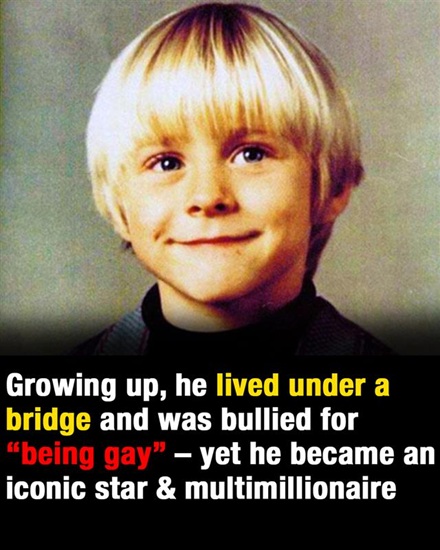
He left behind a legacy that permanently reshaped modern rock music, becoming one of the most influential voices of the early 1990s alternative movement, with a sound that continues to influence musicians and cultural movements worldwide.
Kurt Cobain was born on February 20, 1967, at Grays Harbor Hospital in Aberdeen, Washington, a small logging town in the Pacific Northwest defined by heavy rain, working-class families, and limited economic opportunity.
His parents, Donald and Wendy Cobain, came from modest backgrounds, with his father working as a mechanic and his mother employed in various service jobs, reflecting the everyday struggles of many families in the region.
From an early age, Cobain was described as unusually sensitive and creative, showing a strong inclination toward drawing, music, and imaginative storytelling that distinguished him from other children in his environment.

He was exposed to music through family influences and the broader cultural atmosphere of the 1970s, which included rock, punk, and early alternative sounds that later shaped his artistic direction.
By early childhood, Cobain was already singing and experimenting with melodies, often showing a natural ability to express emotion through sound and rhythm even before formal musical training.
His early years were generally described as energetic and expressive, with a strong emotional depth that became more noticeable as he grew older and began to process changes in his family life.
A major turning point occurred when his parents divorced around the age of nine, an event that deeply affected him and marked the beginning of emotional instability during his formative years.
Cobain later reflected on the divorce as a significant emotional rupture, describing feelings of confusion, sadness, and a desire for stability that he struggled to regain afterward.
Following the separation, he moved between different homes, spending time with both parents and relatives, which created a fragmented upbringing and a lack of consistent emotional grounding.

During his adolescence, he also experienced tension within his family environment, including exposure to conflict and instability that further influenced his emotional development.
At one point, he briefly stayed with a religious family member, where he was introduced to structured religious beliefs, although he later distanced himself from organized religion.
As he entered his teenage years, Cobain increasingly struggled with school, feeling disconnected from both academic expectations and the social environment around him.
He often felt like an outsider, unable to relate to traditional interests such as sports or structured group activities that dominated school culture.
His friendship with a gay student led to bullying and harassment from other peers, an experience that contributed to his sense of alienation and strengthened his resistance to social conformity.
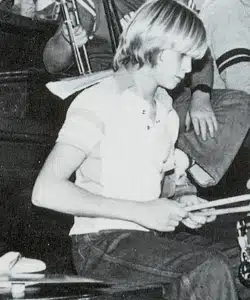
Instead of adapting to expectations, Cobain began expressing himself more openly through appearance, attitude, and creative exploration, rejecting traditional labels and social norms.
Art and drawing became an important emotional outlet for him, allowing him to process feelings that he found difficult to express in everyday conversation.
Music gradually became the most significant form of expression in his life, serving as both a creative escape and a way to communicate intense emotional experiences.
By the time he reached his later teenage years, Cobain had become increasingly disengaged from formal education and ultimately left school before graduation.
After leaving school, he faced periods of instability, often staying with friends or family members and experiencing an uncertain living situation during his transition into adulthood.
Although some stories suggest periods of homelessness, these accounts vary in detail, but they reflect the broader instability and uncertainty of his late teenage years.
During this time, Cobain became deeply involved in the local underground punk scene in the Pacific Northwest, which provided a creative space for raw expression and experimentation.

The punk movement offered him a sense of belonging and artistic freedom that contrasted sharply with his earlier experiences in structured educational and social environments.
It was within this scene that he met Krist Novoselic, with whom he would later form the band Nirvana, marking the beginning of his professional music career.
Early Nirvana rehearsals and performances were modest and often financially unstable, with the band playing small venues and building a following within underground music circles.
Their debut album, Bleach, released in 1989 through Sub Pop Records, showcased a raw, heavy sound that reflected the emerging grunge movement in the Pacific Northwest.
Although Bleach gained attention within alternative music communities, it was the addition of drummer Dave Grohl that helped solidify Nirvana’s later success.
In 1991, the release of Nevermind marked a major turning point, bringing alternative rock into mainstream global attention in a way that few bands had achieved before.
The album’s breakthrough single, “Smells Like Teen Spirit,” became a cultural phenomenon, symbolizing the voice of a generation and reshaping the direction of popular music.

Cobain, however, often expressed discomfort with the sudden fame and the commercialization of his music, preferring to remain connected to the underground values he came from.
As Nirvana’s popularity grew, Cobain became an unwilling public figure, frequently portrayed as the voice of Generation X, a label he often rejected or questioned.
At the same time, he faced increasing personal challenges, including chronic health issues, emotional struggles, and substance dependency that became widely reported in the media.
His relationship with Courtney Love, lead singer of the band Hole, attracted significant public attention, and together they had a daughter, Frances Bean Cobain, born in 1992.
Despite his success, Cobain struggled with the pressures of fame, media scrutiny, and the expectations placed on him as a cultural icon.
By the early 1990s, his personal difficulties had intensified, and those close to him expressed concern about his health and emotional well-being.
On April 8, 1994, Kurt Cobain was found dead at his home in Seattle, Washington, at the age of 27, with authorities concluding that he had died several days earlier.
His death sent shockwaves through the music world, prompting global mourning and widespread reflection on his impact as an artist and cultural figure.
In the years following his passing, Cobain’s music continued to gain recognition, influencing countless artists across genres including rock, punk, and alternative music.
Nirvana’s work remains widely studied and celebrated for its emotional intensity, simplicity in composition, and raw authenticity that resonated deeply with audiences.
Cobain’s songwriting often combined vulnerability, frustration, and introspection, creating a unique emotional language that defined much of early 1990s alternative music.
He is frequently credited with helping bring underground music into the mainstream, fundamentally changing the direction of popular rock music during that era.
At the same time, his life story is often discussed in broader cultural conversations about fame, mental health, and the pressures faced by young artists.
Kurt Cobain’s legacy remains both artistic and cultural, representing a powerful example of how personal expression can shape global music history.
He rose from a small, struggling town to become a defining voice of his generation, leaving behind music that continues to resonate decades after his death.
Ultimately, his life reflects both extraordinary creative achievement and the complex emotional realities that often accompany sudden and overwhelming fame.
