
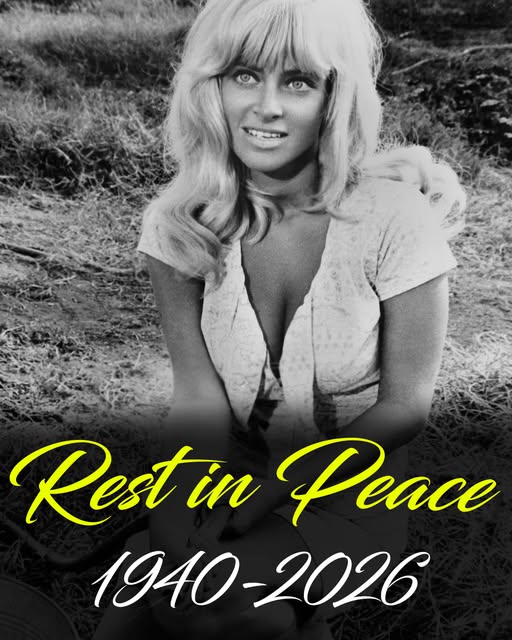
Joy Harmon, an American actress whose brief yet unforgettable appearance in the 1967 classic film Cool Hand Luke became one of cinema’s most recognizable visual moments, has died at the age of 87, according to entertainment reports confirmed by associates close to her family.
Multiple sources reported that she passed away in Los Angeles on April 14, 2026, after suffering complications from pneumonia while receiving hospice care, marking the end of a life that spanned both Hollywood history and private entrepreneurship.
Although her name was not widely known to casual audiences, her presence in Cool Hand Luke became culturally significant due to a single, wordless scene that continues to be discussed in film studies and popular retrospectives decades later.
In that scene, she portrayed a young woman casually washing a car under the harsh sunlight, a moment that appears simple on the surface but became iconic due to its composition, timing, and reaction from surrounding characters in the film.

The film itself, directed by Stuart Rosenberg and starring Paul Newman, George Kennedy, and Dennis Hopper, is widely regarded as a landmark of American cinema, known for its exploration of rebellion, discipline, and human endurance.
Within this larger narrative, Harmon’s brief appearance stands out as a contrasting moment of everyday normality, which unintentionally became one of the most analyzed and remembered sequences in the film.
Despite appearing on screen for only a short duration, her natural performance contributed significantly to the realism of the scene, helping it remain memorable even without dialogue or direct narrative focus.
In later interviews and reflections, Harmon explained that she did not initially recognize the cultural or cinematic significance the scene would later achieve among audiences and critics.
She described the filming process as straightforward, emphasizing that she followed direction carefully and focused primarily on performing the required actions rather than interpreting deeper symbolism during production.
According to her recollections, the scene was filmed in multiple segments, with adjustments made during shooting to capture different angles and pacing, a common practice in filmmaking of that era.

At the time, she viewed the role as a professional opportunity among many television and film appearances, without anticipating that it would become the defining moment of her acting career.
Over the years, however, the scene gained recognition in film analysis for its contrast between simplicity and emotional interpretation, becoming a frequently cited example of visual storytelling without dialogue.
Beyond Cool Hand Luke, Joy Harmon built a steady acting career during the 1960s, a period widely regarded as a transformative era in American television and film production.
She appeared in several popular television series of the time, including The Beverly Hillbillies, Batman, Bewitched, and The Monkees, all of which contributed to her visibility in the entertainment industry.
Her roles during this period often reflected the style of 1960s television, which combined light comedy, guest appearances, and episodic storytelling that allowed actors to move between multiple productions.
In addition to television, she also participated in film projects such as Village of the Giants, a science-fiction themed production that reflected the experimental trends of youth-oriented cinema during that decade.

Although she never pursued major leading roles in Hollywood films, her consistent presence across television and film demonstrated a stable working career in the entertainment industry.
As the years progressed, Harmon gradually stepped away from acting, choosing instead to focus on life outside the entertainment industry and exploring new personal and professional directions.
After leaving Hollywood, she transitioned into entrepreneurship, launching a small baking business that initially began as a home-based operation focused on handmade desserts.
Over time, her baking venture expanded beyond a home kitchen, developing into a recognized local business that supplied baked goods to clients across the Los Angeles area.
The business eventually grew enough to support a physical storefront in Burbank, California, where she continued her work for years, building a second career completely separate from acting.
This transition became a notable part of her life story, illustrating her ability to adapt and succeed in a completely different field after leaving the entertainment industry.
On a personal level, Joy Harmon was married to film editor and producer Jeff Gourson, and their marriage lasted for approximately three decades.

Together, they built a family life that included children and grandchildren, forming a stable foundation away from the public attention of Hollywood.
In her later years, she remained largely private, focusing on family, her business activities, and life outside of media attention or public appearances.
Reports following her passing noted that her family had begun arrangements to honor her memory and manage related end-of-life matters with privacy and care.
Although her filmography was not extensive in terms of lead roles, her contribution to film history remains firmly associated with a single, iconic moment that continues to be referenced in popular culture.
Film historians and audiences often highlight her Cool Hand Luke appearance as an example of how even a brief, non-verbal performance can achieve lasting recognition when captured effectively on screen.
Her legacy is frequently discussed in terms of authenticity, natural presence, and the unpredictable way in which minor roles can become culturally significant over time.
Beyond her acting career, she is also remembered for her later entrepreneurial work, which demonstrated creativity, independence, and long-term dedication outside of Hollywood.

Her life story reflects a broader narrative shared by many performers of her era—moving between entertainment careers and private life while building new identities beyond the screen.
As news of her passing spread, tributes focused not only on her most famous role but also on the quieter aspects of her life, including her family and business achievements.
Joy Harmon’s death marks the end of a life that bridged Hollywood’s golden television era and a grounded personal journey outside of the spotlight.
Today, she is remembered both for a few minutes of unforgettable cinema and for a lifetime that extended far beyond it, shaped by adaptation, family, and resilience.
