
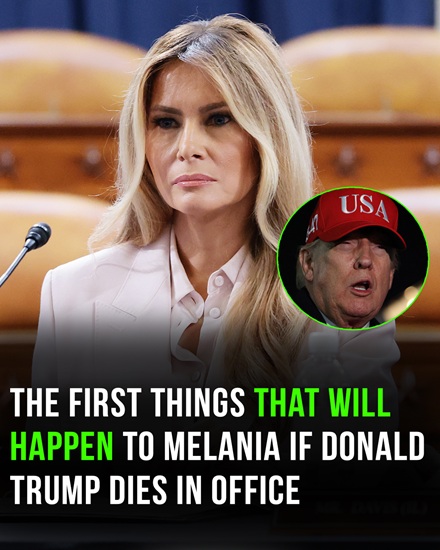
Public attention surrounding the health and security of U.S. President Donald Trump has continued to grow, particularly due to his age and the visibility of routine medical updates shared by the White House.
As one of the oldest individuals to serve as president in modern American history, Donald Trump’s health has naturally become a subject of periodic media coverage and public discussion.
At various official appearances, observers have noted visible changes such as mild swelling in the lower legs and occasional bruising on the hands, which led to increased curiosity about his medical condition.
In July 2025, the White House formally confirmed that President Trump had been diagnosed with chronic venous insufficiency, a circulatory condition that affects the veins in the legs.

This condition occurs when vein valves do not function properly, which can lead to blood pooling in the lower extremities, and it is commonly associated with aging.
White House press secretary Karoline Leavitt publicly addressed the diagnosis, explaining that the information was released in the interest of transparency and public awareness.
She stated that the president had undergone a comprehensive medical evaluation after experiencing mild swelling in his lower legs during routine monitoring.
According to official medical documentation shared by the White House physician, the evaluation included vascular examinations and ultrasound imaging of both legs.
These tests confirmed chronic venous insufficiency but did not indicate any acute or life-threatening medical emergency at the time of diagnosis.
Medical experts involved in the assessment described the condition as relatively common in older adults and generally manageable with standard medical supervision and care routines.

Despite official reassurance, presidential health remains a topic of heightened public sensitivity due to the responsibilities and pressures associated with the office.
As a result, even routine medical updates often generate widespread discussion, especially when they involve a sitting president.
In early 2026, online speculation briefly intensified after periods in which President Trump had limited public appearances or press interactions.
During the Easter weekend of that year, unverified claims circulated online suggesting that the president had been admitted to Walter Reed Medical Center.
The White House quickly addressed these rumors, stating that the president remained active in his duties and had not been hospitalized.
Officials emphasized that he continued to work from the White House and remained engaged in official meetings, briefings, and administrative responsibilities.
White House communications director Steven Cheung also publicly responded, noting that the president maintained a full work schedule during that period.

He described claims of hospitalization as inaccurate and highlighted that limited public communication does not necessarily reflect inactivity in presidential duties.
Additional statements from official rapid response communication channels reinforced that speculation about the president’s health was not supported by verified information.
These responses reflect a broader pattern in modern politics, where social media often amplifies unverified claims during periods of reduced public visibility.
Presidential administrations typically rely on formal communication channels to clarify medical or security-related misinformation when it emerges.
Beyond recent health discussions, President Trump’s tenure has also included high-profile security incidents that have influenced public awareness of presidential risk.
One significant event occurred in July 2024, when a failed assassination attempt against the president heightened concerns about safety and protective measures.

Following that incident, security protocols and public scrutiny of presidential safety increased significantly across federal agencies.
First Lady Melania Trump later spoke about the emotional impact of the event, describing it as a shocking and deeply serious moment for the family.
In her public remarks, she expressed relief that the president survived and reflected on the uncertainty surrounding the immediate aftermath of the incident.
Her comments were widely covered and contributed to ongoing discussions about the pressures faced by presidential families during crises.
Such events also highlight the importance of constitutional systems designed to ensure government continuity in emergency situations.
Under the United States Constitution, the 25th Amendment outlines the procedure for presidential succession in the event of death, resignation, or incapacity.
If a sitting president were to die in office, the vice president would immediately assume the presidency after taking the official oath.

This process is designed to ensure that there is no interruption in executive leadership and that government operations continue without delay.
In the current administrative structure being discussed publicly, Vice President JD Vance would become president if such a succession were required.
Following this transition, the vice president’s spouse, Usha Vance, would typically assume the ceremonial role of First Lady.
Historical precedent shows that presidential transitions caused by death in office have often required both immediate constitutional action and significant personal adjustment for the incoming administration.
One well-known example is the transition following the assassination of President John F. Kennedy in 1963.
In that case, Vice President Lyndon B. Johnson was sworn in aboard Air Force One shortly after Kennedy’s death was confirmed.
Jacqueline Kennedy, the First Lady at the time, played an important role in shaping the national mourning period and funeral arrangements.
She was also involved in symbolic decisions, including burial location and memorial design, which later became part of national historical memory.
These historical cases demonstrate how the responsibilities of presidential families extend beyond political roles into symbolic and cultural dimensions during national transitions.
In the event of a presidential death, the First Lady’s role also changes immediately, shifting from active public duties to that of a former presidential spouse.
Former presidents and their spouses are generally eligible for certain federal protections and benefits under U.S. law.
These include lifetime Secret Service protection, although individuals may choose to decline or modify such arrangements.
Additional provisions exist to support former presidents in transitioning from public office to private life, including financial and logistical assistance programs.
Throughout her time as First Lady, Melania Trump has maintained a relatively private approach compared to more publicly active predecessors.
Observers and individuals familiar with her public presence often describe her as preferring limited political engagement and a focus on personal privacy.
Reports from sources close to her indicate that she tends to avoid political commentary and maintains a more reserved public profile.
This approach has remained consistent throughout her time in Washington, shaping how she is perceived in relation to political life.
Because of this, any future transition in her role would likely depend heavily on personal choice, circumstances, and the nature of a potential presidential transition.
If a presidential death were to occur while in office, her position would change immediately in accordance with established protocol.
However, beyond official titles and constitutional processes, such situations also involve significant emotional and personal adjustment for presidential families.
The structure of the U.S. government ensures that leadership transitions remain orderly even during unexpected or tragic events.
Ultimately, the combination of constitutional law, medical transparency, and institutional procedure is designed to maintain continuity at the highest level of government.
While public discussion often focuses on speculation, official systems rely on verified information and established legal frameworks to guide all transitions.
This ensures that regardless of circumstance, the presidency continues to function without interruption, maintaining stability for the country as a whole.
