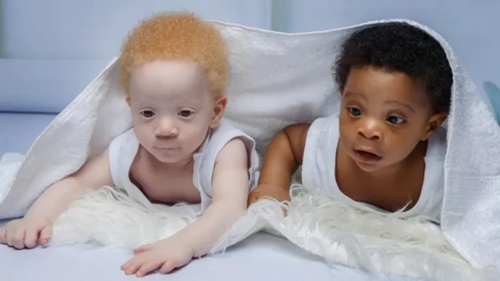
In 2019, a family living in Lagos, Nigeria, experienced a birth that would later attract attention from audiences around the world. This attention did not stem from exaggeration, misinformation, or speculative narratives, but rather from a rare yet scientifically well-understood genetic occurrence.
Stacy Omirin and her husband, Babajide Omirin, welcomed twin boys whose physical appearances differed in a way that many people had never encountered before.
Although the twins share the same biological parents and were born during the same delivery, one child was born with dark skin and black hair, while his twin brother was born with very light skin and light-colored hair.
This visible contrast naturally prompted curiosity, discussion, and widespread sharing across social media platforms and international news outlets. However, medical experts have consistently emphasized that the explanation behind this phenomenon is entirely genetic and well documented in medical literature.
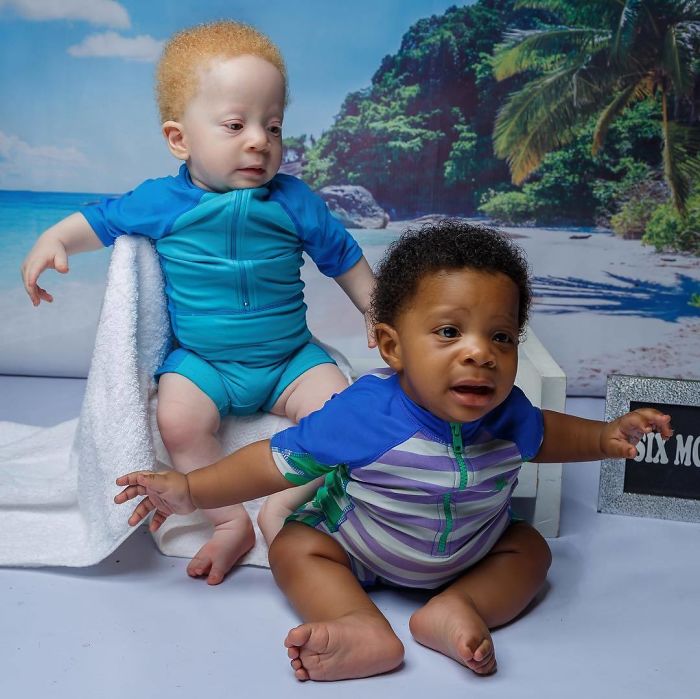
The story of the Omirin twins stands out not because it challenges science, but because it illustrates how genetics can express itself in unexpected yet completely natural ways.
A Story Supported by Verified Sources
The birth of Daniel and David Omirin is not a rumor, hoax, or fabricated viral claim. It has been reported by several well-established and reputable media organizations, including international outlets such as Daily Mail, Bored Panda, India Times, and respected African news platforms. These reports are consistent in their facts and rely on medical explanations rather than speculation.
Healthcare professionals involved in the case confirmed early on that the difference in appearance between the twins is the result of a genetic condition known as albinism. This confirmation has been echoed by independent medical experts who reviewed the case after it became public.
What makes this story particularly valuable from an educational perspective is its ability to demonstrate how inherited genetic traits function. It also contributes to public awareness about albinism, a condition that remains misunderstood in many regions of the world due to lack of accurate information.
Family Background and Early Expectations
Before the birth of the twins, Stacy and Babajide Omirin were focused on building a stable, supportive, and nurturing family environment. The couple already had a daughter, Demilade, and hoped to expand their family by giving her siblings she could grow up alongside.
When Stacy became pregnant, her prenatal care followed standard medical guidelines. Routine checkups showed no abnormalities, and both mother and babies appeared healthy throughout the pregnancy. Ultrasound scans confirmed that she was carrying twins, a development that brought excitement and anticipation to the family.
Doctors did not detect any complications or unusual indicators during prenatal monitoring. There was no medical reason to expect that the twins would appear different from one another at birth. Like many parents, Stacy and Babajide focused on preparing their home, planning for childcare, and ensuring emotional and financial stability for their growing household.
Pregnancy, Medical Care, and Preparation
Throughout the pregnancy, Stacy attended regular prenatal appointments. Her doctors monitored her health closely, particularly because twin pregnancies can require additional observation. Despite this, her pregnancy progressed smoothly, and no medical concerns were raised.
The couple received guidance on nutrition, rest, and general prenatal health. They prepared themselves mentally and emotionally for the arrival of two newborns, understanding that raising twins would require extra attention, coordination, and care.
At no point during the pregnancy did medical imaging reveal anything unusual. This is not surprising, as ultrasound technology does not provide information about skin pigmentation or genetic traits such as albinism. As a result, the appearance of the twins at birth came as a surprise to everyone present.
The Day of the Birth
On February 26, 2019, Stacy arrived at the hospital in Lagos for a planned cesarean section. At 31 years old, she had previous experience with childbirth and felt calm and confident as the procedure approached. The medical team followed standard protocols, ensuring that both mother and babies were safe throughout the delivery.
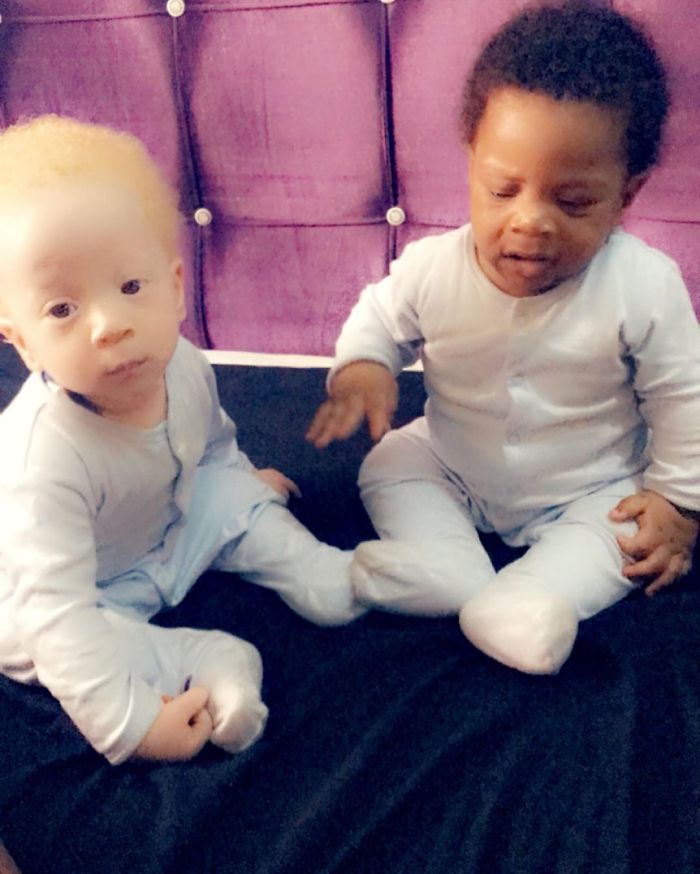
The first child, Daniel Omirin, was delivered without complications. He had dark skin and black hair, features that reflected the appearance of his parents and older sister. Moments later, his twin brother, David Omirin, was born. Immediately, it became clear that David’s appearance was noticeably different.
David was born with very light skin and light-colored hair. The contrast between the two newborns was evident to the medical staff and family members present in the delivery room. While such cases are uncommon, doctors recognized the likely explanation almost immediately.
Initial Medical Observations
The healthcare professionals involved remained calm and professional. Although the difference in appearance was striking, it did not indicate a medical emergency. Doctors conducted routine postnatal examinations and confirmed that both babies were stable and healthy.
Following further assessment, medical staff explained to the parents that David had been born with a form of albinism. They reassured Stacy and Babajide that albinism is a genetic condition and not the result of illness, external factors, or complications during pregnancy.
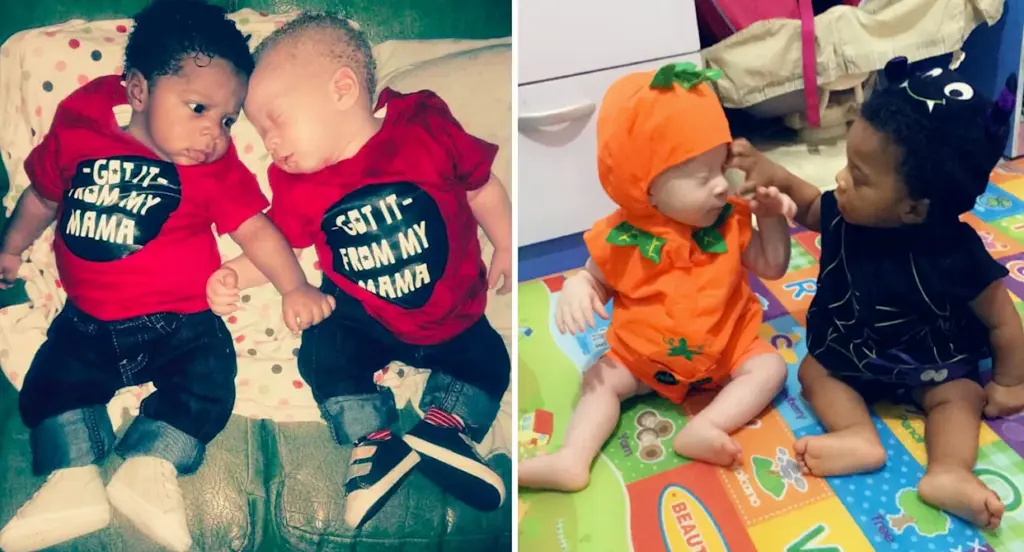
Stacy later explained in interviews that she had no prior indication that one of her children would be born with albinism. Like many parents, she learned about the condition in greater detail only after her son’s birth.
Understanding Oculocutaneous Albinism
Doctors confirmed that David was born with oculocutaneous albinism, a genetic condition that affects the body’s ability to produce melanin. Melanin is the pigment responsible for skin color, hair color, and eye color, and it also plays a role in protecting the skin from ultraviolet radiation.
Albinism occurs when a child inherits specific recessive genes from both parents. Importantly, individuals can carry these genes without displaying any visible signs themselves. This explains how two parents with darker skin tones can have a child with albinism while their other children do not.
Medical experts emphasize that albinism is not contagious and should not be viewed as a disease. It is a lifelong genetic condition that primarily affects pigmentation and, in some cases, visual development and sensitivity to sunlight.
Frequency and Medical Context
According to international health organizations, including the World Health Organization, albinism is more common in Sub-Saharan Africa than in many other regions of the world. Estimates suggest that between one in 5,000 and one in 15,000 individuals in the region are born with the condition.
In comparison, the estimated prevalence in Europe and North America is approximately one in 20,000 births. Medical researchers attribute this difference to genetic diversity and inherited traits within different populations.
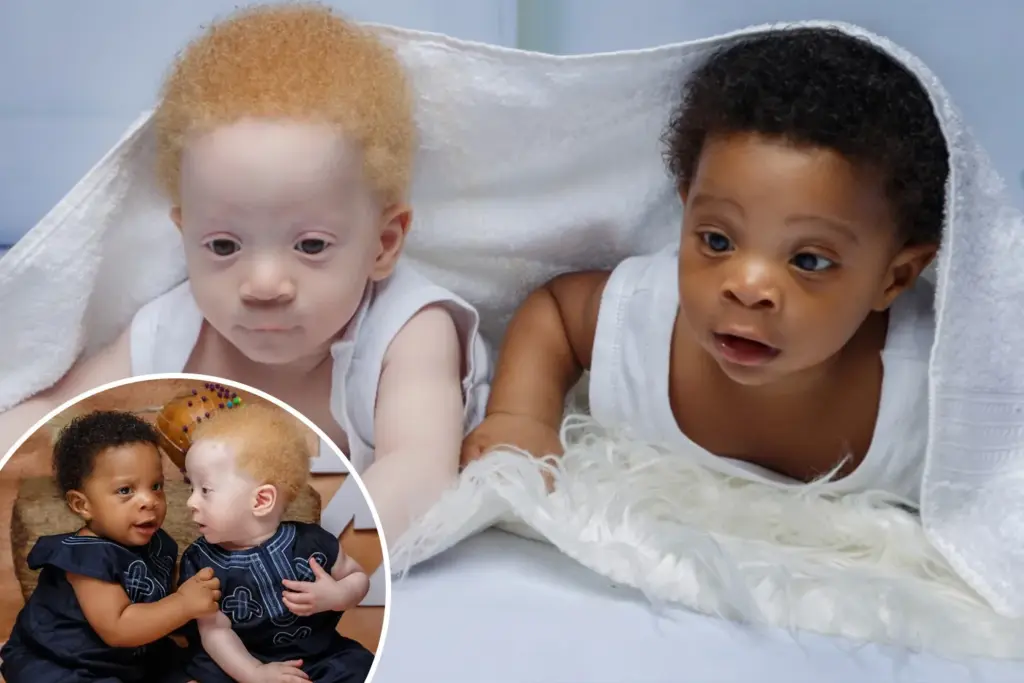
Healthcare providers stress that with proper medical care, education, and protective measures, individuals with albinism can lead healthy, active, and fulfilling lives.
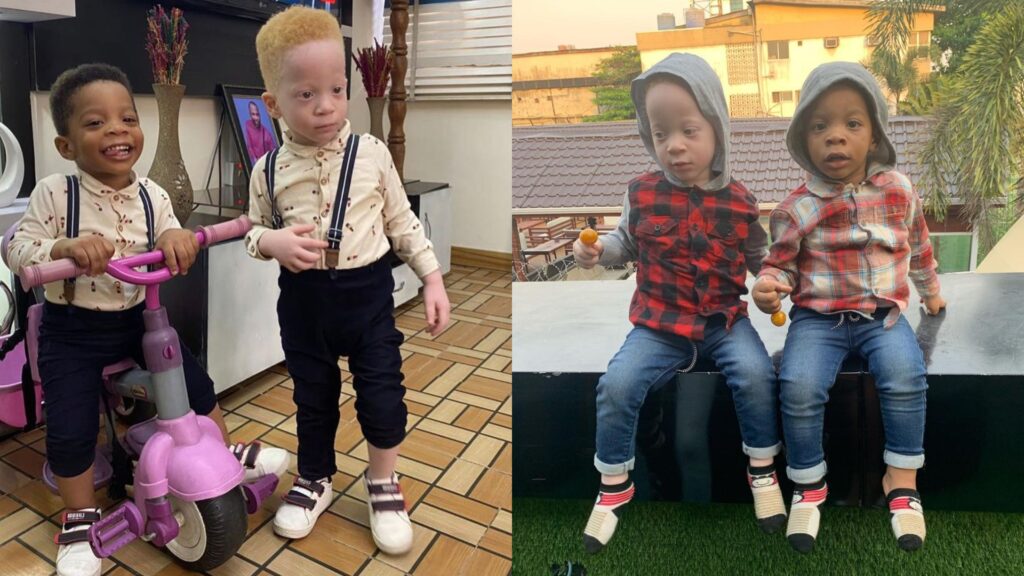
As Daniel and David Omirin grew older, their contrasting appearances continued to draw curiosity, but their bond as brothers grew even stronger. They shared toys, stories, and countless daily routines, creating a childhood filled with laughter, learning, and mutual support. Despite the attention their differences attracted, the twins experienced a nurturing and stable environment, carefully guided by their parents.
Both boys met developmental milestones at similar times, thriving physically, cognitively, and emotionally. Their parents emphasized that while their appearance was unusual, their focus should be on nurturing self-confidence, kindness, and resilience. Stacy and Babajide made it a priority to instill the understanding that uniqueness is a strength, not a limitation.
Individual Personalities
Over time, Daniel and David began to display distinct personalities. Daniel was outgoing, curious, and sociable, often eager to interact with friends and adults alike. David, in contrast, tended to be observant, thoughtful, and quieter, carefully absorbing his surroundings before participating. Their parents stressed that these differences were related to individual temperament, not physical appearance, teaching them to respect and celebrate one another’s uniqueness.
The twins’ personalities complemented each other. Daniel’s energy encouraged David to explore new experiences, while David’s thoughtful nature provided Daniel with balance and perspective. This dynamic strengthened their bond, making them inseparable playmates, collaborators, and confidants.
Public Attention and Social Reactions
As photos of the twins circulated online, public interest surged. People from around the world expressed curiosity, admiration, and sometimes surprise at the visible contrast between the two boys. Many questions arose, ranging from genuine interest to assumptions about adoption or family relationships.
Stacy handled these inquiries with patience, calmness, and education. She took the opportunity to explain albinism, basic genetic principles, and the fact that both children share the same parents. Through these conversations, she discovered that many people had never encountered albinism firsthand and lacked accurate information.
Over time, Stacy realized that sharing her family’s story could help reduce misinformation, promote genetic literacy, and challenge societal misconceptions about children with albinism.
Challenging Stigma and Misconceptions
In certain regions of Africa, people with albinism have historically faced stigma, myths, and social exclusion. Misconceptions often portray albinism as a curse, supernatural condition, or misfortune—ideas that are scientifically unfounded.
By openly discussing David’s condition, showcasing his thriving development, and demonstrating a loving family environment, Stacy seeks to combat these harmful beliefs. She emphasizes education, awareness, and visibility as essential tools to reduce fear, encourage acceptance, and promote inclusion for individuals with albinism.
Healthcare professionals agree that positive representation and accurate information are key to improving public understanding. Educating communities about the genetic basis of albinism helps normalize differences and fosters empathy, reducing discrimination over time.
The Role of Responsible Media Coverage
Media outlets reporting on the twins have maintained a focus on scientific explanation and factual storytelling. Reputable organizations have consistently highlighted the genetic explanation behind the twins’ contrasting appearances, without sensationalizing or exaggerating the story.
The core facts reported across all credible sources remain:
- The twins were born in Lagos, Nigeria, in 2019
- Both children share the same biological parents
- One twin, David, has albinism
- The difference in appearance is fully explained by genetics
This consistency reinforces the credibility of the story, making it a suitable example for educational, informational, and awareness purposes. By presenting the facts responsibly, media coverage has helped reduce misconceptions while generating interest in the science behind albinism.
Life Today and Family Values
Today, both Daniel and David are thriving children. Their parents continue to prioritize education, emotional well-being, and physical health. The twins are encouraged to pursue hobbies, develop social skills, and embrace their individuality, while also appreciating their shared family bond.
Stacy and Babajide maintain routines that include learning, play, outdoor activities, and quality family time. These activities ensure the twins grow in a balanced environment that nurtures both their mental and physical development.
The family emphasizes mutual respect, open communication, and empathy—values that form the foundation for raising socially conscious, confident, and compassionate children.
A Message That Resonates Globally
The story of the Omirin twins has resonated with audiences worldwide because it reflects a universal truth: love, care, and understanding are more important than appearance. Their experience encourages meaningful discussions about:
- Genetic diversity and inheritance
- Understanding and accepting differences
- Combating social stigma
- Promoting empathy and inclusivity
These lessons are relevant across cultures, communities, and generations. By observing how Daniel and David thrive together, people can appreciate how familial love and proper guidance help children navigate a world that may sometimes judge based on appearance.
Inspiring Education and Awareness
The Omirin family’s story also serves as an important educational tool. Schools, community organizations, and online platforms have used their example to teach children and adults about genetics, albinism, and social inclusion. It highlights the importance of:
- Raising awareness about rare genetic conditions
- Fostering supportive environments for children with visible differences
- Educating the public to prevent discrimination
- Promoting inclusion in schools, playgrounds, and social settings
Stacy has become a quiet advocate for education, emphasizing that a better-informed society is one that can embrace diversity without fear or prejudice.
Conclusion: A Story of Love, Science, and Understanding
The birth and upbringing of Daniel and David Omirin is a verified and medically documented event that highlights the complexity of human genetics. The twins’ story is remarkable not because it defies science, but because it illustrates the wonder of genetics, the importance of education, and the transformative power of love and acceptance.
Above all, it is a story about family, responsibility, and awareness. By sharing their journey, Stacy and Babajide Omirin have helped educate the public, reduce stigma, and promote understanding—demonstrating that knowledge, compassion, and inclusion can overcome misunderstanding and prejudice.
For parents, educators, and communities worldwide, Daniel and David’s story is a reminder that differences are natural, valuable, and worthy of celebration. Their example encourages the next generation to approach diversity with curiosity, respect, and empathy—essential values in a modern, interconnected world.
