In mid-December, the United States Department of Justice released a large collection of documents related to the long-running investigation into financier Jeffrey Epstein and his associate Ghislaine Maxwell.
The release, which took place on Friday, December 19, included thousands of records and hundreds of photographs, and was carried out under the requirements of a new federal transparency law aimed at increasing public access to information in the Epstein case.
The disclosure immediately attracted widespread public attention, not only because of the sheer volume of material involved, but also because the records included images and references connected to a number of high-profile public figures.
As has often been the case with past Epstein-related document releases, the appearance of well-known names and faces quickly led to intense online discussion, political debate, and media scrutiny.
Background: Why the Documents Were Released
The document release is tied to the Epstein Files Transparency Act, legislation that requires the Department of Justice to make public a significant portion of its archived Epstein-related materials.
The law was designed to address years of criticism that too much information surrounding the case remained hidden from public view, even after Epstein’s 2019 arrest and subsequent death in federal custody, as well as Ghislaine Maxwell’s later conviction for her role in assisting Epstein’s criminal activities.
According to the Department of Justice, the materials released so far represent only a portion of an enormous archive estimated to contain hundreds of thousands of pages, including investigative reports, correspondence, photographs, video material, and early statements from victims.
Many of these documents remain heavily redacted to protect the identities of victims and to comply with privacy and legal requirements.
High-Profile Names and Public Reaction
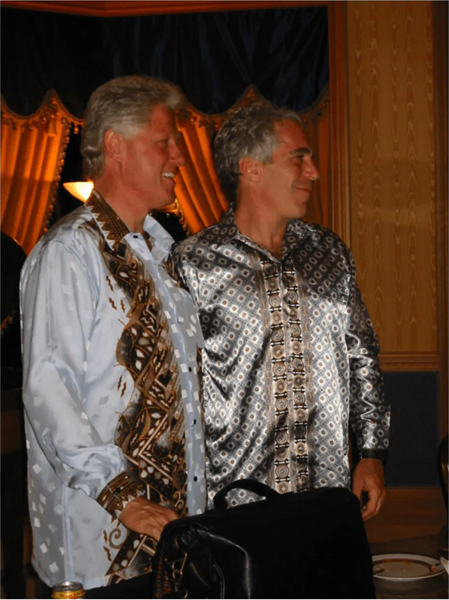
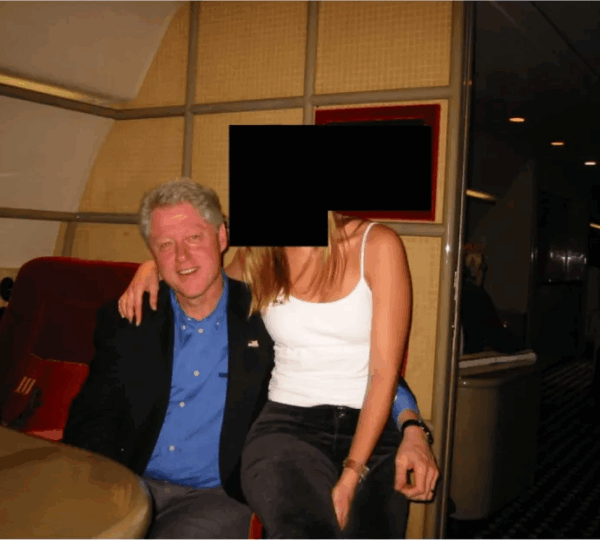
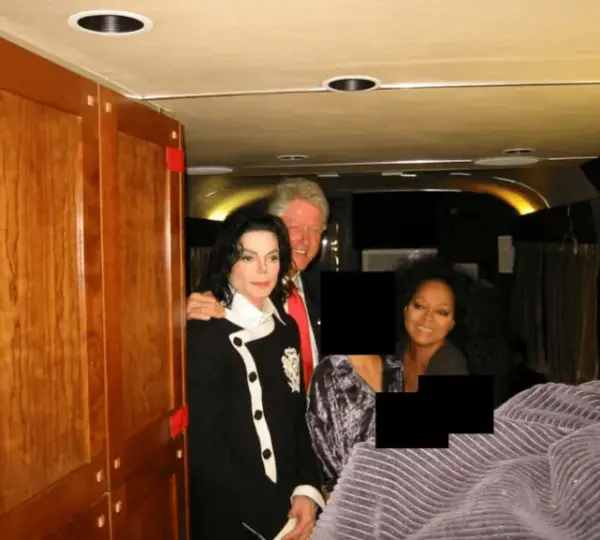
One of the most widely discussed aspects of the latest release is the presence of photographs showing former U.S. President Bill Clinton in social settings with Jeffrey Epstein and Ghislaine Maxwell.
Several images circulating online appear to show Clinton at gatherings that include Epstein, Maxwell, and other individuals. In some photos, the faces of certain people are blurred or redacted.
Among the images that have received the most attention are photographs that appear to show Clinton near a swimming pool with Epstein and Maxwell, another image depicting him seated at a dinner with Epstein and musician Mick Jagger, and a separate image that shows Clinton in what appears to be a hot tub or indoor pool setting.
These images, which were included among the released records, quickly went viral across social media platforms.
The reaction was further amplified after White House press secretary Karoline Leavitt shared one of the poolside images on X (formerly Twitter), adding a brief caption that expressed surprise.
The post contributed to renewed public debate over the significance of the photographs and the broader implications of the document release.
Clinton’s Response Through His Spokesperson
In response to the renewed attention, Bill Clinton’s team issued a public statement through his spokesperson, Angel Ureña.
The statement rejected any suggestion that the release of the photographs implied wrongdoing by the former president and accused political opponents of attempting to use the images as a distraction.
Ureña argued that the timing and framing of the release were being misused to shift attention away from other unresolved questions surrounding the Epstein case.
According to the statement, the Clinton team maintains that the former president had no knowledge of Epstein’s criminal activities and that he severed ties with Epstein years before those crimes became publicly known.
The spokesperson also emphasized that the images being shared are decades old and taken out of context, and that simply appearing in photographs with Epstein does not constitute evidence of criminal behavior.
The statement further asserted that Clinton belongs to a group of individuals who, according to his team, ended contact with Epstein before his criminal conduct was revealed to the public.
The Question of Timing and Political Context
The release of the Epstein files has occurred in a politically charged environment, and reactions have varied widely depending on political affiliation.
Some commentators have questioned why certain names appear more prominently in the released materials than others, while supporters of the transparency effort argue that the law requires disclosure regardless of political consequences.
Notably, former President Donald Trump does not appear in the newly released photographs, despite having publicly acknowledged past social contact with Epstein in the 1990s and early 2000s.
This absence has itself become a point of discussion online, though legal experts caution that the presence or absence of an individual in these records does not, by itself, indicate guilt or innocence.
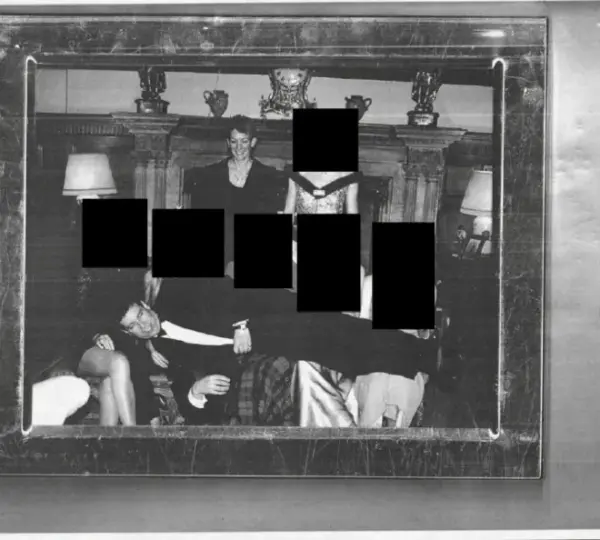
It is important to note that the released documents reflect archived materials, not new investigative findings.
Many of the photographs and records date back years or even decades and were previously held within government files that had not been publicly accessible.
What the Photos Do — and Do Not — Show
Legal analysts and journalists have repeatedly stressed a critical point: appearing in a photograph with Jeffrey Epstein does not automatically imply involvement in criminal activity.
Epstein moved within elite social circles for many years, and he associated with politicians, business leaders, academics, celebrities, and members of royalty.
The Department of Justice has not announced any new criminal charges against individuals named or shown in the released materials as a result of this disclosure.
The documents are intended to increase transparency, not to serve as proof of wrongdoing on their own.
Many of the records remain redacted, and key details — including dates, locations, and the identities of some individuals — are intentionally obscured to protect victims and comply with court orders.
As a result, the public is often seeing partial information without full context, which can contribute to misunderstanding or speculation.
Clinton’s Long-Standing Position
Bill Clinton has consistently stated that he cut off contact with Epstein around 2005, several years before Epstein’s 2008 guilty plea in Florida on charges related to soliciting a minor.
Clinton has also said that he was unaware of Epstein’s criminal behavior at the time of their interactions.
No court has found Clinton guilty of any crime related to Epstein, and he has not been charged in connection with the case.
His representatives have repeatedly emphasized that any suggestion otherwise is unsupported by evidence.
Transparency, Accountability, and Public Expectations
The Epstein Files Transparency Act reflects a broader public demand for accountability and openness in cases involving powerful individuals.
Survivors and advocacy groups have long argued that secrecy allowed Epstein to evade justice for years and that greater transparency is necessary to prevent similar failures in the future.
At the same time, legal experts warn that transparency must be balanced with fairness, due process, and the protection of victims.
Releasing large volumes of material without full explanatory context can lead to misinterpretation, especially when documents and images circulate rapidly on social media.
The Larger Picture
The Epstein case remains one of the most controversial criminal scandals in recent U.S. history, not only because of the crimes themselves, but also because of the network of influence and wealth that surrounded Epstein for decades.
Each new document release tends to reopen unresolved questions, reignite public anger, and fuel debates about power, privilege, and accountability.

While the latest release has renewed focus on familiar names, it has not fundamentally changed the legal status of those individuals.
As of now, the documents serve primarily as historical records and as part of a broader effort to make government files more accessible to the public.
Conclusion
In summary, the release of thousands of Epstein-related records by the U.S. Department of Justice on December 19 is a real and verified event, carried out under a federal transparency law.
The appearance of Bill Clinton in several of the released photographs is also factual, as is the public response from his spokesperson.
However, the existence of these images does not constitute an accusation or proof of criminal conduct, and no new charges have been announced against Clinton or other individuals featured in the materials.
The documents are heavily redacted, incomplete by design, and must be interpreted with caution.
As additional records are reviewed and potentially released in the future, public debate is likely to continue.
For now, the latest disclosure underscores both the demand for transparency and the challenges of interpreting complex historical records in an era of rapid information sharing.
