

In the high desert region of the American Southwest, near the iconic red sandstone formations of Sedona, Arizona, there exists a McDonald’s location that reflects strict local architectural and environmental design regulations.
Sedona is widely recognized for its dramatic natural scenery, spiritual tourism culture, and long-standing commitment to preserving the visual integrity of its red rock landscape through controlled urban development policies.
Unlike many commercial areas in the United States, Sedona enforces detailed zoning and design codes that regulate building appearance, signage, lighting, and color palettes to ensure harmony with the surrounding environment.

These regulations are intended to prevent visual disruption in a region where tourism is strongly connected to natural aesthetics, scenic photography, and the preservation of desert landscapes.
When McDonald’s Corporation planned to open a restaurant in Sedona during the early 1990s, the project required approval under these local planning and design guidelines before construction could proceed.
Local authorities reviewed the proposal carefully to ensure that the building’s exterior would not visually conflict with Sedona’s established architectural standards for earth-toned and low-impact commercial structures.
One of the most significant required adjustments involved the redesign of the restaurant’s exterior signage, particularly the iconic golden arches, which are typically bright yellow in most global locations.
In Sedona, however, planners required a muted color adaptation, resulting in the arches being rendered in a turquoise tone designed to better complement the desert sky and surrounding red rock formations.
This modification was not an independent branding decision by McDonald’s, but rather a compliance measure required by municipal planning regulations governing visual impact in sensitive natural areas.
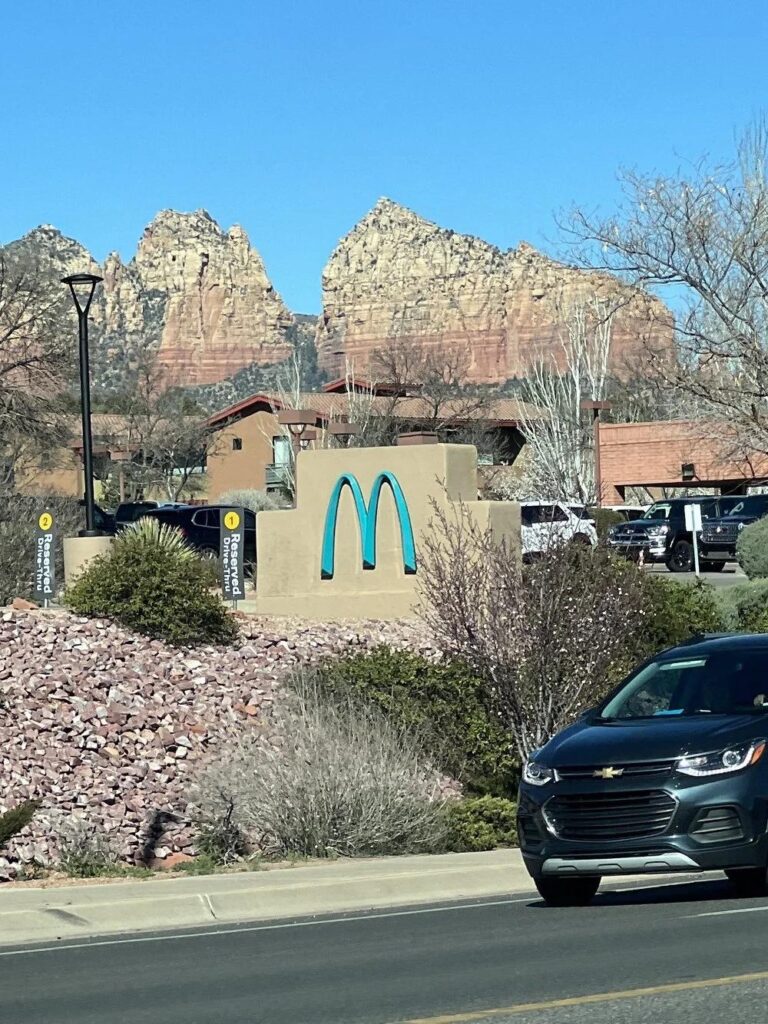
The goal of Sedona’s design code is to ensure that all commercial structures blend into the environment rather than dominate or distract from the natural geological features of the region.
As a result, the McDonald’s location in Sedona became one of the few examples in the world where a globally standardized brand visually adapts to local environmental preservation laws.
The restaurant itself operates like any other McDonald’s location, offering the same menu, service systems, and operational structure found across thousands of franchises worldwide.
The only significant difference lies in its exterior design, which reflects Sedona’s strict requirements for color harmony and architectural integration within the natural landscape.
Over time, the turquoise arches have drawn public interest due to their contrast with the typical bright yellow branding seen at other McDonald’s locations around the world.
Visitors often notice the location during travel through Sedona, where tourism is heavily focused on outdoor activities such as hiking, photography, and sightseeing of the red rock formations.
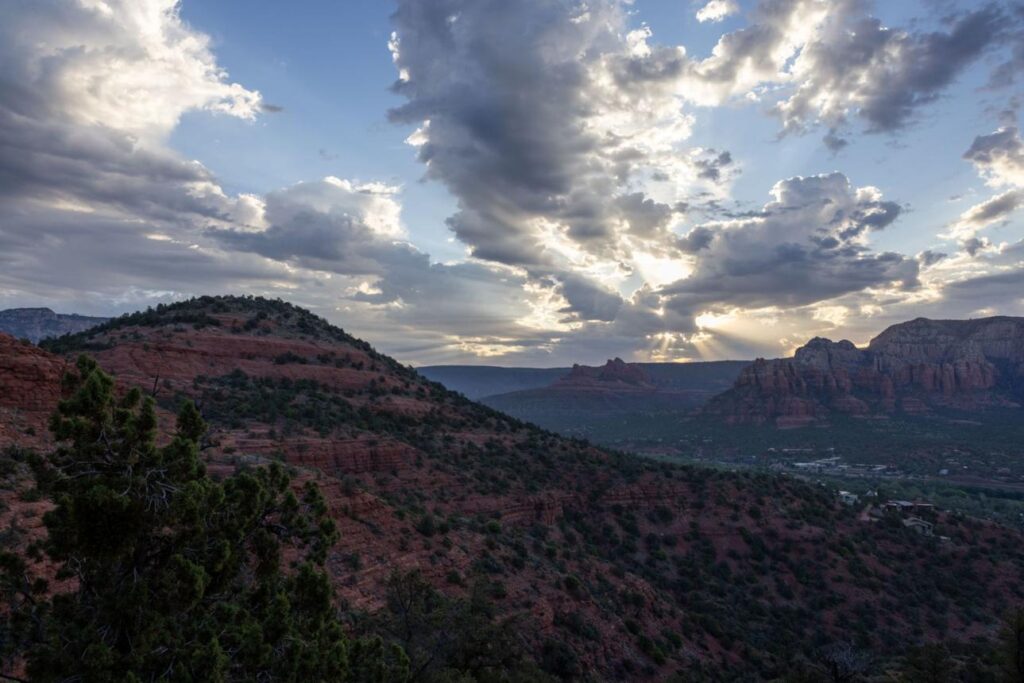
The surrounding area includes well-known natural landmarks and scenic viewpoints that attract millions of visitors annually, making commercial visibility subject to strict aesthetic regulation.
While the restaurant was not originally intended as a tourist attraction, its unique appearance has contributed to increased public attention and frequent photography by visitors.
The turquoise color choice aligns with Sedona’s broader planning philosophy, which emphasizes earth tones, natural hues, and low-contrast building designs throughout the city.
These regulations are among the strictest in the United States regarding commercial signage and exterior design in environmentally sensitive or visually significant regions.
All businesses operating in Sedona must adhere to these standards, ensuring that development does not compromise the region’s visual identity or scenic appeal.
The McDonald’s location is therefore one example of how large international corporations adapt to local regulatory frameworks when operating in environmentally protected or visually regulated areas.
This adaptation demonstrates the interaction between global brand identity and localized urban planning policies that prioritize environmental aesthetics over uniform corporate design.
Although the arches are visually distinct compared to standard McDonald’s branding, they still maintain recognizable brand structure and function within the company’s global system.
Over the years, the Sedona location has become widely shared on travel platforms, often featured in photographs highlighting its unusual integration into the desert environment.
This attention reflects broader interest in how commercial architecture can adapt to natural landscapes without disrupting visual balance or cultural identity.
Sedona’s planning approach continues to serve as an example of how municipalities can regulate development while still allowing international businesses to operate successfully.

The McDonald’s location continues to function as a fully operational restaurant serving both residents and visitors to the region.
Its design remains in full compliance with local zoning laws, which prioritize environmental preservation and consistent architectural styling across commercial properties.
The turquoise arches are therefore best understood as a regulatory outcome rather than a branding innovation or marketing strategy developed by the corporation itself.
This case is frequently referenced in discussions about urban planning, architectural adaptation, and the relationship between global commerce and local environmental policy.
It highlights how standardized corporate identities can be modified when entering regions with strong visual or ecological preservation priorities.
Sedona’s continued enforcement of these regulations ensures that its distinctive desert landscape remains visually dominant over commercial infrastructure.
As tourism continues to grow in the region, maintaining this balance between development and preservation remains a central planning objective.
The McDonald’s location stands as a practical example of how regulatory systems influence the appearance of globally recognized brands in specific geographic contexts.
Ultimately, it demonstrates that even the most standardized corporate designs can be reshaped when placed within communities that prioritize environmental harmony and visual preservation.
