
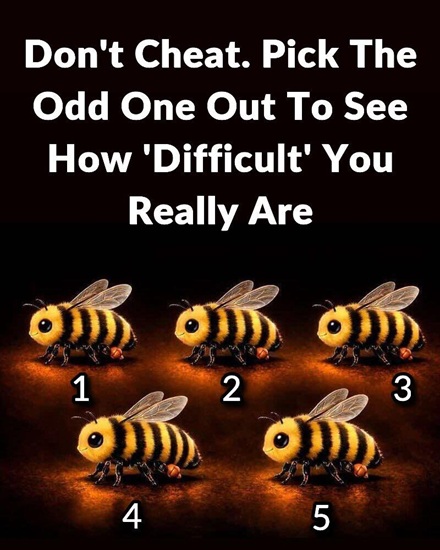
The human brain is one of the most advanced information-processing systems known, constantly receiving sensory input from the environment while simultaneously filtering, organizing, and interpreting it in real time.
Every moment, it is exposed to far more information than it can consciously process. To manage this overload, the brain relies on attention mechanisms that prioritize certain stimuli while ignoring others.
This filtering process is essential for survival, efficiency, and focus in everyday life, allowing humans to function without becoming overwhelmed by constant sensory data.
Cognitive science explains that perception is not a direct recording of reality, but rather a constructed interpretation shaped by neural activity, memory, expectation, and context. In other words, the brain actively builds what we experience as “reality.”
Because of this construction process, perception can vary between individuals even when they are exposed to the same visual scene. Differences in attention, experience, and cognitive style influence what is noticed first and what is ignored.

Psychologists study these differences through controlled experiments involving visual attention, ambiguous figures, and perceptual illusions. These tools help researchers understand how humans prioritize information under limited cognitive resources.
In many cases, the first thing a person notices in an image is influenced by salience, which refers to features that stand out due to contrast, brightness, shape, or position. The brain is naturally drawn to these features before deeper analysis begins.
After this initial stage of rapid detection, the brain engages in higher-level interpretation. This involves identifying objects, assigning meaning, and connecting what is seen with prior knowledge stored in memory.
This two-stage process—initial perception followed by cognitive interpretation—is fundamental to understanding how humans interact with visual information. It explains why perception can feel immediate but is actually highly complex.
Researchers also study how attention can be influenced by top-down processing, where expectations and prior experiences shape what the brain chooses to focus on. This means that what we expect to see can affect what we actually perceive.
For example, in a visually complex image containing multiple elements, one observer may focus on the most prominent object due to its size or contrast, while another may notice smaller details because of trained observational habits.

These differences are not indicators of fixed personality categories but rather examples of attentional variation. Attention is flexible and can change depending on context, emotional state, and cognitive load.
Scientific studies in perception show that humans often use “selective attention,” a mechanism that filters out irrelevant information so that cognitive resources can be directed toward what is most important at the moment.
This system is highly efficient but also imperfect. It can lead to perceptual differences, illusions, and moments where two individuals interpret the same stimulus in different ways.
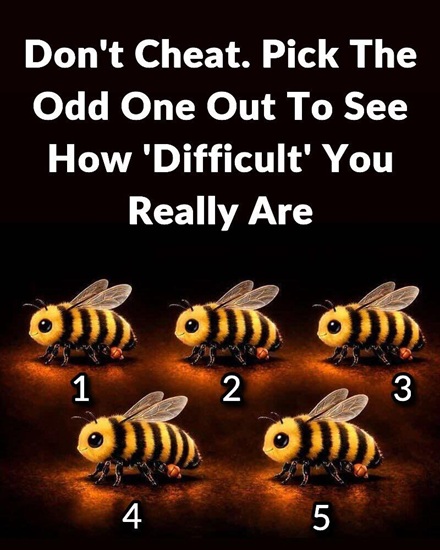
Visual puzzles and ambiguous images are often used in educational and psychological settings to demonstrate this variability. They highlight how the brain resolves uncertainty when multiple interpretations are possible.
However, it is important to clarify that such images do not scientifically determine personality traits or psychological diagnoses. They are observational tools, not diagnostic instruments.
Instead, they provide insight into general cognitive tendencies, such as whether a person tends to process information more globally or more analytically in a given moment.
Global processing refers to perceiving the overall structure or “big picture” of a scene before focusing on details. This type of perception is often useful in situations that require quick understanding of context.
Analytical or detail-focused processing, on the other hand, involves breaking down visual information into smaller components. This approach is often associated with careful observation and systematic evaluation.

Both styles of processing are normal and commonly exist within the same individual, depending on circumstances. Humans are not fixed into one perceptual category but instead shift between modes of thinking.
Another important aspect of perception is pattern recognition. The brain is constantly searching for familiar structures in visual input, which helps it make sense of complex or unfamiliar environments.
This ability allows humans to recognize objects quickly, interpret scenes efficiently, and respond to potential threats or opportunities without extensive conscious analysis.
In addition to pattern recognition, the brain also relies on predictive processing. This means it continuously generates expectations about what will happen next based on prior experience.
When incoming information matches these predictions, perception feels smooth and effortless. When it does not, the brain adjusts its interpretation to resolve the discrepancy.
This adaptive system is one reason why perception can differ between individuals. Each person has unique experiences that shape their internal predictive models.
Emotional state can also influence perception. Research shows that stress, curiosity, or relaxation can affect what elements of a visual scene receive attention first.
For example, a person under stress may focus more on threatening or high-priority stimuli, while a relaxed individual may notice broader environmental details.
Cultural background and learned knowledge further shape perception by influencing what is considered important or meaningful within a given context.
Over time, these factors combine to create highly individualized ways of seeing and interpreting the world, even when external stimuli remain identical.
Visual attention studies demonstrate that perception is not passive but actively constructed. The brain continuously selects, organizes, and interprets data based on both internal and external influences.
This means that what a person notices first in any image is less about objective reality and more about how their cognitive system prioritizes information at that moment.
Scientific psychology emphasizes that there is no single “correct” way to perceive a complex visual scene. Instead, multiple valid interpretations can exist simultaneously.
Understanding perception in this way helps explain why people often disagree about what they see, even when viewing the same image or situation.
It also highlights the importance of cognitive flexibility, which allows individuals to shift perspectives and consider alternative interpretations when needed.
In everyday life, this flexibility supports better decision-making, communication, and problem-solving, especially in uncertain or ambiguous situations.
Ultimately, perception is a dynamic interaction between the external world and the internal workings of the human mind. It is shaped by biology, experience, attention, and context.
Rather than revealing fixed truths about identity, visual perception exercises demonstrate how easily attention can shift and how meaning is constructed in real time.
The study of these processes continues to be an important field in psychology and neuroscience, offering deeper insight into how humans experience and interpret reality.
In conclusion, what we see first in any visual environment is not a reflection of absolute truth, but a reflection of how our brain organizes and prioritizes information in that specific moment of awareness.
