
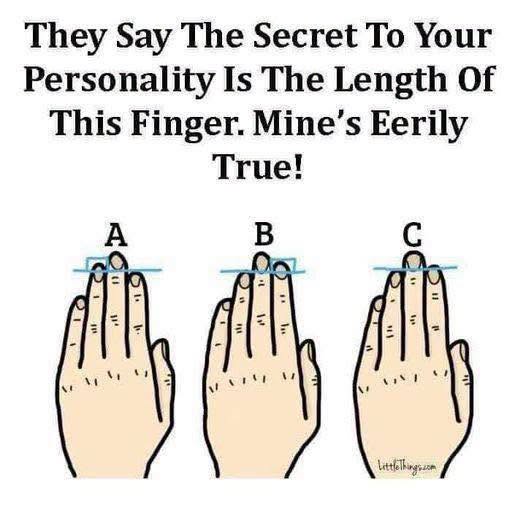
To understand the connection between finger length and personality in a more realistic and responsible way, it is important to go beyond simplified interpretations and look at what science actually says in broader terms.
Research into the 2D:4D ratio continues to focus mainly on developmental biology, especially how prenatal hormone exposure may influence physical growth patterns.
These studies are ongoing and often produce mixed or context-dependent results. Scientists measure finger ratios across large populations to look for statistical trends, but these trends do not translate into individual predictions. This distinction is essential when interpreting the findings correctly.
In many cases, observed differences in finger length are subtle and vary widely even within the same family or population group. This variability shows how complex human development truly is.
Some early studies suggested possible links between lower 2D:4D ratios and traits like competitiveness or physical performance in certain activities, but later research has shown that these associations are not consistent.
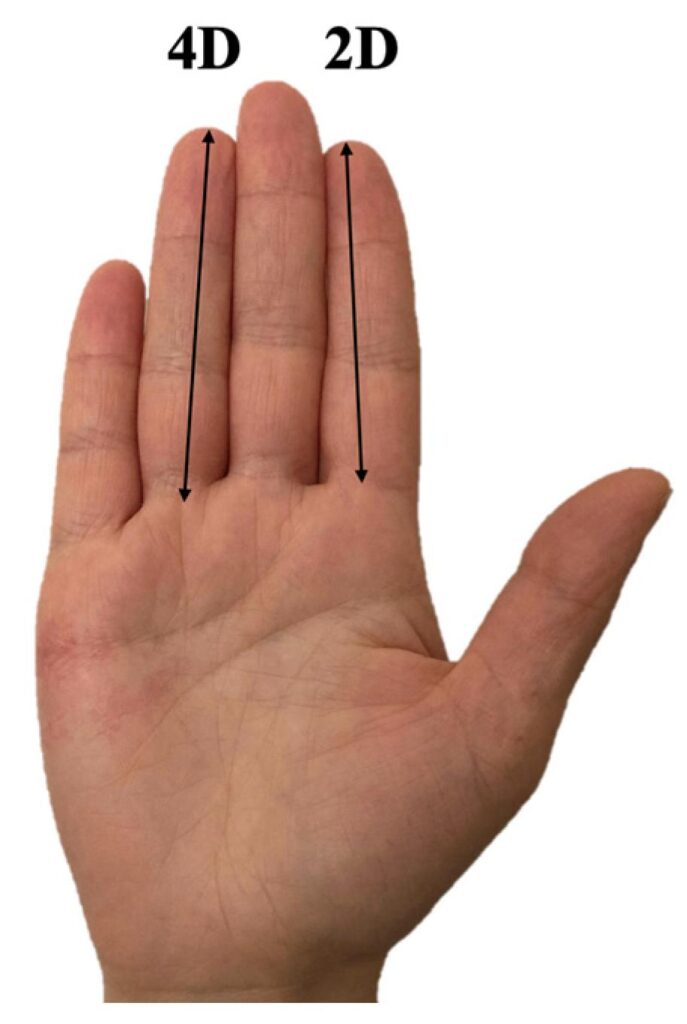
Other studies have explored possible connections between finger ratios and cognitive or behavioral tendencies, yet most researchers agree that these links are weak and should not be used to define personality.
It is also important to note that personality psychology uses validated frameworks such as the Big Five personality traits, which are based on behavior, emotional patterns, and long-term tendencies rather than physical measurements.
Compared to physical markers like finger length, these psychological models provide a much more reliable and scientifically supported way of understanding human personality differences.
Even within scientific literature, researchers often emphasize that biological traits like the 2D:4D ratio should be considered as one small piece of a much larger developmental picture.
Environmental influences such as education, family structure, cultural background, and life experiences play a far more significant role in shaping personality than any single physical trait.
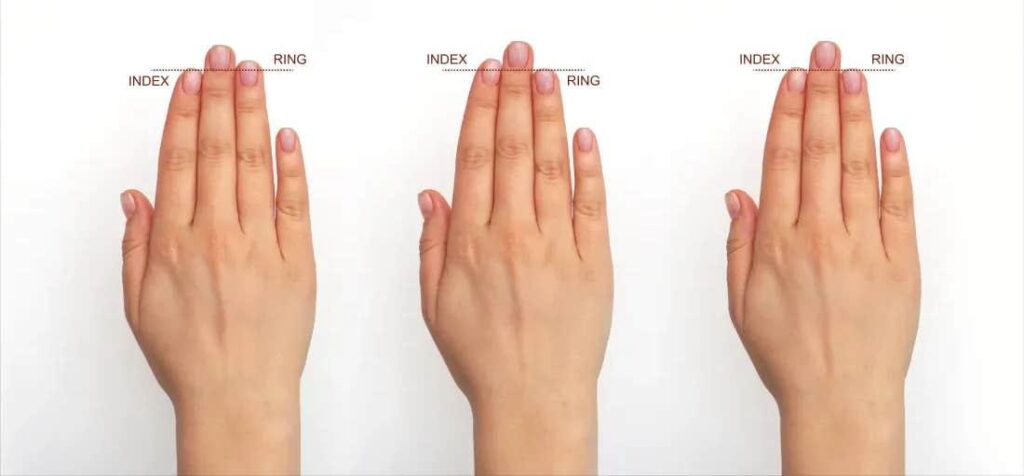
This is why two individuals with similar finger ratios can still have completely different personalities, interests, and life paths, depending on their unique circumstances.
Modern science increasingly focuses on the interaction between biology and environment, often described as “nature and nurture,” rather than attributing behavior to one isolated factor.
From this perspective, finger length differences are better understood as natural variations in human development rather than indicators of fixed personality types.
It is also worth highlighting that much of the popular content about finger length and personality is based on simplified interpretations of scientific studies, which may not fully reflect the original research conclusions.
Responsible scientific communication encourages caution when interpreting such findings, especially when they are presented in a way that suggests certainty or definitive personality classification.
While the idea can be interesting and engaging, it is important not to overstate its accuracy or use it to make judgments about individuals.
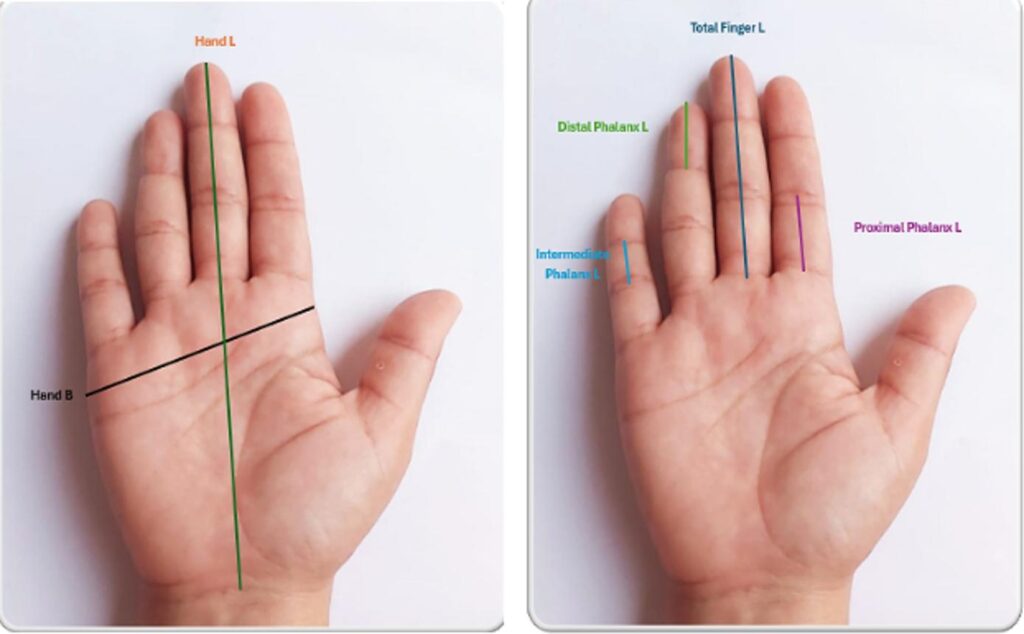
Human behavior is highly dynamic and influenced by continuous learning, emotional growth, and changing environments throughout life.
Because of this, any attempt to categorize personality based solely on physical characteristics will always remain incomplete and limited in scope.
Researchers continue to study prenatal development to better understand how early biological factors may contribute to later outcomes, but these studies focus on probabilities rather than fixed outcomes.
In practical terms, this means that even if small statistical correlations exist, they are not strong enough to predict individual personality traits with accuracy.
For this reason, scientists generally treat the 2D:4D ratio as an interesting biological marker rather than a diagnostic or psychological tool.
It can be useful in academic research for exploring patterns across populations, but it should not be used for self-labeling or judging others.

A balanced understanding of this topic involves recognizing both the scientific curiosity it generates and the limitations of its real-world application.
Ultimately, personality is shaped by a combination of biology, experience, environment, and personal choices, all working together in complex ways.
No single measurement, including finger length, can fully capture the depth of human individuality or explain behavior in a complete way.
As research continues to evolve, the most accurate approach remains one of caution, open-mindedness, and respect for scientific uncertainty.
In conclusion, while finger length studies offer an interesting window into human development, they should be viewed as exploratory science rather than a definitive guide to personality.
