
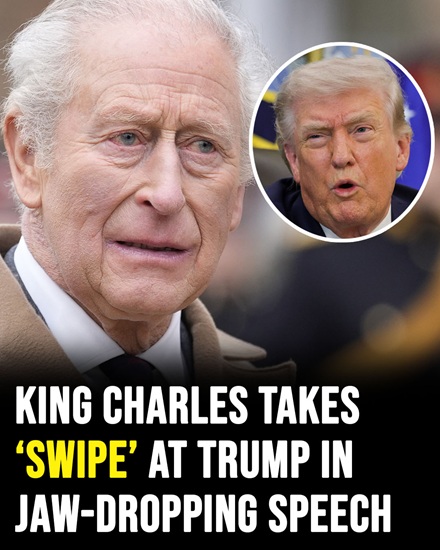
King Charles III recently delivered a commemorative speech marking what would have been the 100th birthday of his late mother, Queen Elizabeth II. The tribute formed part of a wider reflection on her life, her reign, and her legacy as the longest-serving monarch in British history. The occasion carried strong emotional significance for the Royal Family, as well as symbolic importance for the United Kingdom as a whole. Queen Elizabeth II passed away in 2022 at the age of 96 after reigning for 70 years.
Her reign covered major historical events, including post-war reconstruction, the Cold War era, and significant changes in the British monarchy’s public role. The centenary tribute was designed to highlight not only her public duties but also the personal impact she had on those who met her during her lifetime.
In his speech, King Charles III reflected on his mother’s life with a tone of remembrance and gratitude. He spoke about her influence on both national life and individual citizens, noting that she was often remembered for small, personal moments as much as for major constitutional duties. He referenced how people across generations still associate her with stability, continuity, and service.
King Charles III used the occasion to emphasize themes of reflection, duty, and legacy. His remarks focused on the importance of remembering Queen Elizabeth II not only as a monarch but also as a mother, grandmother, and a figure deeply connected to public service. The speech also highlighted the emotional void left by her passing within the Royal Family.

One part of the speech drew particular attention from commentators. King Charles referenced the “troubling times” the world is currently experiencing, suggesting that global conditions today may have caused concern for his late mother. He also expressed hope that values such as goodness and resilience would continue to guide people through uncertainty.
This reference to global difficulties became the subject of interpretation in media analysis. Some observers viewed the language as a general reflection on international instability, while others suggested it could be interpreted more politically, depending on the listener’s perspective. However, no official statement indicated that the remarks were directed at any specific country, leader, or event.
A discussion about the speech appeared on Sky News, where royal commentator Kinsey Schofield offered her interpretation. She suggested that the wording might be perceived by some audiences as indirectly referencing global political tensions, including issues involving the United States. However, she emphasized this as her personal reading of the speech rather than a confirmed intention from the King or the Royal Household.
It is important to note that Buckingham Palace has not confirmed any political meaning behind the remarks. Royal speeches are typically written in carefully measured language, often designed to be diplomatic and broadly applicable rather than targeted at specific individuals or governments. This is consistent with long-standing constitutional norms that require the monarchy to remain politically neutral.
The speech also took place within a broader diplomatic context involving upcoming international engagements. Discussions have been ongoing regarding a future state visit between the United Kingdom and the United States. Such visits are organized jointly with the British government and are part of formal diplomatic relations between the two countries.
U.S. President Donald Trump previously met members of the Royal Family during his visit to the United Kingdom while in office. These meetings were widely covered by international media and were described as formal diplomatic engagements. They included ceremonial elements consistent with traditional state-level visits.
Reports suggest that preparations have been made for another high-level royal visit to the United States, although official details such as the full itinerary and timing have not yet been publicly confirmed. State visits of this nature typically include formal receptions, cultural exchanges, and official meetings with government leaders.
Within this broader context, King Charles’s speech has been analyzed not only as a personal tribute but also as part of ongoing diplomatic symbolism. Royal speeches often receive close attention from commentators who examine tone, wording, and timing for potential political or cultural implications.
Some media discussion focused on whether phrases such as “troubling times” carried additional meaning. However, experts also note that such language is common in royal addresses, particularly when referencing global uncertainty, humanitarian concerns, or general international affairs. Without explicit confirmation, interpretations remain speculative.
The centenary tribute was ultimately centered on remembrance. It highlighted Queen Elizabeth II’s long service, her personal influence, and the lasting role she played in shaping modern British identity. The emotional tone of the speech reflected both personal loss for the Royal Family and public respect for her legacy.
The differing interpretations of the speech demonstrate how royal communications are often analyzed through multiple perspectives. While some focus on emotional and historical significance, others consider potential political undertones, especially in periods of global tension or upcoming diplomatic events.
At its core, however, the speech remains a commemorative reflection on Queen Elizabeth II’s life and legacy. It was not presented as a political statement, but as a tribute to a monarch whose influence shaped decades of British and international history.
