

The story of Charles Manson remains one of the most extensively documented criminal cases in modern American history. His life, crimes, and trial have been studied for decades in legal, psychological, and cultural contexts. The case is not only significant because of the violence involved, but also because of its lasting impact on public perception of crime, influence, and group behavior. Born in 1934 in Cincinnati, Manson entered a childhood marked by instability. His mother was young at the time of his birth and had limited resources to provide a stable home environment.
His biological father was absent, and early records indicate a lack of consistent family structure during his formative years. During his childhood, Manson experienced frequent changes in caregiving arrangements. He spent time living with relatives and in temporary placements while his mother dealt with legal and personal difficulties, including incarceration for robbery. These disruptions contributed to a highly unstable upbringing.
By early adolescence, Manson had already begun encountering the juvenile justice system. Records from this period show repeated issues involving truancy and petty theft. These incidents resulted in placement in reform schools and juvenile detention facilities, which were commonly used at the time as corrective institutions for youth behavior.
The conditions in these institutions during the mid-20th century were often focused on discipline rather than rehabilitation. For individuals like Manson, these environments provided structure but limited psychological or emotional support. He cycled repeatedly between institutional settings and brief periods of release.
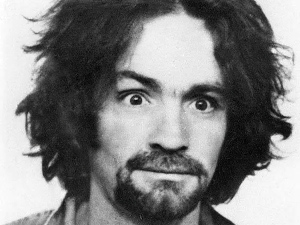
Psychological evaluations conducted during his youth documented behavioral concerns, including difficulties with authority and inconsistent social behavior. These assessments were part of juvenile records but did not provide a definitive prediction of future outcomes.
As he transitioned into adulthood, Manson accumulated additional criminal convictions. His offenses included theft, fraud, and violations of parole conditions. As a result, he spent a significant portion of his early adult life in federal correctional institutions.
While incarcerated, Manson developed a reputation for influence among certain individuals. Reports from prison environments describe him as observant and capable of engaging others in conversation. He was noted for his ability to maintain attention in social settings within the prison population.
During his imprisonment, he had access to various books and written materials, including religious and philosophical texts. These readings were later reflected in his personal interpretations of ideology, though they were not developed into a structured academic framework.
After his release in the late 1960s, Manson relocated to California. There, he began forming a group of followers who would later become known as the “Manson Family.” Many members of this group were young adults who had left their families or were searching for identity and belonging.
The group lived communally in various locations, most notably at Spahn Ranch. Within this environment, Manson became the central figure of authority. His influence over group members was based on psychological dynamics, personal charisma, and ideological framing rather than formal leadership structures.
One of the most widely discussed elements of his ideology was the concept he referred to as “Helter Skelter,” a term taken from the song by The Beatles. Manson interpreted this phrase in a highly personal and distorted way, using it as part of a belief system that developed within the group environment.
In August 1969, members of the Manson Family carried out a series of violent crimes in Los Angeles, including the murders of actress Sharon Tate and others at her residence. These events shocked the United States and became a major national news story due to their brutality and circumstances.
Although Manson did not physically participate in the killings, prosecutors argued that he was responsible as the orchestrator of the crimes. The legal case focused heavily on conspiracy charges and the influence he exerted over group members who carried out the attacks.
In 1971, Manson was convicted of first-degree murder and conspiracy. He was sentenced to death, but his sentence was later changed to life imprisonment after California temporarily abolished the death penalty in 1972, which affected all pending death sentences.
The trial was widely publicized and became one of the most closely followed criminal proceedings of its era. It drew national attention to issues of group influence, ideology, and criminal responsibility.
Following his conviction, Manson remained in prison for the rest of his life. Over the decades, he became a recurring subject in media coverage, documentaries, and academic studies focusing on criminal psychology and cult behavior.
His case has often been referenced in discussions about coercive influence and group dynamics. Researchers have examined how authority can be constructed within isolated social environments and how belief systems can develop under such conditions.
Despite the extensive public attention, modern analysis emphasizes that criminal behavior cannot be explained by a single factor. Manson’s case is studied as a combination of environmental instability, personal development, institutional exposure, and group dynamics.
It is also important to note that the victims of the 1969 crimes remain central to historical records and remembrance. Their lives and identities are preserved in legal documentation and cultural memory to ensure that the events are not reduced solely to the figure of the perpetrator.
Manson died in prison in 2017 at the age of 83. His death marked the end of a long incarceration period and closed a chapter in one of the most widely analyzed criminal cases in U.S. history.
Today, the Manson case continues to be studied in law, psychology, and sociology. It is frequently used as a reference point for understanding group influence, criminal networks, and the psychological mechanisms of control.
The case also serves as a cautionary example of how vulnerable individuals can be influenced within closed environments and how distorted belief systems can develop under certain social conditions.
Ultimately, the historical record of Charles Manson’s life is not only about crime, but also about the broader systems, environments, and psychological factors that contributed to one of the most infamous cases of the 20th century.
