
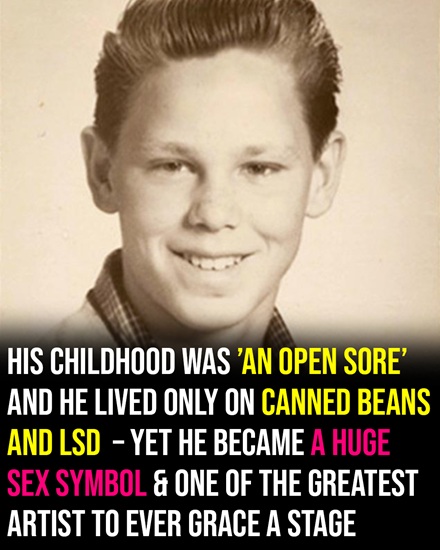
Few figures in rock music history have had as lasting and complex an influence as Jim Morrison, the lead singer and lyricist of The Doors. Known for his deep voice, poetic writing style, and unpredictable stage presence, Morrison became one of the defining frontmen of the 1960s counterculture era. His work blended rock music with poetry and philosophical themes, helping shape the identity of psychedelic rock. Jim Morrison was born on December 8, 1943, in Melbourne, Florida, into a military family.
His father, George Stephen Morrison, served as a U.S. Navy rear admiral. Because of his father’s naval career, Morrison’s early childhood involved frequent relocations across the United States. This constant movement exposed him to different environments and cultures during his formative years. During his youth, Morrison attended several schools due to his family’s relocations.
He later enrolled at the University of California, Los Angeles (UCLA), where he studied film. While at UCLA, he developed a strong interest in poetry, literature, and experimental storytelling. These artistic interests would later become central to his songwriting style and lyrical themes. One widely discussed moment from Morrison’s early life involves a childhood road trip in the American Southwest, where his family reportedly encountered the aftermath of a traffic accident.

Morrison later referenced this memory in symbolic and poetic terms during interviews and writings. However, members of his family have stated that while they did pass an accident scene, Morrison’s later descriptions were likely shaped by artistic interpretation rather than exact detail.
After leaving UCLA, Morrison moved to Venice Beach, California, where he lived a bohemian lifestyle focused on writing and artistic exploration. During this time, he met Ray Manzarek, a fellow UCLA film student and musician. This meeting led to the formation of The Doors, alongside guitarist Robby Krieger and drummer John Densmore.
The band’s name was inspired by Aldous Huxley’s book The Doors of Perception, which itself references a quote from poet William Blake. The Doors quickly developed a distinctive sound that combined rock, blues, jazz influences, and psychedelic elements. Morrison’s lyrics often explored themes such as consciousness, freedom, mortality, and existential reflection.
In 1967, The Doors achieved international fame with the release of their self-titled debut album, which included the hit song “Light My Fire.” The track became a number-one single in the United States and played a major role in establishing the band’s commercial success. Their early albums are now considered important contributions to the development of psychedelic and classic rock music.

As the band’s popularity grew, Morrison became widely recognized for his intense and often unpredictable stage performances. His live shows sometimes included improvisation, spoken-word poetry, and emotionally charged expressions that captivated audiences. This performance style contributed significantly to his reputation as a charismatic and unconventional frontman.
Behind the public image, Morrison struggled with increasing alcohol consumption, which gradually affected both his personal life and professional work. According to accounts from band members and production staff, his behavior during recording sessions became more inconsistent over time. Despite these challenges, The Doors continued to produce several successful albums throughout the late 1960s and early 1970s.
The band released a series of influential records, including Strange Days, Waiting for the Sun, The Soft Parade, Morrison Hotel, and L.A. Woman. These albums contributed to The Doors’ lasting legacy in rock music history. Many of their songs continue to receive significant airplay and remain influential for later generations of musicians.

Morrison also encountered legal issues during his career, including arrests related to public behavior during performances. One of the most notable incidents occurred in Miami in 1969, which resulted in a conviction related to disorderly conduct. Morrison denied some of the allegations, and the case remains a subject of discussion among music historians and fans.
His personal life was also marked by a long-term relationship with Pamela Courson. Their relationship was described as deeply emotional but also turbulent, reflecting the instability that often surrounded Morrison’s life during his peak years of fame. Despite this, Courson remained an important figure in his personal world until his death.
By 1971, Morrison began shifting his focus away from music and toward poetry and writing. He relocated to Paris, France, seeking a quieter environment and more privacy. During this period, he spent time working on poetry and living away from public attention, stepping back from active involvement with The Doors.
On July 3, 1971, Jim Morrison died in Paris at the age of 27. He was found in a bathtub in his apartment. No autopsy was performed, as it was not required under French law in cases where no foul play was suspected. The official cause of death was listed as heart failure, although the absence of an autopsy has led to ongoing discussion and speculation over the years.

His death placed him among other influential musicians who passed away at a young age, contributing to what is often referred to as the “27 Club.” Despite his short life, Morrison’s influence on music, poetry, and popular culture has remained strong for decades. His artistic legacy continues to be studied in both academic and cultural contexts.
Today, Jim Morrison is remembered not only as a rock musician but also as a poet and cultural icon. Through his work with The Doors, he helped redefine what rock music could express, blending literature, performance art, and music into a unique artistic identity. His influence continues to inspire musicians, writers, and artists around the world.
