Monday, November 23, 2026Independent ideas for everyday life.

Author: admin

  • A Mother Spent Four Years Hoping to Hear Her Daughter Speak Clearly – But One Unexpected Whisper Revealed Something No One Had Told Her

    A Mother Spent Four Years Hoping to Hear Her Daughter Speak Clearly – But One Unexpected Whisper Revealed Something No One Had Told Her

    The first time my daughter called me “Mommy,” I was sitting in a hospital bed, exhausted, barely able to keep my eyes open. My husband, Daniel, was standing beside me with tears running down his cheeks.

    “Did you hear that?” he whispered.

    I smiled weakly. “She sneezed.”

    “No, Claire. It sounded like Mommy.”

    “She’s two hours old, Daniel. I don’t think she’s trying to say anything yet.”

    He leaned closer to the little bundle in my arms, smiling as if the baby had just given him the greatest gift in the world.

    “And you’re beautiful,” he said, looking at me.

    After twelve years of trying to become parents, I wasn’t about to argue with him over a tiny sneeze.

    My name is Claire. I was forty-three years old, and I owned a small flower shop that had become my second home. I knew how to make wedding bouquets, funeral arrangements, birthday decorations, and arrangements for people who wanted to apologize without having the courage to say the words themselves.

    But somehow, I had missed something enormous happening inside my own marriage.

    Daniel and I had been together for sixteen years. We met when I was twenty-seven, married three years later, and spent the following years trying desperately to have a child.

    There were appointments, medications, test results, and countless conversations that ended with us pretending we were okay.

    Some nights, I cried quietly in the bathroom because I didn’t want Daniel to see how much another disappointment had hurt.

    He always found me anyway.

    “You don’t have to pretend with me,” he would say, wrapping his arms around me.

    “I just wanted to be a mother.”

    “And you will be. But even if things don’t happen the way we planned, I still have you.”

    Those words carried me through more difficult days than I could count.

    When Lily finally arrived, I felt as though the world had given us something we had spent years believing might never happen.

    I reduced my hours at the flower shop. Daniel took care of bedtime whenever I worked late. Our home filled with toys, tiny clothes, picture books, and the sound of a little girl learning to explore everything around her.

    For a while, I believed our lives had finally become exactly what we had dreamed of.

    Then, slowly, we began noticing things.

    One afternoon, Daniel was sitting on the living room floor playing with Lily when he called my name.

    “Claire, come here for a second.”

    “What happened?”

    “Watch this.”

    He stood behind Lily and called her name.

    “Lily!”

    She continued playing with her toy.

    He tried again.

    “Lily, sweetheart!”

    Nothing.

    I walked closer. “She’s probably concentrating.”

    Daniel looked at me, but he didn’t smile.

    “I called her three times.”

    I picked Lily up and turned her toward us. She smiled when she saw my face, and I immediately told myself there was nothing to worry about.

    But Daniel had already begun worrying.

    We eventually took Lily to an audiologist. After examinations and additional appointments, we were told she was experiencing progressive hearing loss.

    I remember sitting in the office, holding Lily’s little hand, while the specialist carefully explained what it meant.

    “Will she be able to hear us?” I asked.

    The audiologist explained that Lily would need support, ongoing assessments, and help developing communication skills. Hearing aids might provide her with greater access to sound, while speech therapy and sign language could help her communicate and understand the people around her.

    Daniel leaned forward.

    “What can we do right now?”

    “Start learning how to communicate with her in different ways. Speak directly to her, let her see your face, and be patient. She is learning every day.”

    I nodded, but my mind was already racing.

    How would she hear my voice?

    Would she recognize me when I called her name?

    Would she understand how much I loved her?

    That night, I created a little lullaby for her. It wasn’t anything special. I made up the words while rocking her gently, repeating the same melody every evening.

    Lily began placing her little palm against my throat whenever I sang.

    She seemed fascinated by the vibrations.

    “Again?” I asked her.

    She nodded.

    “One more time, my flower.”

    Daniel sometimes stood in the doorway watching us.

    “You’re going to sing that until she’s eighteen,” he joked.

    “Twenty-eight.”

    “Poor girl.”

    We laughed, and for a moment, everything felt normal again.

    But somewhere around Lily’s third year, Daniel began changing.

    He started coming home later and later.

    “Another meeting?” I asked one evening while preparing dinner.

    “Unfortunately.”

    “On Saturday, too?”

    “Just a couple of hours. I have something to finish.”

    He began bringing home little toys and gifts for Lily.

    “Another present?” I asked.

    “She deserves it.”

    “She deserves her daddy home, too.”

    He looked tired and rubbed his forehead.

    “Claire, I’m doing my best.”

    I believed him.

    I had too many things to worry about to imagine that the man I had spent sixteen years with might be hiding something from me.

    Lily needed hearing aids, and the costs were overwhelming. I had already filled out countless applications, contacted different offices, and tried to find assistance.

    One afternoon, our neighbor Ruth stopped by the flower shop.

    “Have you looked into the hospital assistance program?”

    “I don’t think we’d qualify.”

    “You won’t know until you apply.”

    “Ruth, I’ve filled out enough paperwork to wallpaper my house.”

    She shook her head.

    “Then fill out one more. What do you have to lose?”

    Three weeks later, I called her from my shop.

    “Ruth, we got approved!”

    “For Lily?”

    “Yes! They approved the assistance!”

    She laughed so loudly I had to move the phone away from my ear.

    “I told you!”

    “You also told me my roses needed pruning.”

    “And was I wrong?”

    I couldn’t stop smiling.

    When I told Daniel that evening, he hugged me tightly.

    “You did it!”

    “We did it,” I replied.

    He shook his head.

    “No, sweetheart. You did.”

    He couldn’t attend Lily’s fitting because of work.

    “Please take pictures,” he told me.

    “I’ll take fifty.”

    “Make it a hundred.”

    I promised, never imagining how differently that day would unfold.

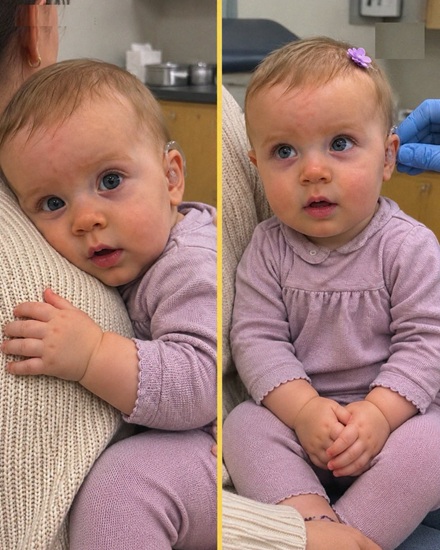
    At the clinic, Lily sat on my lap wearing a lavender outfit with a little purple flower clip in her hair. The audiologist, Megan, carefully adjusted her new hearing aids and explained how to use and care for them.

    “Ready, Lily?”

    My daughter watched Megan’s face.

    Megan turned toward me.

    “Try speaking naturally, Claire. Don’t shout. Just talk to her the way you always do.”

    I gently touched Lily’s hand.

    “Hi, baby. It’s Mommy. I love you.”

    Lily blinked.

    Then she looked at me with wide eyes.

    “Mommy?”

    “Yes, sweetheart. Mommy’s right here.”

    She smiled.

    I began crying so hard Megan had to hand me a box of tissues.

    “She is noticing your voice,” Megan said gently. “This is a wonderful moment, but remember, she’ll need time to adjust.”

    “I know,” I whispered. “I just never thought…”

    I couldn’t finish the sentence.

    After all those years of worrying, hearing Lily respond to my voice felt like someone had opened a door I had been standing in front of my entire life.

    Then Lily tilted her head.

    “Daddy.”

    I smiled.

    “Yes, baby. Daddy will be so happy when I tell him.”

    She shook her head.

    “Daddy… other girl.”

    My smile disappeared.

    “What other girl, sweetheart?”

    Lily touched her hearing aid, then repeated the words more carefully.

    “Girl. Daddy.”

    I looked at Megan.

    “Did you hear that?”

    “Yes,” she answered carefully. “But we don’t know exactly what she means.”

    “Could she be confused?”

    “Possibly. Let’s not pressure her. She may be trying to communicate something she remembers, but we need to be patient.”

    Megan gave us a few minutes alone.

    I immediately called Daniel.

    No answer.

    I called again.

    Nothing.

    The third time, it rang until the voicemail picked up.

    On my fourth attempt, it went straight to voicemail.

    I stared at his photograph on my screen.

    What other girl?

    And why had Lily associated that girl with her father?

    I didn’t want to frighten my daughter or make her feel that she had done something wrong. On the way home, I used the signs she knew and gently asked if she could show me what she meant.

    “Girl,” she repeated.

    “Where?”

    She pointed toward home.

    I stared at her.

    “At our house?”

    She nodded, then rubbed her eyes.

    She was tired. I knew she had just experienced an exhausting appointment, and I wasn’t going to turn her happiest day into an interrogation.

    I tucked her into bed when we got home.

    “Mommy?”

    “Yes, flower.”

    “Daddy?”

    “I’ll find him, sweetheart.”

    After closing her bedroom door, I stood in the hallway thinking about the strange conversation.

    Then I remembered something.

    Three weeks earlier, Lily had wandered near Daniel’s office cabinet. He had immediately stopped her.

    “Stay out of Daddy’s papers.”

    “She’s four, Daniel.”

    “That’s why I keep everything locked.”

    At the time, I hadn’t thought much about it.

    But that evening, his cabinet was open.

    I walked inside.

    Behind the folders was a cardboard box.

    I lifted it carefully and opened the lid.

    The first thing I saw was a photograph of a teenage girl holding Lily’s stuffed rabbit.

    I recognized our couch.

    I turned the picture over.

    “Emma, Christmas.”

    Who was Emma?

    I searched through the box and found more photographs, birthday cards, handwritten letters, and a phone number.

    My hands began shaking.

    I picked up my phone and dialed.

    “Hello?”

    A young woman’s voice answered.

    “Hi. Is this Emma?”

    “Yes. Who is this?”

    “My name is Claire. I’m Daniel’s wife.”

    Silence.

    Then she asked, “Does he know you’re calling me?”

    “No.”

    “Oh.”

    “Emma, could we talk?”

    “Did something happen to him?”

    “No. He’s fine.”

    “Then why are you calling?”

    “Because I found something, and I think we both need to understand it.”

    She hesitated.

    “He said you weren’t ready to meet me.”

    I felt my stomach tighten.

    “Is that what he told you?”

    “Yes.”

    “Emma, can you come over tonight?”

    “To your house?”

    “Yes. Please call before you arrive.”

    She was quiet for a moment.

    “Okay. I want some answers, too.”

    After the call, I photographed everything I had found and returned the box to its place.

    Then I went next door to Ruth’s house.

    She opened the door wearing an apron.

    “How was Lily’s appointment?”

    “She heard my voice!”

    Ruth’s face lit up.

    “Oh, Claire! That’s wonderful!”

    “Could you watch her tonight?”

    Her smile faded slightly.

    “Of course. Is everything okay?”

    “Not exactly.”

    “Want to talk about it?”

    “Not yet.”

    Ruth didn’t push.

    “Then I’ll make pancakes. Bring her over whenever you’re ready.”

    “Thank you.”

    A little later, Daniel finally texted me.

    Love: Meetings all afternoon. How’s Lily?

    Me: She heard me. We need to talk.

    Love: Something wrong?

    Me: We’ll discuss it at home.

    He had no idea what was waiting for him.

    At seven o’clock, he walked through the front door.

    “Hey, beautiful.”

    He kissed my cheek and looked around.

    “Where’s Lily?”

    “Ruth’s.”

    “Why?”

    “I needed some quiet.”

    He pulled out a chair.

    “Everything okay?”

    “She heard me today.”

    His face brightened.

    “Really? Claire, that’s wonderful!”

    “She said Mommy.”

    “That’s my girl!”

    He squeezed my shoulder and asked about the hearing aids, the fitting, and what Megan had told us.

    I answered his questions.

    Then I watched him reach for his mug.

    “Daniel, is there anything you’ve been meaning to tell me?”

    He frowned.

    “About what?”

    “Anything.”

    “Did something happen at the clinic?”

    “Just answer.”

    He smiled uncertainly.

    “No. Why?”

    “Think carefully.”

    His smile disappeared.

    “Claire, you’re scaring me.”

    I pulled the towel away from the cardboard box.

    “Does the name Emma mean anything to you?”

    His expression changed immediately.

    “Where did you get that?”

    I stared at him.

    “Interesting. You didn’t ask who Emma was.”

    “Claire…”

    “Open the box.”

    He looked at it for several seconds.

    “Please.”

    “Open it, Daniel.”

    He lifted the lid.

    Inside were photographs of a girl at different ages, birthday cards, letters, and a copy of a birth certificate.

    I picked it up.

    Emma.

    Fifteen years old.

    Father: Daniel.

    “She’s your daughter?”

    He closed his eyes.

    “Yes.”

    “How long have you known?”

    “Since before she was born.”

    I laughed once, but there was nothing funny about it.

    “Sixteen years together, Daniel. Fifteen years you’ve had a daughter.”

    “I can explain.”

    “Then start with her mother.”

    He rubbed his forehead.

    “We’d only been dating a few months.”

    “And?”

    “I went to a party. I ran into someone I’d known before.”

    “Did you sleep with her?”

    “Yes.”

    “Once?”

    “Once.”

    “And she became pregnant?”

    He nodded.

    “Her name is Rebecca. She told me a few weeks later.”

    “What did you do?”

    “I panicked.”

    “You were twenty-nine years old.”

    “Claire, please.”

    I picked up a photograph of Emma. She looked about seven, smiling with a missing front tooth.

    “Did you know her?”

    “Not really.”

    “Define not really.”

    “I saw her a few times when she was little. Rebecca and I eventually lost touch.”

    “That’s your answer?”

    “Yes.”

    “Are you sure?”

    He looked directly at me.

    “Yes.”

    But I knew there was more.

    “Did Emma ever meet Lily?”

    He stiffened.

    “What?”

    “Our daughter. Has Emma met her?”

    “No.”

    “Never?”

    “No, Claire.”

    I pulled out a photograph of Emma sitting on our living room couch.

    “Then whose house is this?”

    Daniel went pale.

    “Claire, I can explain.”

    “You’ve said that already. Try telling the truth.”

    He looked down.

    “She came over a few times.”

    “While I was working?”

    “Yes.”

    “With Lily there?”

    “Yes.”

    I felt sick.

    “How many times?”

    “Maybe five or six.”

    “And you let me believe you were working?”

    “I didn’t know how to tell you.”

    “You had two years.”

    “I was waiting for the right moment.”

    “Did the right moment have a scheduled arrival time?”

    “Don’t do that.”

    “Do what?”

    “Make jokes.”

    I leaned forward.

    “I’m a florist, Daniel. When something starts rotting, I usually notice before it spreads.”

    He looked away.

    “Does Emma know you’ve hidden her from me?”

    “She understands it’s complicated.”

    “What does that mean?”

    “She knows you’ve been through a lot.”

    “Through what?”

    He rubbed his face.

    “Our fertility struggles. Everything with Lily.”

    I stared at him.

    “What exactly did you tell her?”

    His face turned pale.

    “Claire, whatever Emma says, please remember I was trying to protect you.”

    “Protect me from what?”

    He opened his mouth, then stopped.

    My phone vibrated.

    Emma: I’m outside. Can I come in?

    “Who is it?” Daniel asked.

    “Someone you’ve been lying to.”

    I stood and walked to the front door.

    Emma was standing on the porch wearing jeans and a green cardigan. She was clutching her phone, looking nervous.

    She had Daniel’s eyes.

    “Hi,” she said.

    “Emma?”

    She nodded.

    “I’m Claire. Come in.”

    Daniel appeared behind me.

    “Emma?”

    Her face drained.

    “Dad? You said you weren’t going to be here.”

    “I didn’t know you were coming.”

    I turned toward her.

    “Would you like some water?”

    “Yes, please.”

    We sat at the kitchen table.

    Daniel remained standing.

    “Emma, sweetheart, this isn’t how I wanted…”

    “Sit down,” I told him.

    He sat.

    Emma glanced at me.

    “Do you still have your flower shop?”

    I stared at her.

    “How do you know about that?”

    “Dad told me. He said you make the prettiest wedding bouquets.”

    I turned to Daniel.

    “You told her about my shop?”

    “Claire…”

    “But never told me about her?”

    I turned back to Emma.

    “What else did he tell you?”

    She glanced at him.

    “Emma,” he warned softly.

    “No,” I said. “She gets to answer.”

    Emma twisted the sleeve of her cardigan.

    “He said you knew about me.”

    The room went silent.

    “What else?”

    “That you weren’t ready to meet me.”

    “Why?”

    She swallowed.

    “Because you tried for years to have a baby.”

    Daniel lowered his head.

    Emma continued.

    “He said it would hurt you to see me because he already had a daughter when you couldn’t have one.”

    My throat tightened.

    “He told you that?”

    She nodded.

    “I asked if I could write you a letter. Last Christmas. And before that.”

    “When?”

    “Every time I asked, he said it would upset you. He said you needed more time.”

    Daniel reached toward her.

    “Emma, I was trying…”

    She pulled her hand away.

    “You said she didn’t want me.”

    “I said she wasn’t ready.”

    “That’s the same thing when you keep saying it for two years!”

    Her voice cracked.

    I reached across the table.

    “Emma, I didn’t know you existed until today.”

    She stared at me.

    “Not at all?”

    “Not at all.”

    “But he said…”

    “I know.”

    Her eyes filled with tears.

    “I thought you hated me.”

    “No, sweetheart.”

    “I thought Lily was allowed to be your family, but I wasn’t.”

    For a moment, I couldn’t speak.

    Daniel whispered, “I never wanted you to feel that way.”

    Emma turned toward him.

    “Then why did you let me?”

    He looked between us.

    “I thought if you two met, everything would fall apart. I was trying to protect my family.”

    “Your family?” I asked.

    “Claire…”

    “Emma is your family, Daniel. And you made her feel like she didn’t belong.”

    “I can fix this.”

    “Not by lying to us anymore.”

    I finally looked at my husband.

    “You didn’t just hide something from me. You took the hardest years of my life and used them to make a fifteen-year-old girl believe I rejected her.”

    “I was afraid of losing you.”

    “So you decided what I could handle? What I deserved to know?”

    “Claire, I was trying to protect you.”

    “No. You were protecting yourself. You used my pain to do it.”

    He covered his face.

    I turned toward Emma.

    “None of this is your fault.”

    “But I came here…”

    “Because I invited you.”

    “Are you angry with me?”

    “Not for one second.”

    Daniel looked up.

    “Claire, please. Don’t make a decision tonight.”

    “I’m not making a decision about our marriage tonight.”

    He exhaled as if he thought that meant everything would be okay.

    “But I am making one about this conversation. Emma has heard enough excuses.”

    I stood.

    “Daniel, I need you to stay somewhere else for a while.”

    “Claire…”

    “Please don’t make me ask twice.”

    After a long silence, he nodded.

    Emma stayed another twenty minutes.

    “Lily used to watch me whenever I called him Dad,” she said quietly.

    “Did she?”

    “Sometimes she’d point at him and try to say it, too. I thought it was cute.”

    Suddenly, Lily’s words at the clinic made sense.

    Before Emma left, she stopped at the door.

    “Can I ask something?”

    “Of course.”

    “Will I still get to see Lily?”

    I smiled sadly.

    “Would you like to?”

    “Yeah. She’s funny. She makes me play with the same stuffed rabbit every time.”

    “That’s her favorite.”

    “I know.”

    I touched her shoulder.

    “Then let’s arrange something.”

    Three days later, Emma came for lunch.

    “Em!” Lily cried, rushing toward her with her favorite rabbit.

    “Hi, little flower!” Emma laughed, signing hello.

    I watched them play together.

    Daniel had spent two years deciding who belonged in my life.

    I wouldn’t let him make that choice again.

    Emma was Lily’s sister.

    She belonged here.

    That evening, I sang Lily her lullaby.

    She pressed her palm against my throat, then surprised me by singing along. The words were unclear, but we were singing together.

    I kissed her forehead.

    “That’s my girl.”

    For sixteen years, I had thought I knew my husband.

    But his secret had given Lily a sister—and me a chance to welcome a girl who had spent years believing she wasn’t wanted.

    My little girl had struggled to hear the world around her.

    Yet, in a way I never expected, she had helped me hear the truth.

    And that truth changed all of us.
  • My Husband Took Our Only SUV for a Weekend Trip While I Was Caring for Our Sick Toddler – His Message Left Me Speechless

    My Husband Took Our Only SUV for a Weekend Trip While I Was Caring for Our Sick Toddler – His Message Left Me Speechless

    I was holding my two-year-old son against my chest when the pediatric nurse told me to take him to the emergency room. His little body felt unusually hot, his eyes were barely open, and he had stopped drinking the juice I had been offering him all afternoon.

    I checked the thermometer again, hoping I had somehow read it incorrectly.

    103 degrees.

    Silas whimpered against my shoulder and buried his face into my neck. I could feel his breathing, hear the tiny sounds he made whenever I tried to move him, and knew something was wrong. He wasn’t acting like himself.

    The nurse had been clear.

    “Given how sleepy he is and the fact that he isn’t drinking, I want you to take him in and have him examined.”

    “Okay,” I answered. “I’ll leave right now.”

    I grabbed the diaper bag from beside the couch, shoved a few extra diapers inside, and reached for my keys. I hadn’t even finished zipping the bag when I realized I was missing one of Silas’s socks.

    Normally, I would have laughed about it.

    That afternoon, I didn’t have time to laugh.

    I hurried toward the garage, already thinking about the emergency room, the questions the doctors might ask, and whether I had packed everything I needed.

    Then I opened the garage door.

    And stopped.

    My SUV was gone.

    For several seconds, I simply stared at the empty space where it was supposed to be parked. I looked toward the driveway, then back at the garage, almost expecting to discover that I had somehow parked it somewhere else.

    I hadn’t.

    My husband, Trent, had taken it.

    His own car had been at the repair shop since Wednesday, and he had been looking forward to spending the weekend with his friend Dave. They had planned to watch a game, go fishing, and spend a couple of days away from their usual responsibilities.

    I knew he had been excited.

    We had a two-year-old, and opportunities for either of us to take a break were rare. I had always believed we tried to give each other those opportunities whenever we could.

    But I was standing in an empty garage with a sick child in my arms.

    And I had no way to get him to the hospital.

    I called Trent.

    He rejected the call.

    I tried again.

    Rejected.

    I looked at Silas, who was now resting his cheek against my shoulder, and felt panic begin to rise. I didn’t want to waste another minute.

    Then my phone buzzed.

    “What’s up?”

    I typed quickly.

    “Trent, Silas has a 103 fever. The nurse says he needs to be seen. I just opened the garage and the SUV is gone. Where are you?”

    His reply came almost immediately.

    “Took your SUV. Dave didn’t feel like driving out to get me, and we needed the trunk space for our extra gear anyway.”

    I read the message twice.

    I couldn’t believe it.

    He had taken our family vehicle without telling me, knowing his own car wasn’t available, and apparently hadn’t even considered what I might need it for.

    I called again.

    No answer.

    My hands were shaking, partly from the fear I felt about Silas and partly from the realization that my husband wasn’t taking the situation seriously.

    I sent another message.

    “Please bring it back. Silas is really sick. He’s barely awake and won’t drink. I need to take him to the emergency room.”

    I watched the typing bubbles appear.

    Then disappear.

    Then appear again.

    Finally, he responded.

    “I just sat down on the couch and the game is starting. I’m not driving back because you can’t handle a basic toddler cold. Give him Tylenol.”

    I felt something inside me go quiet.

    Not because I agreed with him.

    Because I suddenly understood that I couldn’t keep waiting for him to decide that my son’s condition was important enough to interrupt his weekend.

    I typed again.

    “He won’t drink, and he’s barely staying awake. I am completely stranded. How am I supposed to get him to the emergency room if he gets worse?”

    His answer came faster this time.

    “Stop trying to sabotage my weekend with your hysterical drama. You’re a mother. Figure it out.”

    I stood in the garage, holding my phone, unable to believe those words were coming from the person I had married.

    Silas moved against my shoulder.

    “Mama,” he whispered.

    That was enough.

    I wasn’t going to argue anymore. I wasn’t going to send another message explaining why a sick two-year-old needed medical attention. I wasn’t going to beg my husband to act like a parent.

    I had to figure out what to do.

    I looked around the garage and noticed the spare toddler car seat sitting beside a box of Christmas decorations. I had bought it for my sister to use whenever she watched Silas. Trent had once complained that we didn’t need another car seat.

    That afternoon, I was grateful I had ignored him.

    I ordered a rideshare to the emergency room.

    The driver arrived about eleven minutes later. He watched me struggle to get the car seat into the back of his vehicle while Silas cried against my shoulder.

    “Take your time,” he said. “You okay?”

    “Just trying to get him to the hospital.”

    He didn’t ask any more questions.

    I finally secured the car seat, checked the straps, and climbed into the back beside Silas. Only after the vehicle started moving did I realize I was wearing slippers.

    I didn’t care.

    At that moment, getting my son medical attention mattered more than anything else.

    The ride felt longer than it actually was. I kept checking Silas, touching his forehead, and trying to encourage him to take another sip of juice.

    He barely responded.

    I held his little hand and told him we were almost there.

    At the emergency room, the nurses helped us get checked in. Silas threw up on my shirt while I was answering questions, and I barely noticed.

    The doctors examined him and evaluated his symptoms. They told me his condition was consistent with a viral infection and gave me instructions about medication, fluids, monitoring, and the warning signs that would require us to return for further care.

    I listened carefully.

    I asked questions.

    I repeated the instructions to make sure I understood.

    By the time we were finally able to leave, Silas had taken a few small sips of juice. I could have kissed the cup.

    He eventually fell asleep against me while I waited for another ride home.

    For the first time in hours, I had a moment to breathe.

    I looked at my phone.

    Nothing from Trent.

    No message asking whether Silas was okay.

    No call asking what the doctor had said.

    No question about whether we were coming home.

    I opened our shared email account because I needed to find the pharmacy receipt. That’s when I noticed another message.

    Miller’s Auto Service.

    VEHICLE READY FOR PICKUP.

    The email had arrived that afternoon. The shop’s weekend pickup hours were listed at the bottom, and Trent’s car was ready.

    I stared at the message.

    For a moment, my brain did what it had always done. It started solving the problem.

    I could call my sister and ask her to sit with Silas. I could collect Trent’s car before the shop closed. Then Trent could bring my SUV home Sunday, and I could follow him to Miller’s so he could retrieve his vehicle.

    I was halfway through planning everything when I stopped.

    Why was I doing this?

    I was holding our sick child.

    Trent had told me to figure it out when I needed help getting Silas to the hospital. He had chosen to leave without checking whether I had transportation.

    And now I was arranging his entire weekend so he wouldn’t have to inconvenience himself.

    I closed the email.

    For once, I wasn’t going to automatically fix everything.

    When Silas and I got home, I sent Trent one message.

    “Silas has been seen. He’s home. We have instructions for tonight. Your car is ready at Miller’s.”

    Five minutes later, he replied.

    “Good. So we’re good? 😃”

    I looked at Silas sleeping on the couch, his hair damp and stuck to his forehead.

    Then I typed three words.

    “Silas is.”

    I put the phone down.

    Saturday was not dramatic.

    It was mostly crackers, juice, medicine, and trying to convince Silas that the thermometer wasn’t some terrible invention designed specifically to ruin his day.

    He ate half a cracker.

    I celebrated like he had just been accepted into college.

    He refused lunch, slept on me for ninety minutes, and became deeply offended whenever I approached him with the medicine syringe.

    I kept following the instructions we had been given and monitored how he was doing. His fever was lower, but he was still tired.

    Around noon, Trent finally sent a message.

    “How’s he doing?”

    I answered honestly.

    “Fever lower. Drinking a little. Still tired.”

    He sent a thumbs-up.

    Nothing else.

    Normally, I would have filled the silence. I would have told him what the doctor said, when the next dose was due, how much Silas had eaten, and whether he had slept.

    I would have sent pictures.

    I would have made sure Trent knew every detail, even if he hadn’t asked.

    That was how our marriage had worked for years.

    I knew the pediatrician’s name, the daycare schedule, which groceries we were running out of, and which cup Silas would refuse to drink from if it wasn’t the blue one.

    I knew the exact place in the hall closet where the extra wipes were stored. I could find his pajamas in the dark and remember which snacks he liked when he wasn’t feeling well.

    Trent knew things too.

    He knew the football schedules, how to fix the grill, and which tools belonged in which drawer. He had his own responsibilities, and I had never thought our differences were a problem.

    I had thought we balanced each other.

    But that weekend made me question whether I had been confusing balance with carrying more than my share.

    Sunday morning, Trent called.

    Silas was on the living-room rug, slowly pushing a wooden truck back and forth. He still wasn’t completely himself, but he was doing better than Friday.

    “Hey,” Trent said. “I need you to do something.”

    “What?”

    “Dave has to leave earlier than he thought. I’ll bring your SUV home, then you follow me to Miller’s so I can get my car.”

    I looked at Silas.

    “I can’t.”

    “What do you mean?”

    “Silas is still sick.”

    “He’s better.”

    “He’s better than Friday. He still needs to rest.”

    Trent sighed.

    “He can rest in his seat. Heather, it’ll take twenty minutes.”

    I looked at the thermometer on the coffee table.

    Twenty minutes.

    That was all he seemed to think it would cost me.

    Twenty minutes of getting a sick toddler dressed, lifting him into a car seat, driving somewhere, waiting, moving vehicles, and bringing him home again.

    “Then what’s the problem?” he asked.

    “I said no.”

    There was a pause.

    “Okay, so what am I supposed to do?”

    I looked at Silas, who drove his wooden truck over my foot.

    “You’re a father, Trent. Figure it out.”

    He went quiet.

    Then the call ended.

    I didn’t feel victorious.

    I didn’t feel like I had won anything.

    Mostly, I needed to change Silas’s diaper.

    About forty minutes later, my phone rang again. It was Dave.

    I answered because I assumed something had happened.

    “Hey, Heather.”

    “Hi.”

    There was an awkward pause.

    “Silas okay?”

    “Getting there.”

    “Good.”

    Another pause.

    Then Dave said something I wasn’t expecting.

    “I didn’t know.”

    “Know what?”

    “That Trent took your SUV without asking.”

    I sat down.

    Apparently, Trent had been complaining about being stranded because his car was at the repair shop. Dave had asked why I hadn’t simply driven him to the house.

    Then Trent had explained.

    Not my version.

    His.

    Dave had heard that Silas was two years old and had a 103-degree fever. He had heard that I had been told to take him to the emergency room. He had heard that Trent had taken the only vehicle I could use and then refused to return it.

    “Trent said you would’ve said no if he’d asked,” Dave continued.

    “Probably.”

    “Yeah,” Dave said quietly. “That’s usually why people ask.”

    I almost laughed, but I didn’t have the energy.

    “I’ve got to head out,” Dave said. “I just wanted to check on the little guy.”

    “Thanks.”

    When Trent finally came home that afternoon, he was driving my SUV.

    He parked badly.

    That was how I knew he was angry.

    He came through the front door carrying his overnight bag and immediately started talking.

    “You made me look like an idiot in front of Dave.”

    I was sitting beside Silas on the couch.

    “I wasn’t there.”

    “You know what I mean.”

    “No, I really don’t.”

    “He spent the whole morning acting like I abandoned my kid.”

    I looked at Trent.

    “You told him what happened.”

    “Apparently he did.”

    Trent dropped his bag and rubbed his forehead.

    “Can we not do this?”

    I almost admired how quickly he wanted the conversation to end.

    Three days after telling me to figure out transportation with a sick toddler, he was exhausted by the discussion.

    He pointed toward the garage.

    “Come on. Miller’s closes soon.”

    “I’m not going.”

    “Heather.”

    “Silas is sleeping.”

    “Wake him up.”

    I looked at him.

    “Wake him up.”

    Trent continued.

    “He’ll fall asleep again in the car.”

    I looked at Silas sleeping beneath his blanket.

    “No.”

    His voice rose.

    “Then how am I supposed to get my car?”

    “Whatever you’d do if I wasn’t here.”

    He stared at me.

    “What is that supposed to mean?”

    I looked at the medicine log on the coffee table.

    “I thought we were a team, Trent.”

    “We are.”

    “No.”

    He opened his mouth, but I continued.

    “I thought we were a team. I thought when one of us needed help, the other one would show up. I thought that was what being married meant.”

    He shook his head.

    “I made one bad call, Heather.”

    “You left me without transportation when Silas needed medical care.”

    “I know.”

    He rubbed both hands over his face.

    “I keep hearing what I texted you. The part about being a mother. Figuring it out. All of it.”

    I waited.

    “I wish I could take every word back,” he said.

    “You can’t.”

    “I know.”

    He sat down across from me.

    “What do you want?”

    For once, I didn’t answer immediately.

    I had spent years telling myself that if I simply explained things clearly enough, Trent would understand. If I made the lists, reminded him about the appointments, and organized the schedules, everything would work.

    But I didn’t want to spend the rest of my life reminding my husband how to be involved in his own family.

    “I want you to know how this house works.”

    He frowned.

    “What?”

    “I want you to know Silas’s doctor’s name without asking me. I want you to know when he needs medicine. I want you to know what daycare sends home. I want you to be able to buy groceries without texting me from aisle four.”

    “Heather, you’re better at that stuff.”

    “Neither was I until I learned it.”

    That stopped him.

    I continued.

    “If we’re staying married, this changes. I can’t be the person who remembers everything, plans everything, and handles everything. I need a husband who is actually part of the responsibility, not someone I have to organize around.”

    Trent looked toward Silas.

    Our son stirred beneath his blanket.

    “Mama,” he murmumbled.

    “I’m here, baby.”

    Trent leaned forward.

    “When does he get medicine again?”

    The answer was sitting on the tip of my tongue.

    Instead, I pointed toward the paper on the coffee table.

    “It’s on there.”

    Trent looked at me.

    Then he picked up the sheet and read it twice.

    “Six-thirty?”

    I nodded.

    He measured the medicine while Silas watched suspiciously.

    It took three attempts, one cartoon video, and a cracker, but Silas finally swallowed it.

    I stayed on the couch.

    I didn’t jump up to help.

    I didn’t take the syringe out of Trent’s hand.

    I didn’t correct every movement.

    I simply let him take care of his son.

    Monday morning, Trent arranged his own ride to Miller’s.

    I didn’t ask how.

    That felt surprisingly good.

    Over the next week, nothing changed dramatically.

    That was probably the point.

    Trent learned the pediatrician’s name.

    He downloaded the daycare app.

    He ruined one load of Silas’s laundry by putting a red washcloth in with his pajamas.

    I considered that educational.

    Saturday morning, I came downstairs expecting the usual question about breakfast.

    Instead, Silas was wearing sneakers and carrying his stuffed dinosaur.

    Trent stood by the refrigerator with the grocery list.

    “Where are you two going?”

    “Follow-up appointment. Then groceries.”

    He scanned the list.

    “We need milk.”

    “Almost.”

    He checked again.

    “Bananas.”

    Silas lifted both arms.

    “Nanas!”

    Trent laughed.

    “Apparently bananas.”

    Outside, he opened his own car.

    The spare car seat was installed in the back.

    He put Silas in, pulled the straps over his shoulders, and paused.

    One strap was twisted.

    My feet nearly carried me toward them automatically.

    I stopped.

    Trent studied the diagram printed on the side of the seat. He unbuckled Silas, fixed the strap, and tried again.

    Click.

    He checked the chest clip.

    Then he closed the door.

    Before getting in, Trent looked toward me.

    He didn’t wave like he had accomplished something extraordinary.

    He hadn’t.

    He was taking his son to an appointment and buying groceries.

    That was parenting.

    I went inside.

    My phone sat on the kitchen table beside a fresh cup of coffee.

    For the first time in a long time, I turned my phone facedown and sat at the table without mentally preparing a list of everything I needed to do for everyone else.

    I drank my coffee while it was still hot.

    And when I heard the car pull away, I realized something had changed.

    It wasn’t that Trent had suddenly become a perfect husband.

    It wasn’t that one conversation had erased the weekend.

    It was that I had finally stopped assuming every problem was mine to solve.

    And for the first time, I was willing to let him learn what being a father really meant.

    The house was quiet.

    The coffee was warm.

    And I didn’t feel guilty for sitting down.

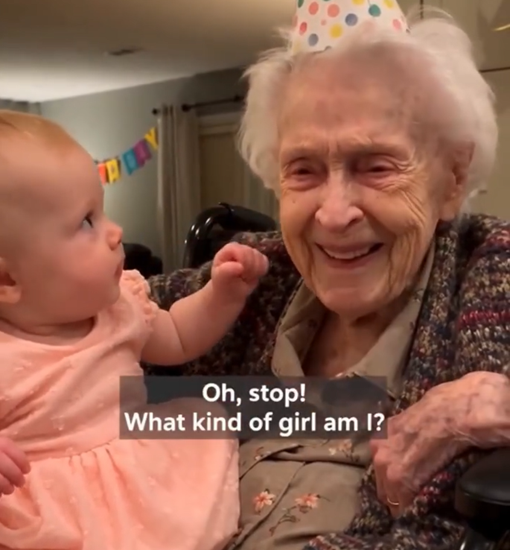
  • My 101-Year-Old Grandma Couldn’t Walk, but She Found a Way to Celebrate Her Great-Granddaughter’s First Birthday

    My 101-Year-Old Grandma Couldn’t Walk, but She Found a Way to Celebrate Her Great-Granddaughter’s First Birthday

    Everyone said my 101-year-old grandmother would never make it to the birthday party.

    The journey was too long. The weather was unpredictable. Her health had become fragile, and even a short outing could leave her exhausted for days.

    My mother suggested that we celebrate without her and bring her some photographs afterward.

    My uncle thought the same thing.

    Even my husband, Mark, gently reminded me that Grandma needed to rest.

    But I couldn’t stop hoping she would come.

    It was Lily’s first birthday, and I wanted the woman who had spent so many years loving our family to be there.

    I wanted her to meet the little girl she had waited so long to hold.

    I wanted one photograph with three generations of women together.

    And, although I didn’t know it yet, Grandma had another reason for making the journey.

    She had brought something with her.

    Something she had been keeping for decades.

    And she wasn’t going to let anyone open it until the right people were standing together.


    The party was already underway when I noticed Grandma sitting beneath the old apple tree.

    She was in her wheelchair, wearing a light cardigan and the small pair of earrings she always wore for special occasions.

    Her face looked tired, but her eyes were bright.

    My uncle stood behind her chair, making sure she was comfortable.

    Mark sat beside her with one hand gently supporting Lily, who was balanced across Grandma’s lap.

    Grandma no longer had the strength to hold a restless one-year-old safely on her own, but she didn’t seem bothered by that.

    She was watching Lily as if nothing else in the garden mattered.

    “She’s got your ears,” she said.

    I laughed.

    “That’s not exactly a compliment.”

    “They’re good ears.”

    “They stick out.”

    “So did yours.”

    “Exactly.”

    Grandma smiled.

    Then she gently touched Lily’s cheek with one finger.

    “Worth waiting for.”

    I felt my throat tighten.

    There were some things Grandma could say in just a few words that stayed with me much longer than entire conversations.

    That was one of them.

    I had waited a long time to become a mother.

    And she had waited a long time to meet my daughter.

    Neither of us had known whether this moment would ever happen.

    But there we were, beneath the same apple tree, with Lily smiling between us.

    I thought that was the most meaningful part of the day.

    I was wrong.


    A little later, Grandma reached for my hand.

    “Not yet,” she whispered.

    I stopped.

    “What is it?”

    She kept her hand over mine.

    “Wait until everybody’s here.”

    I looked around the garden.

    My uncle was there. Mark was beside her. Lily was playing with a ribbon on her dress, and most of our relatives had already gathered.

    “Everybody is here, Grandma.”

    She slowly shook her head.

    “Your mother.”

    I turned toward the house.

    Mom was inside helping with the cake.

    My uncle went to get her.

    For reasons I couldn’t explain, my heart began beating faster.

    Grandma had been unusually quiet all afternoon. She had also kept one hand close to a small package hanging from the side of her wheelchair.

    I had noticed it when she arrived, but assumed it contained something ordinary.

    Now I wasn’t so sure.

    “What is in that bag?” I asked.

    She looked at me.

    “Something I’ve kept.”

    “For how long?”

    She smiled but didn’t answer.

    That was when I realized this wasn’t simply a birthday present.


    When Mom came outside, she was carrying the cake knife.

    “What are we doing?” she asked.

    Grandma pointed to an empty chair.

    “Sit down.”

    Mom frowned.

    “Why?”

    “Because I’m 101 and you still don’t do as you’re told.”

    My uncle laughed.

    Mom shook her head, but she sat beside us.

    Grandma looked at me.

    “Now.”

    I reached for the package.

    The tissue paper came away slowly, revealing a wooden box.

    It was dark walnut, worn around the corners, with a small brass clasp.

    I recognized it immediately.

    “Oh my God.”

    Mom leaned forward.

    “What?”

    “Grandma’s sewing box.”

    For a moment, I was no longer standing in a garden surrounded by family.

    I was a little girl again, sitting beside Grandma’s chair and watching her hands move through pieces of fabric.

    That box had been part of her life for as long as I could remember.

    It used to sit beside her favorite chair.

    Inside were buttons separated into little compartments, needles carefully arranged, and spools of thread organized by color.

    She could spend an entire afternoon repairing a loose hem or turning a piece of ordinary fabric into something beautiful.

    I had always admired her patience.

    I had never inherited it.

    At the very bottom of that box, beneath everything else, she used to keep something wrapped in brown paper.

    Whenever I asked what it was, she would tell me it wasn’t for children.

    I had forgotten about it over the years.

    Until that afternoon.

    I looked at her.

    “You brought this?”

    “For Lily.”

    My eyes began to fill.

    “Grandma, she’s one. She can’t sew.”

    Grandma gave me a familiar look.

    “Neither could you at one.”

    Mom laughed softly.

    I opened the clasp.

    And then I saw the first thing she had kept.


    The top tray was filled with buttons.

    There were pearl buttons, wooden ones, blue glass buttons, and tiny red ones shaped like flowers.

    Some were so small that I wondered what kind of clothes they could possibly have belonged to.

    I lifted the tray carefully.

    Underneath were several folded pieces of fabric.

    The first one was wrapped in a thin piece of tissue paper.

    I opened it.

    A small white dress appeared in my hands.

    Yellow flowers had been embroidered around the collar.

    For several seconds, I couldn’t speak.

    I knew that dress.

    I had seen it in a photograph beside Grandma’s chair for most of my childhood.

    The picture showed me at four years old, standing on her front step.

    I was wearing that exact dress.

    My fingers moved over the tiny flowers.

    “Grandma…”

    She watched my face.

    “You kept it?”

    “Of course I kept it.”

    “For 38 years?”

    “Things don’t spoil just because people get older.”

    I laughed, but my eyes were already filling with tears.

    Mom leaned closer.

    She remembered the photograph too.

    For years, it had been one of Grandma’s favorite pictures.

    She used to point at it whenever someone visited and tell them how little I had been.

    I had never really understood why she loved that photograph so much.

    Now I was beginning to understand.

    But there was something else beneath the first dress.


    I carefully lifted the next layer.

    This time, the fabric was pale blue.

    It was another little dress, smaller than the first, with tiny covered buttons running down the back.

    The stitching was delicate and even.

    Mom made a sound I had never heard from her before.

    She reached toward it with trembling fingers.

    “My dress.”

    I looked at her.

    “What?”

    Grandma nodded.

    “Your mother wore that when she was two.”

    Mom pressed the fabric gently against her mouth.

    For a moment, she couldn’t say anything.

    The dress was more than sixty years old.

    Grandma had made it by hand, carefully smocking the fabric and covering each tiny button.

    Mom had probably spent decades believing it existed only in an old photograph or in a distant memory.

    Now she was holding it again.

    “All these years,” Mom whispered.

    Grandma looked at her.

    “I wasn’t going to throw it away.”

    Mom shook her head.

    “I know.”

    I looked from the blue dress to the white one.

    “Did you make both of them?”

    “Yes.”

    “By yourself?”

    Grandma raised an eyebrow.

    “Who else was going to make them?”

    My uncle chuckled.

    Mom was still holding the blue dress.

    Then Grandma pointed toward the bottom of the box.

    “Keep going.”


    Beneath my mother’s dress was another piece of fabric wrapped in tissue paper.

    I unfolded it carefully.

    It was a cream-colored linen dress with tiny green leaves stitched along the hem.

    It looked newer than the others.

    But something was different.

    The dress wasn’t finished.

    One sleeve had been attached.

    The other was missing.

    A few pins held part of the collar in place.

    I stared at it.

    For a moment, I couldn’t understand why Grandma would have brought an unfinished dress to Lily’s birthday.

    Then she spoke.

    “That’s hers.”

    I looked at Lily.

    Then back at Grandma.

    “You made this?”

    “Started it.”

    “When?”

    She looked away.

    “Years ago.”

    Mom’s expression changed.

    “How many years?”

    Grandma didn’t answer her.

    Instead, she pointed toward the little dress.

    “Look in the pocket.”

    I examined the fabric.

    At first, I couldn’t see a pocket.

    Then I noticed a small fold sewn into the inside near the waist.

    I slipped my fingers inside.

    There was something hidden there.

    An envelope.

    My name was written across the front.

    I recognized Grandma’s handwriting immediately.

    But it was shakier than I remembered.

    I held it between my fingers.

    “What’s this?”

    “Open it,” she said.

    I looked at her.

    She nodded.

    And suddenly, the entire garden seemed quieter.


    The envelope opened easily.

    Inside was a folded letter.

    The first line made my hands tremble.

    “For the baby I hope I live long enough to meet.”

    I stopped reading.

    I looked at Grandma.

    She was watching me carefully.

    Mom had moved closer, and Mark was now crouching beside my chair.

    I read the line again.

    Then I covered my face.

    I knew what the letter was about.

    I remembered the conversation that had taken place years earlier.

    I remembered the kitchen.

    I remembered the tears.

    And I remembered how Grandma had listened without trying to make everything better.

    But I hadn’t known that she had gone home afterward and started making a dress.

    I hadn’t known she had been preparing something for a child who didn’t yet exist.


    I was 34 when I first told Grandma how frightened I was that I might never become a mother.

    Mark and I had been trying for two years.

    We had already gone through the disappointment of unsuccessful fertility treatment.

    We had learned to wait for appointments, test results, and difficult conversations.

    We had also learned how painful it could be to hear people ask when we were planning to have children.

    Most of the time, I tried to avoid discussing it.

    I didn’t want every family gathering to become another conversation about something I couldn’t control.

    But one afternoon, I found myself sitting in Grandma’s kitchen.

    She was making tea.

    I was looking at the table, trying to find the words.

    Finally, I said what I had been thinking for months.

    “Maybe this just isn’t going to happen for me.”

    Grandma put down the cup.

    She didn’t tell me to relax.

    She didn’t tell me that everything happened for a reason.

    She didn’t promise that I would become pregnant.

    She simply reached across the table and took my hand.

    “Maybe,” she said.

    I looked at her.

    “But today isn’t every day.”

    That was all.

    I remember those words because they didn’t make me feel as though I had to pretend to be hopeful.

    She wasn’t asking me to stop being sad.

    She was reminding me that I didn’t have to decide what the rest of my life would look like based on one difficult day.

    We finished our tea.

    We talked about other things.

    And eventually, I went home.

    I never knew what Grandma did after I left.

    Until I opened that letter.


    I looked down and continued reading.

    “My darling girl,

    “You once told me you were frightened you might never become a mother.

    “I did not know what to say because there are some pains you cannot fix by finding the correct sentence.

    “So I went home and did the only useful thing I could think of.

    “I started a dress.”

    I stopped.

    The garden blurred in front of me.

    I looked at the unfinished cream-colored fabric.

    The green leaves were stitched carefully along the hem.

    I imagined Grandma sitting in her chair, choosing the thread, cutting the fabric, and working on it whenever her hands allowed.

    She had started it after that conversation.

    She had done it without telling me.

    I continued.

    “I did not make it because I knew you would have a baby.

    “I made it because hope needs somewhere to sit while it waits.”

    I lowered the letter.

    My mother was crying.

    Mark gently squeezed my hand.

    Grandma kept watching me.

    I took a breath and read the next lines.

    “If no baby ever wore it, that would not make your life smaller.

    “You were never waiting to become enough.

    “But if one did come, I wanted that child to have something made before she was even known.”

    I couldn’t continue immediately.

    I had spent so many years believing that I had to protect myself from disappointment by expecting the worst.

    Grandma had somehow understood that.

    She had never tried to force me into optimism.

    Instead, she had made something with her hands and left room for a possibility.

    Not a promise.

    Not a prediction.

    Just a little dress.


    I wiped my eyes and continued.

    “I finished most of it when I was 94.

    “Then my hands got worse.

    “I left the sleeve because I thought perhaps one day you could finish something I started.”

    I looked at the unfinished sleeve.

    “Grandma, I’m terrible at sewing.”

    She smiled.

    “I know.”

    Everybody laughed.

    Even Mom managed a small smile through her tears.

    I went back to the letter.

    “The other dresses belong to your mother and to you.

    “Three little girls.

    “Three different times.

    “If I am lucky enough to meet yours, put her in whichever one fits.

    “Do not save them so carefully that nobody gets to live in them.”

    I paused.

    Then I read the next lines.

    “Clothes are meant to wrinkle.

    “Children are meant to stain things.

    “Love is not improved by keeping it untouched.”

    I lowered the page.

    Those words reached somewhere deeper than I expected.

    Because I had spent Lily’s first year being afraid.

    Not every minute.

    Not every day.

    But often enough that Mark had noticed.

    After losing a pregnancy at fourteen weeks, I had found it difficult to trust happiness.

    When Lily was born, I counted her breaths.

    I checked the monitor again and again.

    I woke Mark because I thought she felt too warm.

    Then I woke him because I thought she felt too cold.

    I researched every little rash, every unfamiliar sound, and every change that made me worry.

    I had wanted her for so long.

    Sometimes, when I held her, I felt as though I had been handed something incredibly precious that I might somehow lose if I wasn’t careful enough.

    I loved her more than I could explain.

    But I was still learning how to enjoy being her mother without allowing fear to take up every available space.

    Grandma had noticed.

    Of course she had.

    She had spent more than a century watching people grow, worry, celebrate, and change.

    She knew that love could sometimes make people hold on too tightly.

    And she wanted me to remember that Lily was a child.

    She was supposed to explore.

    She was supposed to make a mess.

    She was supposed to live.


    The letter wasn’t finished.

    I unfolded the remaining page.

    “And one more thing.

    “Stop looking frightened every time that child climbs something.

    “You climbed everything.

    “Your mother was worse.”

    Mom immediately protested.

    “That is a lie.”

    Grandma looked at her.

    “You climbed onto a garage roof at eight.”

    “I was retrieving a ball.”

    “You used the drainpipe.”

    “I was resourceful.”

    My uncle started laughing.

    I laughed too.

    For a moment, the tears gave way to the kind of laughter that comes from remembering someone exactly as they are.

    Grandma had always been like that.

    She could make a serious moment lighter without making the feelings disappear.

    I looked down at the last paragraph.

    It was shorter than the others.

    “If I am there when this is opened, somebody give me the baby.

    “If I am not, tell her I waited a very long time to meet her.

    “And tell her I was glad she came.”

    I couldn’t finish the signature.

    I folded the letter against my chest.

    Then I leaned forward and carefully put my arms around Grandma.

    She felt so small.

    For most of my life, she had seemed strong enough to carry anything.

    She carried laundry baskets, moved furniture, and picked me up when I was far too old to be lifted.

    Now I was afraid that even a hug might hurt her.

    She patted my back.

    “You’re making a scene.”

    “You wrote the letter.”

    “Years ago.”

    “That’s worse.”

    She laughed softly.

    And then Lily reached toward the box.

    Naturally, her first target was a blue glass button.

    “No,” three generations of women said at once.

    Everybody laughed again.


    We had cake about twenty minutes later.

    Grandma refused a full slice.

    Then she ate half of mine.

    She stayed for less than two hours because that was all her body could manage.

    By the time my uncle began preparing to take her home, her face had grown pale.

    I walked beside her wheelchair.

    “Was this worth it?”

    She looked at me as if I had asked the most ridiculous question in the world.

    “Obviously.”

    “The drive nearly killed you.”

    “Everything nearly kills you at 101.”

    “Grandma.”

    She reached for my hand.

    “I wasn’t going to sit at home because it was difficult.”

    I swallowed.

    “You could have gotten sick.”

    “I could get sick in my own chair.”

    I didn’t have an answer.

    At the car, she looked back toward the garden.

    Lily was sitting in the grass, smashing birthday cake between both hands.

    Grandma smiled.

    “There.”

    “What?”

    “That’s what I wanted.”

    I looked at my daughter.

    Then I remembered the old photograph.

    Me at four years old, standing on Grandma’s front step in the little white dress.

    “I thought you wanted a picture of her on your step,” I said.

    “I do.”

    “You just said that’s what you wanted.”

    “I can want two things.”

    Even at 101, Grandma was still capable of having the final word.

    We helped her into the car.

    It took my uncle and Mark working together to make her comfortable.

    Before the door closed, she called my name.

    I leaned down.

    “Finish the sleeve.”

    I looked toward the sewing box.

    “I’ll try.”

    “No.”

    Her hand tightened around mine.

    “Don’t try. Finish it.”

    That was Grandma.

    She had never been interested in half-finished promises.

    I nodded.

    “I will.”

    She smiled.

    Then the door closed.

    I stood in the road crying until the car disappeared.


    Three days later, Mom and I went to Grandma’s house.

    She was exhausted after the party, although she wasn’t ill.

    She slept for much of that week.

    The sewing box came home with me.

    So did the unfinished dress.

    I placed everything on the dining-room table and opened the box again.

    The dresses looked different in the daylight.

    The white one reminded me of my childhood.

    The blue one reminded me that Mom had once been a little girl too.

    And the cream one reminded me of a conversation I had almost forgotten.

    I looked at the unfinished sleeve.

    Grandma had left it for me.

    I had promised her I would finish it.

    There was only one problem.

    I had no idea how.


    I bought a beginner sewing kit.

    It was more complicated than I expected.

    I watched instructional videos.

    I read instructions.

    I tried to understand which thread went where and how to keep the fabric from moving while I worked.

    I called Mom.

    She wasn’t much help.

    “I thought Grandma taught you,” she said.

    “She tried.”

    “What happened?”

    “I hated it.”

    Mom laughed.

    “So did I.”

    Apparently, we came from a long line of women who had benefited from one woman’s sewing skills while refusing to learn the craft themselves.

    Eventually, my uncle found Grandma’s old sewing machine in a closet.

    Grandma couldn’t use it anymore, but she could still tell me exactly what I was doing wrong.

    I took the dress to her.

    She examined my first attempt at the sleeve.

    “This seam is terrible.”

    “I know.”

    “Take it out.”

    “It took me two hours.”

    “Then you’ll be faster the second time.”

    I stared at her.

    She smiled.

    For the next six weeks, I worked on the dress whenever I had time.

    Sometimes I managed twenty minutes after Lily went to sleep.

    Other nights, I worked until midnight.

    I redid the sleeve twice.

    I worked on the collar three times.

    There were moments when I wanted to put everything back into the wooden box and leave the dress unfinished.

    It would have been easier.

    I could have told myself that the unfinished sleeve was part of the memory.

    But every time I considered giving up, I remembered Grandma’s voice.

    “Don’t try. Finish it.”

    So I kept going.


    When Lily was thirteen months old, we took her to Grandma’s house.

    I had finally finished the dress.

    It wasn’t perfect.

    The sleeve was attached, but the stitching wasn’t nearly as neat as Grandma’s.

    The collar had taken me several attempts.

    The hem was a little longer than I had planned.

    Still, the dress was complete.

    And it fit Lily almost perfectly.

    I dressed her in it before we left.

    Mark helped me gather the sewing box and the old photographs.

    Mom had already arrived at Grandma’s house.

    She was holding the picture of me at four years old, wearing the white dress.

    Grandma was waiting inside the doorway in her wheelchair.

    When she saw Lily, she looked at the dress first.

    Then she looked at me.

    “Well?”

    “It’s finished.”

    She nodded.

    “Let me see.”

    I turned Lily gently so Grandma could examine the sleeve.

    She studied the stitching.

    I waited for her criticism.

    She looked at it for a long moment.

    Then she said, “Not bad.”

    Coming from Grandma, that was practically a standing ovation.

    I laughed.

    “You can say it’s good.”

    “I could.”

    “But?”

    She smiled.

    “Not bad.”

    Mom laughed beside us.

    Then we carried Lily outside to the front step.

    The same step where I had stood in the old photograph.

    Lily immediately tried to crawl away.

    “Of course,” I said.

    Mom laughed.

    “Put something in front of her.”

    Grandma suggested giving her a button.

    “A big one.”

    “No buttons,” I said.

    “You’re no fun,” Grandma replied.

    Mark stood behind the camera and made ridiculous noises until Lily finally looked up.

    For one brief second, she was still.

    Click.

    We got the photograph.


    Later, we placed the two old photographs beside the new one.

    There was me at four, wearing the yellow-flowered white dress.

    There was Mom at two, wearing pale blue.

    And there was Lily at one, wearing cream and green.

    Three little girls.

    Three different times.

    Three dresses made by the same pair of hands.

    The photographs showed three generations of our family connected by something Grandma had created long before she knew how the story would turn out.

    Grandma stared at the new picture on my phone.

    She looked at it for a long time.

    Then she handed it back.

    “Print it.”

    “I will.”

    “People don’t print things anymore.”

    “I print things.”

    “You have 8,000 pictures on that phone.”

    “How do you know?”

    “You told me.”

    Fair enough.

    I printed it that afternoon.

    I chose a large frame and placed the photograph inside.

    The next time I visited Grandma, it was on the little table beside her chair.

    The old photograph of me had been moved slightly to the left.

    There was just enough room for both.

    I didn’t say anything.

    Neither did she.

    But I knew she was happy.


    Grandma died four months later.

    She was 101 years and seven months old.

    It happened quietly, in her own bed.

    My mother was there.

    So was my uncle.

    I arrived twenty minutes too late.

    For a long time, that bothered me.

    I kept thinking about all the things I would have said if I had arrived earlier.

    I wanted one more conversation.

    One more ridiculous instruction.

    One more opportunity for her to look at something I had done and tell me how to improve it.

    I wanted to hold her hand and thank her again for the dress.

    But eventually, I began to understand something.

    Grandma had spent years saying goodbye in pieces.

    The sewing box.

    The letter.

    The unfinished dress.

    The birthday party.

    The photograph.

    She had given us something to hold on to before we even understood that we would need it.

    And she had made it to Lily’s first birthday.

    She had made it into the photograph.

    She had seen the dress finished.

    She had held the child she had waited so long to meet.

    That mattered.


    The sewing box still lives in my house.

    I keep it somewhere safe, but not somewhere unreachable.

    I don’t want it to become another object that is so carefully protected that nobody gets to enjoy it.

    The cream dress has already been stained.

    Strawberry, I think.

    The white dress I wore as a child has a tiny tear near the waist.

    Lily wore it for family photographs one spring and caught it on a branch.

    For about five seconds, I was devastated.

    Then I remembered Grandma’s words.

    “Clothes are meant to wrinkle.”

    “Children are meant to stain things.”

    So I repaired it.

    Badly.

    But well enough.

    And that was enough.


    Lily is still too young to understand the story behind the three dresses.

    One day, I will show her the photographs.

    I’ll tell her about the woman who sat beneath an apple tree at 101 years old, waiting for her mother to arrive so she could open a wooden box.

    I’ll show her the letter.

    I’ll explain that before Lily existed, her great-grandmother had begun making her a dress.

    She didn’t know whether a baby would ever wear it.

    She didn’t know when it might be finished.

    She simply wanted to make something that could be passed from one generation to another.

    I’ll tell Lily that the dress wasn’t perfect when it was first made.

    It needed a sleeve.

    It needed patience.

    And eventually, it needed another pair of hands.

    Maybe I’ll tell her about the six years we tried to have her.

    Maybe not all at once.

    Some stories belong to children when they are old enough to understand them.

    But I want her to know that she was loved long before she was born.

    Not because anyone knew she would arrive.

    Not because anyone could promise what the future would bring.

    Simply because someone had made room for the possibility.


    On Lily’s second birthday, we kept the celebration smaller.

    There was cake, a paddling pool, too many balloons, and more family food than anyone could finish.

    At one point, Lily ran through the garden wearing nothing but a diaper and one of Grandma’s old necklaces.

    Mom started to say, “Careful with that.”

    Then she stopped.

    We looked at each other.

    For a moment, neither of us said anything.

    I knew exactly what she was thinking.

    Grandma would have hated us hovering over Lily every second.

    She would have wanted us to let her explore, laugh, and get a little messy.

    Mom sighed.

    “Fine.”

    Lily ran away laughing.

    And we let her.


    Later that evening, after everyone had gone home, I sat in the garden with the sewing box beside me.

    I opened it again.

    I had looked through it many times since Grandma died, but that night I noticed something I had somehow missed.

    At the bottom, underneath the dresses, there was a tiny scrap of cream fabric.

    I lifted it carefully.

    On it were several attempts at the little green leaf pattern Grandma had eventually stitched along Lily’s hem.

    The first leaf was crooked.

    The second was worse.

    The third was almost right.

    I stared at it for a long time.

    Grandma had been sewing for nearly ninety years when she made Lily’s dress.

    And she had still practiced first.

    That small piece of fabric changed the way I thought about her.

    For most of my life, I had imagined that Grandma knew how to do everything without being afraid or uncertain.

    She always seemed to know what to do.

    She could repair almost anything.

    She could make something beautiful out of scraps.

    She could comfort someone without making them feel weak.

    But perhaps she had never been as certain as I imagined.

    Perhaps she had simply learned to keep going.

    She made mistakes.

    She tried again.

    She took out stitches that weren’t right.

    And then she made another one.

    I framed the little scrap of fabric too.

    Not because it was beautiful.

    But because it reminded me that even the most skilled hands had once needed practice.


    I think about that now whenever motherhood frightens me.

    Whenever Lily climbs too high.

    Whenever she gets sick.

    Whenever I feel the old panic telling me to hold on too tightly because I waited so long to have her.

    I remember a 101-year-old woman making a long journey because missing a birthday mattered more to her than the inconvenience of getting there.

    I remember her sitting beneath the apple tree, holding Lily carefully while Mark supported her.

    I remember the way she looked at my daughter.

    And I remember the unfinished sleeve.

    Grandma didn’t need to finish every part herself.

    She only needed to leave enough for me to continue.

    Maybe that is what families are.

    Not perfect things kept untouched inside beautiful boxes.

    Not photographs that never change.

    Not clothes that remain clean forever.

    Maybe families are the things we make, repair, pass along, and sometimes have to finish together.

    They are the stories told around kitchen tables.

    The old photographs that get moved to make room for new ones.

    The lessons we don’t fully understand until years later.

    And the little pieces of love that someone leaves behind without knowing exactly how they will be used.

    The sewing box is still in my house.

    Sometimes Lily opens it with me and looks at the buttons.

    I keep the smallest ones out of her reach.

    The dresses are folded carefully, but I no longer treat them as if they must never be touched.

    Because Grandma taught me something I wish I had understood earlier.

    Love is not made more valuable by keeping it untouched.

    Sometimes, the best way to honor something beautiful is to let it become part of everyday life.

    To let it wrinkle.

    To let it be worn.

    To let it be repaired when necessary.

    And to keep passing it on.

    The little cream dress is not perfect.

    My stitching is uneven.

    The sleeve is not as neat as Grandma would have made it.

    But when I look at Lily wearing it, I don’t see the mistakes.

    I see a woman who started sewing for a child she had never met.

    I see a mother who once wore a pale blue dress.

    I see a little girl standing on a front step in a white dress with yellow flowers.

    And I see the hands that connected all three of us.

    Grandma waited a very long time to meet Lily.

    She made it to the birthday.

    She gave us the box.

    And, in her own way, she left us something that would keep teaching us long after she was gone.

    I used to think the most important part of that story was that Grandma had finished the dress.

    Now I think it was something else.

    She had started it without knowing how the story would end.

    And she trusted that, one day, someone else would take it from there.

  • A Teacher Mocked a Little Girl’s Appearance, Never Expecting Her Mother to Turn the Moment Into a Powerful Lesson

    A Teacher Mocked a Little Girl’s Appearance, Never Expecting Her Mother to Turn the Moment Into a Powerful Lesson

    Ten years ago, I came home from work and found my six-year-old daughter sitting on the staircase, crying so hard she could barely speak.

    Her little hands were wrapped around her knees. Her backpack lay beside her, still unopened, and her cheeks were wet with tears.

    I dropped my keys.

    “Sweetheart, what happened?”

    She looked up at me, trying to catch her breath.

    “Daddy, Mommy said she’s not coming back.”

    For a moment, I didn’t understand what she meant. I thought Caroline had gone somewhere for the afternoon. Perhaps she was upset about something. Maybe they had argued, and my daughter had misunderstood.

    I knelt beside her and wiped her cheeks.

    “What do you mean, she’s not coming back?”

    “Mommy said she was leaving. She said she doesn’t want to live here anymore.”

    I forced a little smile, hoping it would make her feel better.

    “Okay, sweetheart. Let’s go inside. Mommy and Daddy will talk about it.”

    But even as I said those words, something inside me was beginning to feel terribly wrong.

    The house was unusually quiet.

    Our other three daughters were upstairs, and I could hear one of them playing with toys in her bedroom. I walked through the hallway, calling Caroline’s name.

    There was no answer.

    I checked the kitchen, the living room, and the bathroom. I opened the bedroom door and stopped.

    Half of the closet was empty.

    Her favorite dresses were gone. Several pairs of shoes were missing. Her jewelry box had been taken, and the small suitcase she usually kept tucked away was nowhere to be found.

    Then I noticed something on the dresser.

    Her wedding ring.

    It was lying beside a folded piece of paper.

    I picked it up, hoping it would explain what was happening.

    The note contained only a few words.

    “Don’t look for me. I want to live on my own.”

    I read it once.

    Then again.

    And again.

    I kept waiting for the words to somehow change into something else. A misunderstanding. A joke. An explanation that would make sense.

    But they didn’t.

    Caroline was gone.

    And she had left our four daughters behind.


    Caroline and I had been married for ten years.

    From the outside, people often told us we had the kind of family they wished they could have. We had four beautiful daughters, a comfortable home, photographs from family vacations, and birthdays filled with decorations and laughter.

    We weren’t perfect.

    We had disagreements, stressful days, bills to pay, and the occasional argument about things that seemed important at the time. But I had never imagined that our marriage was about to disappear without a conversation.

    I couldn’t understand how someone could leave four children without saying goodbye properly.

    I couldn’t understand how the woman who had kissed them goodnight the previous evening could walk away the next morning and not look back.

    And most of all, I couldn’t understand why.

    I immediately tried calling her phone.

    It went straight to voicemail.

    I called again.

    And again.

    I sent messages asking where she was, whether she was safe, and whether she would at least tell me what was happening.

    Nothing.

    I contacted the authorities because I didn’t initially know whether she had left voluntarily or whether something terrible had happened. I checked hospitals and tried to find anyone who might have seen her.

    That night, I barely slept.

    Every time my phone vibrated, I reached for it.

    Every time a car slowed outside the house, I looked through the window.

    I kept thinking she might suddenly return, walk through the door, and tell me there had been some terrible misunderstanding.

    But the hours passed.

    Then the days.

    And Caroline still didn’t call.


    The hardest part wasn’t the silence between us.

    It was trying to explain that silence to four little girls.

    Our oldest, Sophie, was old enough to understand that something serious had happened. She watched me constantly, looking for answers in my face.

    “Daddy, is Mommy mad at us?”

    “No, sweetheart. This has nothing to do with you.”

    “Did we do something wrong?”

    That question nearly broke me.

    I sat beside her on the couch and held her hands.

    “Listen to me. None of you did anything wrong. Mommy leaving is not because of anything you said or did. Do you understand?”

    She nodded, but I could tell she wasn’t convinced.

    The other girls asked different questions.

    “Is Mommy coming back tomorrow?”

    “Can we call her?”

    “Does she know we miss her?”

    I didn’t have answers.

    I didn’t know whether Caroline would come back in a week, a month, or never.

    I was trying to understand what had happened while keeping four children from feeling as though their entire world had been taken away.

    And I was terrified that I would fail them.


    For weeks, I searched for an explanation.

    Eventually, the authorities informed me that Caroline had been located. She was alive and staying with another man in a different state.

    I remember sitting inside my truck when I heard the news.

    I had parked outside the house, but I couldn’t bring myself to walk inside. My hands were gripping the steering wheel, and I stared through the windshield without really seeing anything.

    She hadn’t disappeared because something had happened to her.

    She had chosen to leave.

    And she had chosen a life somewhere else.

    I began crying.

    Not the kind of crying that comes from a single painful moment, but the kind that comes after holding everything together for too long.

    I cried for my marriage.

    I cried for the years I thought we had built together.

    I cried for my daughters, who were waiting inside the house for a mother who had stopped answering their calls.

    Then I glanced toward the kitchen window.

    All four girls were standing there.

    They were watching me.

    I quickly wiped my face, opened the truck door, and walked toward the house.

    I couldn’t let them believe they had lost both parents at once.

    Their mother had left.

    But I was still there.

    And I was going to stay.


    The first few months were harder than I ever imagined.

    I had never been the only parent responsible for every little thing. Suddenly, I was trying to remember school schedules, grocery lists, appointments, laundry, meals, permission slips, and four different personalities that needed attention at the same time.

    Some mornings began with someone crying because her favorite shirt was missing.

    Other mornings involved arguments over cereal, shoes, hairbrushes, and who had taken whose toy.

    I burned pancakes more times than I care to admit.

    I accidentally packed the wrong lunch.

    I forgot a school event once and spent the entire afternoon feeling like the worst father in the world.

    There were nights when all four girls wanted to talk at the same time.

    “Daddy, I need help with my homework.”

    “Daddy, she took my blanket.”

    “Daddy, my stomach hurts.”

    “Daddy, can you come see what I made?”

    I would stand in the middle of the hallway and wonder how one person was supposed to be in four places at once.

    But somehow, we managed.

    I learned to braid hair by watching videos and practicing until my fingers stopped getting tangled.

    I learned which daughter needed a hug before she could talk and which one needed a few minutes alone.

    I learned that bedtime could take an hour even when everyone was exhausted.

    And I learned that sometimes the most important thing I could do was sit beside one of them and listen.


    The first Christmas without Caroline was the one I feared most.

    I tried to make everything feel normal.

    We decorated the tree together, hung lights around the windows, and placed wrapped presents beneath the branches.

    The girls were excited, but there was something missing that none of us could ignore.

    When we sat down for dinner, I noticed our youngest had placed an extra plate at the table.

    I looked at her.

    “Sweetheart, who is that plate for?”

    She shrugged as if the answer were obvious.

    “Mommy.”

    My heart tightened.

    “Why did you put a plate for Mommy?”

    “Maybe she’ll come home. Maybe she’s hungry.”

    I couldn’t speak for a moment.

    I wanted to tell her that her mother wasn’t coming. I wanted to tell her not to wait anymore.

    But how could I crush a hope that was still keeping her little heart together?

    I gently moved the plate closer to the center.

    “Let’s keep it here for now,” I said.

    That Christmas, after the girls had fallen asleep, I sat alone beside the tree.

    I looked at the empty chair.

    I thought about all the promises Caroline and I had made. The things we had imagined doing as the girls grew older. The family trips we had planned. The birthdays. The ordinary evenings that I would have given anything to experience again.

    And I wondered how someone could walk away from all of it.


    As the years passed, the questions became less frequent.

    The girls slowly stopped asking when their mother was coming home.

    They stopped asking whether I had heard from her.

    But sometimes, when a school assignment involved family photographs, I noticed them searching through old albums.

    Sometimes one of them would ask about Caroline’s favorite food.

    Sometimes they wanted to know what she was like when she was young.

    I never tried to erase their mother from their lives.

    Whatever had happened between Caroline and me, she was still their mother. I didn’t want my anger to become something they had to carry.

    So I told them about the good memories.

    I told them about the time Caroline laughed so hard she couldn’t finish a sentence.

    I told them about the family vacation when we got lost and ended up eating dinner at a little roadside restaurant.

    I told them about the way she used to sing while cooking.

    The girls deserved to know that their lives had once been filled with happy moments too.

    But I never pretended she had stayed.

    And I never told them she was coming back.


    There were moments when I wondered whether I could keep going.

    After the girls were asleep, I sometimes sat at the kitchen table staring at bills, school papers, and a list of things that needed to be done the following morning.

    I was exhausted.

    There were times I missed having someone to talk to about the smallest things.

    Someone to tell me that the youngest had finally learned to tie her shoes.

    Someone to laugh with when the girls did something ridiculous.

    Someone to sit beside me after a difficult day.

    But every morning, four little faces appeared.

    And they needed me.

    So I got up.

    I made breakfast.

    I packed lunches.

    I drove them to school.

    I went to work.

    I came home.

    I listened.

    I did it again.

    And again.

    The years passed faster than I expected.

    The little girls who once needed help reaching the kitchen counter began helping me cook.

    The ones who had cried because their mother was gone began making their own decisions.

    They became teenagers.

    They developed opinions about clothes, music, friends, and everything else.

    They argued with me sometimes.

    They laughed at me often.

    They told me I was embarrassing.

    And I loved every bit of it.


    Ten years after Caroline left, we finally moved into the house I had spent years saving for.

    It wasn’t the biggest house in the neighborhood.

    It didn’t have the most expensive furniture.

    But every room represented something we had worked for together.

    There were photographs on the walls.

    There were family decorations.

    There were four bedrooms filled with the girls’ belongings.

    And there was a kitchen where we had shared hundreds of ordinary meals.

    When we first walked through the front door, the girls began screaming.

    “We actually did it!”

    Sophie hugged me so tightly I nearly lost my balance.

    One of the younger girls ran upstairs to claim her room.

    Another immediately began talking about how she wanted to decorate the hallway.

    I stood in the living room, looking around, unable to believe that the little family I had been so afraid of losing had made it this far.

    That evening, they surprised me.

    They had made a cake.

    The frosting was uneven, and the writing wasn’t perfectly straight. One corner had a little too much decoration, and I could tell they had been trying to fix it before I arrived.

    But the words on top were clear.

    “You were always enough, Dad.”

    I stared at it.

    I read it again.

    Then I looked at my daughters.

    “What is this?”

    Sophie smiled.

    “It’s for you.”

    “Why?”

    “Because you always told us we could count on you.”

    Another daughter stepped forward.

    “And we wanted you to know that we counted on you too.”

    I tried to laugh, but my voice broke.

    I pulled all four of them into my arms.

    For the first time in a long time, I allowed myself to cry in front of them without trying to hide it.

    They hugged me.

    Then someone started laughing.

    I don’t even remember who.

    Soon all five of us were laughing and crying at the same time, standing in the middle of our new living room.

    I thought that was the moment I would remember forever.

    I thought nothing could take that happiness away.

    Then someone knocked on the door.


    The knock was gentle.

    Two taps.

    Then a pause.

    Sophie wiped her hands on a napkin and headed toward the front door.

    “Probably a neighbor,” she said.

    I was still smiling when I heard the door open.

    Then everything went quiet.

    “Sophie?”

    No answer.

    I looked toward the hallway.

    A few seconds later, she returned.

    Her face had changed.

    Her eyes were red, and she was trying to say something without making the others hear.

    “Daddy…”

    “What is it?”

    She swallowed.

    “Someone’s here for you.”

    I stood up.

    “Who?”

    Sophie looked at me as if she couldn’t believe the answer herself.

    “Mom.”

    The room suddenly felt smaller.

    I could hear the girls behind me asking questions.

    “Who is it?”

    “What’s happening?”

    “Why is Sophie crying?”

    I walked toward the front door.

    And there she was.

    Caroline.

    Ten years had passed, but I recognized her immediately.

    She looked much the same as the woman I remembered. Her hair was different, perhaps a little shorter. Her face showed signs of time, but the expression was familiar.

    She stood on our porch with her hands clasped in front of her.

    For a moment, neither of us spoke.

    I had imagined this moment countless times.

    I had imagined her apologizing.

    I had imagined yelling at her.

    I had imagined asking a hundred questions.

    But now that she was standing in front of me, I couldn’t seem to find the words.

    Finally, I spoke.

    “What are you doing here?”

    Caroline looked down.

    “I came to explain.”

    I almost laughed.

    “Explain?”

    My voice grew louder than I intended.

    “Explain what? Explain where you went? Explain why you left four little girls behind? Explain why you never called?”

    She didn’t interrupt.

    I kept going.

    “Do you know how many nights they waited for you? How many birthdays they looked at the door? How many Christmases they asked if you were coming home?”

    Caroline’s eyes filled with tears.

    “I know.”

    “No. You don’t know.”

    I took a breath, trying to calm myself.

    “You missed everything. Their first days of school. Their birthdays. The nights they were sick. The moments they needed their mother and I had no idea what to tell them.”

    She lowered her head.

    “I know I hurt them.”

    “Then why are you here?”

    She looked past me, toward the living room.

    I could see Sophie standing behind the wall.

    The other girls were nearby, listening.

    Caroline’s lips trembled.

    “I wanted to see them.”

    I shook my head.

    “You don’t get to walk back into their lives as if nothing happened.”

    “I know.”

    “Do you?”

    She looked at me.

    “I know I have no right to ask for anything.”

    I stepped back slightly.

    “Then you should understand that the apology you owe isn’t to me.”

    I pointed toward the living room.

    “It’s to your daughters.”

    Caroline nodded.

    “I know.”

    I turned to walk away.

    For ten years, I had imagined what I would say if I ever saw her again.

    I had promised myself I wouldn’t let her hurt me twice.

    I had promised myself that I would never give her the power to destroy the life we had rebuilt.

    But before I could close the door, she reached out and caught my hand.

    “Please.”

    I stopped.

    “There is something I haven’t told you.”

    I looked at her.

    “What now?”

    She was shaking.

    “Something from the night I left.”

    My anger returned immediately.

    “Ten years, Caroline. You had ten years to tell me whatever it is.”

    “I couldn’t.”

    “Couldn’t, or didn’t want to?”

    She closed her eyes.

    “I was afraid.”

    I stared at her.

    “Afraid of what?”

    She looked toward the girls again.

    Then back at me.

    “Please. Just let me speak.”

    I didn’t move.

    She tightened her grip on my hand.

    “For ten years, I couldn’t tell the truth. I thought if I stayed silent long enough, it would disappear. I thought I could live with what I had done.”

    Her voice cracked.

    “But it didn’t disappear.”

    I felt a chill run through me.

    “What truth?”

    Caroline looked at the house.

    At the four daughters she had left behind.

    At the father who had spent ten years trying to make sure they never felt abandoned again.

    Then she whispered the words I had never expected to hear.

    “You have to know what really happened the night I left.”

    I stood there, unable to answer.

    Behind me, Sophie stepped into the hallway.

    “Dad?”

    I looked at my daughter.

    Then at Caroline.

    For the first time in ten years, I wasn’t the only one waiting for an explanation.

    And whatever Caroline had come to reveal, it was no longer a secret that belonged only to the two of us.

    The past had finally found our front door.

    But I still didn’t know whether opening it would bring us answers—or another heartbreak.

  • He Left Her After Learning About Her Cancer Diagnosis – But His Unexpected Appearance at Prom Changed Everything.

    He Left Her After Learning About Her Cancer Diagnosis – But His Unexpected Appearance at Prom Changed Everything.

    “Is that boy seriously making fun of our daughter?” My husband, Mark, dropped the box of water bottles he had been carrying. Across the gym, the music continued playing, students were laughing, and several phones were already pointed toward the entrance.

    I grabbed his arm before he could take another step.

    “Wait,” I whispered.

    Our seventeen-year-old daughter, Olivia, stood frozen near the dance floor. Her blue prom dress shimmered under the lights, but she wasn’t looking at her friends anymore.

    She was staring at Nate.

    The boy who had broken her heart a month earlier had just walked into her senior prom with a completely shaved head and a long purple sequin dress.

    For a moment, I couldn’t understand what I was seeing.

    Nate had been the last person I expected to hurt Olivia. He had practically become part of our family over the past two years. He knew where we kept the snacks, helped Mark wash the cars, and never walked through our front door without asking if we needed anything.

    But after Olivia’s cancer diagnosis, everything between them had changed.

    And now he was standing in the middle of her prom wearing a dress that seemed designed to attract every eye in the room.

    Before Mark could reach him, Nate stepped toward the DJ’s microphone.

    “Can I please have just one minute?”

    The music stopped.

    Every conversation seemed to disappear at once.

    Nate looked toward Olivia, then down at the floor. His hands were shaking.

    “I know what everyone thinks I did to her,” he said. “And I know what this looks like.”

    Olivia’s face went pale.

    Then Nate swallowed and continued.

    “But there’s something Olivia asked me not to tell anyone.”

    She immediately stepped forward.

    “Nate, don’t.”

    He looked at her, his expression filled with regret.

    “Liv, I’m sorry. I can’t keep that promise anymore.”

    I felt Mark’s arm tighten beside me.

    Something was happening that we didn’t understand. And whatever Nate was about to reveal, our daughter clearly wasn’t ready for everyone to hear it.

    But to understand why a boy would walk into prom wearing a purple sequin dress, we had to go back to a time when Olivia’s biggest worry was finding the perfect outfit.


    Three months earlier, Olivia had been practically living in front of her bedroom mirror.

    She had ordered several dresses, returned two, and spent hours looking at photographs of different styles.

    When the pale blue dress finally arrived, she called me upstairs before she had even finished opening the package.

    “Mom! Come here!”

    I walked into her room and found her standing in front of the mirror wearing it.

    She turned slowly, holding the fabric away from her body.

    “Is it too much?”

    I smiled.

    “It’s prom, sweetheart. You’re allowed to look beautiful.”

    She laughed and looked at her phone.

    “Nate says I look like a princess.”

    Nate had been her boyfriend for nearly two years. He was the kind of boy who remembered small things, like Olivia’s favorite candy or the fact that she hated being surprised with loud birthday parties.

    He had once driven across town just to bring her a notebook she had forgotten at his house.

    He was polite without being overly formal, funny without trying too hard, and comfortable enough in our home to sit at the kitchen table and tell Mark stories about school.

    The two of them had already planned their prom night.

    They were going to take pictures outside, have dinner with their friends, and spend the evening dancing. Olivia had even made a playlist for the drive.

    Everything seemed ordinary.

    Then one afternoon, Olivia noticed a lump near her collarbone.

    At first, she barely mentioned it.

    She thought perhaps it was nothing. I told her we should have it checked just to be safe.

    The appointments followed one another quickly.

    Blood tests. Imaging. A biopsy.

    I remember sitting in the doctor’s office, trying to understand every word while Olivia stared at the floor and held my hand so tightly that my fingers hurt.

    When the diagnosis finally came, I felt as though the room had become smaller.

    Lymphoma.

    The doctor explained the treatment plan, the appointments, and the things we would need to prepare for.

    Olivia listened quietly.

    Then she asked a question that made me want to cry.

    “Will I still be able to go to prom?”

    The doctor told her that it would depend on how she responded to treatment and how she felt closer to the date.

    She nodded as though she had just been given a homework assignment.

    On the way home, she barely spoke.

    That evening, Nate came over with a bag of snacks and a stack of homework.

    He sat beside her on the couch and asked what she wanted to watch.

    Olivia chose a comedy.

    For a little while, they laughed just like they always had.

    I stood in the kitchen watching them and thought that perhaps, despite everything, some parts of our life could remain normal.

    I was wrong about how quickly things could change.


    Chemotherapy became the center of our family’s calendar.

    Appointments were written on the refrigerator. Medications were organized. We learned to recognize the days Olivia felt exhausted before she even said a word.

    Some mornings she wanted to get dressed and go outside.

    Other days, she didn’t want anyone opening her bedroom door.

    Nate kept visiting at first.

    He brought homework, funny drawings from their classmates, and stories about things happening at school.

    But slowly, I noticed he was becoming different.

    He stopped joking as much.

    When Olivia stood up, he immediately asked whether she felt dizzy.

    When she wanted to walk outside, he asked if she should rest instead.

    If she mentioned meeting friends, he worried about how tired she might become.

    At first, I thought it was simply concern.

    He was seventeen. He had never experienced anything like this. Watching someone he loved go through cancer treatment must have been frightening.

    But Olivia began reacting differently.

    One afternoon, I was carrying laundry down the hallway when I heard her speaking to him in her room.

    “Nate, I’m sick. I’m not made of glass.”

    He answered quietly.

    “I know. I just don’t want you getting worse.”

    “I’m not asking you to decide everything for me.”

    I stopped outside the door.

    There was a long silence.

    Then Olivia said, “I just want to be your girlfriend. Not someone you have to take care of every second.”

    I continued down the hallway because I didn’t want them to know I had heard.

    That conversation stayed with me.

    A few days later, Olivia was sitting on her bed, staring at her phone.

    I knocked and walked in.

    “Everything okay?”

    She shook her head.

    “Nate and I are done.”

    I sat beside her.

    “What happened?”

    She looked away.

    “It’s over, Mom.”

    I wanted to ask a hundred questions.

    Had they argued? Had he said something cruel? Had she been hurt by something he did?

    But she looked so tired that I decided to wait.

    “Do you want to talk about it?”

    “Not right now.”

    I nodded.

    Then she added something that made my heart sink.

    “Please don’t call him. And don’t ask his parents about it.”

    Mark didn’t take the news well.

    When I told him, he stood at the kitchen counter with his hands resting on it.

    “That boy was here every weekend. What happened?”

    “I don’t know.”

    “Then I’m going to find out.”

    Olivia heard him from the stairs.

    “Dad, please don’t.”

    Mark turned.

    “Sweetheart, did he hurt you?”

    “No. Just leave it alone.”

    She went upstairs before we could ask anything else.

    And we did what she asked.

    We left Nate alone.


    The weeks that followed were difficult in ways I hadn’t expected.

    Olivia was already dealing with treatments, fatigue, and changes she couldn’t control. Now she was also dealing with a breakup she refused to explain.

    Her blue prom dress remained hanging in her closet.

    Every time I passed her room, I saw it.

    Sometimes she would look at it and smile faintly. Other times, she would close the closet door as quickly as possible.

    I stopped mentioning prom.

    I didn’t want to make her feel as though she had to attend just because she had spent months planning it.

    Nate stopped visiting our house.

    The Sunday car washes continued, but Mark no longer had anyone helping him hold the hose or making jokes about the dirt he missed.

    I wondered whether Nate was hurting, too.

    But I was angry.

    Angry that Olivia had to go through so much at such a young age. Angry that something as ordinary as prom had become another uncertainty. Angry that the boy who had once made her laugh seemed to have disappeared when she needed him.

    I never said those things aloud.

    Then, four days before prom, Olivia came downstairs while I was preparing dinner.

    She stood in the doorway, twisting the sleeve of her sweater.

    “Mom?”

    “What’s wrong, sweetheart?”

    She took a breath.

    “Do you think my dress still fits?”

    I turned off the stove.

    “I’m sure it does. Why?”

    She hesitated.

    Then she looked directly at me.

    “I want to go.”

    “To prom?”

    She nodded.

    “Even if nobody asks me to dance. Even if I get tired. I just want to go.”

    I walked over and hugged her.

    “Then you’re going.”

    She rested her head against my shoulder.

    After a moment, she whispered, “I don’t want to wear a wig.”

    I pulled back and looked at her.

    “Then don’t wear one.”

    Her eyes filled with tears.

    “What if everyone stares?”

    “Some people might. But you don’t owe anyone a different version of yourself.”

    She nodded, but I could tell she was still frightened.

    That night, after she went upstairs, I went into the bathroom and cried.

    I cried because I wished I could give her back the life she had before the diagnosis.

    I wished she could worry about dresses, school dances, and silly arguments with her boyfriend.

    I wished the hardest thing she had to face was whether her shoes matched her outfit.

    But wishes couldn’t change what was happening.

    All I could do was be there.

    And on prom night, I would make sure she knew she didn’t have to face the room alone.


    On prom night, Olivia came downstairs wearing her pale blue dress.

    She had chosen small silver earrings and decided to leave her head uncovered.

    Her hair had fallen out during treatment, and she no longer tried to hide it.

    Mark stood at the bottom of the stairs with his phone in his hand.

    He looked at her for a moment.

    Then he said, “Well, I’m going to need a bigger camera.”

    Olivia laughed.

    “Dad, you’re embarrassing me already.”

    “That’s my job.”

    We took photographs in the living room, outside the house, and beside the car.

    She complained about Mark taking too many pictures, but she kept smiling.

    At the school, Mark and I had volunteered to help with refreshments and the senior entrance.

    Olivia joined two girls from her class.

    At first, she stood near the edge of the gym, holding her purse and watching the other students dance.

    Then one of her friends pulled her into a conversation.

    A few minutes later, Olivia was laughing.

    I remember thinking that perhaps the night was going to be better than we had feared.

    Then the gym doors opened.

    And Nate walked in.


    He was completely bald.

    The purple dress glittered beneath the lights, and its hem was long enough that he nearly stepped on it as he walked.

    Someone near the entrance laughed.

    Another student whispered something to a friend.

    Phones came out.

    Olivia turned toward the doors.

    Her smile disappeared.

    Mark put down the box of water bottles.

    “Is that boy seriously making fun of our daughter?”

    He started walking.

    I grabbed his arm.

    “Wait. Let’s see what he’s doing.”

    Nate didn’t seem to notice the laughter.

    He moved toward the DJ table, asked for the microphone, and waited until the music stopped.

    “Can I please have just one minute?”

    The gym became quiet.

    “I know what everyone thinks I did to Olivia,” he said. “I know people think I broke up with her because she got cancer.”

    He looked toward her.

    “But that’s not exactly what happened.”

    I felt Mark turn beside me.

    Olivia was already crying.

    Nate continued.

    “Olivia asked me not to tell anyone the real reason we broke up. She didn’t want people to know it was her decision.”

    A murmur spread through the room.

    He lowered the microphone slightly.

    “But I let everyone believe I left her because I didn’t want to explain what happened. I let people think I didn’t care.”

    His voice shook.

    “And that was wrong.”

    He looked at Olivia again.

    “I’m sorry, Liv. I should have talked to you. I should have been honest.”

    Then he gestured toward the purple dress.

    “This isn’t a joke about her. It’s something I promised her a long time ago.”

    He put down the microphone.

    There was no applause.

    No cheering.

    Just a room full of teenagers trying to understand what they had witnessed.

    Mark looked at me.

    “She told us he broke up with her.”

    “I know.”

    “Why didn’t she tell us?”

    Before I could answer, Olivia walked toward Nate.

    “Why would you do that?” she asked.

    Nate looked at her.

    “Because everyone thinks I left you because of your cancer.”

    “You did leave!”

    He flinched.

    Olivia turned and hurried toward the hallway.

    I followed her.

    She stopped near the restrooms, wiping her cheeks with the back of her hand.

    “Sweetheart.”

    “Please don’t ask me anything.”

    I stood beside her.

    For a while, neither of us spoke.

    Then she whispered, “I didn’t want everyone knowing.”

    I already had a feeling what she meant.

    “You told him to break up with you?”

    She nodded.

    “Why?”

    Olivia shook her head.

    “Because it sounds stupid.”

    “Tell me anyway.”

    She looked back toward the gym.

    And finally, she began to explain.


    After her diagnosis, Nate had started giving up nearly everything he enjoyed.

    He stopped going out with friends.

    He canceled weekend plans.

    He skipped activities he had been looking forward to for months.

    Whenever Olivia had an appointment, he wanted to be there.

    Whenever she was tired, he stayed.

    Whenever she said she wanted to do something, he worried she might not have the strength.

    At first, Olivia appreciated it.

    She knew he was trying.

    But eventually, she began feeling as though her illness had taken over their relationship.

    Every conversation was about how she felt.

    Every plan revolved around whether she was strong enough.

    Every time she wanted to do something ordinary, Nate seemed frightened.

    “He was always looking at me like something bad was going to happen,” she said.

    I listened.

    “He stopped doing things he loved. He stopped talking about basketball. He stopped making plans with his friends. He just wanted to sit with me.”

    “Maybe he was scared.”

    “I know he was.”

    She wiped her eyes.

    “But I didn’t want him to stop living his life.”

    One afternoon, Olivia had suggested going to the movies.

    Nate immediately told her they should stay home because she might get tired.

    She became frustrated.

    “I already have doctors telling me what I can do. I don’t want my boyfriend doing it, too.”

    She told him she needed space.

    He refused to accept it at first.

    He said they could make things work.

    He promised he would be there.

    But Olivia had made up her mind.

    She told him she didn’t want to be with him anymore.

    “He asked me if I still loved him,” she said.

    “What did you tell him?”

    “I said no.”

    I looked at her.

    “Was that true?”

    She shook her head.

    Her voice broke.

    “I just wanted him to stop sacrificing everything.”

    She had hoped he would understand that she needed him to have his own life, too.

    But when she told him she didn’t love him, Nate went quiet.

    Then he said he couldn’t do it anymore.

    He walked away.

    And afterward, he didn’t call.

    Olivia had expected him to fight for the relationship, even though she had told him to leave.

    She knew it was unfair.

    But she had been frightened, lonely, and overwhelmed.

    “When he actually stayed away,” she whispered, “it hurt more than I thought it would.”

    I pulled her into my arms.

    She had been trying to protect the boy she loved while struggling to understand what was happening to her own life.

    And Nate had believed her words.

    Neither of them had known how to say what they truly meant.


    “Do you want to go home?” I asked.

    Olivia shook her head.

    “No.”

    She looked toward the gym.

    “I came here to dance.”

    I smiled through my tears.

    “Then let’s go back.”

    She hesitated.

    “Can you ask Dad not to yell at Nate?”

    “I’ll try.”

    When we returned, Mark was standing beside the refreshments table with his arms crossed.

    Nate was a few feet away.

    “You could’ve handled that better,” Mark said.

    “I know, sir.”

    “And the microphone wasn’t your finest idea.”

    “No, sir.”

    Mark looked at the purple dress.

    “Neither was walking in without checking the hem.”

    Nate glanced down.

    Despite the tension, I nearly laughed.

    Olivia walked up.

    “Dad, can I talk to him?”

    Mark looked at her carefully.

    “Are you sure?”

    “Yes.”

    They moved toward a quieter hallway.

    I started to follow, but Mark caught my hand.

    “Let them talk.”

    So we stayed where we were.

    I couldn’t hear what they said.

    I only saw Olivia gesturing with her hands, Nate listening, and then both of them standing quietly for a moment.

    When she returned, her eyes were still red.

    But she wasn’t crying anymore.


    Later, Olivia told me what they had discussed.

    Nate apologized for making their private conversation public.

    He admitted he had been frustrated and hurt, but that didn’t give him the right to reveal something Olivia had asked him to keep private.

    He also admitted that he had been afraid.

    He was afraid of her illness.

    Afraid of losing her.

    Afraid that if he wasn’t constantly helping, something terrible would happen.

    He didn’t know how to be seventeen and watch someone he loved go through something so frightening.

    He thought being there every minute was the only way to prove he cared.

    But he had forgotten that Olivia still wanted to be Olivia.

    She wanted to laugh.

    She wanted to go to school.

    She wanted to dance.

    She wanted to make plans without every conversation ending in concern about her health.

    And she wanted him to understand that she didn’t need him to fix her.

    She needed him to listen.

    When Olivia asked why he had worn the dress, Nate reminded her of something they had done months earlier.

    They had been shopping for prom clothes when Olivia spotted a purple sequin dress on a clearance rack.

    She held it up in front of Nate and started laughing.

    “You should wear this to prom.”

    He had immediately refused.

    “Absolutely not.”

    “Just for one dance.”

    “People would never let me forget it.”

    She laughed even harder.

    “Then you’d better hope I never need cheering up.”

    Eventually, Nate agreed.

    If Olivia ever needed a reason to laugh, he would wear the purple dress to prom.

    It had become one of their private jokes.

    After her diagnosis, Olivia had reminded him of the promise.

    But when she lost her hair, she told him to forget it.

    She didn’t want him attracting attention.

    She didn’t want people staring at him and then looking at her.

    She didn’t want the night to become another conversation about her cancer.

    Nate, however, remembered how much she had laughed when they first made the promise.

    He decided to keep it.

    He shaved his head, found the dress, and walked into prom.

    He hoped people would look at him instead of her.

    He hoped she would laugh.

    But he had made another mistake.

    He thought revealing their breakup would somehow make things right.

    He hadn’t asked Olivia whether she wanted the truth shared.

    And that was something he still needed to apologize for.


    When they returned to the gym, Nate didn’t try to stand beside Olivia.

    He gave her space.

    She went back to her friends.

    For a few minutes, she watched the dance floor.

    Then Nate started toward the exit.

    “Wait,” Olivia called.

    He stopped.

    She looked at him, then at the purple dress.

    “You still owe me a dance.”

    Nate’s face changed.

    “Are you sure?”

    “One dance. That’s what you promised.”

    He smiled.

    “One dance.”

    The DJ had started another song.

    Nate held out his hand.

    Olivia took it.

    They walked onto the dance floor, and for a moment, I forgot about the phones, the whispers, and the awkwardness of the evening.

    They were just two teenagers dancing.

    A girl complimented Nate’s dress.

    Someone asked if he needed help with the hem.

    He laughed.

    Olivia laughed, too.

    And it was the first time in weeks I had heard that sound from her.

    Mark stood beside me, watching.

    “I still don’t like how he handled tonight,” he said.

    “Neither do I.”

    “But I understand him a little better.”

    I nodded.

    We had believed Nate abandoned Olivia because she became sick.

    The truth was more complicated.

    They had both been scared.

    They had both made mistakes.

    And neither had known how to ask for what they needed.

    When the song ended, Nate didn’t try to kiss her.

    He thanked her for the dance and stepped back.

    Olivia stayed with her friends.

    She was smiling again.

    Not because everything between them had been fixed.

    Not because she had suddenly forgotten the pain of their breakup.

    But because she had finally been able to enjoy a night she had almost given up on.


    On the drive home, Olivia rested her head against the window.

    The streetlights passed across her face.

    “Mom?”

    “I’m here.”

    “Do you think I’m stupid for still loving him?”

    I turned toward her.

    “No, sweetheart.”

    She looked down at her hands.

    “I don’t know why I still do.”

    Mark glanced at her through the rearview mirror.

    “I think you’re seventeen,” he said. “You’re allowed to have complicated feelings.”

    Olivia smiled faintly.

    “That’s surprisingly reasonable, Dad.”

    “Don’t tell anyone.”

    For a moment, we laughed.

    Then Olivia grew serious again.

    “We’re not back together.”

    “Okay,” I said.

    “We’re just going to talk. That’s all.”

    “That’s fine.”

    She looked at her blue dress.

    “I don’t know what happens next.”

    I reached back and squeezed her hand.

    “You don’t have to decide tonight.”

    She nodded.

    There were still treatments ahead.

    There were still difficult days, uncertain moments, and things we couldn’t control.

    One prom night couldn’t change all of that.

    And Nate’s shaved head and purple sequin dress couldn’t erase the hurt he had caused.

    But the following Sunday, he came to our house.

    He didn’t bring flowers.

    He didn’t make another speech.

    He simply asked Olivia if she wanted to sit outside and talk.

    She agreed.

    Through the kitchen window, I watched them sitting on the back steps.

    Sometimes they laughed.

    Sometimes they sat quietly.

    Neither seemed to be trying to solve everything at once.

    When Olivia came inside, she carefully hung her blue prom dress in the closet.

    For weeks, that dress had reminded me of everything cancer might take from her.

    Now it reminded me of the night she decided to go anyway.

    Nate had made a grand entrance.

    He had shaved his head, worn a purple dress, and drawn attention to himself.

    But Olivia had made the braver choice long before he arrived.

    She had chosen to walk into that gym without a wig.

    She had chosen to dance.

    She had chosen to laugh.

    She had chosen to live the evening on her own terms.

    And whatever happened between her and Nate afterward, I hoped she would always remember that she was never defined by the illness she was fighting.

    She was still our daughter.

    Still seventeen.

    Still full of dreams.

    Still the girl who wanted a blue prom dress, a song she loved, and one ordinary night with her friends.

    That was what I wanted for her.

    Not a perfect story.

    Not a miracle ending.

    Just the chance to keep living her life, one day at a time.

    And that night, for a few hours, she got exactly that.

  • Grandmother Agreed to Watch Her Grandchildren for One Afternoon – What Happened During Her Short Absence Changed Everything

    Grandmother Agreed to Watch Her Grandchildren for One Afternoon – What Happened During Her Short Absence Changed Everything

    My daughter trusted me to watch her three children for one afternoon. I thought it would be an ordinary visit filled with toys, snacks, cartoons, and the usual arguments about what the children wanted to do next. I had no idea that before the afternoon was over, I would be calling emergency services and wondering whether I could keep my grandchildren safe.

    My name is Margaret. I’m 64 years old, and I have three grandchildren who have always brought more happiness into my life than I could ever describe. Noah was six, while his younger siblings, Oliver and Lily, were four-year-old twins who rarely went more than a few minutes without finding something to laugh about.

    Their mother, Emily, is my only daughter. She has always been the kind of person who tries to handle everything herself, even when the weight of it becomes too much. I had learned over the years that when she said she was fine, sometimes what she really meant was that she didn’t know how to explain what was happening.

    Last Thursday morning, she called me shortly after nine.

    “Mom, would you be able to watch the kids this afternoon?”

    “Of course I can,” I answered. “What’s going on?”

    “I have an important appointment. I just need a few hours without having to worry about them.”

    I could hear exhaustion in her voice. It wasn’t the ordinary tiredness that came from a busy week or a sleepless night with the twins. There was something else underneath it, something she was trying very hard not to let me hear.

    “What time do you need me?”

    “One o’clock. I’ll probably be back around four, but it might take a little longer.”

    “That’s fine. Is everything okay, sweetheart?”

    She was quiet for a moment.

    “There’s just a lot I need to sort out.”

    I knew she was dealing with difficult matters involving her former husband. Their divorce had been finalized months earlier, but the disagreements surrounding the children had not disappeared with the paperwork. I wanted to ask whether she was frightened, whether she needed help, or whether there was anything she hadn’t told me.

    But I didn’t want to pressure her.

    “All right,” I told her. “You take care of what you need to do. I’ll be with the children.”

    “Thank you, Mom.”

    Before ending the call, she added something that caught my attention.

    “Please don’t talk about the things I’ve told you in front of the kids. They don’t need to worry about any of this.”

    “I promise.”

    She seemed relieved, although not completely.

    When I arrived at her house that afternoon, the children were already waiting for me. Noah was trying to convince Oliver that a blanket fort needed at least six pillows, while Lily was insisting that the entire living room should become their castle.

    Emily stood by the door, holding her purse.

    “Grandma’s here!” Noah shouted.

    The twins ran toward me, nearly knocking my handbag from my shoulder.

    “Careful, little monsters,” I laughed. “Let me get inside first.”

    Emily kissed each child and told them to behave.

    “We always behave,” Noah said confidently.

    His mother raised an eyebrow.

    “That’s a very interesting statement.”

    The children laughed, and for a moment, everything felt normal again.

    Before Emily left, she pulled me aside and lowered her voice.

    “Mom, please. If they ask questions, just keep things simple.”

    “I will.”

    She looked as though she wanted to say something else, but she stopped herself.

    Then she hugged me tightly.

    I watched her walk to her car. She turned once to wave, and I waved back, smiling even though I was worried about her.

    I didn’t know that I would soon be wishing she had stayed home that day.

    The first hour passed peacefully.

    We built a blanket fort in the living room, watched cartoons, and ate apple slices. Oliver tried to convince me that he could eat five cookies without getting crumbs on his shirt. Lily kept changing the rules of their imaginary castle, and Noah was the only one who seemed determined to make everything organized.

    Children have a way of making ordinary moments feel important.

    For a while, I forgot the tension I had heard in Emily’s voice that morning.

    Then Noah came to me with an idea.

    “Grandma, can we make something for Mommy?”

    “What would you like to make?”

    “A cake.”

    Oliver immediately raised both hands.

    “A giant cake!”

    Lily clapped.

    “With pink frosting!”

    I smiled at them.

    “Well, that sounds lovely. We might make cupcakes when Mommy gets home.”

    Noah’s face fell a little.

    “Why cupcakes?”

    “Because I need to see what ingredients we have first. I don’t want to promise a giant cake if we don’t have everything.”

    He accepted that answer, but I could tell he was disappointed.

    “Mommy has been sad,” he said quietly.

    I looked at him.

    “Has she?”

    He nodded.

    “We want her to be happy.”

    I felt a lump in my throat.

    I knew Emily had been carrying a great deal lately, but hearing it from her six-year-old son made everything feel heavier. Children notice far more than adults sometimes realize. They may not understand the details, but they recognize when the people they love are hurting.

    “That’s very sweet of you,” I told Noah. “I’m sure she’ll love whatever you make.”

    The children began talking about frosting, decorations, and whether the cake should have strawberries. I told them we would see what the kitchen had before making any plans.

    Around 2:30 in the afternoon, a delivery truck pulled into the driveway.

    I was expecting a replacement lamp that Emily had ordered, so I walked toward the front door.

    “I’ll be right back,” I told the children. “Stay inside and keep playing.”

    The driver explained that the shipping label had been damaged. He needed to confirm the address before handing me the package.

    It took longer than I expected.

    I was outside for perhaps ten minutes, although at the time it felt like an ordinary interruption. I could hear laughter coming from inside the house, and I assumed the children had returned to their blanket fort.

    When the delivery was finally complete, I thanked the driver and carried the package toward the door.

    The moment I stepped inside, I stopped.

    The living room looked as though someone had emptied an enormous bag of white powder across every surface.

    Flour covered the carpet.

    It was scattered across the couch, the coffee table, and the television stand. There were handprints on the cushions and small footprints leading toward the hallway. The air itself seemed dusty, and I could see flour floating whenever someone moved.

    I nearly dropped the package.

    “Good heavens! What happened in here?”

    Oliver was standing in the middle of the room, sneezing.

    Lily was laughing, but it wasn’t the carefree laughter I had heard earlier. Her eyes kept moving toward the hallway, and she looked nervous.

    Noah stood beside an empty bag of flour.

    “Grandma,” he whispered.

    “What happened? Why is there flour everywhere?”

    “We wanted to make Mommy a cake.”

    I tried to take a breath.

    “Sweetheart, making a cake doesn’t mean putting flour on the floor.”

    He looked at me without answering.

    I was about to ask where they had found the flour when I noticed something near the back door.

    Footprints.

    Large footprints.

    They were not the little marks left by the children. These were heavy shoeprints crossing the kitchen tiles and continuing into the hallway.

    I crouched to look at them.

    One print had a strange notch in the heel.

    I knew that mark.

    I had seen it before.

    My stomach tightened as I stared at the damaged edge of the footprint. I didn’t want to believe what my mind was telling me, but I recognized the boots.

    I knew who wore them.

    Suddenly, the flour no longer seemed like a funny accident.

    I turned toward the children.

    “Noah, come here for a moment.”

    He slowly walked toward me.

    “Sweetheart, did somebody come into the house while Grandma was outside?”

    His eyes moved toward Oliver and Lily.

    Then he nodded.

    My heart began beating faster.

    “Who came?”

    “A man.”

    I tried to keep my voice calm.

    “Do you know him?”

    Noah hesitated.

    “He came to see Mommy yesterday.”

    My hands suddenly felt cold.

    “Did he talk to you?”

    Noah nodded again.

    “What did he say?”

    “He asked where Mommy kept the blue folder.”

    I felt sick.

    “Did you tell him?”

    Noah looked down at the flour on his socks.

    “He found it.”

    I immediately hurried toward the kitchen.

    The drawer where Emily kept the blue folder was open. I searched the drawer, looked beneath some papers, and checked the nearby counter.

    It was gone.

    I looked toward the back door again.

    The footprints were still there.

    The distinctive heel mark was unmistakable to me. I was convinced I knew whose boots had left them, but I needed to make sure the children were safe before I allowed myself to think about anything else.

    My phone vibrated.

    It was Emily.

    “Mom, I’m coming home early. Don’t tell the kids yet.”

    I stared at the message.

    I couldn’t let her walk into the house without knowing what had happened.

    I typed back quickly.

    “Emily, don’t come home yet. Someone has been inside. The blue folder is missing. I’m calling the police.”

    Then I locked the back door.

    I moved the children away from the hallway and gathered them in the living room, trying to speak calmly despite the fear building inside me.

    “Come sit with Grandma. We’re going to stay together for a little while.”

    Noah looked at me.

    “Are we in trouble?”

    “No, sweetheart. You haven’t done anything wrong.”

    I checked the doors again and kept the children away from the windows. Then I dialed 911.

    The dispatcher answered immediately.

    “911. What’s the address of your emergency?”

    I gave her Emily’s address and explained that someone had entered the house without permission while I was outside. I told her there were three small children with me and that an important folder had disappeared.

    “Do you know if the person is still inside?”

    “I don’t think so,” I said. “But I can’t be certain.”

    “Are you in a safe location right now?”

    I looked toward the hallway.

    Before I could answer, I heard something.

    Footsteps.

    Heavy footsteps.

    Coming from inside the house.

    I stopped speaking.

    The sound was slow and unmistakable.

    I turned toward the hallway, and my entire body seemed to freeze.

    A man was standing in the doorway.

    Fabian.

    My daughter’s former husband.

    He was holding the blue folder in one hand.

    In the other hand, he had Noah’s small dinosaur backpack.

    For a moment, I couldn’t process what I was seeing.

    He looked at me as though my presence were the unexpected part of the situation.

    “Margaret,” he said. “I thought you’d still be outside.”

    I tightened my grip on the phone.

    “What are you doing here?”

    “Collecting some things.”

    He lifted the backpack slightly.

    “These belong to my children.”

    I looked toward the hooks by the front door. The children’s jackets were missing.

    “Where are their coats?”

    “In the car.”

    “Why are they in your car?”

    He sighed as though I were making things unnecessarily difficult.

    “I’m taking them to my parents’ house.”

    His parents lived in Indiana, several hours away.

    “Emily hasn’t agreed to that.”

    “Emily doesn’t agree to anything anymore.”

    He looked past me toward the children.

    “Come on. Get your shoes.”

    Noah started to move.

    I gently placed my hand on his shoulder.

    “Stay here with Grandma.”

    Fabian’s expression changed.

    “Don’t do that, Margaret. I’m their father.”

    “And their mother doesn’t know you’re here.”

    “She’ll know soon enough.”

    The dispatcher was still listening.

    “Ma’am, is the person inside the residence now?”

    “Yes,” I answered. “He’s here. He’s trying to take the children.”

    Fabian stared at the phone.

    “You’re calling the police?”

    “Yes.”

    He shook his head.

    “Unbelievable.”

    He dropped the backpack onto the couch.

    “You people have been treating me like a criminal for months.”

    I tried to keep my voice steady.

    “Fabian, please leave. We can talk about this when Emily gets home.”

    “No. That’s what she always wants. Another conversation. Another lawyer. Another excuse.”

    His voice became louder.

    I didn’t want the children to hear another argument. I had seen how quickly disagreements between Fabian and Emily could turn into shouting, and I knew the children had already experienced too much tension.

    I looked toward Noah.

    “Please take Oliver and Lily into the bedroom.”

    Fabian stepped forward.

    “They’re not going anywhere.”

    I kept my voice calm.

    “They’re scared. Let them sit somewhere quiet.”

    Lily was already crying.

    Noah took his sister’s hand, and Oliver followed them, holding his stuffed rabbit tightly against his chest.

    “Close the door, sweetheart,” I called.

    A moment later, I heard it shut.

    Then the lock clicked.

    Fabian turned toward me.

    “You’ve got them hiding from their own father?”

    “They saw someone enter the house while I was outside. They don’t understand what’s happening.”

    “I’m not some stranger!”

    “Then why did Noah look frightened? Why did he tell me a man came yesterday?”

    Fabian stopped.

    I had not known for certain what he had told Noah, but his expression changed in a way that made me more concerned.

    He placed the blue folder on the kitchen counter.

    “She thinks this is going to destroy me.”

    “What are you talking about?”

    “Emily. All of this.”

    He opened the folder and pulled out several pages.

    “Photographs. Messages. Every argument we’ve ever had. She’s collecting everything.”

    I stared at him.

    “Those are her documents.”

    “She’s going to tell a judge I can’t take care of my own children.”

    I finally understood why he had come looking for the folder.

    He believed it could affect the custody dispute.

    But I couldn’t understand why he had entered the house while the children were there, or why he had tried to take them without Emily knowing.

    “If you disagree with what’s in those papers,” I said, “you should speak to your attorney.”

    He laughed bitterly.

    “You think I haven’t? My lawyer says some of it looks bad.”

    His face reddened.

    “If she gets what she’s asking for, I’ll barely see my kids.”

    “Then you need to handle this through the proper process.”

    “So you think I should just sit back and let her take them away?”

    I shook my head.

    “They are children, Fabian. They’re not something you can put in a car and drive away with because you’re angry.”

    His voice grew sharper.

    “You never liked me.”

    “That’s not true.”

    “You always took her side.”

    “I welcomed you into our family. I helped you when Noah was born. I wanted your marriage to work.”

    “Then help me now.”

    I looked toward the bedroom door.

    “Not like this.”

    He stepped closer, and I felt myself move backward until I was against the kitchen counter.

    The dispatcher spoke through the phone.

    “Margaret, officers are on their way. Please keep your distance if you can.”

    Fabian heard her.

    “You’re really doing this?”

    “I’m trying to keep everyone safe.”

    He looked toward the bedroom.

    For one terrifying moment, I thought he might try to open the door.

    Then, from somewhere outside, I heard sirens.

    His shoulders dropped.

    “You’ve ruined everything,” he muttered.

    “No,” I said quietly. “You chose to come here.”

    He turned toward the back door, leaving the blue folder on the counter.

    But he didn’t get far.

    Two officers met him outside before he reached his truck.

    I stayed inside, shaking, until one of them came back and told me it was safe to open the bedroom door.

    The moment I unlocked it, Noah ran straight into my arms.

    “Grandma!”

    Oliver came behind him, and Lily was still crying.

    I held all three of them as best I could.

    “You’re safe. You’re safe.”

    Noah looked up at me.

    “Is Daddy angry?”

    “He’s talking to the police, sweetheart.”

    “Are we in trouble?”

    “No. None of you are in trouble.”

    His face crumpled.

    “I didn’t want to lie.”

    I knelt down in front of him.

    “What happened, Noah?”

    He wiped his nose with his sleeve.

    “We were getting the flour. We wanted to make Mommy a cake.”

    I nodded.

    “Then someone came in the back door.”

    “Who?”

    “Daddy.”

    Oliver spoke softly from behind his brother.

    “I thought he was a robber.”

    I looked at him.

    “Why?”

    “He had his hood up.”

    Noah continued.

    “We got scared. Oliver threw flour. Lily threw some too. I did it because I didn’t know what to do.”

    The flour suddenly made sense.

    It hadn’t been an ordinary baking mess.

    The children had been frightened when someone entered the house, and the flour had become part of their reaction.

    Noah looked at the floor.

    “Then Daddy told us to stop.”

    I gently asked what happened next.

    “He asked where Mommy kept the blue folder. He found it. Then he told me that if anyone asked, I should say it was the man who came yesterday.”

    My heart broke.

    “Why did he tell you to say that?”

    Noah shook his head.

    “He said Mommy would get mad if she knew he came.”

    I pulled him close.

    “You should never have to keep something frightening a secret from Mommy or Grandma.”

    An officer nearby had been listening and made a few notes. She did not continue questioning Noah, but explained that if investigators needed to speak with the children, it could be arranged appropriately.

    Outside, the officers were speaking with Fabian.

    They recovered the children’s jackets from his truck and documented what had happened. They also took information about the entry into the house, the missing folder, and his stated intention to take the children.

    The custody dispute itself was something the officers explained would need to be addressed through family court.

    Fabian was not leaving with the children that afternoon.

    I was still trying to understand everything when Emily’s car pulled into the driveway.

    She came through the front door, visibly shaken.

    “Mom!”

    I walked toward her.

    “Emily, the kids are okay.”

    She looked past me.

    “Where are they?”

    “In the living room.”

    She rushed toward them.

    Noah saw her first.

    “Mommy!”

    He ran into her arms.

    Oliver and Lily followed.

    Emily held them tightly, kissing their heads and asking whether they were hurt.

    “Are you okay? Did anything happen to you?”

    The children shook their heads.

    “I’m here,” she whispered. “I’m here.”

    After the officers finished their work and the children settled down with cartoons, Emily and I sat at the kitchen table.

    The blue folder was still there.

    She stared at it for a long time.

    “That’s why I went to see my attorney today,” she finally said.

    I nodded.

    “What was in the folder?”

    “Messages. Photographs. Notes about incidents. Things I was advised to document because of the custody dispute.”

    She explained that her attorney had encouraged her to keep records and preserve anything that might be relevant to the children’s arrangements and safety.

    The folder contained material she had been organizing for the upcoming hearing.

    “That’s why I didn’t want the kids to know,” she said. “I don’t want them feeling like they have to choose between us.”

    I reached for her hand.

    “You don’t have to handle everything alone.”

    She looked down.

    “I know. I just wanted to get through the appointment before I told you more.”

    Then Noah appeared in the doorway.

    “Mommy?”

    Emily immediately opened her arms.

    He walked toward her, looking uncertain.

    “I’m sorry.”

    She pulled back slightly.

    “Sorry for what, sweetheart?”

    “I told Grandma it was another man.”

    Emily’s expression changed.

    “Why did you say that?”

    “Because Daddy told me to. He said you shouldn’t know he was here.”

    Emily’s eyes filled with tears.

    Noah looked frightened.

    “Please don’t be mad.”

    She hugged him again.

    “I’m not mad at you. Not at all.”

    “But I told a lie.”

    “Listen to me,” she said gently. “You are a child. If an adult tells you to hide something that makes you scared, you can always tell me. You can tell Grandma. You can ask for help.”

    He pressed his face into her shoulder.

    “I just wanted to make you a cake.”

    Emily began crying too.

    “I know, baby. I know.”

    I stood beside them, feeling an anger I had never experienced quite like that before.

    It wasn’t because Fabian had shouted at me.

    It wasn’t because he had argued about custody.

    It was because Noah had been made to feel that he was responsible for hiding something from his own mother, and that telling the truth might somehow hurt the people he loved.

    That evening, Emily and the children stayed at my house.

    Nobody wanted to return to the house immediately, and Emily needed time to speak with her attorney and decide what to do next.

    The next morning, she contacted her lawyer and obtained a copy of the police report. Her attorney discussed requesting temporary custody and additional safety measures while the court reviewed the circumstances.

    The court would have to consider the existing parenting arrangement, the reported incident, and the children’s welfare.

    Nothing was instantly resolved.

    Fabian was still their father, and the custody case remained ongoing. The incident did not mean every question about the children’s future had been answered, and there would be more legal proceedings ahead.

    But Emily was no longer trying to handle the situation without support.

    She arranged counseling for Noah and the twins so they could talk about what had happened in an environment where they felt comfortable.

    She also began making practical changes to the home, including improving security and discussing safer arrangements for exchanges of the children.

    For the first few days, Noah was unusually quiet.

    He kept asking whether his father was angry and whether the police were going to come back.

    Emily reassured him whenever he needed to hear it.

    “You didn’t do anything wrong.”

    Sometimes he would ask the same question several times.

    And every time, she answered him patiently.

    The twins slowly returned to their usual selves. Oliver started building towers out of blocks again, and Lily began demanding that everyone wear princess costumes during breakfast.

    The house gradually became noisy in the familiar way I had always known.

    Then, a few weeks later, Noah came to me with another question.

    “Grandma, can we make Mommy a cake now?”

    I smiled.

    “Of course we can.”

    This time, we gathered everything carefully.

    We measured the flour into bowls, cracked the eggs, and made sure the children stood far enough away from the mixer. Lily wanted pink frosting, Oliver wanted chocolate, and Noah wanted to write something special on top.

    When Emily arrived, she found the three children wearing aprons and arguing over whose turn it was to stir.

    “What are you making?”

    “A cake!” they shouted.

    She laughed.

    It was the first time in weeks I had heard her laugh without that exhaustion hiding behind it.

    We spent the afternoon cleaning up frosting, wiping the counter, and trying to stop Oliver from eating decorations before they reached the cake.

    It wasn’t perfect.

    The frosting was uneven, the letters were crooked, and one side looked as though it had been decorated by someone who had never seen a cake before.

    But Emily stood in the kitchen, looking at it, and smiled.

    “That’s the most beautiful cake I’ve ever seen.”

    Noah looked proud.

    “Because we made it for you.”

    She hugged all three of them.

    And for a little while, the fear and uncertainty that had filled that afternoon seemed far away.

    I still don’t know exactly how the custody case will end.

    There will be more discussions, more decisions, and perhaps more difficult days ahead. I know that legal matters involving children rarely have simple answers, and I hope everyone involved will remember that their needs must come first.

    But I know what happened that afternoon.

    I know how quickly an ordinary visit can change.

    I know how frightened those children looked when they realized someone had entered their home.

    And I know how important it was that they had an adult who listened to them, took their fear seriously, and asked for help instead of trying to handle everything alone.

    I never imagined that stepping outside to receive a package would lead to calling 911.

    I never imagined that a bag of flour, a missing folder, and a set of familiar footprints would become memories I would carry for a long time.

    But I also learned something I will never forget.

    Children don’t always know how to explain what scares them. Sometimes they hide behind laughter. Sometimes they make a mess. Sometimes they tell a story that doesn’t make sense until you finally understand what they were trying to protect.

    That afternoon, three little children had wanted to make their mother a cake.

    And before they could finish, they were caught in a situation they never should have had to understand.

    When I look back, I don’t remember the flour on the couch as much as I remember Noah’s voice.

    “Grandma, I didn’t want to lie.”

    Those words stay with me.

    Because he was six years old, and he thought telling the truth might get him into trouble.

    I hope he never has to feel that way again.

    And I hope that, whatever happens next, all three children grow up knowing they are allowed to speak, they are allowed to ask for help, and they never have to carry an adult’s problems on their little shoulders.

    The cake we made afterward wasn’t just a cake.

    It was a small, ordinary moment in a family trying to find its way back to peace.

    And sometimes, after a frightening day, an ordinary moment is the beginning of something better.

  • My Wife Left Me to Raise Our Four Daughters Alone – Ten Years Later, She Returned With an Explanation I Never Expected

    My Wife Left Me to Raise Our Four Daughters Alone – Ten Years Later, She Returned With an Explanation I Never Expected

    The Mother Who Returned After Ten Years—But Her Daughters Had Already Learned to Live Without Her

    Ten years ago, Adam came home from work expecting an ordinary evening. He imagined dinner waiting, his daughters arguing over something small, and Caroline asking him how his day had gone. It was the kind of routine he had lived for years, a routine he never thought could disappear in a single moment.

    Instead, he found his six-year-old daughter sitting on the stairs, crying. Her little shoulders trembled. Her hands were pressed against her face, and she kept looking toward the front door as though she expected someone to walk through it.

    “Daddy,” she whispered when she saw him. “Mommy said she’s not coming back.”

    Adam stopped moving.

    For a second, he didn’t understand the words. He thought perhaps Caroline had gone somewhere and their daughter had misunderstood. Maybe her mother had said she was going to visit a friend. Maybe there had been an argument. Maybe she would be home before bedtime.

    He gave a nervous laugh and knelt beside his daughter.

    “Come on, sweetheart. Mommy’s probably just gone somewhere.”

    But the little girl shook her head.

    “She said she was leaving.”

    Something about her voice made Adam’s smile disappear.

    He carried her into the living room, sat beside her, and tried to get her to explain. Every answer was short. Every question seemed to make her cry harder.

    Eventually, she told him that Caroline had packed some of her belongings and left.

    Adam still refused to believe it.

    He walked upstairs, expecting to find his wife waiting in their bedroom, ready to explain that something had gone wrong. But the moment he opened the closet, he knew the situation was much worse than he had imagined.

    Half of Caroline’s clothes were gone.

    Her drawers were empty.

    Her wedding ring was sitting on the dresser.

    And beside it was a note.

    “Don’t look for me. I want to live on my own.”

    Adam read it once.

    Then again.

    Then a third time, hoping that perhaps he had misunderstood something.

    He hadn’t.

    His wife had left him, and she had left their four daughters behind.

    He immediately called her phone.

    It rang.

    No answer.

    He tried again.

    And again.

    Each time, the same result.

    He sent messages asking where she was, whether she was safe, and whether she intended to come home. He asked her to explain what had happened. He even apologized for things he didn’t understand, simply because he thought there might be something he could do to bring her back.

    But Caroline never responded.

    That night, Adam barely slept.

    He sat on the edge of the bed with his phone in his hand, listening for every sound in the house. He kept checking the screen, hoping her name would appear.

    It never did.

    By morning, he was convinced something terrible might have happened to her.

    He called the police.

    He checked hospitals.

    He drove through places where he thought she might have gone.

    He searched parking lots, familiar streets, and places they had visited together. Every time he saw a woman who resembled Caroline, his heart jumped before sinking again.

    He didn’t know whether she had been hurt, whether someone had forced her to leave, or whether she had simply decided that her family no longer belonged in her life.

    For weeks, he lived with that uncertainty.

    Then the police finally confirmed what Adam had feared and, at the same time, what he had never wanted to hear.

    Caroline had left voluntarily.

    She was living in another state.

    And she was with another man.

    Adam sat in his truck outside his house after receiving the news. He stared at the steering wheel, unable to move. The tears came before he could stop them.

    Through the kitchen window, he could see his daughters.

    They were watching him.

    He quickly wiped his face.

    He couldn’t let them see him fall apart.

    Sophie, the oldest, was only nine years old. The other girls were younger, and the youngest was just three. They didn’t understand marriage, betrayal, or the complicated reasons adults sometimes gave for destroying their own families.

    They understood only one thing.

    Their mother was gone.

    Adam took a deep breath, opened the truck door, and walked inside.

    He had no idea how he was going to raise four little girls by himself.

    But he knew he had to try.

    And he knew he couldn’t leave them waiting for someone who had already walked away.

    The first few months were harder than he ever imagined.

    He had always been a father, but suddenly he was responsible for everything. Every meal, every school morning, every bath, every doctor’s appointment, every bedtime story, every tear that came when one of the girls asked why their mother wasn’t home.

    He learned how to braid hair by watching videos.

    He practiced ponytails, only to discover that the girls could somehow make them fall apart before he had finished the second one.

    He burned pancakes.

    He forgot permission slips.

    He once sent Sophie to school wearing two different shoes because neither of them noticed until she came home and showed him.

    At first, he was embarrassed by the mistakes.

    Then he began laughing about them with his daughters.

    They started calling his cooking experiments “Daddy’s surprises.” Some were edible. Others were quietly abandoned after the first bite.

    The house was no longer as organized as it had once been.

    There were toys everywhere.

    Laundry appeared in places he didn’t understand.

    Someone was always asking for something at the exact moment he thought he could sit down.

    But the girls began adjusting.

    And Adam adjusted with them.

    He learned that being a good father didn’t mean getting everything right. Sometimes it meant apologizing for forgetting something. Sometimes it meant staying awake beside a child who couldn’t stop crying. Sometimes it meant pretending to be confident when he was terrified that he was failing.

    He made mistakes.

    Plenty of them.

    But he stayed.

    As the years passed, the girls grew older. Their problems changed, but the responsibilities never really disappeared.

    There were school projects that needed help late at night.

    Arguments over clothes.

    Teenage friendships that suddenly ended.

    First crushes.

    Broken hearts.

    Moments when one daughter refused to talk, while another wanted to tell him every detail of her day before he had even taken off his shoes.

    Adam learned to listen.

    He learned that sometimes his daughters didn’t need solutions.

    They needed someone who would sit beside them and let them finish.

    The hardest moments, however, were the holidays.

    Christmas was supposed to be a time of warmth, excitement, and family. But for the first few years, there was always an empty space that nobody knew how to fill.

    The youngest girl had a habit of setting an extra plate at the table.

    Adam noticed it the first time and gently asked why.

    “Maybe Mommy will be hungry when she comes home,” she said.

    He looked at the plate.

    He looked at his daughter.

    And he couldn’t bring himself to tell her that Caroline hadn’t called, that there had been no message, and that he didn’t know whether she would ever return.

    So he simply sat down beside her.

    The extra plate remained.

    The following Christmas, she did it again.

    And the Christmas after that.

    Adam never told her to stop.

    He didn’t want to crush a hope that belonged to a child. He also didn’t know how to explain that waiting for someone could sometimes become its own kind of pain.

    Eventually, the little girl stopped setting the extra plate.

    She stopped asking whether her mother was coming.

    She stopped checking the window when a car pulled into the driveway.

    Adam noticed the change, but he didn’t celebrate it.

    He understood that sometimes children stopped asking questions not because they had received the answers, but because they had learned that nobody was coming to answer them.

    Meanwhile, Caroline remained absent.

    Not a phone call.

    Not a birthday message.

    Not a letter.

    Not even a brief explanation.

    Their marriage eventually ended formally, but the paperwork did little to change what had already happened inside the house.

    Adam continued working.

    He saved what he could.

    He made sacrifices that his daughters didn’t always notice at the time. He postponed things he wanted. He took extra shifts when he could. He tried to make sure the girls had what they needed, even when he wasn’t sure how he would manage the next month.

    He never wanted them to feel that their lives had become smaller because their mother had left.

    Years passed.

    The little house that had once felt overwhelming began to feel like home again.

    The girls grew into young women with different personalities, different dreams, and different ways of making Adam laugh.

    And after years of saving, he finally accomplished something he had quietly worked toward for a long time.

    He bought a new house.

    It wasn’t simply a building to him.

    It represented every overtime shift, every postponed purchase, every difficult month, and every moment he had reminded himself that the girls deserved stability.

    Last Saturday, they celebrated.

    The daughters had baked a cake.

    They had decorated the dining room.

    They had spent the afternoon laughing, taking pictures, and teasing their father about how emotional he would become when he saw the frosting.

    The words written across the cake made him stop.

    “You were always enough, Dad.”

    He hugged all four of them.

    For a moment, he didn’t care how messy the kitchen was or how much work remained to be done.

    He was surrounded by his daughters.

    They were happy.

    And they were together.

    Then someone knocked on the door.

    Sophie, now nineteen, went to answer it.

    A few moments later, she returned.

    But she wasn’t smiling anymore.

    Her cheeks were wet.

    “Daddy,” she said quietly. “Someone’s here for you.”

    Adam felt a strange uneasiness before he even stood up.

    He walked toward the door.

    And when he stepped outside, he nearly collapsed.

    Caroline was standing in front of him.

    Ten years had passed, but he recognized her immediately.

    She looked older, naturally. There were lines around her eyes that hadn’t been there before. Her hair was different. Her expression seemed uncertain, almost frightened.

    But it was her.

    The woman who had left without saying goodbye.

    The woman who hadn’t called their daughters for ten years.

    The woman who had missed birthdays, school events, Christmas mornings, growing pains, and every ordinary moment that had quietly become important.

    “What are you doing here?” Adam asked.

    His voice barely sounded like his own.

    Caroline looked down.

    “I came to explain.”

    Adam let out a short, disbelieving breath.

    “Explain?”

    He looked toward the house, where the celebration was still happening.

    “Do you know how many nights they cried for you? How many birthdays they spent waiting? How many times I had to answer questions I couldn’t answer?”

    Caroline didn’t interrupt.

    “You owe those girls an apology,” he continued. “Not me.”

    He turned away.

    But she reached for his hand.

    “Please. There’s something I’ve kept from you for ten years.”

    Adam pulled his hand free.

    “Then why tell me now?”

    Her eyes filled with tears.

    “I couldn’t tell you the truth for ten years. But now you need to know what really happened the night I left.”

    Adam stared at her.

    He had spent years trying to understand why she had abandoned them. He had imagined different explanations, different possibilities, and different versions of what might have happened.

    None of them had prepared him for this.

    “Was the man the police found you living with your boyfriend?”

    Caroline nodded.

    “Then what haven’t you told me?”

    She glanced toward the doorway.

    Sophie was standing there.

    Watching.

    “There’s another girl involved,” Caroline whispered. “And she thinks I’m her mother.”

    Adam’s expression changed.

    “What girl?”

    Caroline looked as though she wanted to turn around and leave.

    “Can we talk somewhere private?”

    Adam told Sophie that he needed a few minutes. Then he led Caroline toward the far end of the porch, away from the open door and the sounds of the family celebration.

    He folded his arms.

    “Start talking.”

    Caroline clasped her hands together.

    “Before I left, I met someone through work. He made me feel different. Like I could be someone besides a wife and mother.”

    Adam’s jaw tightened.

    “So you abandoned us.”

    “I thought I’d found something that would make me happy.”

    “And did it?”

    Caroline’s eyes filled.

    “No.”

    For the first time, Adam heard something in her voice that sounded less like an explanation and more like regret.

    She told him the man had promised her a new life. At the time, she had believed that leaving everything behind would somehow solve the emptiness she felt.

    But the excitement didn’t last.

    Within months, the relationship began changing. The promises became arguments. The future she had imagined seemed increasingly distant.

    Before their first year together had ended, the man asked her to leave.

    Adam listened without speaking.

    He had waited ten years for an explanation.

    But the more Caroline talked, the less he understood how she could have made the choices she had.

    She found a job.

    She rented a small apartment.

    She lived alone.

    “Then why didn’t you come home?” Adam asked.

    Caroline looked down at her hands.

    “I was ashamed.”

    Adam stared at her.

    “Shame?”

    He shook his head.

    “Sophie cried herself to sleep for months. Our youngest asked whether you’d forgotten the way home. You could have called.”

    “I know.”

    “You had years, Caroline. Years.”

    She covered her mouth.

    “I kept thinking I’d call the next day. Then another month passed. Eventually, I didn’t know what I could possibly say.”

    Adam felt the old anger returning.

    “So you said nothing.”

    Caroline couldn’t argue.

    He remembered the first Christmas after she left. He remembered sitting outside the girls’ bedroom, listening to the youngest cry for her mother.

    He remembered holding the phone, wondering whether Caroline was thinking about them.

    Now he knew she had been somewhere else.

    And the silence had continued.

    “There’s more,” Caroline said.

    Adam almost laughed.

    “Of course there is.”

    “Four years after I left, I met someone else.”

    He folded his arms tighter.

    “Go on.”

    Caroline hesitated.

    “When I met him, I told him I didn’t have children.”

    For a moment, Adam couldn’t understand what he had just heard.

    “You told him our daughters didn’t exist?”

    “I wanted a fresh start.”

    Adam looked away, stunned.

    “A fresh start by pretending four people had never been born?”

    Caroline’s voice became quieter.

    “We got married the following year.”

    He didn’t care about her second marriage. He didn’t care about the man she had chosen or the life she had built.

    But then she said something that made him look at her again.

    “He had a daughter from his previous marriage. She was eight when I met her.”

    Caroline’s expression changed.

    “She was shy around me at first. But eventually, we became close.”

    Adam watched her.

    “How close?”

    “I helped raise her.”

    The words landed harder than he expected.

    “You raised another man’s daughter?”

    Caroline nodded.

    Adam thought about all the mornings he had rushed four girls out of the house. All the evenings he had spent helping with homework after exhausting days at work.

    He thought about the little girl who had once waited beside the phone.

    “Did you go to her school events?”

    “Yes.”

    “Her birthdays?”

    “Of course.”

    “Did you take care of her when she was sick?”

    Caroline began crying.

    “Adam, please.”

    His voice was low.

    “If you could be a mother to someone else’s daughter, why couldn’t you be one to ours?”

    She pressed her palms against her eyes.

    “I don’t have a good answer.”

    “Try.”

    Caroline took a shaky breath.

    “When I met her, she didn’t know what I’d done. She saw someone kind. Someone she could depend on.”

    Adam looked toward the house.

    “And our girls?”

    “They knew I’d left them.”

    That was the part he couldn’t forget.

    The girl Caroline had raised didn’t have to wonder why her mother had disappeared. She had never been asked to carry the weight of Caroline’s abandonment.

    Adam finally understood something that made the betrayal even more painful.

    Caroline hadn’t been incapable of loving a child.

    She had chosen to love a child whose life didn’t remind her of the family she had walked away from.

    “Being with her made me feel like I could be a good person again,” Caroline admitted.

    Adam shook his head.

    “You could have been a good person by calling your own daughters.”

    Caroline lowered her head.

    “I know that now.”

    But Adam wasn’t sure she truly understood.

    Then she reached into her purse.

    She removed an old photograph.

    Adam recognized it immediately.

    It was a picture of Caroline sitting on their old living room couch. All four girls were crowded around her.

    Sophie was grinning, missing a front tooth.

    The youngest was asleep against Caroline’s shoulder.

    Adam had taken the photograph shortly before Caroline disappeared.

    He stared at it.

    “Why do you still have this?”

    “It was the only picture I kept.”

    For ten years, Adam had imagined Caroline had thrown away everything connected to them.

    But apparently, she had kept that photograph while telling another family that her daughters didn’t exist.

    “Why bring it here?”

    Caroline swallowed.

    “A few months ago, my husband found it while we were putting things into storage. His daughter saw it before I could put it away.”

    The girl had asked who the children were.

    At first, Caroline told her they were relatives.

    But the girl noticed something in the picture.

    The resemblance.

    The way Caroline held the youngest.

    The familiar closeness that couldn’t easily be explained away.

    She kept asking questions.

    Eventually, Caroline admitted the truth.

    “My husband couldn’t believe I’d hidden four daughters from him,” Caroline said. “But his daughter took it hardest.”

    Adam looked at the photograph.

    “What did she say?”

    Caroline stared at the image.

    “She asked whether I would have left her too.”

    Adam felt a bitter silence settle over him.

    Inside the house, his daughters were celebrating the new home they had worked toward together.

    For the first time, he wondered whether Caroline understood what she had taken from them.

    “She trusted me,” Caroline continued. “I was there for her when she needed someone. She thought I would never leave.”

    Adam interrupted.

    “That’s exactly what our girls thought.”

    Caroline nodded miserably.

    “She asked why I never contacted them. I told her I was ashamed. She said being ashamed wasn’t an excuse.”

    “She’s right.”

    Caroline revealed that her marriage had ended and that the girl barely spoke to her anymore.

    Adam finally understood why she had suddenly appeared after ten years.

    But understanding the reason didn’t make him feel any better.

    “Did she tell you to come here?”

    Caroline nodded.

    “She said she couldn’t trust me when I’d never even apologized to my own children.”

    Adam studied her face.

    “And you thought coming here would change her mind?”

    “I wanted to make things right.”

    “For whom?”

    Caroline hesitated.

    “For everyone.”

    Adam shook his head.

    “Why now? Why not when your boyfriend left? Why not when Sophie turned ten? Why not when our youngest started school?”

    “I was afraid you’d hate me.”

    “We might have. But we still deserved to hear from you.”

    Caroline said nothing.

    Adam asked the question that had been forming in his mind ever since she mentioned the girl.

    “If your new family hadn’t discovered us, would you be standing here today?”

    Caroline opened her mouth.

    Then closed it.

    Finally, she whispered, “I don’t know.”

    That answer hurt more than anything else.

    At least it was honest.

    For years, Adam had imagined Caroline occasionally wondering whether her daughters needed her.

    Now he knew she had built another life while convincing herself that the first one could remain buried.

    The front door opened.

    Sophie stepped onto the porch.

    “Dad? Are you okay?”

    Adam turned toward her.

    “I’m alright, sweetheart.”

    She looked at Caroline.

    “Is it really you?”

    Caroline nodded.

    “Hi, Sophie.”

    Sophie didn’t move.

    She was nineteen now.

    Taller.

    Older.

    And no longer the little girl who waited for her mother beside the phone.

    “Why are you here?”

    “I wanted to explain why I left.”

    Sophie crossed her arms.

    “Then explain.”

    Caroline glanced at Adam.

    He didn’t rescue her.

    She told Sophie that she had been unhappy, that she had made a terrible decision, and that she regretted leaving.

    Sophie listened without interrupting.

    Then she asked the question that had stayed with her for years.

    “Why didn’t you ever call?”

    Caroline looked down.

    “I didn’t know if you’d want to hear from me.”

    Sophie let out a bitter laugh.

    “I was nine. I waited beside the phone every birthday.”

    Caroline’s face crumpled.

    “I remember asking Dad if I’d done something wrong,” Sophie continued. “I thought maybe I was too loud. Maybe you were tired of us fighting. Maybe you just didn’t like being our mom anymore.”

    “Sophie, no. It wasn’t your fault.”

    “Then why didn’t you tell me that when I was nine?”

    Caroline had no answer.

    Sophie noticed the photograph.

    “What’s that?”

    Adam explained how Caroline’s new family had discovered the picture. Then he told Sophie about the stepdaughter.

    Her expression changed.

    “You raised another girl?”

    Caroline nodded.

    “She needed someone.”

    Sophie stared at her.

    “We needed someone too.”

    “I know.”

    “Did she ever have to wonder whether you loved her?”

    Caroline began crying again.

    Sophie stepped closer to Adam.

    “You don’t get to come back because your other family doesn’t want you anymore.”

    “I didn’t come only because of that,” Caroline insisted.

    Sophie looked directly at her.

    “Would you have come otherwise?”

    Caroline looked between them.

    “I want to believe I would have.”

    Sophie shook her head.

    “That’s not an answer.”

    For a long moment, nobody spoke.

    Then Caroline finally said, quietly, “You’re right.”

    She took a shaky breath.

    “I left because I wanted to. I stayed away because I was afraid to face what I’d done. And I came here because I couldn’t keep pretending it hadn’t happened.”

    Sophie wiped her cheeks.

    “You didn’t lose us, Mom. You left us.”

    Caroline reached toward her, then stopped.

    “I’m sorry.”

    Sophie moved closer to her father.

    “I’m not ready to forgive you.”

    “I understand.”

    Caroline looked past them through the open doorway.

    The dining room table was visible.

    Five plates were arranged around it.

    She stared at the table for a moment.

    “Do the girls ever ask about me?”

    Adam thought about all the questions she had missed.

    “Our youngest used to set an extra plate for you every Christmas.”

    Caroline’s eyes widened.

    “She did?”

    “She thought you might come home hungry.”

    A tear rolled down Caroline’s cheek.

    “Does she still do that?”

    “No.”

    “What happened?”

    “She got tired of waiting.”

    Adam remembered the Christmas when his youngest had quietly returned the extra plate to the cabinet.

    She had told him she wanted to enjoy dinner with the people who were there.

    He hadn’t realized until that moment how much she had grown.

    Caroline covered her face.

    “I missed everything.”

    “Yes,” Adam said. “You did.”

    For once, he didn’t soften the truth.

    Caroline asked whether she could see the younger girls.

    Adam told her they knew she was outside. He would let them decide whether they wanted to speak with her.

    “Can I at least leave my number?”

    “Yes. But don’t expect them to call.”

    Caroline nodded.

    “I know I don’t deserve anything from them.”

    Adam looked at the photograph still in her hand.

    “Then don’t ask them to make you feel better about what happened. If they contact you, listen. If they don’t, respect that.”

    Caroline wrote her number on a piece of paper.

    Before leaving, she looked at Sophie one more time.

    “I really am sorry.”

    Sophie didn’t answer.

    Caroline walked down the driveway without looking back.

    Adam watched until she disappeared around the corner.

    For ten years, he had wondered whether knowing the truth would make things easier.

    It didn’t.

    But it finally made something clear.

    Caroline hadn’t left because their daughters were difficult to love.

    She hadn’t left because Adam wasn’t enough.

    She had made a choice.

    Then she had spent years avoiding its consequences.

    When Sophie touched his arm, he turned toward her.

    “Dad, are you okay?”

    He looked at his daughter, the same little girl who had once waited beside the phone.

    “I think I will be.”

    They went inside together.

    His other three daughters were waiting near the kitchen. The youngest came straight over and hugged him.

    “Is everything okay?”

    Adam looked at their faces.

    “Not everything,” he admitted. “But we’re okay.”

    Sophie picked up the cake knife.

    “Can we finally eat this?”

    Everyone laughed.

    Adam looked at the words written across the frosting.

    “You were always enough, Dad.”

    For years, he had worried that his daughters were missing something he couldn’t provide.

    He had tried to fill every gap.

    He had tried to become the kind of parent who could make them forget the person who had left.

    But standing there, surrounded by the four people who mattered most, he understood what they had been trying to tell him.

    They had never needed him to replace their mother.

    They had needed him to stay.

    And he had.

    They sat down together at their new dining table.

    Five chairs.

    Five plates.

    Nobody reached for another.

    Every seat was filled.

    And for the first time in a long time, Adam didn’t feel like the family was waiting for someone to return.

    They were simply home.

  • I Raised My Grandson Alone After My Daughter Died in Childbirth – 10 Years Later, a Stranger Came to Her Grave With a Secret

    I Raised My Grandson Alone After My Daughter Died in Childbirth – 10 Years Later, a Stranger Came to Her Grave With a Secret

    I Raised My Grandson Alone for Ten Years, Believing His Father Had Abandoned Him – Then a Stranger Arrived With a Letter My Daughter Had Written Before She Died

    For ten years, I believed I understood why my daughter had died with so many unanswered questions surrounding her. I believed her boyfriend had abandoned her when she needed him most. I believed she had faced the final months of her pregnancy feeling alone, frightened, and disappointed in the people she once trusted.

    And I believed that raising her son without his father was simply the life we had been given. I never imagined that one ordinary afternoon at her grave would make me question almost everything I remembered.

    The woman standing beside me held an envelope.

    She looked to be somewhere in her late fifties, perhaps a little older. Her coat was buttoned all the way to her neck, and her hands trembled slightly despite the mild weather.

    She wasn’t looking at me.

    She was looking at the name engraved on the gravestone.

    TEAGAN ELIZABETH HARRIS.

    My daughter.

    My only child.

    The girl who used to leave handwritten notes on the refrigerator, who sang terribly while washing dishes, and who always insisted that she could manage everything herself.

    The woman finally turned toward me.

    “Are you Elizabeth?”

    I nodded.

    “Yes. Who are you?”

    She glanced at the flowers in my hand.

    “My name is Trudy. I knew your daughter.”

    Something about the way she said it made me uneasy.

    “From where?”

    “From the hospital.”

    I looked at her more carefully.

    “What hospital?”

    “The hospital where Teagan gave birth.”

    My fingers tightened around the bouquet.

    I hadn’t spoken to anyone from that hospital in years.

    “Why are you here?”

    Trudy took a slow breath.

    “Because I made your daughter a promise. And I’ve waited far too long to keep it.”

    She held out the envelope.

    My name was written across the front.

    Elizabeth.

    But it wasn’t the handwriting of the woman standing in front of me.

    I knew those letters.

    I had seen them on birthday cards, shopping lists, school assignments, and little notes left beside my coffee cup.

    It was Teagan’s handwriting.

    I felt the ground shift beneath my feet.

    “Where did you get this?”

    Trudy looked toward the gravestone.

    “She gave it to me the day her baby was born.”

    For several seconds, I couldn’t speak.

    My daughter had been gone for ten years.

    And this woman had been carrying a letter from her all that time.

    “Why didn’t you give it to me?”

    Trudy lowered her eyes.

    “I thought I was protecting you.”

    Before I could ask another question, I heard a familiar voice coming from the path behind us.

    “Grandma!”

    Lucas.

    My ten-year-old grandson was running toward us, holding a folded birthday card he had made for his mother.

    He visited Teagan’s grave with me every year on her birthday.

    He had never known his mother.

    But he knew her favorite color, her birthday, and the stories I told him about the woman who had given him life.

    Trudy immediately slipped the envelope into my hand.

    “Please,” she whispered. “Don’t open it in front of him.”

    I stared at her.

    “Who are you really?”

    “My name is Trudy. I was one of the nurses who cared for your daughter.”

    Then she turned and walked away.

    I watched her disappear between the rows of graves.

    Lucas reached me a moment later.

    “Grandma, look! I made Mom a card.”

    I smiled because that was what he expected me to do.

    But my hand was shaking.

    And inside my coat was a letter from my daughter that had been hidden from me for ten years.


    Teagan was eighteen when she told me she was pregnant.

    I remember the evening clearly.

    It was raining outside, and I was preparing dinner when she appeared in the kitchen doorway.

    She stood there for several seconds without speaking.

    I turned around.

    “What’s wrong, sweetheart?”

    She looked at the floor.

    “I’m pregnant.”

    For a moment, I thought I had misunderstood her.

    Then I noticed the tears gathering in her eyes.

    I put down the spoon.

    “Come here.”

    She started crying before she reached me.

    I hugged her, although my mind was already racing through a hundred questions.

    “What about the father?”

    She pulled away slightly.

    “Mom, please.”

    “Does he know?”

    “Yes.”

    “Is he going to help you?”

    “I don’t know.”

    That answer frightened me more than anything else.

    I wanted to know his name. I wanted to know whether he had a job, whether his family knew, and whether he intended to take responsibility.

    But every time I asked, Teagan became quieter.

    Eventually, she stopped talking about him altogether.

    I interpreted her silence as stubbornness.

    I thought she was protecting someone who didn’t deserve her protection.

    I didn’t understand that she might have been frightened of something else entirely.

    The months passed.

    Teagan continued attending school when she could, visited her doctor, and gradually prepared for the arrival of her baby.

    I bought a small crib and painted the spare bedroom a soft yellow.

    She chose the curtains.

    She folded tiny clothes into drawers and spent evenings reading baby names aloud.

    Sometimes, I caught her smiling at her phone.

    When I asked who she was talking to, she would turn the screen over.

    “Just a friend.”

    I didn’t push.

    Or perhaps I had already pushed too much.

    Looking back, I can remember several moments when she wanted to tell me something.

    I remember one evening when she stood beside the kitchen table holding a cup of tea.

    “Mom, can I ask you something?”

    I was sorting through bills.

    “Of course.”

    She hesitated.

    “If someone makes a mistake when they’re young, do you think they can still become a good parent?”

    I looked up.

    “That depends on the mistake.”

    She nodded slowly.

    “What if they’re scared?”

    I sighed.

    “Teagan, I don’t have all the answers.”

    She gave me a small smile.

    “Okay.”

    Then she went upstairs.

    I never asked what she had meant.

    For years, I would remember that conversation and wonder whether it had been one of the moments when I could have understood her better.

    But by then, it was too late to ask.

    Lucas was born on a Thursday morning.

    I remember the hospital waiting room, the uncomfortable chairs, the smell of coffee, and the clock that seemed to move more slowly with every passing minute.

    Teagan had been admitted earlier that morning.

    I was nervous, but I kept telling myself everything would be fine.

    She was young.

    She was strong.

    And soon, I would be holding my grandson.

    At one point, a doctor approached me.

    I stood immediately.

    “Is the baby here?”

    The doctor looked tired.

    He asked me to sit down.

    I didn’t want to.

    Then he delivered the words that divided my life into everything before and everything after.

    “I’m very sorry. We did everything we could.”

    I stared at him.

    “What about my daughter?”

    He paused.

    “Your grandson is alive. He is receiving care, and we’re going to make sure he gets the attention he needs.”

    I remember asking the same question several times.

    I remember not understanding the answers.

    And I remember the terrible silence that followed when I finally realized Teagan wasn’t coming home.

    My daughter had entered that hospital expecting to become a mother.

    I left carrying her son.

    For a long time, I couldn’t look at his face without seeing hers.

    He had her eyebrows.

    Her little nose.

    And a habit of making a serious expression whenever he was trying to understand something.

    I named him Lucas because Teagan had written that name in a notebook.

    I thought it was the least I could do for her.

    I promised myself I would raise him with as much love as I could give.

    I also promised myself I would never let him feel abandoned.

    But there was one question I couldn’t answer.

    Who was his father?

    The first years were difficult.

    I was older than most new parents at the playground.

    While other grandparents were enjoying occasional visits, I was learning how to prepare bottles, organize doctor’s appointments, and recognize the difference between ordinary crying and the kind that meant something was wrong.

    I learned how to braid hair from online videos, although Lucas eventually informed me that he preferred his hair short.

    I learned which cartoons he liked.

    I learned that he hated peas but would eat almost anything if I put it beside pancakes.

    And I learned that children can ask questions at the exact moment you are least prepared to answer them.

    When Lucas was four, he pointed at a family photograph.

    “Grandma, where’s my daddy?”

    I swallowed.

    “I don’t know, sweetheart.”

    “Is he at work?”

    “I don’t know.”

    “Will he come home?”

    I held him close.

    “I can’t promise something I don’t know.”

    He accepted that answer because he was still little.

    But as he grew older, the questions became more difficult.

    At seven, he asked whether his father knew his birthday.

    At eight, he wondered whether he had another family.

    At nine, he began noticing that other children had fathers attending school events.

    I always tried to answer honestly.

    I never wanted him to grow up believing something simply because I had repeated it often enough.

    But I also had no idea how much of the story I was missing.

    And then came the afternoon at the cemetery.


    That evening, after Lucas went to bed, I placed Teagan’s envelope on the kitchen table.

    I had avoided opening it all afternoon.

    Part of me was afraid of what I might find.

    Another part was angry that someone had decided I didn’t deserve to know what my daughter had written.

    I ran my fingers over the handwriting.

    Then I carefully opened the envelope.

    Inside was a photograph and several folded pages.

    The photograph showed Teagan standing beside a teenage boy.

    He looked about her age.

    He had dark hair, a shy smile, and an old baseball glove tucked under one arm.

    I recognized him.

    Not immediately, but enough to make my heart beat faster.

    He had visited our house twice during Teagan’s pregnancy.

    I remembered him standing near the front door, politely asking whether Teagan was home.

    I had assumed he was one of her classmates.

    The first time, I barely acknowledged him.

    The second time, I remember asking whether he needed something.

    He said he had come to see Teagan.

    I told him she was resting.

    He thanked me and left.

    I hadn’t thought about him since.

    Now I was holding a photograph of him beside my daughter.

    I unfolded the first page.

    “Mom,

    I know you’ve been asking about him.

    I haven’t told you everything, and I know that has made you angry.

    But I need you to understand something.

    He knows about the baby.

    He wanted to be part of our lives, but he is frightened.

    His family keeps telling him that becoming a father now will ruin everything he has planned.

    I told him he needs to make his own decision.

    I don’t want him to stay because somebody forces him.

    I want him to understand what being a father means.

    I want him to choose us because he wants to.”

    I stopped reading.

    My eyes returned to the photograph.

    The boy I had barely spoken to had known about Lucas.

    I continued.

    “You keep asking me who he is, Mom.

    But you never ask why I’m scared.

    I’m scared that everyone will make decisions for me.

    I’m scared that I’ll disappoint you.

    And I’m scared that I won’t be the mother Lucas deserves.

    I know you love me.

    I just wish you would listen before deciding what I should do.”

    I lowered the letter.

    For a moment, the kitchen seemed completely silent.

    Then another memory returned.

    The evening when Teagan had asked whether frightened people could still become good parents.

    I remembered my answer.

    I remembered how quickly I had dismissed her question.

    And suddenly, I wondered whether I had spent ten years remembering the wrong things.

    At the bottom of the page was another sentence.

    “If anything happens and you receive this letter, please don’t let Lucas grow up believing he was unwanted.”

    I pressed the paper against my chest.

    I had spent ten years trying to protect my grandson from a story I didn’t fully understand.

    And now I was beginning to realize that my silence might have been protecting the wrong person.

    I called Trudy the next morning.

    Her number was written on the back of the envelope.

    She answered after several rings.

    “Hello?”

    “It’s Elizabeth.”

    There was a pause.

    “I was hoping you would call.”

    “You had my daughter’s letter for ten years.”

    “I know.”

    “Why?”

    “I thought you were already carrying too much grief.”

    I closed my eyes.

    “You don’t get to decide what I can handle.”

    “I understand.”

    “No, I don’t think you do.”

    She remained silent.

    I looked at the photograph on the table.

    “That boy. Who is he?”

    “I don’t know his full name.”

    “But you saw him?”

    “Yes.”

    “When?”

    “After Teagan passed away.”

    I felt my stomach tighten.

    “Tell me exactly what happened.”

    Trudy explained that she had been working in the maternity department that day.

    She remembered Teagan because she had been young, nervous, and particularly concerned about her baby.

    She also remembered the letter.

    Teagan had asked her to keep it safe.

    She had said that if something went wrong and the boy she had been expecting didn’t return, Trudy should make sure her mother received the envelope.

    I asked why she hadn’t simply delivered it immediately.

    Trudy took a breath.

    “After your daughter died, I saw a young man asking about her.”

    My heart began pounding.

    “Was it the boy in the photograph?”

    “I believe so.”

    “What did he want?”

    “He asked where Teagan was.”

    “And what did you tell him?”

    “I hadn’t realized who he was at first. Then I saw you leaving with the baby.”

    I gripped the edge of the table.

    “What happened next?”

    “He saw you.”

    “And?”

    “He walked away.”

    I felt anger rising inside me.

    “You watched him leave?”

    “Yes.”

    “And you never told me?”

    “No.”

    “Why?”

    Trudy’s voice became quieter.

    “I thought giving you the letter would make everything harder. I was wrong.”

    I wanted to shout.

    I wanted to ask her how she could have carried such an important secret for so long.

    But another question was already forming in my mind.

    “Did you know his name?”

    “No.”

    “Did Teagan ever mention his family?”

    “Only that they disagreed with her pregnancy.”

    I sat down.

    “Then I need to find him.”

    That afternoon, I brought Teagan’s old storage box down from the closet.

    It had been years since I had opened it.

    Inside were school certificates, birthday cards, photographs, and a collection of little objects I had never found the courage to throw away.

    There was the bracelet she wore almost every day.

    A

  • A Teacher Made a Hurtful Comment About a Girl with Down Syndrome – She Never Expected Her Mother’s Response

    A Teacher Made a Hurtful Comment About a Girl with Down Syndrome – She Never Expected Her Mother’s Response

    I went to my daughter’s school that afternoon with one clear intention. I wanted her teacher to explain why she had told my six-year-old daughter that makeup wouldn’t make girls like her pretty. I expected excuses.

    Perhaps an apology. Maybe even an uncomfortable conversation with the principal. What I didn’t expect was that the most important lesson of the day wouldn’t come from the teacher, the principal, or anything I said.

    It would come from my own little girl. And it would make me question something I had been doing for years without realizing it. My daughter, Victoria, was six years old. She had Down syndrome.

    From the moment she was born, I had promised myself that I would do everything possible to make sure she grew up knowing that she was loved, valued, and capable of discovering her own place in the world.

    I knew that life might present challenges.

    I knew there would be people who didn’t understand her.

    And I knew that some situations would require me to speak up when she couldn’t yet find the words herself.

    But I also knew something important.

    I didn’t want her childhood to become a constant battle against other people’s expectations.

    I wanted her to have friends.

    I wanted her to laugh during recess, bring home drawings, talk about her favorite stories, and come running through the front door with exciting news about her day.

    Most importantly, I wanted her to feel that school was a place where she belonged.

    Sending Victoria to first grade had been one of the most emotional decisions I had ever made.

    Before school started, I spent weeks preparing her.

    We visited the building.

    We looked at pictures of the classrooms.

    We talked about teachers, playgrounds, lunchboxes, and the other children she might meet.

    I even practiced the morning routine with her.

    “First, we wake up.”

    “Then breakfast!” Victoria would interrupt.

    “Exactly. Then we get dressed, brush our teeth, and put on our backpack.”

    “Then school!”

    She would clap her hands.

    I remember how excited she was when we bought her school supplies.

    She wanted to choose everything herself.

    Her favorite discovery was a bright dinosaur backpack with little green spikes along the top.

    “Mommy! Look! He has teeth!”

    She held it against her chest.

    I laughed.

    “He’s certainly a fierce-looking dinosaur.”

    “His name is Mr. Chompy.”

    “That’s a wonderful name.”

    She carried that backpack around the house for the rest of the afternoon.

    But as the first day approached, I started worrying.

    Would the other children accept her?

    Would her teacher understand her individual needs?

    Would she have someone to sit beside during lunch?

    I knew that every child deserved to be treated with kindness, but knowing something and watching your own child experience it are two very different things.

    Every afternoon, I developed a little routine.

    When Victoria came home, I would kneel beside her and ask about her day.

    “Did anyone tease you today?”

    “No, Mommy.”

    “Was everyone nice?”

    “Yes!”

    “Did you play with your friends?”

    “Yes! Lily has a purple lunchbox.”

    I smiled.

    “That sounds lovely.”

    “And Emma has sparkly shoes!”

    “Really?”

    “Yes! They shine when she walks.”

    I laughed.

    Then I would ask one final question.

    “If somebody says something unkind, will you tell me?”

    Victoria would nod.

    “I promise.”

    I believed her.

    I had no idea how soon that promise would become important.

    For the first two weeks, everything seemed wonderful.

    Victoria came home smiling.

    She showed me drawings, talked about classroom activities, and occasionally mentioned the names of children she had played with.

    One afternoon, she told me that Lily had shared her crayons.

    Pages: 1 2 3 4 5 6 7 8 9 10

  • They Mocked Her Height for Decades – Then Her MIL Made a Shocking $100,000 Offer After Her Pregnancy

    They Mocked Her Height for Decades – Then Her MIL Made a Shocking $100,000 Offer After Her Pregnancy

    “Do you honestly believe someone like you should be having children?” My mother-in-law, Patricia, asked me that question while I was setting the dinner table. I was three months pregnant.

    For a moment, I thought I had misunderstood her. I stood beside the dining table, holding two plates, wondering whether the woman sitting across from me had actually said what I thought I had heard.

    “What exactly do you mean by that?” I asked quietly.

    Patricia looked directly at my stomach.

    “Your condition, Sarah. Have you really considered what that could mean for a child?”

    I placed the plates down carefully.

    “Michael and I have discussed everything with our doctors. We understand the risks, and we’re receiving appropriate medical care.”

    She gave a small, dismissive sigh.

    “Doctors don’t know everything.”

    Before I could respond, the kitchen door opened.

    Michael walked in, loosened his tie, and smiled when he saw us.

    “Everything all right in here?”

    Patricia’s expression changed immediately.

    “Of course, sweetheart. We were just talking about how Sarah is feeling.”

    I looked at her, unable to understand how someone could say something so hurtful one moment and behave as though nothing had happened the next.

    I didn’t want to create an argument during dinner, so I remained silent.

    At the time, I thought it was simply another uncomfortable conversation with a woman who had never fully accepted me.

    I had no idea that her concerns would eventually become something far more disturbing.

    I was born with dwarfism.

    At three feet and eight inches tall, I had spent most of my life learning that people could make assumptions about someone before knowing anything about them.

    As a little girl, I often noticed other children staring.

    Some were simply curious, but others made jokes they didn’t understand were hurtful.

    In elementary school, classmates called me names and treated my height as though it were the most interesting thing about me.

    I remember one afternoon when I came home crying because a group of children had refused to let me join their game.

    My mother sat beside me on the bed and held my hand.

    “Sarah, never let somebody else’s opinion determine how you feel about yourself.”

    I wanted to believe her.

    But growing up, it became increasingly difficult.

    High school brought different challenges.

    I watched other girls receive flowers, attend parties, and experience the excitement of teenage relationships.

    I wanted those ordinary experiences too.

    One afternoon, a boy approached me and asked whether I would go to the school prom with him.

    For a few seconds, I couldn’t believe it.

    I spent hours choosing a dress and imagining what the evening might be like.

    But when I arrived at school the next morning, I discovered that the invitation had been a prank.

    His friends laughed when they saw me.

    I went home and put the dress away.

    I never attended that prom.

    As I grew older, I became more careful about allowing people into my life.

    Some men rejected me immediately.

    Others seemed interested only because they considered my appearance unusual.

    A few treated dating me like an experience they wanted to try rather than a genuine relationship.

    Eventually, I stopped expecting much.

    By the time I reached my mid-thirties, I had built a comfortable life around my independence.

    Pages: 1 2 3 4 5 6 7 8 9 10