
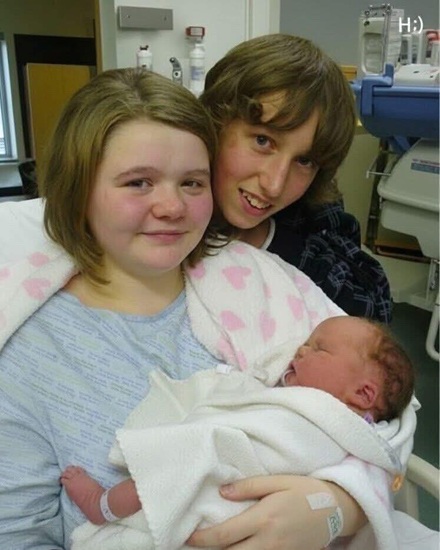
In 2010, a case from South Wales attracted widespread attention across the United Kingdom involving two teenagers, April Webster and Nathan Fishbourne, who became widely reported in the media as Britain’s youngest parents at the time. Their story gained national coverage after the birth of their son, Jamie, when both were just 14 years old. It quickly became part of a broader public discussion about teenage pregnancy and youth support systems in the UK. The events took place in Caerphilly, a town in South Wales, where both teenagers attended school and were described as having a typical school-age relationship before the pregnancy.
Like many young couples, their connection began during adolescence, a period often associated with emotional development, social learning, and early relationships. However, their situation became unusual due to the extremely young age at which parenthood occurred. April Webster reportedly discovered she was pregnant when she was 13 years old. This moment marked a significant and unexpected turning point in her life. At an age when most young people are focused on school and personal development, she was suddenly faced with a major life responsibility that required medical attention, emotional support, and family involvement.
Nathan Fishbourne, also 14 at the time of the birth, learned of the pregnancy during the same period. The news reportedly came as a shock to both families. The situation required immediate adjustment, not only for the teenagers themselves but also for their parents, who suddenly had to consider long-term caregiving and support for both a newborn child and two adolescents.

Following the discovery of the pregnancy, both families became actively involved in supporting the teenagers. Reports from the time indicated that parents on both sides chose to provide guidance and assistance rather than distance themselves from the situation. This included attending medical appointments and helping to ensure that April received appropriate prenatal care.
During the pregnancy, April continued to receive medical supervision through the National Health Service (NHS), which provides maternity care and support for pregnant teenagers in the United Kingdom. This care typically includes regular check-ups, midwife support, and guidance on maternal health and child development. Such services are designed to ensure safety for both mother and baby, regardless of age.
The public reaction to the case was highly divided. Some individuals expressed concern about teenage pregnancy rates and questioned the circumstances that led to such an early transition into parenthood. Others emphasized the importance of support systems and argued that young parents should be guided rather than judged, especially when they are still children themselves.
Media coverage at the time was extensive, with national newspapers and television programs reporting on the story. The attention placed April and Nathan in an unexpected public spotlight, despite their young age and personal circumstances. This level of exposure contributed to ongoing debates about privacy, responsibility, and media ethics when reporting on minors.
When baby Jamie was born in 2010, both families were present and involved in the early moments of his life. Reports described the birth as medically stable, and attention quickly turned toward ensuring the wellbeing of both the child and his young parents. The arrival of the baby represented a major shift in responsibility for both families involved.
In the immediate period after the birth, both April and Nathan relied heavily on family support. Parenting at such a young age requires constant assistance, particularly in areas such as feeding, healthcare, and emotional adjustment. Family members played a key role in helping stabilize daily routines and providing a structured environment for the newborn.
Local support services also became involved, as is standard in teenage pregnancy cases in the UK. Social workers and healthcare professionals typically work together to ensure that both the young parents and the child receive appropriate care. This includes parenting education, health monitoring, and ongoing family support to encourage stability.
Over time, the intense media attention surrounding the case gradually decreased. As the news cycle moved on, April and Nathan were able to focus more privately on their lives and the upbringing of their son. Like many cases that receive national attention, public interest eventually shifted away from the immediate story.
As they grew older, April Webster and Nathan Fishbourne reportedly followed separate personal paths while continuing to share parental responsibility for their child. Their families remained involved in providing support, helping to ensure that Jamie’s upbringing was stable despite the early challenges his parents faced.
The broader significance of their story has often been discussed in relation to education and youth awareness. In the UK, teenage pregnancy is a topic that has been addressed through improved sex education programs and public health initiatives aimed at reducing early pregnancies and supporting informed decision-making among young people.
Experts and educators often use cases like this to highlight the importance of communication between parents, schools, and young people. Access to accurate information, emotional guidance, and healthcare support is considered essential in helping teenagers navigate relationships responsibly.
It is also widely recognized that teenage pregnancy cases require a careful balance of support and safeguarding. The focus in modern approaches is generally on providing education, emotional care, and practical assistance rather than judgment, especially when those involved are minors.
In reflection, the story of April Webster and Nathan Fishbourne is often seen as part of a broader social discussion rather than an isolated incident. It highlights how quickly life circumstances can change during adolescence and how important structured support systems are in such situations.
Their experience continues to be referenced in discussions about youth development, healthcare access, and social responsibility. It serves as an example of how families, communities, and public services interact when unexpected life events occur at a very early age.
Ultimately, the story is not defined by headlines alone, but by the human reality behind it: two teenagers facing adult responsibilities earlier than expected, families adapting to unexpected change, and a child born into a situation shaped by both challenge and support.
