
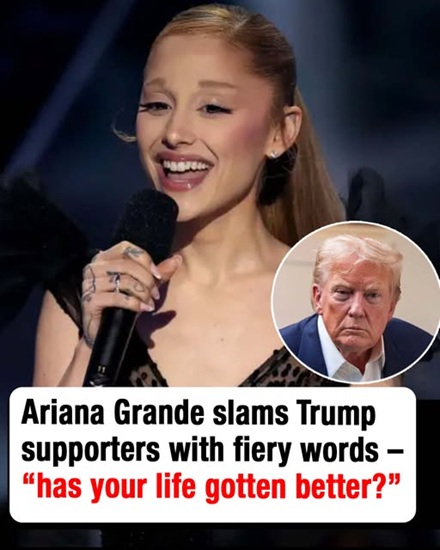
In recent days, a post shared on Instagram by Ariana Grande has sparked widespread discussion across social media platforms, drawing attention from fans, commentators, and political observers alike.
The conversation began when Grande reshared a message on her Instagram Story that questioned the impact of political promises made during the administration of Donald Trump, particularly regarding economic conditions and social policy outcomes.
The original post she reshared was attributed to LGBTQ+ activist Matt Bernstein, and it raised questions about whether certain voter expectations had been fulfilled, especially in relation to cost of living and broader policy effects.
The message specifically referenced issues such as insurance costs, grocery prices, and overall economic stability, while also contrasting those topics with concerns related to immigration policy, transgender rights, and free speech debates.

The tone of the reposted content was reflective and critical, asking whether perceived economic benefits had come at the expense of social harm or increased marginalization of certain communities within American society.
After the repost gained attention, it quickly circulated beyond Instagram, with screenshots shared on platforms like X (formerly Twitter), TikTok, and Facebook, where users began debating both the message and Grande’s decision to share it.
Some users interpreted the post as a continuation of Grande’s long-standing engagement with political and social issues, while others viewed it as a provocative statement that reopened familiar partisan tensions online.
Reactions were divided, with supporters praising her willingness to engage in political discourse, while critics accused her of amplifying divisive messaging during an already polarized political climate.
As a high-profile public figure with a global audience, Grande’s posts often attract significant attention, and this instance was no exception due to her massive reach of hundreds of millions of followers.
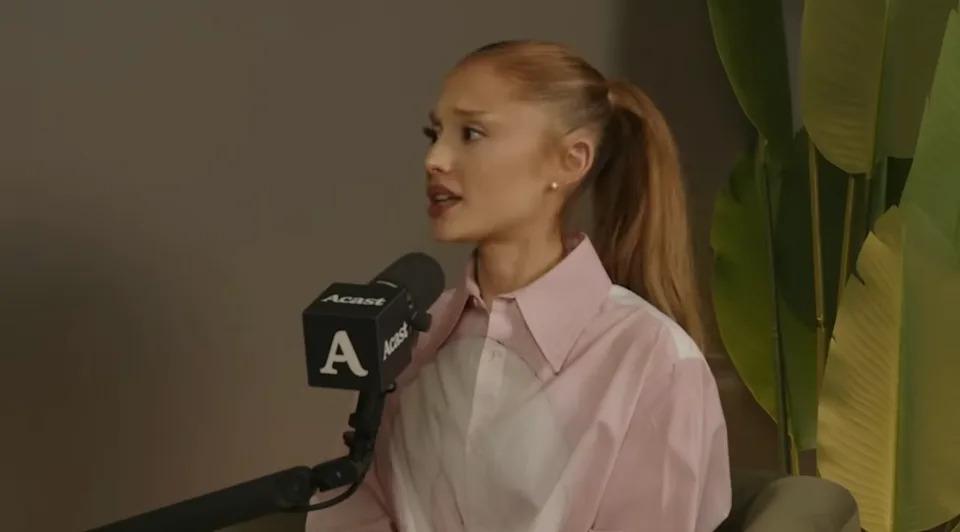
Her influence on Instagram, where she has over 370 million followers, makes even indirect political commentary widely visible, often generating rapid response cycles across digital media ecosystems.
Grande has previously used her platform to express views on political and social issues, particularly those involving immigration policy, LGBTQ+ rights, and broader questions of equality and representation.
Her public stance has historically aligned with progressive causes, and she has often supported initiatives or figures associated with those positions during election cycles and public debates.
In earlier years, she publicly expressed support for political figures such as Kamala Harris, especially in contexts related to elections and civic participation.
During televised appearances, including hosting roles on programs like Saturday Night Live, she has occasionally referenced political moments or encouraged voter engagement.
Following previous U.S. election outcomes, Grande has also shared messages of empathy and emotional support directed toward fans who expressed disappointment or anxiety about political results.
These past actions contributed to renewed interest in her latest repost, with many observers framing it as consistent with her broader public identity rather than an isolated incident.
However, critics of celebrity political engagement argue that public figures with large platforms can unintentionally amplify polarization by sharing politically charged content.
Supporters, on the other hand, argue that celebrities are also citizens with the right to express opinions and engage in public discourse on issues that affect society.
This broader debate about celebrity influence in politics is not new and has become increasingly common in the age of social media, where public figures can directly communicate with global audiences.
In Grande’s case, the discussion intensified because of her scale of influence, cultural relevance, and history of outspoken commentary on social justice issues.
Some online reactions escalated beyond policy debate, with a small number of users posting extreme or inaccurate claims in response to her repost, highlighting the volatility of social media discourse.
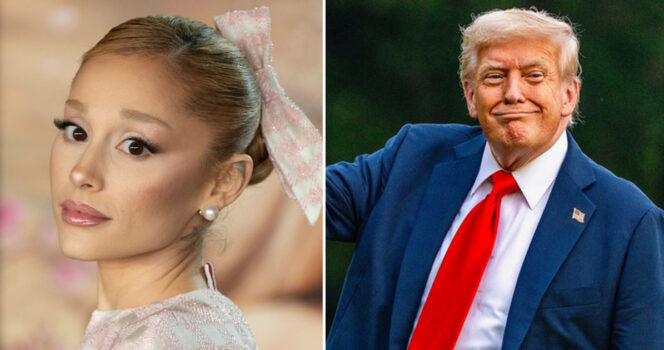
It is important to note that many of these reactions reflect broader online polarization rather than verified facts, and they often spread quickly in emotionally charged environments.
Grande herself did not issue an extended public statement following the repost, and the content remained within the format of an Instagram Story, which is temporary by design.
Instagram Stories typically disappear after 24 hours unless saved to highlights, meaning that much of the discussion is based on screenshots and secondary circulation rather than permanent posts.
This format often contributes to rapid viral spread, as users share and reinterpret content before it disappears from the original platform.
The situation also highlights how quickly political narratives can emerge from short-form social media content, especially when shared by globally recognized celebrities.
In the modern media landscape, even brief reposts can be analyzed, criticized, and amplified within hours, reflecting the speed of digital communication.
Grande’s extensive audience ensures that her online activity is closely monitored, and even subtle engagement with political content tends to generate widespread commentary.
Her career as an entertainer has always intersected with public attention, and her influence extends beyond music into cultural and social conversations.
Despite differing opinions about her political engagement, there is no indication from verified sources that her repost contained original commentary beyond resharing existing content.

The situation instead reflects how curated messages from other users can gain significant traction when amplified by high-profile accounts.
It also demonstrates the evolving role of celebrities in shaping online discourse, whether intentionally or through passive amplification of existing narratives.
As discussions continue, the incident serves as another example of how social media has blurred the line between entertainment, activism, and political commentary.
Observers note that this blending of roles is increasingly common among public figures who maintain large digital followings and use platforms to connect directly with audiences.
For supporters of Grande, the repost is seen as consistent with her established views and advocacy history, particularly regarding social justice issues.
For critics, it raises questions about the responsibility that comes with influence and whether public figures should engage in politically sensitive topics in such direct ways.
Ultimately, the reaction to the Instagram Story reflects broader divisions in public opinion rather than a single isolated controversy.
It highlights how digital platforms can transform even brief interactions into large-scale cultural discussions within a matter of hours.
As of now, the situation remains part of an ongoing conversation about celebrity influence, political expression, and the role of social media in shaping public debate.
