
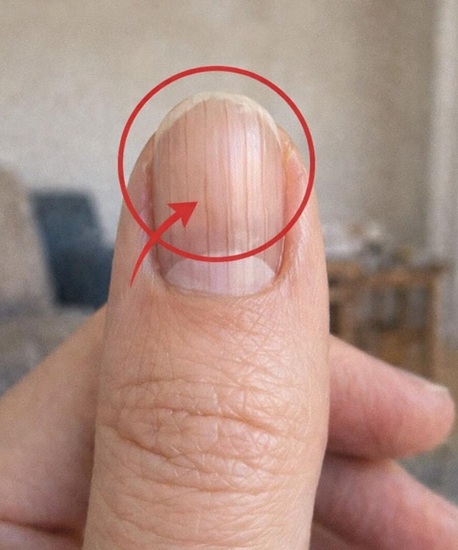
The idea that fingernails can reflect aspects of overall health has become increasingly popular in recent years, especially in conversations around aging, wellness, and biological indicators. While some online interpretations can exaggerate what nails are capable of revealing, there is a real scientific foundation behind studying nail growth and appearance. Fingernails are not predictive tools for lifespan or disease on their own, but they do offer small, observable clues about how certain processes in the body are functioning at a given time.
From a biological perspective, fingernails are composed mainly of keratin, a strong protein produced by specialized cells in the nail matrix. These cells continuously divide and push older cells forward, forming the hard nail plate that we see. This process depends on adequate blood circulation, nutrient availability, and overall cellular activity. Because nail growth is tied to these internal systems, changes in growth speed or structure can sometimes reflect shifts in metabolism, health status, or aging-related biological processes.
In discussions about longevity science, including ideas sometimes associated with researchers such as David Sinclair, fingernail growth is occasionally mentioned as one of many indirect indicators of how the body’s regeneration systems behave over time. The concept is not that nails determine biological age, but rather that they may loosely reflect changes in cellular renewal rates. However, scientific consensus does not support nails as a precise or standalone measure of aging, and they should always be interpreted alongside other medical and biological markers.

Research conducted over many decades has shown that fingernail growth tends to slow gradually with age. This is considered a natural part of the aging process, linked to reduced circulation, slower cell turnover, and changes in overall metabolic activity. Studies have suggested that this slowdown often becomes more noticeable after early adulthood, although the rate of change varies significantly between individuals due to genetics, lifestyle, and environmental factors. Because of this variability, nail growth alone cannot reliably indicate biological age.
More important from a medical standpoint are visible changes in nail color, shape, or texture. These changes can sometimes provide early signals of underlying health conditions, although they are never diagnostic on their own. For example, dark vertical lines in a nail may require professional evaluation to rule out serious concerns, even though they can also result from harmless pigmentation variations. The key medical principle is that observation must always be followed by proper assessment when needed.
Other nail changes have been associated in medical literature with specific conditions. Pitting, or small dents in the nail surface, can sometimes be seen in individuals with skin conditions such as psoriasis. Yellowing of the nails may be linked to fungal infections, although it can also appear in certain systemic conditions or as a result of external exposure to chemicals or cosmetic products. In each case, the appearance alone is not enough to determine a cause, and context is essential.

One of the more recognized nail-related signs in medical studies is clubbing, where the fingertips become rounded and the nails curve more than usual. This has been associated with long-term conditions affecting oxygen levels in the body, such as certain heart or lung disorders. However, it is not exclusive to any single disease and must always be evaluated in combination with other symptoms and medical tests. Similarly, pale or white nails may sometimes be associated with anemia or liver-related issues, while bluish nails can indicate reduced oxygen circulation, but again, these signs are not definitive without clinical confirmation.

At the same time, many nail changes are completely harmless and caused by everyday factors. Frequent handwashing, exposure to cleaning agents, minor trauma, temperature changes, and even stress can temporarily affect nail strength, texture, or color. Brittle or peeling nails, for example, are often related to dryness or repeated mechanical stress rather than internal disease. Nutritional factors can also influence nail quality, but deficiencies severe enough to cause visible changes are relatively uncommon in well-balanced diets.
Because of these many possible influences, medical professionals generally recommend a balanced approach to nail observation. Instead of focusing on a single change in isolation, it is more useful to look for persistent patterns over time. A temporary change is usually not significant, but ongoing or worsening alterations may justify further attention. This approach helps avoid unnecessary concern while still allowing meaningful awareness of potential health signals.

When unusual nail changes do appear, it is often helpful to consider recent lifestyle or environmental factors before assuming a medical cause. Changes in diet, stress levels, medication use, or exposure to new substances can all affect nail appearance. In many cases, adjusting these factors or allowing time for recovery leads to normal nail regrowth. However, if changes persist or are accompanied by other symptoms, consulting a healthcare professional is the most responsible step.
Overall, the scientific perspective is clear that fingernails are best understood as subtle indicators rather than diagnostic tools. They can reflect aspects of circulation, nutrition, and cellular activity, but they cannot independently determine health status or predict future outcomes. Their value lies in observation over time, not in single interpretations or assumptions.
The most grounded conclusion is that fingernails are part of the body’s broader communication system. They do not forecast life expectancy or define biological age, but they can provide small, visible clues about how the body is functioning in the present moment. Paying attention to them is less about prediction and more about awareness, helping individuals stay informed about their general well-being without unnecessary alarm.
