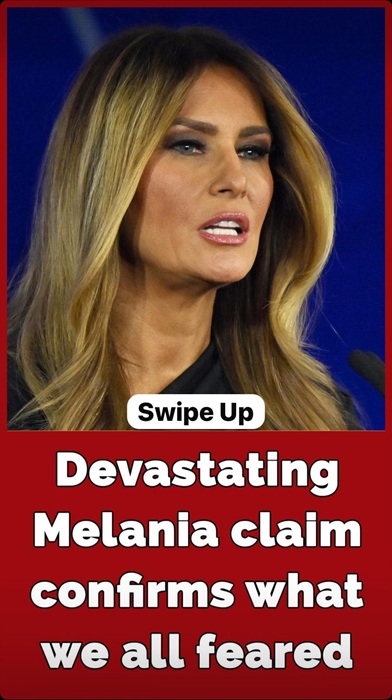
Melania Trump Keeps a Holiday Tradition Alive — and the Internet Reacts
Every December in Washington, D.C., a familiar and deeply rooted tradition quietly returns to Children’s National Hospital. For generations, the First Lady of the United States has visited young patients who must spend the Christmas season in hospital rooms instead of at home.
The gesture is simple: a visit, a book, a few words of encouragement, and the reminder that they are not forgotten during one of the most emotionally charged times of the year.
This tradition stretches back to the 1940s, when First Lady Bess Truman made one of the earliest documented holiday visits to children receiving long-term medical care. Since then, many First Ladies—across parties, personalities, and political eras—have continued the practice. Over time, it has become one of the few moments of bipartisan continuity in an otherwise divided political landscape.

In early December, Melania Trump carried on that custom by visiting Children’s National Hospital during the holiday season. Her appearance followed the familiar outline of the tradition: a decorated space, a Christmas-themed children’s book, and time spent with young patients and their families. What should have remained a quiet, compassionate moment, however, quickly became a lightning rod for online debate.
A Visit Focused on Children
According to the hospital, the visit was centered on children who were unable to leave the hospital for the holidays due to serious medical conditions. These patients often include children undergoing cancer treatment, recovering from major surgeries, or managing chronic illnesses that require constant monitoring.
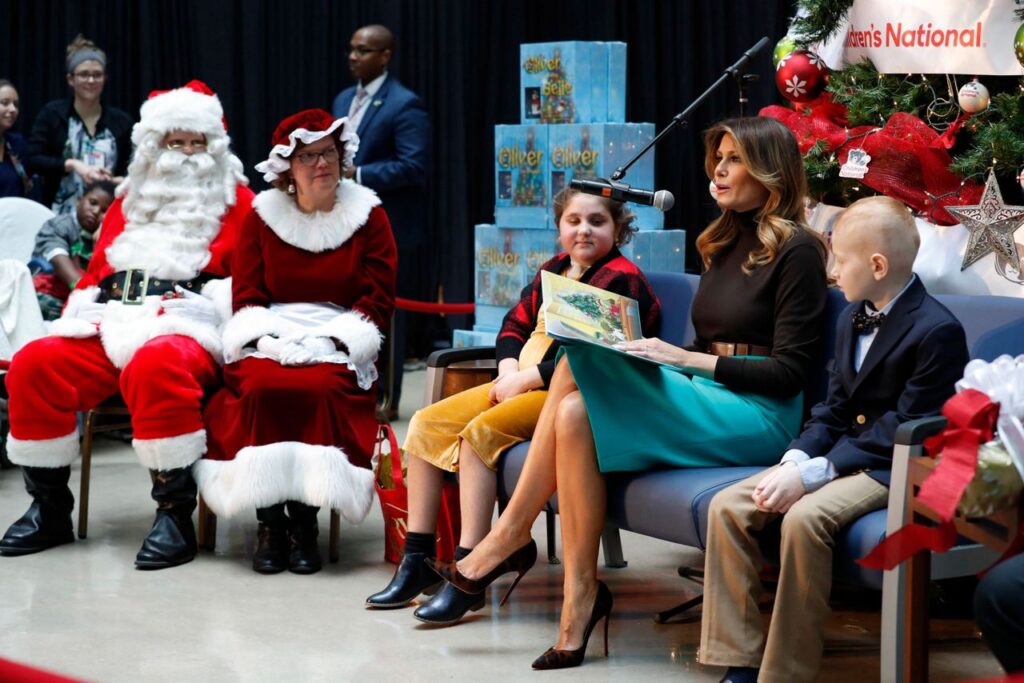
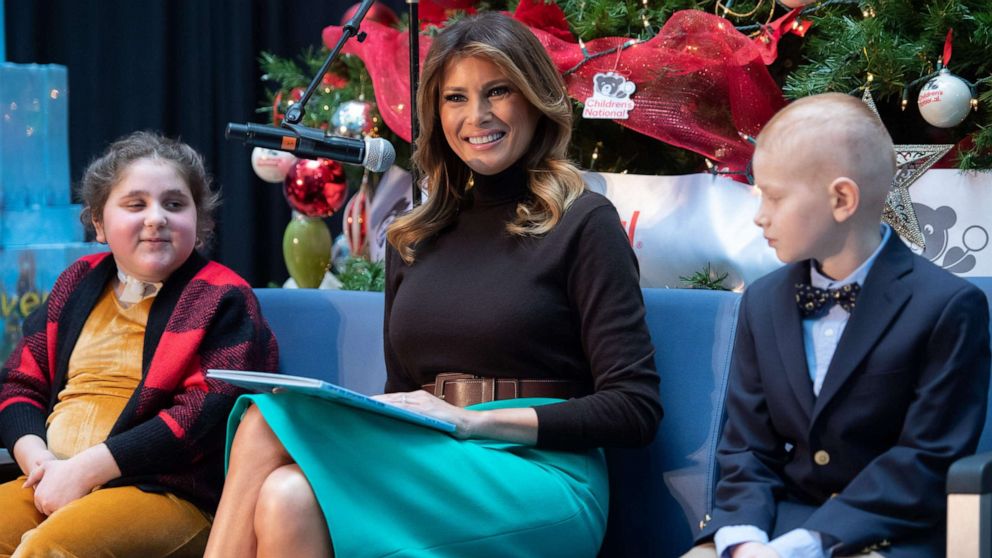
Melania Trump arrived with gifts and joined the children in a festively decorated area featuring a large Christmas tree and seasonal decorations. She was escorted into the room by two young patients, a detail the hospital later highlighted as a joyful part of the day. Hospital staff described the children involved as energetic and upbeat, noting that their enthusiasm helped create a warm atmosphere despite the clinical setting.
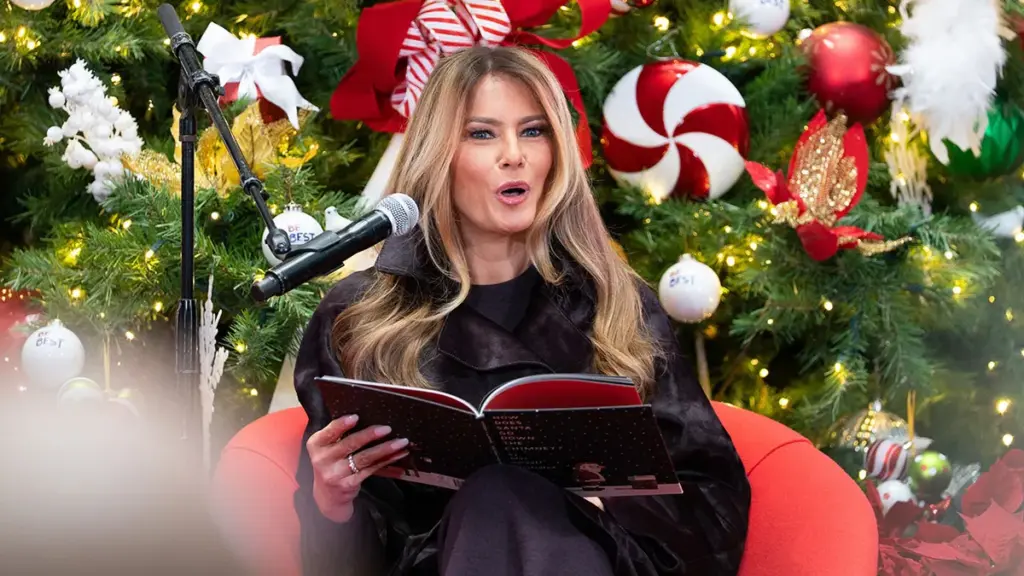
The First Lady took a seat and read a picture book titled How Does Santa Go Down the Chimney? by bestselling author Mac Barnett. The book, known for its playful tone and humorous exploration of a classic Christmas mystery, is a common choice for readings aimed at younger audiences.
The reading itself was calm and measured. Melania Trump paused occasionally, and her Eastern European accent—shaped by her Slovenian upbringing—was clearly audible. For those in the room, this appeared to be of little importance. The children listened, smiled, and engaged with the story, enjoying a rare moment of normalcy during a difficult season.
From Hospital Room to Social Media Storm
Shortly after the visit, video clips of the reading circulated on social media platforms. As is often the case with viral content, the footage was removed from its original context and judged by millions who were not present.
A portion of online users focused less on the children or the purpose of the visit and more on Melania Trump’s delivery. Some comments criticized her pacing. Others mocked her pronunciation or questioned her emotional expression. A number of posts referenced her accent directly, framing it as evidence of perceived insincerity or detachment.
The tone of the commentary escalated quickly. What began as casual criticism turned into personal attacks, sarcasm, and political jabs. In some cases, the remarks extended beyond critique and into ridicule, using language that many observers described as unnecessarily harsh.
It is worth noting that Melania Trump has never presented herself as a highly animated public speaker. Throughout her time in the public eye—both before and during her tenure as First Lady—she has maintained a reserved demeanor. Supporters often describe this as composed and formal; critics interpret it as distant. Regardless of perspective, her style has been consistent.
Language, Accents, and Public Expectations
One of the central points of online criticism involved Melania Trump’s accent. Born and raised in Slovenia, she learned English later in life and is fluent in multiple languages. Linguists have long noted that accents often persist even after decades of living in an English-speaking country, particularly when a person learns the language as an adult.
Accents are not indicators of intelligence, effort, or character. They reflect linguistic history. Yet in public discourse—especially online—they are frequently used as shorthand for judgment. In this case, the criticism appeared especially sharp given the context: a volunteer holiday visit to hospitalized children.
Public figures are routinely scrutinized, and First Ladies are no exception. Still, many observers questioned whether focusing on pronunciation during a children’s hospital visit missed the larger point of the event. The purpose of the tradition has never been performance; it has always been presence.
What the Hospital Emphasized
Children’s National Hospital expressed appreciation for the visit, focusing on the impact it had on patients and families. Hospital leadership and staff highlighted the importance of moments that bring joy, comfort, and emotional relief to children facing prolonged medical challenges.
For families spending the holidays in hospital corridors and patient rooms, even brief interruptions to routine can be meaningful. A decorated space, a special guest, and a shared story can provide a sense of celebration where it might otherwise be absent.
Medical professionals often note that emotional well-being plays a role in a child’s overall experience during treatment. While a book reading cannot change a diagnosis, it can offer distraction, positivity, and a memory that stands apart from clinical procedures.
Separating Politics from the Moment
Melania Trump’s tenure as First Lady unfolded during a highly polarized political period. Strong opinions about her husband and his administration inevitably shape how some people view her actions. For critics, it can be difficult—or even undesirable—to separate personal gestures from political associations.
However, holiday hospital visits have traditionally existed outside partisan boundaries. They are not policy announcements, campaign events, or ideological statements. They are symbolic acts rooted in empathy and continuity.
Many First Ladies before Melania Trump faced criticism of their own, often for entirely different reasons. Some were labeled too glamorous, others too traditional, others too outspoken. Yet the hospital visit tradition endured because it serves a purpose beyond image management.
The Children at the Center
Lost in much of the online debate were the children themselves. Photographs and statements from the hospital indicated that the young patients involved were engaged and pleased by the visit. Smiles, laughter, and curiosity—not pronunciation—defined their experience.
Children facing serious illness often live in the present moment. A story, a gift, or a kind word can matter more than the delivery style or accent of the person offering it. For them, the visit represented attention, care, and acknowledgment during a challenging time.
Parents, too, benefit from these moments. Watching their children smile, even briefly, can provide emotional relief during periods of prolonged stress. Hospital traditions that focus on normal childhood experiences—stories, holidays, celebrations—are designed with this understanding in mind.
A Broader Reflection on Online Culture
The reaction to this visit also reflects broader trends in online culture. Social media platforms reward strong reactions, quick judgments, and sharable outrage. Nuance rarely travels as far as criticism.
When short video clips are detached from context, they invite interpretation shaped by preexisting opinions. In this environment, even acts intended as compassionate can become controversial if they involve a public figure.
Some commentators pushed back against the criticism, arguing that the focus on accent and delivery was unfair. Others suggested that empathy should outweigh political disagreement, particularly in situations involving children with serious illnesses.
Why the Tradition Still Matters
Despite the noise surrounding this particular visit, the underlying tradition remains intact. For decades, First Ladies have stepped away from formal duties to sit with children during the holidays. These visits are not about perfection, performance, or public approval. They are about continuity and care.
Melania Trump’s participation in the tradition fits squarely within that historical framework. Regardless of personal opinions about her or her politics, the act itself aligns with a longstanding effort to bring moments of warmth into a difficult environment.
In the end, the measure of the visit is not found in comment sections or viral clips. It is found in the reactions of the children who experienced it firsthand. By all available accounts, those reactions were positive.
Conclusion
Holiday traditions at children’s hospitals exist to remind young patients and their families that they are seen and valued. They are small gestures with symbolic weight, carried forward by individuals who temporarily hold public roles.
This year’s visit became a subject of debate, but its core purpose remained unchanged. A First Lady showed up, read a story, brought gifts, and offered kind words to children spending Christmas in a hospital. For many, that simple act still counts for something.
