President Trump’s Energy and Public Image Under Scrutiny: Comprehensive Analysis of Health, Stamina, and Public Perception
Former U.S. President Donald Trump has long relied on his reputation for high energy, relentless work ethic, and vigorous public appearances as a central part of his political identity. Throughout his first term (2017–2021) and during his 2015–2016 campaign, Trump consistently emphasized his stamina and vitality as a distinguishing feature compared to his opponents. He often portrayed himself as more capable of handling the pressures of the presidency due to his physical energy and mental sharpness.
However, recent weeks have brought renewed scrutiny regarding Trump’s health and endurance. New photographs from Cabinet meetings, along with analysis of his public schedule, have led to speculation about whether the 79-year-old president is experiencing more visible fatigue than in previous years. These discussions have been fueled by comparisons to President Joe Biden, who at 82 is the oldest U.S. president to date, as well as by media commentary and social media reactions highlighting moments when Trump appeared tired during extended sessions.
Signs of Fatigue and Shifts in Public Engagement
At 79, Donald Trump is the oldest person ever elected to the presidency. Comparisons to President Biden are frequent in media coverage, especially regarding energy levels, stamina, and capacity to maintain a rigorous schedule. Trump has historically used these comparisons as a rhetorical device, framing himself as more alert and active than his peers. For example, during one White House event, Trump displayed an autopen in place of the official portrait of Joe Biden, subtly suggesting that the former vice president lacked energy or engagement.
Trump has also made repeated public comments about Biden’s sleep habits. In November 2025, he remarked, “He sleeps all the time — during the day, during the night, on the beach. I’m not a sleeper.” Such statements serve a dual purpose: they reinforce Trump’s image of vitality while framing questions about Biden’s stamina as politically relevant.
Despite these assertions, recent reporting by The New York Times and other media outlets indicates a noticeable shift in Trump’s schedule and public visibility compared to his first term:
- Reduced Public Appearances: In 2025, Trump has appeared at fewer public events and press conferences than he did in the comparable period of his first term in 2017. This reduction may reflect strategic choices or the natural effects of aging.
- Shorter Daily Engagements: Most of Trump’s public appearances now occur between noon and 5 p.m., with fewer early morning or late evening engagements.
- Domestic vs. International Travel: Domestic travel has decreased in frequency, but international engagements have remained relatively high, including summits, bilateral meetings, and trade negotiations.
Observers note that these changes could indicate a deliberate prioritization of high-impact appearances, or they may reflect the physical realities of sustaining a demanding presidential schedule at an advanced age.
The Cabinet Meeting That Sparked Social Media Discussion
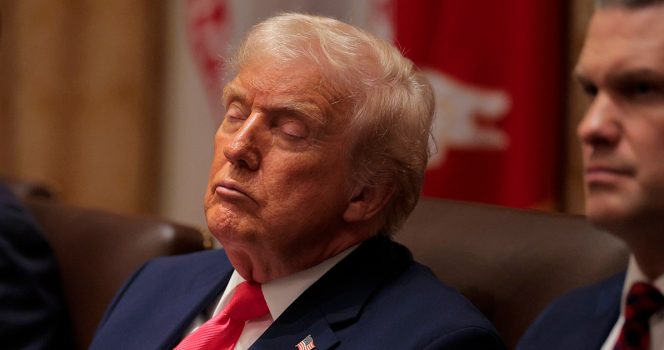
A recent photograph from a Tuesday Cabinet meeting quickly went viral online. The image showed President Trump mid-session with visibly drooping eyes, appearing to struggle to maintain full attention as Cabinet members outlined accomplishments from his first year in office. The meeting, lasting two hours and 17 minutes, covered a broad range of topics, including:
- Federal strategies to combat drug trafficking
- Public health initiatives and wellness programs
- Immigration policy, including targeted remarks on Somali migrants
Social media users reacted swiftly, coining nicknames such as “Dozy Don” and “Commander in Sleep.” Critics suggested the photograph illustrated difficulty sustaining focus during lengthy policy discussions.
White House Press Secretary Karoline Leavitt responded by defending the president’s stamina. Speaking to Daily Mail, she said:
“President Trump was listening attentively and running the entire three-hour marathon Cabinet meeting,”
Leavitt further highlighted what she described as the president’s “amazing final answer” during a press portion of the session, in which he sharply criticized opposition parties for perceived failures to secure the U.S. border.
Trump’s Response to Health Scrutiny
Public scrutiny of Trump’s health increased following remarks from Minnesota Governor Tim Walz, who requested that the president release recent MRI results. On December 1, 2025, the White House complied, releasing medical documentation showing a “perfectly normal” MRI, indicating no immediate health concerns.
During the same Cabinet meeting, Trump addressed these questions about his health directly. Using his characteristic blend of confidence and sarcasm, he stated:
- “You always find something new, like, ‘Is he in good health?’”
- “Biden was great. I sit here and do four news conferences a day. I ask questions from very intelligent lunatics. You people. I give the right answers. There’s never a scandal. There’s never a problem. I give you answers and solve your little problems.”
- “If I go one day, I had one day where I didn’t do a news conference. ‘There’s something wrong with the president.’ I’ll let you know when there’s something wrong. There will be some day; that’s going to happen to all of us. But right now, I think I’m sharper than I was 25 years ago, but who the hell knows.”
Even with this verbal defense, Trump’s intermittent eye closures during the Cabinet meeting contributed to widespread discussion about his physical stamina.
Policy Commentary During the Meeting
Trump also used the Cabinet session to address immigration policy and make remarks about Somali migrants and Representative Ilhan Omar. He stated:
- “She’s garbage, her friends are garbage. These aren’t people that work. These aren’t people that say, let’s go, come on, let’s make this place great. These are people that do nothing but complain.”
- “And they complain and do nothing but b***h. We don’t want them in our country. Let them go back to where they came from and fix it.”
These remarks drew criticism from human rights groups, journalists, and political opponents, highlighting the contentious nature of Trump’s rhetoric and his willingness to confront political adversaries directly in public forums.
Public Reaction and Media Analysis
The combination of apparent fatigue, aggressive rhetoric, and highly publicized appearances has elicited varied responses from the public and media:
- Supporters: Many continue to view Trump as energetic, interpreting brief signs of tiredness as normal for someone in a position of immense responsibility. Some praise his ability to stay engaged despite long sessions and international travel.
- Critics: Analysts, journalists, and political opponents have questioned whether the president’s stamina and schedule can meet the demands of the office. Criticism has focused on the perception of fatigue and the implications for policy execution.
Media outlets, including The New York Times, have highlighted contrasts between Trump’s current public image and his earlier first-term persona. Reduced visibility and shorter public engagements are noted as factors influencing public perception of vitality.
Historical Context: Age and Presidential Performance
Trump’s age is significant in the history of the U.S. presidency. At 79, he is the oldest elected president, surpassing Ronald Reagan, who served his second term at age 77. Joe Biden, at 82, currently holds the record as the oldest sitting president.
Historical analyses of presidents’ physical stamina suggest that age can influence energy levels, recovery times, and the ability to sustain prolonged attention. Reagan, for example, faced similar public scrutiny during his second term, with the media closely analyzing gestures, speech patterns, and schedule adherence.
Medical experts in geriatrics and political psychology note that age alone is not necessarily determinative of capability but can affect endurance during extended public engagements. Trump’s MRI and medical documentation indicate no acute health issues, supporting his eligibility to serve; however, public perception often weighs heavily on visual cues and media portrayal.
Social Media Reactions and Political Implications
Social media platforms amplified the conversation surrounding Trump’s perceived fatigue. Viral images, memes, and commentary highlighted the president’s drooping eyes and moments of rest during the Cabinet meeting. Common hashtags included #CommanderInSleep and #DozyDon, illustrating the cultural and political resonance of physical stamina in leadership narratives.
Political analysts have noted that public perception of stamina can influence voter confidence and affect narratives leading into elections. By framing brief moments of rest as normal, the White House aims to counter negative coverage while emphasizing policy accomplishments.
White House Response and Messaging Strategy
The White House has maintained a consistent message defending Trump’s energy and focus. Press Secretary Karoline Leavitt emphasized the accomplishments of Cabinet meetings and described the president as engaged throughout all sessions:
“In all of these historic meetings, the president and his incredible team highlight the exhaustive list of accomplishments they have delivered on behalf of the American people to Make America Great Again.”
This strategy underscores a deliberate approach to shift attention from physical appearance to policy achievements, reinforcing Trump’s political messaging while addressing concerns regarding age and stamina.
Conclusion
Donald Trump’s recent public appearances and images have reignited discussions regarding presidential stamina, health, and age. While some observers interpret visible signs of fatigue as evidence of diminished energy, supporters argue that brief moments of rest are natural, particularly during extended meetings and international travel.
The broader implications include:
- Ongoing scrutiny of Trump’s public image
- The media’s role in shaping narratives about presidential vitality
- Political framing of capacity, leadership, and executive energy
Trump’s age, policy engagement, and public persona remain intertwined in discussions about governance and leadership effectiveness. As the president continues to navigate his second term, public attention is likely to focus both on policy outcomes and perceptions of personal vitality, highlighting the enduring importance of image, messaging, and public engagement in modern politics.
