
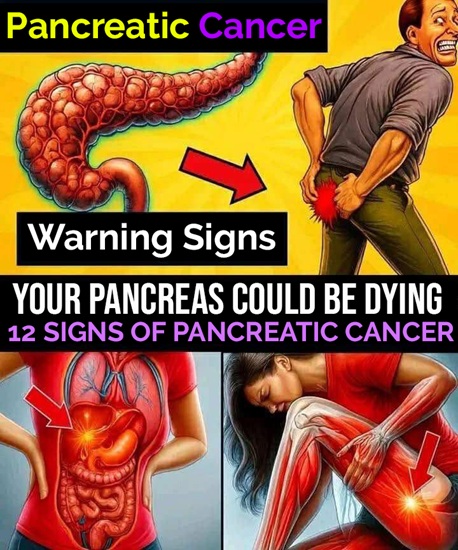
Pancreatic cancer is often described as a silent and aggressive disease because it usually develops without clear early symptoms, making detection difficult until it has already reached more advanced stages.
Unlike many other cancers, it tends to grow quietly inside the body, and its early signs are often mild, vague, or mistaken for common digestive problems that do not initially raise concern.
This lack of specific early warning signs is one of the main reasons why pancreatic cancer is frequently diagnosed late, when treatment options may be more limited and outcomes more challenging.
The pancreas is a small but essential organ located deep in the abdomen, behind the stomach, and it plays a key role in digestion and blood sugar regulation through enzymes and hormones.

Because of its hidden position inside the body, tumors can grow significantly before they start to affect nearby organs, nerves, or bodily functions in a noticeable way.
When symptoms eventually appear, they are often nonspecific, meaning they can be linked to many different health conditions, which makes early diagnosis even more difficult for both patients and doctors.
Medical research shows that pancreatic cancer is one of the leading causes of cancer-related deaths worldwide, despite being less common than some other major cancer types.
In the United States, tens of thousands of new cases are diagnosed each year, and the disease accounts for a large number of annual cancer deaths.
One of the most challenging aspects of pancreatic cancer is that it often spreads early to other parts of the body before it is even discovered.
This early spread, combined with delayed symptom recognition, contributes significantly to the difficulty in treating the disease effectively in many patients.

Several well-known public figures have brought attention to pancreatic cancer through their personal battles, helping increase awareness of its seriousness and complexity.
Steve Jobs, the co-founder of Apple, was diagnosed with a rare form known as a pancreatic neuroendocrine tumor, which is different from the more common type of pancreatic cancer.
Actor Patrick Swayze, widely recognized for his role in Dirty Dancing, also faced pancreatic cancer and became a public example of the disease’s aggressive nature.
Television host Alex Trebek openly shared his journey with pancreatic cancer while continuing to work, helping raise awareness about the importance of early detection and research.
Supreme Court Justice Ruth Bader Ginsburg also died from complications related to pancreatic cancer, highlighting how the disease can affect individuals even with access to advanced medical care.
These cases have contributed to global awareness but also reflect the reality that pancreatic cancer remains difficult to detect and treat effectively at early stages.

One of the main reasons early detection is so challenging is that symptoms often resemble common digestive issues that many people experience in daily life.
Because these symptoms are not unique to pancreatic cancer, they are often ignored or attributed to less serious conditions, delaying medical evaluation.
Abdominal pain is one of the more common symptoms and is often described as a dull or aching discomfort in the upper abdomen.
This pain may gradually spread to the back and can become more persistent as the disease progresses, sometimes worsening after meals or when lying down.
Jaundice is another important symptom that occurs when a tumor blocks the bile duct, causing a buildup of bilirubin in the body.
This condition leads to yellowing of the skin and eyes and may also cause dark urine, pale stools, itching, and general discomfort.

Although jaundice can result from several different medical conditions, sudden or unexplained cases should always be evaluated by a healthcare professional.
Unexplained weight loss is also commonly reported and may occur even when a person has not changed their diet or physical activity levels.
This weight loss can be caused by reduced appetite, changes in metabolism, and the body’s inability to properly digest and absorb nutrients.
Because the pancreas plays a major role in digestion, cancer can significantly disrupt normal enzyme production needed to break down food.
As a result, individuals may experience bloating, nausea, indigestion, or discomfort after eating, which may gradually worsen over time.
Stool changes are also common and may include oily, pale, or unusually foul-smelling stools due to poor fat absorption in the digestive system.
These digestive symptoms are frequently mistaken for more common conditions such as food intolerance or irritable bowel issues.
Some patients may also develop new-onset diabetes, particularly when insulin production is affected by damage to the pancreas.

Symptoms of this type of diabetes can include increased thirst, frequent urination, fatigue, and blurred vision without a prior history of the condition.
Fatigue is another frequent symptom and is often described as a deep and persistent tiredness that does not improve with rest.
This exhaustion can be caused by a combination of factors including inflammation, metabolic changes, poor nutrition, and the body’s response to cancer.
In some cases, pancreatic cancer can increase the risk of blood clots, particularly in the legs, a condition known as deep vein thrombosis.
These clots can cause swelling, pain, and redness, and in severe cases they may travel to the lungs, creating a life-threatening situation.
Fever and chills may also occur, often linked to infections or inflammation caused by bile duct obstruction or other complications.
Some individuals experience persistent itching, which is caused by the buildup of bile salts in the bloodstream when bile flow is blocked.
This itching can become severe and uncomfortable, sometimes appearing before other more obvious symptoms like jaundice develop.
Each of these symptoms alone does not necessarily indicate pancreatic cancer, but a combination of persistent symptoms should never be ignored.
Medical professionals emphasize the importance of seeking evaluation if symptoms last more than a few weeks or progressively worsen over time.
Risk factors for pancreatic cancer include smoking, older age, obesity, chronic pancreatitis, and certain genetic predispositions, although many cases occur without clear risk factors.
Family history of pancreatic or related cancers may also slightly increase risk, which is why genetic awareness can sometimes be important in certain individuals.
Despite ongoing research, there is still no widely available screening test for early detection in the general population, which adds to diagnostic challenges.
Current diagnostic methods include imaging tests, blood work, and biopsies, but these are usually performed after symptoms have already appeared.
Because of these limitations, researchers are actively working on developing better early detection tools, including blood-based biomarkers and genetic testing methods.
Advances in medical imaging and laboratory science are also improving the ability to detect smaller tumors earlier than in the past.
In recent years, new treatment approaches have been explored, including targeted therapies that focus on specific genetic changes in cancer cells.
Chemotherapy remains one of the most common treatments, often used in combination with surgery or radiation when possible.
Surgical removal of the tumor offers the best chance of long-term survival, but it is only possible when the cancer is detected early enough and has not spread widely.
Immunotherapy research is also growing, aiming to help the immune system better recognize and attack cancer cells more effectively.
Experimental mRNA-based vaccines are currently being studied in clinical trials, showing early signs of potential benefit in certain patients.
Some newer drug combinations have demonstrated improved survival rates in controlled studies, offering cautious optimism for future treatment improvements.
Despite these advancements, pancreatic cancer remains a very serious diagnosis, and long-term survival rates are still lower compared to many other cancers.
The five-year survival rate remains relatively low, largely because most cases are diagnosed at advanced stages when the disease has already spread.
However, survival rates have slowly improved over time due to better treatments, earlier recognition in some cases, and increased research funding.
Awareness campaigns continue to play an important role in educating the public about symptoms and encouraging timely medical consultation.
Early recognition of symptoms such as persistent abdominal pain, jaundice, and unexplained weight loss can significantly improve the chances of earlier diagnosis.
While pancreatic cancer remains a major medical challenge, ongoing research continues to provide hope for more effective detection and treatment strategies in the future.

