
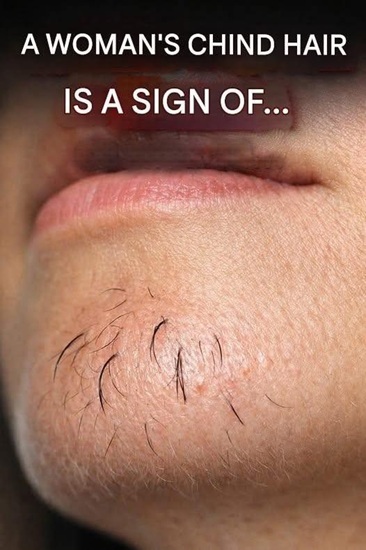
Finding a few dark hairs on the chin can sometimes feel unexpected or concerning, especially when they appear for the first time. In most cases, however, this is a normal biological occurrence and not a sign of a serious health problem. Human hair growth patterns are influenced by genetics, hormones, and natural aging processes. Small changes in facial hair distribution can happen gradually over time and are often harmless. Still, when hair becomes thicker, darker, or increases rapidly, it may indicate underlying hormonal changes that deserve attention.
Hair growth in women is mainly regulated by hormones known as androgens. These include testosterone and other related hormones that are present in both men and women, although women usually have them in lower amounts. Androgens are important for several body functions, including maintaining bone density, supporting muscle health, and influencing reproductive and metabolic systems. However, when androgen levels increase or when the body becomes more sensitive to them, they can stimulate coarse hair growth in areas such as the chin, upper lip, chest, or abdomen.
One of the most well-known medical conditions associated with increased facial hair growth is hirsutism. Hirsutism refers to excessive or male-pattern hair growth in women due to elevated androgen levels or increased sensitivity of hair follicles. It is important to understand that hirsutism is not a disease itself, but rather a clinical sign that may indicate an underlying hormonal imbalance. The severity of hirsutism can vary widely from mild cases with only a few extra hairs to more noticeable and widespread growth.
A common cause of hirsutism is Polycystic Ovary Syndrome (PCOS), which is one of the most frequent hormonal disorders affecting women of reproductive age. PCOS is associated with higher androgen levels and insulin resistance, which can disrupt normal ovulation and hormone balance. In addition to unwanted hair growth, PCOS may also cause irregular menstrual cycles, acne, weight fluctuations, and sometimes thinning hair on the scalp. However, not all women with PCOS experience the same symptoms, and the condition can present differently from person to person.
Hormonal changes during different life stages can also influence facial hair growth. One significant stage is menopause, when estrogen levels naturally decline in women. Estrogen normally helps balance the effects of androgens, so when it decreases, androgen activity may become more noticeable even if androgen levels remain stable. As a result, some women may notice new or thicker chin hairs during midlife or after menopause, which is considered a common age-related change.
In some cases, increased facial hair growth occurs without any identifiable medical cause. This condition is known as idiopathic hirsutism. In these situations, hormone levels are typically within normal ranges, but hair follicles are more sensitive to androgen stimulation. Genetic factors often play a major role in this type of hair growth, meaning it can run in families. While it may be cosmetically concerning, idiopathic hirsutism is generally not associated with serious health risks.
Certain medications can also contribute to unwanted hair growth as a side effect. Drugs that influence hormone levels, such as anabolic steroids, can increase androgen activity in the body and lead to changes in hair growth patterns. Some medications used for unrelated conditions, including minoxidil, may also cause increased facial hair growth in some individuals. These effects depend on dosage, duration of use, and individual sensitivity, and they are usually reversible after discontinuation of the medication.
Although rare, there are medical conditions that can cause more significant hormonal imbalances leading to excessive hair growth. These include disorders such as Cushing’s syndrome, adrenal gland abnormalities, or rare tumors that affect hormone production. In these cases, hirsutism is usually accompanied by other noticeable symptoms such as changes in body weight, skin texture, muscle weakness, or fatigue. Because these conditions are uncommon, they are typically considered only after more common causes have been ruled out.
Doctors often evaluate facial hair growth based on several factors, including how quickly it develops, how coarse the hair is, and whether other symptoms are present. Gradual and mild changes are usually considered normal, especially as women age. However, sudden or rapid increases in facial hair, especially when combined with irregular periods, severe acne, or voice changes, may require medical evaluation to rule out hormonal disorders.
Diagnosis of hirsutism or related conditions typically involves a combination of medical history, physical examination, and blood tests. These tests may measure hormone levels such as testosterone and other androgens, as well as assess thyroid function or insulin resistance when necessary. In some cases, imaging studies like ultrasound may be used to examine the ovaries if conditions like PCOS are suspected.
Treatment depends entirely on the underlying cause and the severity of symptoms. For mild cases, no medical treatment may be needed, and cosmetic methods such as shaving, waxing, threading, or laser hair removal are often used. In cases where a hormonal imbalance is identified, doctors may prescribe medications that help regulate hormone levels or reduce the effect of androgens on hair follicles.
Lifestyle factors can also play a supportive role in managing hormonal balance, especially in conditions like PCOS. Maintaining a balanced diet, engaging in regular physical activity, and managing body weight can help improve insulin sensitivity and hormonal stability. While these changes may not eliminate existing hair, they can help reduce further progression in some cases.
It is important to note that some degree of facial hair in women is completely normal and often underreported due to social perceptions. Many women experience mild chin or upper lip hair at different stages of life, particularly with aging. The presence of a few hairs alone does not indicate a medical problem and should be understood within the context of normal biological variation.
From a psychological perspective, unwanted facial hair can sometimes affect self-confidence and emotional well-being. This is why both medical and cosmetic approaches are often considered together when addressing the issue. Supporting mental health and self-image is an important part of overall care, especially when visible physical changes cause distress.
In conclusion, chin hair growth in women is usually a normal and harmless condition influenced by hormones, genetics, and aging. In some cases, it may be associated with conditions such as PCOS or other hormonal imbalances, but most cases are not serious. Understanding the underlying causes helps reduce unnecessary concern and encourages appropriate medical consultation when needed. With proper awareness, most cases can be effectively managed or treated based on individual needs.
