
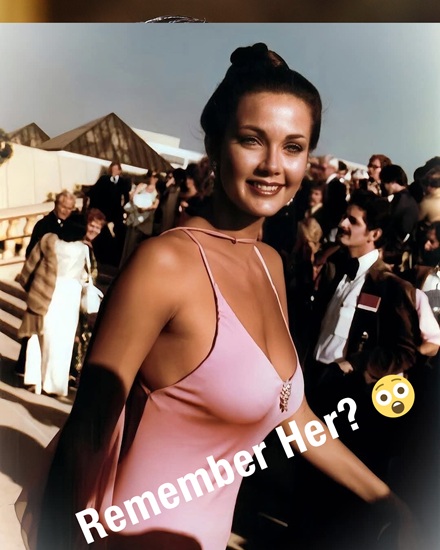
Lynda Carter became a household name after starring as Wonder Woman in 1975, a role that made her an icon of female strength. Her portrayal inspired generations, breaking gender stereotypes in action television.
Growing up in Phoenix, Arizona, Lynda exhibited natural talent and charisma from an early age. She made her first television appearance at five on Lew King’s Talent Show, setting the stage for her lifelong career in performance.
During her teenage years, Lynda developed a deep passion for music. She joined her high school band and performed at local venues, earning $25 a weekend at a pizza parlor, while balancing school responsibilities and performance practice.
Carter faced challenges in her early life, including her parents’ divorce and insecurities about her height. Standing tall made her self-conscious, but she gradually turned those early struggles into confidence that helped in modeling and acting.
Reflecting on her childhood, Lynda admitted she felt awkward at times, saying, “I felt like crumbling jelly inside.” Her humor and resilience allowed her to embrace her height, transforming it into a signature feature in her professional career.

Despite difficulties, Lynda cherished her upbringing. Her family attended church every Sunday, shared picnics, and enjoyed playful moments together. These experiences instilled moral values, a strong work ethic, and a sense of responsibility that influenced her life.
Carter briefly attended Arizona State University but left to focus on a professional music career. Winning the “Most Talented” award fueled her ambition, yet she soon redirected her focus toward modeling and acting opportunities.
In 1972, Lynda won a local beauty contest in Arizona, which allowed her to represent her state in Miss USA. She later competed in Miss World, finishing among the top fifteen contestants, gaining international recognition.
Though pageantry brought fame, Carter later described the experience as emotionally difficult, noting the competitiveness and judgment inherent in beauty contests. She emphasized the importance of authenticity over superficial accolades in shaping her future career.
Lynda pursued acting seriously in New York, taking classes and refining her skills. She appeared in small television roles, including Starsky and Hutch, gaining practical experience while preparing for her eventual breakthrough in Hollywood.
Her early career in Los Angeles was financially challenging. At one point, she nearly ran out of money and contemplated leaving acting for a “normal” job, illustrating her perseverance and determination to succeed in entertainment.

In 1975, Carter was cast as Diana Prince, Wonder Woman, after Joanna Cassidy was passed over. This opportunity transformed her life, propelling her into fame and allowing her to portray one of the first female superheroes on television.
The Wonder Woman series emphasized both action and compassion. Lynda’s portrayal balanced physical strength with intelligence and grace, offering a role model for young viewers who had previously lacked strong female heroes on screen.
Wonder Woman’s creation in 1941 by William Moulton Marston intended to inspire girls. The television adaptation aligned with the 1970s women’s liberation movement, promoting female empowerment and emphasizing equality, justice, and moral responsibility.
Carter faced production challenges, including the initial insistence on a male stunt double. She insisted on performing stunts herself or having a female stuntwoman, demonstrating that women could safely and effectively execute action sequences.
Her portrayal extended beyond aesthetics. Lynda brought authenticity and depth to Diana Prince, combining heroism with compassion. Her performance challenged stereotypes, proving that female superheroes could be both powerful and relatable to diverse audiences.
While some criticized the costume as revealing, Carter maintained that it symbolized patriotism and strength. She worked to ensure that Wonder Woman remained empowering for women, inspiring confidence rather than promoting objectification.

During her run on Wonder Woman, Carter became a cultural phenomenon. She earned the title of “Most Beautiful Woman in the World” in 1978, and her poster became an emblem of 1970s pop culture and female empowerment.
After Wonder Woman, Carter explored music and television projects. She appeared on The Muppet Show and other specials, expanding her career while earning financial security. Her success allowed her to purchase luxury real estate and vehicles.
Carter’s next major acting role was on Partners in Crime, co-starring with Loni Anderson. She demonstrated versatility beyond superhero roles, solidifying her position as a talented actress capable of handling a range of dramatic and comedic characters.
In the 1990s, she founded Potomac Productions, producing television content while continuing acting in movies and TV films. Lynda also performed voice-over work, showing versatility and a commitment to a diverse career in entertainment.
In 2005, she appeared in The Dukes of Hazzard film remake, introducing her to younger audiences. She also pursued theater, performing in productions such as Chicago in London’s West End, highlighting her range and dedication to performing arts.
Carter’s Wonder Woman legacy remains influential. DC Comics recognized her contributions, and she was invited to participate in promotional and celebratory events surrounding the 2017 Wonder Woman film, maintaining a strong connection to her iconic character.

In 2016, Lynda attended the United Nations celebration of Wonder Woman’s 75th anniversary. The event acknowledged her impact on female empowerment and gender equality, recognizing her role in inspiring women worldwide through a powerful television character.
Carter’s personal life included early relationships, including with French singer Michel Polnareff. She married talent agent Ron Samuels in 1977, though the marriage ended in divorce in 1982, illustrating the personal challenges often faced by public figures.
During her first marriage, she faced stress and disagreements over family planning, showing that professional success does not always align with personal fulfillment. Despite challenges, she maintained grace and professionalism throughout the experience.
Lynda later found love with attorney Robert Altman in 1984. Their marriage provided stability, and the couple focused on family life, raising two children in Potomac, Maryland, while maintaining privacy away from Hollywood’s intense spotlight.
Motherhood became Carter’s most cherished role. She often described raising her children as her greatest adventure, emphasizing that fulfillment and joy in parenthood surpassed professional achievements, awards, or public recognition.
In 2021, Lynda experienced profound loss when her husband Robert passed from leukemia. She publicly expressed grief, sharing tributes to honor his memory, their love, and his enduring influence on her life, family, and career.

Carter also overcame alcohol dependency, celebrating over 20 years of sobriety. She credits Robert’s support and personal determination for her recovery, demonstrating resilience, discipline, and commitment to health and well-being.
Even in her seventies, Carter remains active and engaged with fans through social media, sharing reflections, throwback photos, and updates on family life, career milestones, and public appearances, inspiring admiration across generations.
Her impact on pop culture is enduring. Wonder Woman remains a symbol of female empowerment, while Carter’s portrayal set standards for future female superheroes in television, movies, and comics, inspiring women and girls worldwide.
Lynda Carter’s life reflects talent, resilience, and advocacy. From overcoming childhood challenges to becoming an iconic superhero, she has inspired countless fans, balancing fame, family, and personal growth throughout a distinguished, multi-decade career.
