
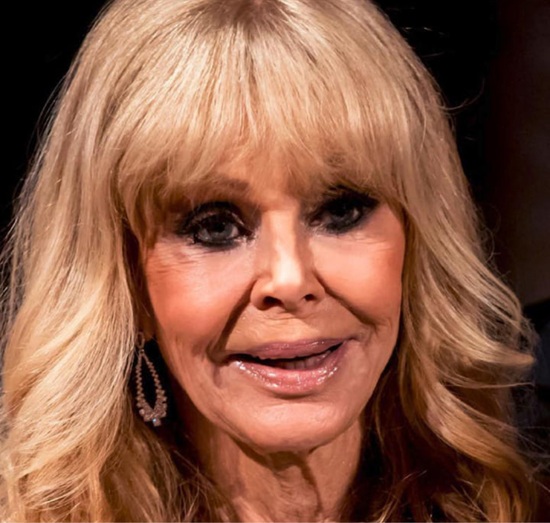
British-Swedish actress Britt Ekland remains one of the most recognizable figures associated with the classic era of the James Bond franchise, largely due to her role as Mary Goodnight in The Man with the Golden Gun.
Born on October 6, 1942, in Stockholm, Sweden, Ekland grew up in a creative environment that encouraged artistic expression, which later influenced her decision to pursue a career in acting and performance.
Her early years were shaped by a strong interest in theater and film, leading her to study acting before gradually stepping into the European film industry during the early 1960s.
Ekland began her professional career with small roles in Swedish and international productions, steadily building experience and confidence while developing the on-screen presence that would later define her career.

As she gained more exposure, her natural charisma and distinctive look helped her stand out, opening doors to larger roles in both European cinema and English-language productions.
By the mid-1960s, she had already begun to attract attention beyond Sweden, becoming part of a new wave of European actors finding success in international film markets.
Her rising profile coincided with an era when cinema was becoming increasingly global, allowing actors like Ekland to move between different countries and industries with greater ease.
In addition to her acting work, her personal life became a major topic of public interest, especially following her marriage to Peter Sellers, one of the most prominent comedic actors of the time.
The relationship brought her significant media attention, placing her firmly in the spotlight and introducing her to a wider audience beyond film enthusiasts.
Although her marriage to Sellers eventually ended, it played an important role in shaping her early public image and increasing her visibility in international entertainment circles.
Later, her relationship with Rod Stewart further solidified her status as a high-profile celebrity, connecting her to the world of music as well as film.

Despite the intense public focus on her personal life, Ekland remained committed to her acting career, continuing to take on roles that showcased her versatility and dedication.
During the late 1960s and early 1970s, she appeared in a range of films that allowed her to explore different genres, from drama to comedy and suspense.
One of her most significant performances outside the Bond franchise came in Get Carter, a British crime film that has since become highly regarded for its gritty storytelling and strong performances.
Her role in that film contributed to its enduring reputation and demonstrated her ability to be part of serious, character-driven narratives.
Another defining moment in her career came with her appearance in The Wicker Man, a film that later achieved cult status for its unique blend of horror, folklore, and psychological tension.
In that production, Ekland played a memorable role that contrasted sharply with her other work, highlighting her willingness to take creative risks and explore unconventional material.

However, it was her involvement in the James Bond series that ultimately brought her the highest level of global recognition.
In The Man with the Golden Gun, she starred opposite Roger Moore, who was portraying James Bond during a period when the franchise leaned toward a more lighthearted and humorous tone.
Her character, Mary Goodnight, was portrayed as a loyal assistant to Bond, often finding herself in humorous or awkward situations that added a different dynamic to the film.
While some critics viewed the character as less serious compared to earlier Bond women, audiences embraced her charm, making her one of the more memorable figures in the franchise.
The film itself contributed to the ongoing evolution of the Bond series, balancing action, humor, and exotic locations, elements that became defining features of the era.
Ekland’s performance ensured that her association with the Bond franchise would remain a central part of her legacy for decades to come.
The global success of the Bond films significantly expanded her audience, introducing her to viewers around the world and solidifying her image as a screen icon of the 1970s.

Beyond the glamour and recognition, Ekland has often spoken about the realities of working in the entertainment industry during that time.
She has described an environment where expectations for actresses were often shaped by appearance and public image, with fewer protections and less control over professional decisions.
Despite these challenges, she acknowledges that the era also offered unique opportunities, allowing her to travel, collaborate with talented individuals, and build an international career.
As the industry evolved, Ekland gradually shifted her focus away from leading film roles, exploring new opportunities in theater and television.
Her work on stage allowed her to engage more directly with audiences, offering a different kind of creative fulfillment compared to film acting.
Television appearances further expanded her reach, keeping her connected with viewers while adapting to changes in media consumption and audience preferences.

Over time, she became a familiar presence in interviews and documentaries, where she shared insights about her career and the broader history of the entertainment industry.
Her reflections often highlight the contrast between past and present, particularly in terms of how women are represented and treated in film.
According to Ekland, modern productions tend to place greater emphasis on professionalism, respect, and equality, reflecting broader cultural changes.
She has noted that contemporary “Bond women” are often portrayed as stronger, more independent characters, playing active roles in the story rather than serving primarily as romantic interests.
These changes illustrate how the industry has adapted to shifting social expectations, creating more balanced and diverse representations on screen.
Ekland’s willingness to discuss these topics openly has contributed to a deeper understanding of the challenges faced by actresses in earlier decades.
Despite stepping back from major film projects, she continues to participate in public events, film festivals, and interviews, maintaining a connection with her audience.
Her presence at such events often draws attention from fans of classic cinema, many of whom continue to celebrate her contributions to film history.
In recent years, she has embraced a more relaxed lifestyle, balancing occasional public appearances with personal time away from the spotlight.
Social media platforms have provided her with new ways to engage with fans, allowing her to share memories and reflections from her long career.
Her continued activity demonstrates the lasting appeal of her work and the strong connection she has maintained with audiences over the years.
Even in her later years, Ekland is often recognized for her sense of style and confidence, qualities that have remained consistent throughout her life.
Her story reflects the broader evolution of celebrity culture, illustrating how public figures adapt to changing expectations while preserving their identity.
The enduring popularity of the James Bond franchise has also played a role in keeping her legacy alive, as new generations discover the films that defined earlier eras.
Ekland’s role in The Man with the Golden Gun continues to be revisited by fans and critics, contributing to ongoing discussions about the series.
Her work in films like The Wicker Man and Get Carter further ensures that her career is remembered for its variety and depth.
Together, these performances highlight her ability to navigate different genres and storytelling styles, making her a versatile and enduring figure in cinema.
Her experiences also offer valuable insight into how the film industry has changed over time, particularly in terms of opportunities and expectations for women.
By sharing her perspective, she provides a personal connection to the history of cinema, helping audiences understand the realities behind the glamour.
Today, Britt Ekland is often viewed as a symbol of a distinctive era in film, characterized by bold storytelling, iconic characters, and a strong visual style.
Her legacy is closely tied to that period, yet it also extends beyond it, reflecting a career that adapted to change while maintaining its core identity.
For many fans, she represents a bridge between classic and modern cinema, connecting different generations through her work and public presence.
Her journey illustrates how a single role can define a career while still allowing room for growth and evolution over time.
As interest in classic films continues, her contributions remain relevant, ensuring that her work is appreciated by both longtime fans and new audiences.
Ultimately, Britt Ekland’s career stands as a testament to resilience, adaptability, and the lasting power of cinematic storytelling.
Through her performances and reflections, she continues to offer insight into an industry that has undergone significant transformation over the decades.
Her enduring recognition highlights the impact of iconic roles and the way they shape both public perception and personal legacy.
Even today, she remains an important figure in discussions about film history, celebrity culture, and the evolution of the entertainment industry.
Her story serves as a reminder that behind every well-known role is a complex journey filled with both challenges and achievements.
As a result, Britt Ekland continues to be celebrated not only for her work but also for her perspective on the changing world of cinema.
Her legacy endures as part of the broader narrative of film history, reflecting both the glamour of the past and the progress of the present.
