
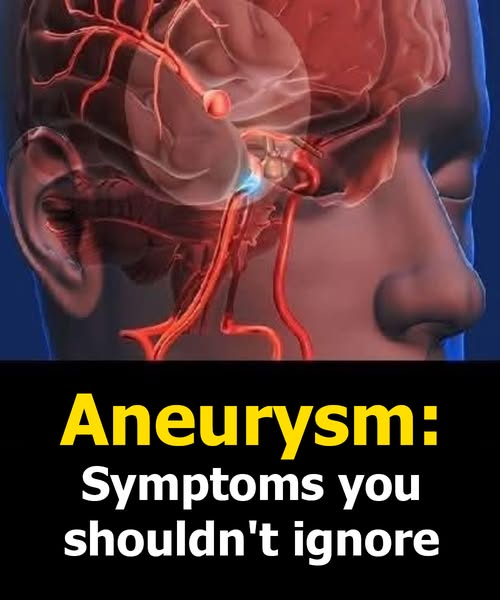
Aneurysms are often described as silent threats, and that description reflects a deeper truth about how easily they can go unnoticed. Unlike many other medical conditions that produce clear and early warning signs, aneurysms can develop gradually without causing any immediate discomfort. This invisibility allows misunderstandings to grow, as people tend to rely on symptoms to judge whether something is wrong. In reality, the absence of symptoms does not guarantee safety.
Instead, it often means the condition has not yet reached a point where it disrupts surrounding tissues or triggers noticeable changes in the body. One of the most common beliefs surrounding aneurysms is that they primarily affect older individuals. While aging does play a role in weakening blood vessel walls over time, the condition is not limited to a specific age group.
Blood vessels depend on structural proteins such as collagen and elastin to maintain their strength and flexibility. In some people, these components may be compromised earlier in life due to inherited conditions or developmental factors. As a result, aneurysms can form in younger individuals, especially when additional risk factors are present.
Genetic conditions like Ehlers–Danlos syndrome or Marfan syndrome can significantly increase vulnerability. These disorders affect the body’s connective tissues, including those that support the structure of blood vessels. When these tissues are weaker than normal, arteries may be less able to withstand the constant pressure of circulating blood. In addition to genetic influences, congenital abnormalities—structural differences present from birth—can also create weak points in arterial walls, making aneurysm formation more likely over time.
Lifestyle and environmental factors can further influence risk. Smoking, for example, has been strongly associated with damage to blood vessels, contributing to inflammation and weakening of the arterial wall. Similarly, uncontrolled high blood pressure places continuous stress on vessel walls, accelerating the process of structural deterioration. When these factors are combined with underlying vulnerabilities, the likelihood of developing an aneurysm increases, sometimes earlier than expected.
Another widespread misconception is the idea that if there are no symptoms, there is no danger. In truth, many aneurysms remain completely silent for years. This silence is not a sign of stability but rather a reflection of the aneurysm’s position and size at a given moment. As long as it does not press on nearby nerves or tissues, it may go entirely unnoticed. However, beneath the surface, the vessel wall may be gradually weakening due to ongoing mechanical and biological stress.
The concept of hemodynamic stress helps explain this process. Blood does not flow evenly through all parts of the vascular system. Certain areas, particularly where arteries branch or curve, experience greater pressure and turbulence. Over time, this uneven force can contribute to the formation and growth of aneurysms. As the vessel wall stretches outward, it becomes thinner and less capable of withstanding pressure, increasing the risk of rupture.
Headaches are often dismissed because they are so common, but context is essential when evaluating them. Most headaches are harmless and temporary, which is why people rarely associate them with serious conditions. However, a sudden and extremely severe headache is different. Often described as a “thunderclap” headache, it reaches peak intensity within seconds and can signal a life-threatening event such as a subarachnoid hemorrhage.
This type of headache is typically accompanied by additional symptoms, including nausea, vomiting, stiffness in the neck, sensitivity to light, and sometimes confusion or difficulty staying conscious. These signs occur because blood leaking into the space around the brain irritates sensitive tissues and increases pressure within the skull. Unlike routine headaches, this combination of symptoms represents a medical emergency and requires immediate evaluation.
There is also a belief that being physically healthy eliminates the possibility of developing an aneurysm. While maintaining a healthy lifestyle can reduce overall risk, it does not provide absolute protection. Aneurysms can still form due to underlying biological processes that are not always visible or preventable. Chronic low-level inflammation, gradual breakdown of structural proteins, and subtle changes in blood flow can all contribute to vessel wall weakening without producing noticeable symptoms.
On the other hand, it is important to avoid the assumption that every aneurysm will inevitably rupture. Many aneurysms remain stable and never lead to serious complications. The likelihood of rupture depends on several factors, including the aneurysm’s size, location, growth rate, and the overall condition of the blood vessel. Medical professionals use these variables to assess risk and determine the most appropriate course of action for each individual case.
Treatment decisions are highly personalized. In some situations, careful monitoring through regular imaging is the best approach, allowing doctors to track any changes over time. In other cases, preventive interventions may be recommended. Procedures such as surgical clipping or endovascular coiling are designed to secure the aneurysm and reduce the risk of rupture. These treatments are chosen based on a careful evaluation of potential benefits and risks, ensuring that decisions are tailored to the patient’s specific condition.
At a fundamental level, an aneurysm represents a structural weakness in a blood vessel wall. This weakness develops through a combination of biological and mechanical influences. Proteins like elastin provide flexibility, allowing vessels to expand and contract with each heartbeat, while collagen provides strength and stability. When these components are damaged or reduced, the vessel wall becomes more susceptible to bulging under pressure.
Blood flow dynamics further complicate the picture. The circulatory system is not uniform, and certain نقاط are exposed to higher levels of stress. Over time, these areas may become sites where aneurysms are more likely to form. This interaction between structural biology and physical forces highlights why aneurysms can develop even in individuals who appear otherwise healthy.
Although many aneurysms remain undetected, the body may sometimes produce subtle warning signs before a rupture occurs. An unruptured aneurysm pressing on nearby nerves can lead to localized symptoms such as pain behind one eye, blurred or double vision, a drooping eyelid, or weakness on one side of the face. These symptoms are often overlooked or attributed to less serious causes, but they can provide important clues that something is wrong.
When an aneurysm ruptures, the symptoms are usually sudden and severe. In addition to an intense headache, individuals may experience vomiting, neck stiffness, confusion, seizures, or loss of consciousness. These symptoms indicate bleeding in or around the brain and require urgent medical attention. Quick recognition and response are critical, as early treatment can significantly improve outcomes.
In the end, aneurysms exist in a delicate balance between silence and urgency. They may remain hidden for years, but when they do produce symptoms, those signals should be taken seriously. Awareness is not about creating unnecessary fear but about understanding the condition well enough to recognize when something is unusual. By staying informed, managing risk factors, and seeking medical attention when needed, individuals can take practical steps to protect their health.
Knowledge, in this context, becomes a form of prevention. Recognizing that aneurysms do not always follow predictable patterns allows for a more realistic and responsible approach to health. Rather than relying on assumptions, it is better to remain attentive to sudden changes in the body and to treat unusual symptoms with the seriousness they deserve.
