
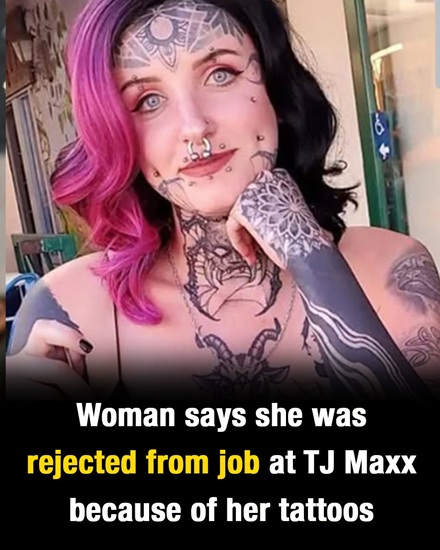
A recent viral discussion on social media has sparked widespread debate about employment standards, workplace appearance, and hiring practices after a young woman shared her experience applying for a retail job and being rejected.
The woman, known online as Ash Putnam, posted a video on TikTok describing her experience applying for a position at TJ Maxx, a large retail chain in the United States known for selling discounted clothing, home goods, and accessories.
In her video, she explained that she submitted an online application for a retail position and later received an automated rejection email without being contacted for an interview or receiving detailed feedback.

She stated that after receiving the rejection, she decided to visit the store in person to ask for clarification regarding her application and to better understand the hiring decision.
According to her account, she spoke with a store employee or manager who explained that other applicants may have had more relevant experience in retail or customer service roles, which influenced the hiring outcome.
She also raised the question of whether her visible tattoos and facial piercings may have contributed to the decision, although she was reportedly told that lack of experience was the main reason.
Her appearance, which includes multiple visible tattoos on her face and body as well as facial piercings, became a major focus of discussion after her video gained widespread attention online.
The TikTok video quickly went viral, reaching millions of views and generating thousands of comments from users expressing a wide range of opinions about employment, appearance, and workplace expectations.

Many social media users engaged in debates about whether visible tattoos and piercings affect job opportunities, especially in customer-facing roles such as retail positions.
Some commenters suggested that certain employers may still prefer traditional appearance standards in roles that involve direct interaction with customers.
Others argued that skills, attitude, and work experience should be the primary factors in hiring decisions, rather than personal appearance.
The discussion highlighted the ongoing tension between modern self-expression and traditional workplace expectations in industries such as retail, hospitality, and customer service.
Over the past decade, tattoos and piercings have become significantly more socially accepted in many parts of the world, especially among younger generations.
However, workplace policies regarding visible body art can still vary widely depending on the company, industry, and specific job responsibilities.

Retail environments like TJ Maxx often involve customer interaction, which means some locations may still apply appearance guidelines based on branding and customer experience considerations.
Some online users claimed that facial tattoos in particular may be viewed differently from tattoos in less visible areas of the body, especially in conservative or customer-facing workplaces.
Other users strongly disagreed with this perspective, emphasizing that personal appearance should not determine a person’s ability to perform job duties effectively.
A portion of commenters shared their own experiences of job rejections or workplace challenges, suggesting that employment decisions can sometimes feel unclear or inconsistent to applicants.
Several users also pointed out that entry-level retail positions often receive a large number of applications, which can make the selection process highly competitive.
In such cases, employers may prioritize candidates with prior experience in retail, customer service, or similar roles where communication and product handling are required.

Some individuals who identified themselves as hiring managers or HR professionals in the comments suggested that customer-facing roles often consider overall presentation as part of the hiring process.
However, these comments reflect personal opinions and experiences rather than official statements from any specific company or verified hiring policy.
TJ Maxx, like many large retail chains, typically evaluates candidates based on a combination of experience, availability, communication skills, and suitability for the specific role being filled.
Hiring decisions may also vary depending on store location, management preferences, and staffing needs at the time of application.
The viral nature of the video contributed to a broader public discussion about workplace inclusivity and evolving attitudes toward tattoos, piercings, and alternative fashion styles.
In many industries today, visible tattoos have become more accepted, particularly in creative fields, entertainment, technology, and certain service sectors.
However, in more traditional customer-facing environments, some employers may still maintain dress codes or appearance guidelines aimed at maintaining a consistent brand image.

The conversation also highlighted the challenges faced by young job seekers, particularly those applying for entry-level positions without prior work experience.
Experts in employment and career development often note that gaining initial work experience can be one of the most difficult steps for new job seekers entering the workforce.
Because of this, many candidates begin with part-time jobs, internships, or volunteer work to build experience and improve their chances of future employment.
The situation shared online also reflects how quickly personal experiences can become widely discussed topics on social media platforms, often generating strong and divided opinions.
Some users focused on the broader issue of workplace fairness and equal opportunity, while others emphasized practical hiring considerations in customer service environments.
The discussion further illustrates how appearance-based judgments remain a sensitive and complex topic in modern employment practices.
While society continues to move toward greater acceptance of individuality and self-expression, differences still exist between industries and employer expectations.
It is also important to note that online reactions do not always represent official policies or verified facts about any company involved in viral discussions.
Social media platforms often amplify personal opinions, humor, and emotional reactions, which can sometimes overshadow the original context of an event.
In this case, the video served as a catalyst for a wider conversation about job applications, rejection experiences, and perceptions of professionalism in the workplace.
Ultimately, the situation highlights the importance of understanding that hiring decisions can be influenced by multiple factors, including experience, competition, and role requirements.
It also reflects ongoing changes in workplace culture as businesses balance traditional standards with modern expectations of diversity and self-expression.
As the conversation continues online, it remains a reminder of how employment experiences can resonate with many people and quickly become part of larger societal debates.
