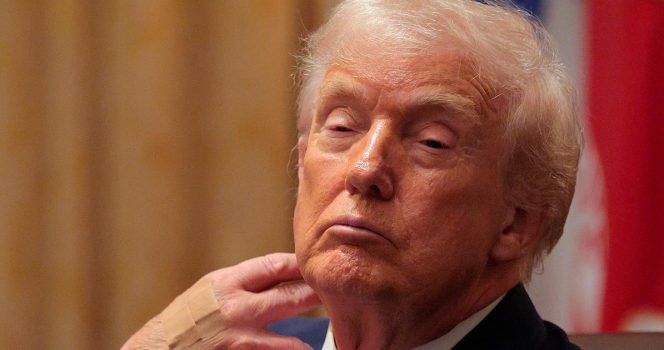
In recent weeks, former U.S. President Donald Trump has once again directed sharp, personal attacks at female journalists — and on Monday, December 8, 2025, he singled out another reporter during a tense White House exchange. The target was Rachel Scott, a senior political correspondent for ABC News. This incident highlights a broader, recurring pattern of hostility toward women in the press — a pattern that has alarmed media watchdogs, colleagues, and public-interest advocates alike.
The attacks, though verbal, are not merely interpersonal disputes; they are indicative of a political culture that increasingly conflates journalistic scrutiny with personal antagonism. Media scholars argue that repeated, gendered attacks can erode public trust, compromise democratic oversight, and send chilling signals to both established and aspiring journalists, particularly women.
🔹 What Happened: The Confrontation
The confrontation unfolded during a White House roundtable on agricultural aid, held in a room crowded with reporters, aides, and officials. As the session neared its end, Rachel Scott asked a pointed question regarding Trump’s previous statements indicating willingness to release full video footage of a controversial military strike on an alleged drug-smuggling boat off the coast of Venezuela.
The strike — and especially the second “double-tap” missile that reportedly targeted survivors from the first attack — has drawn heightened scrutiny, including from lawmakers, defense analysts, and human-rights observers. This sequence of events raised critical questions about accountability, transparency, and potential international law violations.
Scott reminded Trump that, days earlier, he had publicly stated he had “no problem” releasing the full strike video. Her question was precise: whether the government would commit to releasing the complete footage of the September 2 strike.
Rather than responding substantively, Trump erupted, denied making the statement, and directed personal insults toward Scott. Addressing her and the press pool, he said:
“You are the most obnoxious reporter in the whole place … a terrible, actually a terrible reporter. And it’s always the same thing with you.”
He then attempted to shift responsibility, claiming that whether the footage would be released depended on Secretary of War Pete Hegseth:
“Whatever Pete Hegseth wants to do is OK with me.”
By contradicting his own prior statement of openness regarding the footage, Trump further complicated efforts to secure transparency about the controversial strike. Observers note that this deflection not only evades direct accountability but also undermines the credibility of public statements made by government leaders.
🔹 A Pattern of Gendered Attacks
This attack on Rachel Scott is far from an isolated incident. In the past month alone, Trump has publicly targeted multiple female correspondents from major news organizations.
On November 18, 2025, aboard Air Force One, he told Bloomberg’s White House correspondent Catherine Lucey to “Quiet, piggy” when she pressed him about previously classified files related to the Epstein investigation. Media organizations widely condemned the remark as demeaning and sexist.
On several occasions, Trump has called female reporters “stupid,” “ugly,” or other disparaging names after they posed critical questions. Targets have included reporters from CNN, CBS, The New York Times, Bloomberg, and ABC News.
Media-freedom organizations and press associations warn that repeated attacks of this nature are not simply isolated insults but represent a systemic pattern of hostility toward women in the press. Such behavior risks normalizing disrespect, discouraging rigorous reporting, and undermining journalistic integrity.
🔹 Historical Context: Trump and the Press
Donald Trump’s contentious relationship with the media dates back to his early campaigns. As a presidential candidate in 2015–2016, he frequently labeled critical outlets “fake news,” attacked reporters personally, and encouraged public distrust of the press.
While male journalists were sometimes targeted, numerous studies have found that female journalists consistently faced gendered attacks — insults emphasizing appearance, demeanor, or “tone” — alongside criticism of their reporting. Such tactics exploit societal biases and can discourage women from participating fully in political journalism.
These behaviors are not unique to Trump, but the repeated, public nature of the attacks, combined with his influence as a political leader, magnifies their impact. Media scholars argue that repeated exposure to this hostility reinforces a culture in which women reporters are more likely to self-censor, limit their investigative work, or exit the profession altogether.
🔹 Press Freedom and Accountability
Scott’s question concerned the release of footage from a military strike — an issue with significant implications for public oversight and transparency. By responding with personal insults rather than addressing the question, Trump sidestepped a substantive discussion on matters of public interest.
Media advocates argue that hostility directed disproportionately at female journalists exacerbates a chilling effect. When reporters anticipate personal attacks, they may hesitate to ask difficult questions or challenge powerful actors, thereby weakening democratic accountability.
In this context, personal attacks serve as both a defensive tactic and a signal to other journalists: that critical scrutiny may be met with ridicule or intimidation. Over time, this can normalize aggression toward journalists and erode institutional norms designed to protect press freedom.
🔹 The Fallout: Public and Political Reactions
The response to Trump’s attacks was swift. Numerous media outlets condemned the president’s remarks, highlighting the broader implications for press freedom and gender equality. Journalists across networks expressed solidarity with Rachel Scott and other targets, emphasizing that attacks on one member of the press corps affect the entire profession.
Lawmakers on Capitol Hill pressed for transparency regarding the Venezuelan boat strike. Congressional leaders and defense-oversight committees demanded the release of all footage, citing the American public’s right to unedited records of military operations. Legal experts have also called for investigations into the potential human-rights implications of the second strike.
Press advocacy groups raised alarms, warning that repeated gendered insults contribute to a hostile environment, undermining democratic norms and discouraging rigorous journalism. Some observers urged collective action from the global press corps: refusing to normalize such attacks and reaffirming standards of respect, particularly when covering sensitive national-security issues.
🔹 Gendered Hostility in Journalism: A Global Trend
The Trump-Scott incident is part of a broader, global pattern. Research indicates that female journalists frequently face disproportionate hostility, including harassment, sexist slurs, and personal attacks, especially when reporting on high-profile figures or controversial topics.
Academic studies highlight that women in journalism are more likely than their male counterparts to experience online abuse, gendered criticisms, and public denigration. Such hostility is magnified in politically polarized environments, social media platforms, and contexts where public officials themselves normalize aggressive rhetoric.
Unchecked, these behaviors threaten the morale, safety, and professional development of women in media. They can also narrow public discourse by discouraging diverse voices and perspectives, ultimately undermining the quality and credibility of news reporting.
🔹 Psychological and Social Effects
Repeated exposure to gendered attacks can have measurable psychological consequences for journalists. Studies in occupational psychology suggest that individuals subjected to ongoing verbal hostility may experience increased stress, anxiety, and burnout.
In addition, these patterns influence newsroom culture. Colleagues may hesitate to support targeted reporters, aspiring journalists may reconsider career paths, and editorial priorities may shift to avoid conflict, ultimately impacting the breadth and depth of news coverage.
🔹 International Comparisons
Globally, the phenomenon of female journalists facing disproportionate attacks is documented in democratic and non-democratic societies alike. In many European countries, North America, and parts of Asia, women covering politics, conflict, and sensitive investigations face a higher incidence of threats, both online and offline.
International press organizations, including the Committee to Protect Journalists (CPJ) and Reporters Without Borders (RSF), have repeatedly highlighted the need for robust protections, legal frameworks, and cultural interventions to ensure gender equity and safety in journalism.
🔹 The Importance of Collective Standards
Experts argue that protecting journalists requires both legal safeguards and cultural norms. Individual reporters cannot bear the responsibility alone; press organizations, media advocacy groups, policymakers, and the public must actively enforce standards of respect, accountability, and equitable treatment.
Collective action can include:
- Denouncing gendered attacks consistently across platforms.
- Establishing newsroom protocols for support and reporting incidents.
- Advocating for legislative protections against harassment and threats.
- Encouraging public recognition of the societal value of critical journalism.
By fostering an environment that prioritizes respect and integrity, society helps ensure that all journalists — particularly women — can perform their duties without fear of personal attacks.
🔹 Lessons for Leadership and Democracy
Trump’s confrontation with Rachel Scott underscores the broader stakes of leadership behavior. When those in power model hostility toward journalists, the message is amplified: critical scrutiny is punishable, and press freedom is conditional rather than guaranteed.
For democracies, this presents a dilemma. Citizens rely on the press to provide accurate, timely, and independent information. When journalists are intimidated, misled, or disparaged, the public’s ability to hold power accountable diminishes. Leadership that prioritizes personal defense over transparency jeopardizes democratic norms, undermining public trust in institutions and media alike.
🔹 Conclusion: A Pattern — and a Call to Action
President Trump’s attack on Rachel Scott is not an isolated outburst; it is part of a persistent pattern of personal attacks on female journalists — often following legitimate, public-interest questions.
The implications are profound: such behavior threatens press freedom, discourages gender equity in media, undermines accountability, and erodes public trust.
The choice before journalists, media organizations, civil-society advocates, and citizens is clear: either tolerate hostility and normalize its impact, or actively push back, demand accountability, and reinforce standards of respect.
In the delicate balance between authority and transparency, words matter. And so do the people who report them. By supporting journalists, especially those targeted due to gendered hostility, society affirms the value of truth, equity, and democratic oversight.
