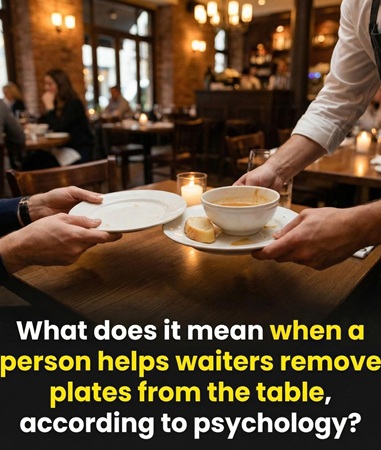
In the gentle hum of conversation, the clinking of glasses, the occasional hiss of espresso machines, and the warm glow of overhead lighting, restaurants and cafés are far more than places to eat—they are social microcosms. Every movement, every glance, every subtle interaction between patrons and staff contributes to a dynamic, unfolding network of behavior, etiquette, and shared experience.
Among these interactions, some of the smallest gestures—lifting a stack of plates, handing an empty cup to a server, or adjusting the placement of condiments—might initially seem inconsequential. Yet, these micro-actions, when examined closely, reveal intricate patterns of human empathy, social intelligence, and the natural inclination to cooperate within shared spaces. They illustrate how even the most ordinary moments can illuminate profound truths about character, intention, and the social fabric of daily life.
Consider a diner who, without being asked, gathers a few empty plates and passes them to a server with a quiet smile. The act itself is brief, almost imperceptible in a busy dining room, and yet it demonstrates a convergence of social awareness, observation, and consideration.
It signals recognition of the labor involved in service work, an understanding that shared spaces function more smoothly when participants contribute thoughtfully, and an ability to act without seeking acknowledgment. Research in social psychology confirms that small, voluntary acts of kindness—sometimes referred to as “prosocial micro-behaviors”—can profoundly influence both the giver and the recipient, affecting mood, cooperation, and even long-term social cohesion.
The Social Microcosm of Dining Spaces
Restaurants, cafés, and other shared dining environments are unique social laboratories. Patrons enter these spaces with expectations of enjoyment, sustenance, and relaxation, while staff navigate a complex set of tasks—taking orders, managing multiple tables, balancing trays, and responding to a steady flow of requests. Amid these dynamics, diners’ behaviors can either alleviate or exacerbate stress, both for themselves and for service staff. Individuals who instinctively step in to assist, even in minor ways, are demonstrating a level of social cognition that goes beyond basic courtesy. They read the environment, anticipate needs, and act in a manner that enhances collective efficiency and emotional harmony.
Dr. Mark Leary, a leading psychologist in social behavior, notes that such prosocial acts often reflect a heightened capacity for empathy: “When individuals are attuned to the experiences of others, they are more likely to engage in behaviors that support communal functioning, even without conscious deliberation.” In dining settings, this translates into actions such as clearing plates, moving chairs for easier passage, or holding doors open—gestures that, while seemingly trivial, signal awareness and care for the comfort of others.
Prosocial Behavior and Its Psychological Foundations
Prosocial behavior—the voluntary actions intended to benefit others—is a cornerstone of human social interaction. Numerous studies have shown that prosocial acts are driven by a combination of intrinsic motivation, empathy, social norms, and emotional intelligence. In the context of restaurants, diners who spontaneously assist staff often do so not because of expectation or social pressure, but because they recognize the effort and complexity of service work. They may have experienced similar roles themselves or may simply be attuned to the challenges of carrying multiple trays, navigating crowded floors, and managing demanding customers.
Research in behavioral psychology emphasizes that even minor, unprompted acts of assistance can have measurable impacts on mood and satisfaction. For instance, a study published in the Journal of Personality and Social Psychology found that individuals who engaged in small acts of helping behavior reported increased positive affect and a greater sense of purpose, compared to those who did not. These micro-behaviors reinforce the idea that meaningful social contributions do not always require grand gestures—they often manifest in the quiet, seemingly insignificant choices we make daily.
Emotional Intelligence and the Art of Timing
The effectiveness of these micro-gestures often depends on timing and social awareness. People who possess high emotional intelligence are particularly adept at reading subtle cues in their environment. They notice a server juggling multiple trays, a colleague reaching for a condiment, or a fellow diner struggling to make space at the table. Acting at the appropriate moment ensures that assistance feels natural rather than intrusive.
Timing matters because public spaces, particularly busy restaurants, operate on rhythms that are both visible and invisible. Patrons who assist at precisely the right moment—such as passing plates when a server pauses at the edge of a table, or stacking cups during a lull—demonstrate an intuitive understanding of these rhythms. This capacity to observe, interpret, and respond appropriately is a hallmark of social intelligence, and it allows individuals to contribute meaningfully without disrupting the flow of activity.
Humility and Recognition of Shared Effort
Acts of helping in dining contexts also reveal aspects of humility. Those who assist without drawing attention to themselves demonstrate that they do not consider themselves above the labor being performed. They recognize the shared nature of communal spaces: comfort, efficiency, and enjoyment are collective responsibilities, not the burden of a single individual. This quiet humility is significant because it counters common social hierarchies that often arise between patrons and service staff, or even among patrons themselves.
Anthropologist Mary Douglas observed that social cohesion often depends on the acknowledgment of others’ contributions, particularly in shared spaces. By performing small acts of consideration—holding a chair, clearing a spill, or stacking a plate—diners reinforce a culture of mutual respect and cooperation. Over time, these gestures normalize helpful behaviors, encouraging others to act similarly and creating a more supportive environment for all.
The Emotional Ripple Effect
The benefits of these micro-behaviors extend beyond immediate utility. For service staff, small gestures of assistance or recognition can alleviate stress, boost morale, and enhance job satisfaction. In high-pressure environments, even minor acknowledgment—such as a polite “thank you” or a shared effort in clearing dishes—can make the difference between a draining and a rewarding shift.
From the patrons’ perspective, participating in such acts fosters feelings of agency and personal efficacy. Engaging in small, meaningful behaviors has been shown to enhance self-perception, improve mood, and strengthen one’s sense of social connectedness. In essence, helping becomes mutually reinforcing: both the helper and the recipient derive emotional benefits, creating a positive feedback loop of cooperation, gratitude, and social harmony.
Cultural and Contextual Influences
It is important to note that prosocial behaviors in public spaces vary significantly based on cultural norms, upbringing, and individual boundaries. In some cultures, direct assistance may be encouraged, while in others, it may be considered intrusive or inappropriate. Similarly, personal experiences shape how individuals perceive and enact these behaviors. What matters most is the intent: assistance motivated by empathy and genuine care contributes positively to the environment, while acts driven by obligation, self-interest, or performative purposes may have neutral or even negative effects.
Practical Applications in Everyday Life
The principles underlying these micro-gestures in restaurants are applicable across numerous public and private contexts. In workplaces, offering a colleague help with a task, cleaning shared equipment, or preparing meeting materials can foster collaboration and reduce stress. In schools, students who assist peers with assignments or classroom organization contribute to a more productive and supportive environment. On public transportation, holding doors, giving up seats, or helping with luggage improves the experience for everyone involved.
Specific restaurant examples further illustrate the impact of small contributions:
- A diner noticing a server balancing multiple trays may step in to hold open a door.
- A family clearing crumbs and empty dishes while waiting for dessert reduces clutter that slows service.
- A single patron returning condiments or napkins ensures smoother experiences for subsequent diners.
Individually, these actions may seem trivial, but collectively, they improve workflow, foster goodwill, and enhance the emotional tone of the space. Staff often respond with appreciation, creating a reinforcing cycle where courteous behavior begets further kindness.
Broader Implications for Society
Small gestures of cooperation reflect broader social principles. Recognizing the efforts of others, contributing to shared comfort, and assisting when appropriate can strengthen communal bonds and promote a culture of respect and empathy. Encouraging awareness of micro-behaviors and modeling cooperative conduct has the potential to improve social cohesion in broader society, helping to mitigate conflict, reduce stress, and enhance interpersonal relationships across diverse environments.
The Takeaway
In conclusion, lifting a plate, stacking a cup, or adjusting the arrangement of items on a table extends far beyond its apparent simplicity. These acts embody empathy, humility, social intelligence, and recognition of shared responsibility. They serve as a quiet reminder that kindness does not require grand gestures—it thrives in everyday, often unnoticed moments. In a world where impatience, entitlement, and stress are common, even the smallest acts of consideration create ripples that enhance experiences, reinforce social bonds, and leave lasting impressions.
Next time you find yourself in a bustling restaurant or café, pay attention to the small gestures of assistance, both from yourself and others. Observe how they affect the energy, efficiency, and emotional tone of the space. Recognize that in these quiet interactions, the invisible threads of empathy, respect, and cooperation are at work, weaving a more harmonious and supportive environment. By embracing these micro-behaviors, we contribute not only to smoother dining experiences but also to a society where thoughtfulness, collaboration, and subtle kindness are valued, respected, and contagious.
