“Mom, there’s something I need to tell you about Oliver.” Jacob’s voice was barely audible above the wind.
We were standing at the summit of a mountain in the Appalachian region, looking out over miles of distant ridges and forests. After nearly six hours of climbing, my legs were exhausted, my breathing was heavy, and tears were already gathering in my eyes.
We had finally reached the place my late son had dreamed of seeing.
For years, I had imagined this moment.
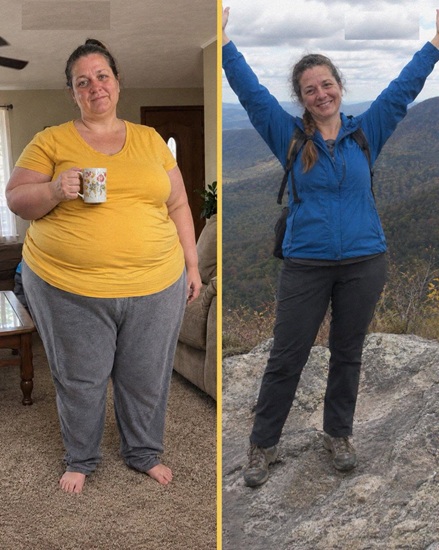
I had lost approximately 160 pounds, rebuilt my strength, and spent countless mornings walking trails with Jacob. Every step had brought us closer to the promise we had made to Oliver.
But as I turned toward my surviving son, I noticed that he wasn’t looking at the view.
He was staring down at a folded piece of paper in his hands.
“What’s wrong?” I asked.
Jacob swallowed.
“Oliver gave me this before he died. He made me promise not to tell you.”
I stared at him.
“What do you mean?”
His eyes filled with tears.
“Mom, there’s something about the day Oliver died that you never knew.”
Then he unfolded the paper.
And the first sentence made the beautiful view around us disappear from my mind.
Four years earlier, I had two sons.
Oliver and Jacob were identical twins. They were twelve years old, shared the same brown eyes, and had nearly identical crooked smiles.
People often struggled to tell them apart in photographs.
But anyone who spent a little time with them quickly discovered how different they were.
Jacob was thoughtful and quiet. He preferred to listen before speaking, and he often considered every possibility before making a decision.
Oliver was the opposite.
He was curious, adventurous, and always looking for something new to explore.
If he discovered a trail in a hiking guide, he immediately wanted to know where it led. If he saw a photograph of a mountain, he would start planning a trip before anyone had agreed to go.
My husband, Daniel, and I tried to encourage their interests.
Whenever our schedules allowed, we took the boys hiking, camping, and exploring nearby outdoor areas.
We spent weekends sleeping in tents, preparing simple meals outside, and watching the sunrise from rocky overlooks.
Those trips became some of our happiest family memories.
Oliver especially loved the mountains.
He kept a sketchbook filled with drawings of trees, trails, tents, and distant peaks. Sometimes he drew our family standing together at the top of a mountain.
He always included four little figures.
One afternoon, he showed us a picture of a mountain he had discovered in a hiking guide.
It was somewhere in the Appalachian region, and he had become fascinated with it.
“That’s the one,” he announced.
Daniel looked at the drawing.
“The one what?”
“The mountain we’re going to climb.”
I laughed.
“That’s quite a big adventure.”
Oliver nodded seriously.
“I know. That’s why we need to practice.”
He began drawing the route, adding trees and little marks to represent places where we could stop and rest.
Underneath the picture, he wrote a sentence:
“One day, all of us.”
Daniel promised that we would try to make the trip that summer.
Oliver started counting the weeks.
He talked about the mountain at breakfast, after school, and sometimes just before going to bed.
He imagined what the view would look like from the summit.
He even asked whether we could take a family photograph there.
We had no reason to think that anything would stop us.
But that summer never came for Oliver.
One morning, Oliver woke up feeling unwell.
He looked pale and told us he felt dizzy.
At first, I thought he might be coming down with an ordinary illness. Children sometimes wake up feeling terrible, and I assumed we would understand what was happening once the morning progressed.
But his condition worried me more as time passed.
He seemed weak, and his breathing did not look normal to me.
Then, without warning, he collapsed in the hallway.
Everything happened so quickly that I struggled to understand what I was seeing.
“Oliver!”
I rushed toward him.
Daniel called emergency services while I knelt beside our son.
I remember holding his hand and repeatedly telling him that we were there.
“Stay with me, sweetheart. Please.”
Oliver opened his eyes briefly.
“Mom?”
“I’m here. I’m right here.”
Those were the last words I remember exchanging with him.
The paramedics arrived and began working urgently.
I rode in the ambulance while Daniel followed with Jacob.
I remember the movement of the vehicle, the voices around me, and the overwhelming feeling that I needed someone to explain what was happening.
Then I heard that Oliver’s heart had stopped.
The medical team attempted to revive him.
They could not.
My twelve-year-old son was gone.
I don’t remember every detail of the hours that followed.
I remember sitting in a hospital room, trying to understand sentences that seemed impossible to connect with the child I had kissed goodbye that morning.
Doctors explained that Oliver had suffered a sudden cardiac arrest.
There were questions about what had caused it, but I struggled to absorb anything beyond the fact that he wasn’t coming home.
I wanted an explanation.
I wanted someone to tell me why it had happened.
Most of all, I wanted to go back to that morning and somehow change what had occurred.
But I couldn’t.
And the silence that followed was almost unbearable.
The weeks after Oliver’s death were a blur.
Our home still contained his shoes, his drawings, his schoolbooks, and the little things he had left behind.
His bedroom remained almost exactly as it had been.
Sometimes I would walk past the door and expect to hear him talking to Jacob.
Then reality would return.
Daniel handled his grief differently from me.
He became distant and spent long periods alone in the garage.
He rarely joined us for dinner, and conversations about Oliver seemed to make him uncomfortable.
At first, I assumed he simply needed time.
We had both lost our child.
I believed we were trying to survive the same tragedy in different ways.
But as the months passed, Daniel became increasingly withdrawn.
Several months after the funeral, he told me he couldn’t continue living in the house.
“I can’t do this anymore,” he said.
I looked at him in disbelief.
“What about Jacob?”
Daniel glanced toward the stairs.
“I’ll still be his father.”
But he moved out.
His visits became irregular, and eventually Jacob stopped asking when his father would come.
I was so consumed by my own grief that I didn’t fully recognize how much the separation was affecting the child who was still living beside me.
I thought I was the only one struggling to breathe in a world without Oliver.
I didn’t realize Jacob was struggling too.
Before Oliver died, I had already been dealing with my weight.
After his death, my relationship with food became increasingly difficult.
I ate when I couldn’t sleep.
I ate when the house felt unbearably quiet.
I ate when memories appeared unexpectedly and I didn’t know how to handle them.
Food gave me temporary comfort, even though it never changed what had happened.
Over time, my health and mobility became more difficult to manage.
Approximately two years after Oliver’s death, I weighed around 330 pounds.
Walking from the grocery store to my home could leave me exhausted.
Stairs were difficult.
Long walks seemed impossible.
I avoided photographs and declined invitations because I didn’t feel comfortable with how I looked or how little energy I had.
Jacob was fourteen by then.
He had become unusually independent.
He prepared simple breakfasts, washed his own clothes, and rarely asked me for anything.
Sometimes I caught him watching me with an expression I couldn’t understand.
I assumed he was worried about my health.
I didn’t realize he was also afraid of losing another parent.
One afternoon, while cleaning his room, I found something beneath a pile of notebooks.
It was an old sketchbook.
I recognized the cover immediately.
Oliver had decorated it with little drawings of pine trees and mountain paths.
I sat down and opened it.
The first pages contained familiar sketches.
There were tents, forests, trails, and small drawings of our family.
Then I turned another page.
And there it was.
The mountain.
Oliver had drawn it beneath a bright yellow sun.
Four tiny figures stood together at the summit.
Underneath, he had written:
“One day, all of us.”
I stared at the words until my eyes filled with tears.
For two years, I had avoided looking at Oliver’s belongings because I couldn’t bear the memories.
But that drawing reminded me of something I had nearly forgotten.
Oliver had loved exploring.
He had loved being outside.
And he had wanted his family to keep experiencing those things together.
That evening, I showed the drawing to Jacob.
He studied it quietly.
“I remember this,” he said.
I ran my fingers over the page.
“I want to climb that mountain.”
Jacob looked at me.
“Really?”
“Yes. I want us to do it for Oliver.”
He hugged me.
“Then we’ll do it together.”
Neither of us knew how difficult that promise would become.
The next morning, I tried walking around our neighborhood.
I didn’t get very far.
My knees hurt, my breathing became uncomfortable, and I had to turn back before completing even half a mile.
I sat on the porch feeling disappointed.
Jacob came outside.
“How far did you go?”
“Not far enough.”
He sat beside me.
“Then we’ll try again tomorrow.”
His answer was simple, but it stayed with me.
I spoke with my doctor about my health and began making changes to my routine.
I worked on improving my eating habits and gradually increased my physical activity.
At first, the goal wasn’t to climb a mountain.
It was simply to become strong enough to walk around the neighborhood without feeling defeated.
Jacob often joined me.
We started with short walks and slowly increased the distance.
Some mornings were easier than others.
There were days when my legs felt heavy and my motivation disappeared.
There were also days when grief returned unexpectedly, making even the smallest task feel exhausting.
But Jacob kept showing up.
He began making little maps of our walks.
Whenever we reached a new distance, he marked it down.
When I completed my first three-mile trail, he took a photograph.
“Oliver would’ve loved this,” he said.
I looked at the picture.
For the first time in a long while, remembering Oliver brought a smile before the tears.
That was a small victory.
But it mattered.
The months passed.
My progress wasn’t perfectly steady.
There were frustrating weeks when the scale barely changed and days when I felt as though I had taken several steps backward.
Still, I continued working on my health with guidance and patience.
Over approximately two years, I lost around 160 pounds.
It changed more than my appearance.
I could walk farther.
I could climb stairs more comfortably.
I had more energy for ordinary activities.
Most importantly, I was beginning to feel present in my own life again.
Jacob and I became closer through our walks.
We talked about school, friends, plans for the future, and the memories we shared with Oliver.
Sometimes we laughed about the trouble his brother used to get into.
Other times, we simply walked quietly.
There was one subject Jacob rarely discussed.
The morning Oliver died.
Whenever I mentioned it, he became unusually quiet.
I assumed the memories were too painful.
I didn’t want to pressure him.
Looking back, I wish I had understood that silence can sometimes hide more than sadness.
By the time Jacob turned sixteen, we had begun planning the mountain trip seriously.
We researched the route, considered the difficulty, checked the weather, and prepared the equipment we would need.
I also made sure my health and physical ability were appropriate for the planned hike.
We wanted the journey to be meaningful, but we also wanted to complete it safely.
The night before we left, Jacob appeared in the doorway of my bedroom.
“Mom, are you nervous?”
“A little,” I admitted.
He nodded.
“Me too.”
I smiled.
“That’s normal. It’s a big day.”
I assumed he was nervous about the climb.
I didn’t know there was something else weighing on him.
We started early the next morning.
The air was cool, and sunlight filtered through the trees.
Jacob carried a backpack containing water, food, and extra layers.
I carried Oliver’s sketchbook inside a waterproof pouch.
At the beginning, the trail felt manageable.
We walked steadily, stopping occasionally to drink water and enjoy the scenery.
The forest was peaceful.
Every now and then, Jacob pointed out something interesting along the route.
A strange tree.
A patch of sunlight.
A distant ridge visible between the branches.
I kept thinking about Oliver.
I imagined him running ahead, stopping to draw something, and then calling for us to catch up.
The thought made me smile.
But the trail gradually became steeper.
The ground was uneven, and the climb demanded more effort than the earlier sections.
My legs began to ache.
I slowed down.
Jacob noticed immediately.
“Do you want to take a break?”
I nodded.
We found a suitable place to rest.
He handed me water and sat nearby.
For a moment, I wondered whether I had underestimated the challenge.
I had worked so hard to reach this point.
I didn’t want to turn back.
But I also knew that finishing the hike safely mattered more than proving anything.
“We can stop if you need to,” Jacob said.
I looked at him.
“Let’s take a few minutes. Then we’ll decide.”
He smiled.
“Okay.”
After resting, I felt ready to continue.
We moved slowly, taking breaks when necessary.
As the trees became thinner, the view began to open.
Distant ridges appeared between the branches.
The air felt cooler.
The summit was getting closer.
And with every step, I thought about the drawing inside my backpack.
When we finally reached the summit, I stopped walking.
The view was extraordinary.
Mountains stretched into the distance, layered one behind another.
The wind moved across the open space.
After everything we had been through, I could hardly believe we had made it.
I opened the waterproof pouch and carefully removed Oliver’s sketchbook.
I turned to the drawing of the mountain.
There were the four little figures beneath the yellow sun.
I held the page gently.
“We did it, sweetheart,” I whispered. “We’re here, Ollie.”
My eyes filled with tears.
Jacob stood beside me.
For a moment, I thought he was simply overwhelmed by the same emotions.
But when I turned toward him, I noticed he was staring at his backpack.
His expression was different.
He looked frightened.
“Jacob?”
He didn’t answer immediately.
Then he reached inside and removed a folded piece of paper.
It was old and worn along the creases.
He held it carefully, as though it might fall apart.
“Mom, there’s something I need to tell you.”
I looked at the paper.
“What is that?”
“Something Oliver gave me before he died.”
My heart began beating faster.
“What did he give you?”
Jacob’s eyes filled with tears.
“He made me promise not to tell you.”
I couldn’t understand.
“Why would he do that?”
Jacob looked down.
“Because he was worried about something. And because Dad knew.”
I felt the wind against my face.
“What did Dad know?”
Jacob unfolded the paper.
And then he handed it to me.
The handwriting was unmistakable.
It belonged to Oliver.
The note began with a familiar greeting.
“Jake,”
I read the first lines slowly.
“I got dizzy again today. My heart was beating really fast after we came back from walking, even though I wasn’t running.”
I stopped.
Then I read the sentence again.
Oliver continued:
“I told Dad like you said. He thinks I’m probably just tired, but he promised we’ll go to the doctor if it happens again.”
My fingers began to tremble.
The final lines were even harder to read.
“Please don’t tell Mom yet. She worries about everything, and I don’t want her to cancel our mountain trip.”
“I promise I’ll tell her if it gets worse.”
“Ollie.”
I stared at the paper.
I read it once.
Then again.
For four years, I had believed that Oliver’s death had come without any warning we could have recognized.
Now I was holding a note suggesting that he had experienced symptoms before that terrible morning.
I looked at Jacob.
“When did he write this?”
“A few days before he died.”
I struggled to speak.
“Did you know about this?”
Jacob began crying.
“He told me he had been getting dizzy. I told him he should say something to Dad.”
I looked down at the note.
“He told Dad?”
Jacob nodded.
“He said Dad knew, so I thought everything was okay.”
I sat down on a nearby rock.
The summit was still beautiful.
The sky was still bright.
But my thoughts had changed completely.
“Why didn’t anyone tell me?”
Jacob wiped his face.
“Mom, I wanted to.”
His voice broke.
“But I promised Oliver.”
Jacob explained what had happened after Oliver died.
He had found the note tucked inside his brother’s school notebook.
At first, he didn’t know what to do with it.
He was only twelve.
He had just lost his twin brother, and he was trying to understand why the person who had shared almost every part of his life was suddenly gone.
Eventually, he showed the note to Daniel.
“How did Dad react?” I asked.
Jacob looked down.
“He started crying.”
I waited.
“He said he should have taken Oliver to the doctor.”
I closed my eyes.
Jacob continued.
“Then he told me you were already struggling. He said that if you found out, you might blame him, and it could destroy what was left of our family.”
I couldn’t believe what I was hearing.
“Did he ask you not to tell me?”
Jacob nodded.
“He said we couldn’t change what happened. He told me to keep the note between us.”
I looked at my son.
He had been twelve years old.
He had lost his identical twin, the person who had been beside him since the day they were born.
And now I was learning that he had also been carrying a secret he believed he wasn’t allowed to share.
“Jacob…”
His face crumpled.
“I thought I was protecting you.”
I reached for his hand.
He continued explaining that as the months passed, he became increasingly afraid of upsetting me.
He saw how difficult it was for me to get through ordinary days.
He noticed that I was eating more, avoiding people, and spending long periods alone.
He believed that telling me about the note would make everything worse.
“Then Dad left,” he whispered. “And you were barely able to get out of bed some mornings.”
I felt tears running down my cheeks.
“I didn’t want to lose you too.”
That sentence hurt more than anything else.
For years, I had believed I was the only person in our home who was afraid of losing someone.
I hadn’t realized how frightened Jacob had been.
“Why didn’t you tell me when you got older?” I asked gently.
Jacob shook his head.
“At first, I thought I had to keep the promise. Then I thought you would never forgive Dad. I didn’t know what would happen to us.”
He looked at the note again.
“And sometimes I thought maybe I should have done something.”
I moved closer.
“What do you mean?”
“I knew he was getting dizzy. I told him to tell Dad. But I didn’t tell you myself.”
His voice became quieter.
“What if I had?”
I held both his hands.
“Jacob, you were twelve years old.”
He looked at me.
“You were a child who had just lost his brother. You weren’t responsible for diagnosing Oliver, arranging medical care, or deciding what the adults should do.”
“But I knew something was wrong.”
“You knew your brother wasn’t feeling well. You encouraged him to tell someone. That is what a brother could reasonably do.”
Jacob began crying.
“I keep thinking that maybe if I had told you, things would have been different.”
I took a deep breath.
“We don’t know that.”
He looked at me.
“We don’t know what caused Oliver’s cardiac arrest. We don’t know whether a medical appointment at that time would have changed the outcome. We cannot answer those questions from this note.”
I paused.
“But one thing I do know is that you were never supposed to carry responsibility for what happened.”
Jacob leaned against me.
I wrapped my arms around him.
For a long time, neither of us spoke.
The wind moved across the summit, and the paper rested between us.
We had climbed the mountain to honor Oliver.
But we had uncovered something neither of us had expected to face.
Eventually, Jacob looked toward the distant ridges.
“There’s something else I want you to know.”
I turned toward him.
“When you first said you wanted to climb this mountain, I was scared.”
“Because of the hike?”
He nodded.
“You were struggling to walk very far back then. I worried that you might hurt yourself trying to do something so difficult.”
I remembered those first attempts.
The short walks.
The aching knees.
The frustration of having to turn back.
“But then you kept going,” he continued.
“You started getting stronger. You started going outside more. And sometimes, you even laughed again.”
His eyes filled with tears.
“I kept helping because I didn’t want to lose you.”
I felt my throat tighten.
I had always believed that our walks were mainly about Oliver.
I thought Jacob was helping me fulfill a promise to his brother.
But now I understood that there had been another reason.
He had been trying to bring his mother back into his life.
“I thought we were doing this for Oliver,” I said.
“We were,” Jacob replied.
Then he looked at me.
“But I needed you back too.”
I pulled him close.
“I’m here, Jacob.”
He rested his head against my shoulder.
“And I’m going to do a better job of being here.”
It was a promise I intended to keep.
We stayed at the summit for a while.
I took out Oliver’s sketchbook again and opened the page with the mountain drawing.
Four small figures stood beneath the yellow sun.
For years, I had looked at that picture and thought only about what we had lost.
Now I saw something else.
Oliver had wanted us to explore.
He had wanted us to spend time together.
He had wanted his family to share an adventure.
We couldn’t give him the exact moment he had imagined.
But Jacob and I had reached the place he had dreamed about.
I carefully folded the note and placed it inside the sketchbook.
“Would you like me to keep it?” I asked.
Jacob nodded.
“Please.”
I returned the book to its waterproof pouch.
Then we prepared for the descent.
The climb had taken hours, but the journey down required just as much attention.
We moved carefully, rested when necessary, and made sure we had enough energy to finish safely.
Neither of us spoke much at first.
But the silence between us felt different now.
It wasn’t a silence built around an unspoken secret.
It was simply two people trying to process something painful together.
Two days after returning home, I called Daniel.
I had not spoken with him about anything beyond occasional matters involving Jacob for quite some time.
I sat at the kitchen table with Oliver’s note beside me.
When Daniel answered, I didn’t waste time.
“I know about Oliver’s note.”
There was a long silence.
Then he asked quietly:
“Jacob told you?”
“Yes.”
Daniel exhaled.
“I never wanted you to find out that way.”
I stared at the paper.
“How did you want me to find out?”
He didn’t answer.
I asked whether Oliver had told him about the dizziness and the episodes of a racing heartbeat.
Daniel eventually admitted that Oliver had mentioned them.
“He said it happened after he’d been active,” Daniel explained. “I thought he was probably overtired.”
I tried to keep my voice steady.
“And you promised to take him to the doctor if it happened again?”
“Yes.”
“Did you arrange an appointment?”
“No.”
The answer was quiet.
But it was enough to make me close my eyes.
“Why not?”
Daniel’s voice cracked.
“I thought there was time.”
I waited.
He continued.
“I thought he was just tired. I didn’t understand how serious it could be.”
I looked down at the note.
“You knew something was happening, Daniel. And I didn’t.”
“I know.”
“Why did you let Jacob carry this secret?”
Daniel began crying.
“I couldn’t bear the thought of you blaming me.”
I sat still.
“So you made our twelve-year-old son responsible for protecting me from the truth?”
He didn’t answer.
I had imagined many conversations with Daniel over the years.
I had wondered whether he knew more about Oliver’s final days than he had told me.
But hearing him acknowledge that he had known about the symptoms was different from imagining it.
I was angry.
I was heartbroken.
And I was still left with questions no conversation could answer.
“Did you ever speak with a doctor about the note?” I asked.
Daniel said he had not.
He explained that after Oliver died, he became consumed by guilt and repeatedly wondered whether he should have acted sooner.
But instead of discussing it honestly, he had withdrawn.
He had convinced himself that silence would protect the family.
It hadn’t.
It had placed an enormous burden on Jacob.
“You should have told me,” I said.
“I know.”
“You should have allowed me to share the truth with you, even if it was painful.”
Daniel was crying now.
“I was afraid.”
“So was I,” I replied. “We were both afraid. But Jacob was a child.”
He agreed.
I told him that if he wanted to rebuild his relationship with our son, he needed to apologize directly.
Not because Jacob owed him forgiveness.
Not because an apology could erase the past.
But because Jacob deserved to hear his father acknowledge that the secret had never been his responsibility.
Daniel said he understood.
I wasn’t ready to forgive him.
I didn’t know when I would be.
But I also knew that I couldn’t let his silence determine what Jacob and I were allowed to discuss.
For the first time in four years, the subject was no longer hidden.
That evening, Jacob found me sitting in the living room.
Oliver’s sketchbook was open on my lap.
“Did you talk to Dad?” he asked.
“Yes.”
“Was he angry?”
“No, sweetheart.”
Jacob sat beside me.
“Are you angry?”
I thought carefully before answering.
“Yes. I’m angry about some of the choices he made. But I’m not angry with you.”
Jacob nodded.
Then he pointed toward one of the drawings.
It showed our old camping tent beside a lake.
“Do you remember when Oliver dropped all the marshmallows in the dirt?”
I laughed unexpectedly.
“Of course I remember.”
Jacob smiled.
“He tried to convince us they were still good.”
“And then he ate one himself.”
We both laughed.
For a while, we turned the pages together.
We found drawings of trees, tents, animals, and mountains.
There were little notes in the margins and reminders of trips we had taken.
We talked about Oliver’s terrible attempts at cooking outdoors.
We remembered how he always wanted to stay outside longer than everyone else.
We remembered his jokes, his curiosity, and the way he could turn an ordinary afternoon into an adventure.
For the first time in years, Jacob spoke about his brother without appearing afraid that remembering him would upset me.
And I listened.
Not as someone trying to escape the sadness.
But as a mother who wanted to remember her child fully.
A week later, I framed Oliver’s drawing of the mountain.
I placed it in our living room beside a photograph Jacob had taken at the summit.
In Oliver’s picture, four tiny figures stood beneath a yellow sun.
In the photograph, Jacob and I stood together, exhausted and smiling.
I looked at both pictures for a long time.
I still wondered about the symptoms Oliver had described.
I wondered what might have happened if we had understood their significance sooner.
I wondered whether a medical evaluation would have revealed something that could have changed his care.
But I also knew that wondering was not the same as knowing.
The note gave us information about what Oliver had experienced and what he had told his father.
It did not establish the medical cause of his death.
It could not tell us with certainty what would have happened under different circumstances.
Those questions might remain unanswered.
And I would have to learn to live with that uncertainty.
But there was one thing I could change.
Jacob no longer had to carry the secret alone.
In the months that followed, we continued spending time together.
We went for walks.
We looked through Oliver’s drawings.
Sometimes we talked about the mountain, and sometimes we discussed ordinary things that had nothing to do with grief.
Daniel eventually spoke with Jacob and apologized for asking him to keep the note hidden.
I knew that rebuilding trust would take time.
An apology could begin a conversation, but it could not erase four years of silence.
I didn’t force Jacob to respond in any particular way.
He deserved the time and space to decide what kind of relationship he wanted with his father.
My priority was making sure he understood that he could always speak honestly with me.
One afternoon, we returned to the framed mountain drawing.
Jacob stood beside me.
“Do you think Oliver would have liked the photograph?”
I smiled.
“I think he would have asked why we didn’t bring him along.”
Jacob laughed.
“He would’ve complained about how slowly we walked.”
“Probably.”
Then we both became quiet.
Not every memory needed a conversation.
Some were enough simply to hold.
I began this journey because I wanted to climb the mountain Oliver had dreamed of reaching.
I thought the greatest challenge would be losing weight, rebuilding my strength, and making it to the summit.
Those things were difficult.
But the hardest part was discovering how much pain my surviving son had been carrying while I was trying to survive my own.
For four years, Jacob had believed that keeping a promise to his brother meant hiding something from his mother.
He had mistaken silence for protection.
And I had mistaken his quietness for a sign that he was coping.
We had both been grieving.
We had both been afraid.
But we had not been talking about the things that mattered most.
That changed on the mountain.
I cannot go back and change the morning Oliver died.
I cannot know whether an earlier medical appointment would have altered what happened.
And I cannot recover the years when Jacob believed he had to manage a secret that belonged to the adults.
But I can listen now.
I can make room for difficult conversations.
I can help my son understand that he never had to protect me by carrying his pain alone.
The mountain was supposed to be the destination.
Instead, it became the place where we finally began telling each other the truth.
I had climbed 160 pounds lighter than the woman who first sat on the porch, exhausted after a short walk.
But the most important thing I carried down that mountain wasn’t a photograph or a finished hiking challenge.
It was the understanding that honoring the child we lost must never mean overlooking the child who is still here.
Oliver’s dream brought us to the summit.
Jacob’s courage helped us face what we had left unspoken.
And when I look at the two pictures hanging side by side in our living room, I remember both sons.
One who dreamed of reaching the mountains.
And one who helped his mother find the strength to keep going.
We couldn’t change the past.
But we could finally face it together.