
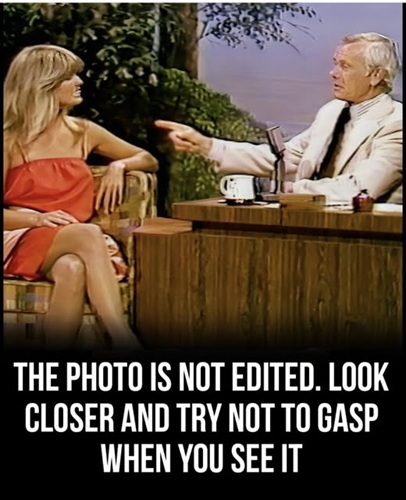
Farrah Fawcett did not simply rise to fame in the 1970s — she became one of the defining images of the decade.
Long before the era of social media metrics, viral fame, and digital branding, her stardom developed through television screens, glossy magazine covers, and a single photograph that would become one of the most recognizable images in American pop culture.
She represented a particular moment in time: optimistic, sunlit, athletic, and distinctly American. Yet behind the famous smile and feathered hair was a thoughtful, disciplined, and ambitious woman whose life story extends far beyond a poster or a television role. To understand the magnitude of her influence, it is essential to begin not in Hollywood, but in Texas.
Roots in Corpus Christi: A Grounded Beginning
Farrah Leni Fawcett was born on February 2, 1947, in Corpus Christi, Texas. She was the younger of two daughters born to Pauline Alice Fawcett, a homemaker, and James William Fawcett, an oil field contractor. Her upbringing was rooted in a traditional Catholic household, one defined by structure, faith, and close family ties.

Friends and classmates later recalled her as polite, warm, and naturally charismatic. Despite the glamour that would later surround her name, her early life was notably conventional. She attended John J. Pershing Middle School and later W.B. Ray High School, where her beauty quickly drew attention. She was voted “Most Beautiful” by her classmates multiple years in a row — a distinction that foreshadowed the attention she would continue to receive throughout her life.
Still, Farrah was not solely focused on appearance or popularity. She was artistic, disciplined, and academically capable. In 1965, she enrolled at the University of Texas at Austin, initially studying microbiology before switching to art. Her time at the university revealed both her creative inclinations and her openness to new possibilities.
It was during these college years that her life changed direction.
The Move to Los Angeles: A Leap of Faith
In 1968, while she was still a student, a Hollywood publicist noticed her photographs and encouraged her to pursue modeling in Los Angeles. After much deliberation — and with her family’s cautious support — Farrah made the decision to move to California.
The relocation was not initially framed as a permanent career move. Like many aspiring performers of the era, she intended to explore opportunities and see what might develop. However, her photogenic presence and ease in front of the camera quickly attracted attention from advertisers and casting agents.
She began appearing in national television commercials for major brands, including Ultra Brite toothpaste and Wella Balsam shampoo. These commercials were widely broadcast and helped introduce her to a national audience. Her wholesome image and radiant smile made her particularly appealing in an era when advertisers sought approachable glamour rather than unattainable mystique.
During these early years, she also appeared in small guest roles on television series such as I Dream of Jeannie, The Flying Nun, and The Partridge Family. These appearances were brief, but they helped her gain experience and build industry relationships.
At this stage, Farrah was still establishing herself. Few could have predicted how dramatically her visibility would soon expand.
Marriage to Lee Majors and Growing Visibility
In 1973, Farrah married actor Lee Majors, who was then widely known for his role in the television series The Six Million Dollar Man. The marriage elevated her public profile considerably. As Majors’ fame grew, so did interest in Farrah.

However, it would be a mistake to assume that her identity was defined by her husband’s career. Even during this period, she was actively pursuing her own opportunities. She continued modeling and acting, gradually positioning herself as more than simply a celebrity spouse.
The entertainment industry in the early 1970s was shifting. Television was becoming a dominant cultural force, and networks were seeking fresh faces who could appeal to a broad national audience. Farrah possessed an unusual combination of qualities: athleticism, warmth, approachability, and striking beauty. That blend would soon align with a major opportunity.
The Red Swimsuit Poster: A Cultural Earthquake
In 1976, Farrah participated in a photo session with photographer Bruce McBroom for Pro Arts Inc., a company that produced celebrity posters. At the time, there was little indication that the resulting image would become historic.
The photograph featured Farrah seated on a Mexican serape blanket, wearing a simple red one-piece swimsuit. Notably, she selected the swimsuit herself from her own wardrobe. Rather than opting for a bikini, she chose the one-piece design, a decision that subtly shaped the image’s tone. The result balanced sensuality with athletic wholesomeness — glamorous yet not overtly provocative.
The poster was released later that year and became a commercial phenomenon. It is estimated that more than 12 million copies were sold, making it one of the best-selling posters of all time. The image appeared in dorm rooms, bedrooms, locker rooms, and pop culture references across the country.
What made the poster so powerful was not simply Farrah’s appearance. It was the expression — relaxed, confident, and joyful — that resonated with viewers. At a time when the United States was emerging from the turbulence of the early 1970s, her image projected optimism and vitality.
The red swimsuit poster solidified Farrah Fawcett as a household name before she had even secured her most famous acting role.
Charlie’s Angels: Stardom on Television
That same year, Farrah was cast as Jill Munroe in the new television series Charlie’s Angels, produced by Aaron Spelling. Premiering in September 1976 on ABC, the show followed three female private investigators working for the mysterious Charlie Townsend.
Alongside co-stars Kate Jackson and Jaclyn Smith, Farrah brought athletic energy and playful charisma to the role. Jill Munroe was intelligent, capable, and physically agile — a character who could both investigate crimes and engage in action sequences.
The show became an immediate ratings success. Critics were initially skeptical, and the term “jiggle television” was controversially applied to the series due to its focus on glamorous female leads. However, audiences embraced it enthusiastically.
Farrah’s performance stood out. Her natural athleticism — she had been a tennis player in her youth — allowed her to perform convincingly in action scenes. Her warmth and humor added dimension to the character, preventing Jill Munroe from becoming a one-dimensional figure.

Despite the show’s success, Farrah made a bold decision: she chose to leave after the first season to pursue film opportunities. This move generated legal disputes and significant media coverage. Ultimately, she resolved contractual disagreements and later returned for guest appearances.
Her departure demonstrated something essential about her personality — she was unwilling to remain confined by a single role, even one that brought extraordinary fame.
The “Farrah Flip” and Beauty Influence
During her time on Charlie’s Angels, Farrah’s feathered hairstyle became an international trend. The voluminous, layered look — later dubbed the “Farrah flip” — was widely imitated.
Women across the United States and abroad attempted to recreate the style using blow dryers, round brushes, and curling irons. Hair salons reported surges in requests for the layered cut. The hairstyle was not merely cosmetic; it became symbolic of 1970s femininity — active, youthful, and vibrant.
Unlike highly structured Hollywood beauty standards of earlier decades, Farrah’s look felt sunlit and spontaneous. She often did her own hair and makeup for public appearances, reinforcing her reputation as approachable rather than remote.
This relatability contributed to her lasting appeal. She did not present herself as distant or unattainable. Instead, she embodied a kind of everyday glamour that viewers believed they could approximate.
Expanding Ambitions: Beyond the Sex Symbol Label
Although her image was frequently celebrated for its beauty, Farrah was determined to be recognized as a serious actress. After leaving Charlie’s Angels, she pursued film and television roles that challenged her abilities.
In 1984, she received critical acclaim and an Emmy Award nomination for her performance in the television film The Burning Bed, in which she portrayed a domestic abuse survivor. The role marked a dramatic departure from her earlier image and demonstrated her range.
She later earned additional Emmy nominations for Small Sacrifices (1989) and the television film Guardian Angel (1994). These performances established her as more than a pop culture figure; they confirmed her commitment to craft and emotional depth.
Farrah understood the double-edged nature of fame. While her beauty opened doors, it also created assumptions she had to overcome. Through disciplined work and carefully chosen projects, she reshaped public perception.
The Complexity Behind the Image
By the mid-1980s, Farrah Fawcett had evolved from poster icon to accomplished actress. Her marriage to Lee Majors ended in 1982, and her later long-term relationship with actor Ryan O’Neal brought additional media attention. The relationship, which began in 1979, was marked by both affection and public scrutiny. Together they had one son, Redmond O’Neal, born in 1985.

Despite intense tabloid coverage, Farrah maintained close friendships and strong family ties. She was particularly devoted to her mother, Pauline, whose influence remained central throughout her life.
As the 1990s approached, Farrah had already lived multiple chapters: small-town Texas student, commercial model, television phenomenon, poster icon, and award-nominated actress. Each phase revealed a different aspect of her character — ambition, resilience, vulnerability, and determination.
By the early 1980s, Farrah Fawcett stood at a crossroads. She had already achieved a level of fame that most performers only dream of — global recognition, record-breaking poster sales, and a defining role on Charlie’s Angels. Yet she understood something crucial: iconic visibility did not automatically translate into artistic longevity.
Rather than settling comfortably into the role of nostalgic sex symbol, Farrah made a series of deliberate, sometimes risky decisions that reshaped her career and public image. The second phase of her life was marked by reinvention, creative exploration, and an ongoing determination to be taken seriously as an actress and artist.
Leaving Charlie’s Angels: A Risk That Redefined Her
Farrah’s departure from Charlie’s Angels after just one season in 1977 shocked audiences and industry executives alike. The show was a ratings success, and her popularity was at its peak. Leaving such a platform seemed counterintuitive.
However, Farrah felt that remaining exclusively tied to one television character could limit her range. She had aspirations beyond episodic television and wanted to pursue more challenging roles in film and long-form storytelling.
Her exit led to a highly publicized legal dispute with the show’s producers, including Aaron Spelling. Ultimately, a settlement was reached that allowed her to return for several guest appearances in later seasons, preserving goodwill and maintaining audience connection.
In hindsight, the decision reflected her instinct for long-term identity over short-term comfort. She was willing to face criticism and uncertainty in order to shape her own narrative.
Breaking Through With Dramatic Roles
Throughout the late 1970s and 1980s, Farrah gradually transitioned into more complex roles. The turning point came with the 1984 television film The Burning Bed. In it, she portrayed Francine Hughes, a woman who endured years of domestic abuse before committing a desperate act of self-defense.
The performance was widely praised for its emotional authenticity and restraint. It earned her an Emmy Award nomination and shifted critical perception. Audiences who had once seen her primarily as Jill Munroe now saw an actress capable of depth, vulnerability, and gravitas.
Five years later, she received another Emmy nomination for Small Sacrifices (1989), in which she portrayed Diane Downs, a mother convicted of shooting her own children. The role was emotionally demanding and controversial, requiring Farrah to explore psychological complexity without sensationalism.
These projects demonstrated her commitment to challenging material. She was not interested in safe roles designed merely to preserve her image. Instead, she chose characters that tested her range and forced audiences to reconsider their assumptions.
Broadway and the Stage: A Different Kind of Validation
Television success brought fame, but stage performance brought a different kind of artistic legitimacy. In 1982, Farrah stepped into the off-Broadway play Extremities, replacing Susan Sarandon in the role of Marjorie, a woman who turns the tables on her attacker.

The production was intense, confrontational, and physically demanding. Critics initially approached the casting with skepticism, but many left impressed by Farrah’s raw, committed performance.
The play’s success led to a 1986 film adaptation, in which Farrah reprised her role. Her work in Extremities reinforced her determination to be judged on merit rather than image.
The stage required discipline, stamina, and emotional endurance. There were no camera angles to soften vulnerability, no editing to refine performance. Night after night, she delivered emotionally charged scenes in real time. This experience further solidified her transformation from pop icon to serious actress.
Artistic Pursuits Beyond Acting
While acting remained central to her career, Farrah’s creative life extended into visual art. During her time in Los Angeles, she studied sculpture under the respected artist Charles Umlauf. Her interest in art had roots in her college years at the University of Texas, where she initially studied the subject before her modeling career took precedence.
In the 1990s and 2000s, she returned to art with renewed focus. Her sculptures and drawings reflected introspection and experimentation rather than commercial ambition. Friends described her as deeply engaged in the creative process — working patiently, revising repeatedly, and approaching her art with humility.
In 2009, the University of Texas at Austin exhibited her artwork, acknowledging a dimension of her life that had long remained private. The exhibition revealed an artist who valued craftsmanship and expression over publicity.
Her dedication to visual art reinforced a recurring theme: Farrah Fawcett refused to be reduced to a single identity.
Personal Relationships and Public Scrutiny
Farrah’s personal life frequently drew media attention. Her marriage to Lee Majors ended in 1982, after nearly a decade together. The pressures of two high-profile careers, combined with constant media scrutiny, contributed to their separation.
Her long and often turbulent relationship with Ryan O’Neal began in 1979. Together they had one son, Redmond O’Neal, born in 1985. Their relationship experienced periods of separation and reconciliation over the years.
Despite the tabloid attention, Farrah remained deeply devoted to motherhood. She spoke about the grounding effect of raising her son and prioritized family life whenever possible.
Close friendships also played an important role. Her longtime friend Alana Stewart was a consistent presence during both joyful and challenging times. These enduring bonds offered stability amid the unpredictability of celebrity life.
Farrah valued loyalty and privacy, even when circumstances made both difficult to maintain.
Media Challenges and Public Perception
The 1990s brought a different kind of challenge: navigating fame in a media environment that was becoming increasingly aggressive. Tabloid journalism intensified, and personal struggles often became headlines.
In 1997, Farrah appeared on The Late Show with David Letterman, an interview that generated significant media discussion due to her unconventional and spontaneous behavior. Years later, she clarified that she had intended the appearance to be playful and lighthearted, though it was widely misinterpreted.
The episode highlighted the vulnerability of public figures in a media culture eager for sensational narratives. Farrah’s experience underscored the difficulty of maintaining nuance in an increasingly polarized entertainment environment.
Despite these challenges, she continued working steadily in television films and guest appearances, maintaining a presence in the industry while balancing personal priorities.
The Diagnosis That Changed Everything
In 2006, Farrah received a diagnosis that would profoundly alter the final years of her life: anal cancer, a rare and serious illness. Rather than retreating from public view, she approached the situation with openness and determination.
She pursued aggressive treatment, including chemotherapy and radiation. When the cancer returned, she sought alternative treatments abroad while continuing conventional medical care. Throughout this period, she remained actively involved in decisions regarding her health.
Her longtime physician, Dr. Lawrence Piro, later described her as informed, courageous, and resolute. She asked detailed questions, evaluated options carefully, and insisted on maintaining autonomy.
In 2009, she allowed cameras to document portions of her cancer journey in the television documentary Farrah’s Story. The program provided an intimate look at her struggle — not dramatized, but candid. It showed vulnerability, resilience, fear, and hope.
The documentary resonated deeply with viewers. It shifted public focus from nostalgia to empathy. The woman once known primarily for a swimsuit poster was now recognized for extraordinary courage.
Advocacy and the Farrah Fawcett Foundation
Before her passing, Farrah established the Farrah Fawcett Foundation, dedicated to funding cancer research and supporting prevention and awareness initiatives. The foundation continues to operate, reflecting her commitment to turning personal hardship into collective benefit.
Her advocacy helped bring attention to cancers that were often less publicly discussed. By sharing her experience, she contributed to broader awareness and reduced stigma around diagnosis and treatment.
This chapter of her life revealed strength of a different kind — not the radiant glamour of youth, but the quiet fortitude of someone facing profound uncertainty.
Final Months and Public Mourning
On June 25, 2009, Farrah Fawcett passed away in Santa Monica, California, at the age of 62. Her death occurred on the same day as that of pop icon Michael Jackson, a coincidence that affected the immediate news cycle.
Nevertheless, tributes poured in from colleagues, friends, and fans worldwide. Former co-stars from Charlie’s Angels, including Jaclyn Smith and Kate Jackson, publicly honored her talent and warmth. Industry figures reflected not only on her beauty but on her perseverance and kindness.
In the days following her passing, media retrospectives revisited her career — from the red swimsuit poster to her Emmy-nominated performances and her final documentary. A more complete portrait emerged: not simply a symbol of the 1970s, but a woman of complexity and depth.
Reinvention as a Lifelong Theme
Looking back at this middle chapter of Farrah Fawcett’s life, a consistent pattern appears: reinvention.
She moved from model to television star.
From television star to dramatic actress.
From pop culture icon to stage performer.
From public celebrity to private artist.
From patient to advocate.
Each transition required courage. Each involved risk. And each reflected her insistence on self-definition.
Farrah understood fame, but she refused to be controlled by it. She embraced opportunity without surrendering autonomy. She welcomed admiration without losing individuality.
Farrah Fawcett left an indelible mark on popular culture that continues to resonate decades after her passing. While she rose to fame as the emblematic image of 1970s American beauty and optimism, her true legacy is far richer and more complex. Farrah was not simply a poster girl or a television star; she was a pioneer in navigating the intersection of visibility, agency, and authenticity. Part Three examines her lasting influence on media, beauty standards, celebrity culture, and public perceptions of resilience, creativity, and independence.
Pop Culture Iconography: Beyond the Red Swimsuit
The 1976 red swimsuit poster remains one of the most recognized images in modern American pop culture. What made it extraordinary was not simply its aesthetic appeal, but the cultural context in which it emerged. The poster coincided with a period of shifting social norms: second-wave feminism was challenging traditional roles, the sexual revolution was redefining public openness, and mass media was rapidly expanding its influence.
Farrah’s image bridged multiple worlds. She was glamorous without being untouchable, attractive without appearing intimidating, and aspirational without feeling artificial. Millions of young people saw in her a combination of independence, warmth, and physical vitality that seemed both achievable and desirable. The poster became a visual shorthand for optimism, approachability, and effortless charm.
Yet Farrah herself viewed the poster as more than a simple display of sex appeal. By choosing a one-piece swimsuit rather than a bikini, she subtly exerted control over her public representation. It was an early example of her lifelong attention to personal agency — a theme that would reappear throughout her life, whether in choosing roles, pursuing dramatic material, or navigating public scrutiny.
The “Farrah Flip” and Beauty Standards
Farrah Fawcett’s iconic hairstyle, the “Farrah flip,” is another enduring symbol of her cultural impact. Its influence extended far beyond Hollywood sets: millions of women around the world attempted to replicate the feathered, voluminous layers in homes and salons. Unlike rigid or artificial beauty standards of previous decades, the Farrah flip communicated movement, vitality, and freedom.
The hairstyle also reflected a larger cultural shift in the perception of femininity. Farrah’s look combined elegance and athleticism, glamour and accessibility. It subtly communicated a message: beauty and effortlessness could coexist, and women could embrace self-expression without sacrificing authenticity. Her influence on fashion and hair trends continues to be studied by cultural historians and style analysts as a moment when celebrity aesthetics became truly democratic.
Impact on Television and Female Representation
Charlie’s Angels represented more than entertainment; it was a cultural touchstone. Farrah, along with her co-stars, helped redefine female representation on television. Her character, Jill Munroe, was intelligent, capable, and physically active — qualities that departed from the passive, decorative roles often assigned to women in media.
While the series was sometimes dismissed as “jiggle television,” Farrah’s portrayal offered nuance. She brought warmth, humor, and agency to her character, demonstrating that a woman could be attractive, independent, and competent simultaneously. This portrayal influenced generations of writers, producers, and actresses, laying the groundwork for complex female protagonists in television dramas and action series.
Beyond the screen, Farrah’s career choices reinforced the idea that women could define their public image while maintaining personal integrity. Her transition from television to serious dramatic roles illustrated that audiences would respond to women who challenged typecasting, offering a template for other actresses navigating a male-dominated industry.
Dramatic Acting and Critical Recognition
Farrah’s Emmy-nominated performances in The Burning Bed (1984) and Small Sacrifices (1989) represented a deliberate effort to be recognized for her craft rather than her appearance. In The Burning Bed, she portrayed Francine Hughes, a woman driven to desperate action after enduring years of domestic abuse. The role demanded both emotional vulnerability and raw intensity, and Farrah delivered a performance that critics called “hauntingly authentic” and “profoundly human.”
Similarly, in Small Sacrifices, she depicted Diane Downs, a mother convicted of shooting her own children. Tackling morally complex and emotionally charged material, Farrah confronted audiences with the discomfort of real-life tragedy, demonstrating her courage in choosing roles that challenged both herself and the viewer.
Her dramatic work contributed to an evolving narrative around female actors in Hollywood. By taking on difficult material, she redefined public expectations, showing that beauty need not preclude depth, and visibility need not preclude artistry.
Artistic Pursuits and Intellectual Depth
Farrah Fawcett was also an accomplished visual artist. She studied sculpture under Charles Umlauf and maintained a lifelong interest in drawing and sculpture. Her work revealed a reflective, contemplative side often overshadowed by her celebrity image.
She approached art with the same dedication she applied to acting: meticulous, patient, and exploratory. Her pieces often reflected personal experiences, emotions, and observations, underscoring her ability to translate human complexity into tangible form. Exhibitions of her artwork, including at the University of Texas, offered insight into a side of Farrah that was rarely visible in the public eye: introspective, disciplined, and creatively courageous.
Through her art, Farrah challenged assumptions about celebrity superficiality. She demonstrated that fame and intelligence, aesthetics and creativity, could coexist — an early counter-narrative to the “blonde bombshell” stereotype pervasive in Hollywood.
Confronting Illness with Transparency and Courage
Farrah’s battle with anal cancer in the mid-2000s revealed a profound dimension of her character. Faced with a rare and serious illness, she made conscious decisions about her treatment and the documentation of her journey. She underwent conventional and alternative therapies, traveled internationally for experimental treatments, and maintained autonomy over her medical choices.
In Farrah’s Story (2009), she allowed cameras to follow her through diagnosis, treatment, and recovery attempts. The documentary presented her unflinchingly: vulnerable, reflective, and courageous. She spoke candidly about fear, hope, and the realities of mortality. Farrah’s willingness to confront illness publicly without sensationalism redefined her relationship with fame. She moved from being a distant idol to a relatable human being facing profound challenges.
The documentary also had a wider social impact. By raising awareness of anal cancer and highlighting the importance of early detection and informed medical decisions, she contributed meaningfully to public health discourse. Farrah’s openness demonstrated that personal hardship could be leveraged to educate, support, and empower others.
The Farrah Fawcett Foundation and Advocacy
In the final years of her life, Farrah established the Farrah Fawcett Foundation, dedicated to funding cancer research and supporting prevention and awareness programs. The foundation continues to operate, emphasizing her commitment to philanthropy and community impact.
Her advocacy work reinforced a core aspect of her legacy: the use of personal experience to foster positive change. By confronting illness with honesty and action, she demonstrated that celebrity could be harnessed for meaningful societal contribution, extending influence beyond entertainment.
Enduring Cultural Resonance
Farrah Fawcett’s influence is multi-layered. She reshaped beauty standards, influenced hairstyles and fashion trends, challenged traditional representations of women on television, and established a model of personal agency in Hollywood. Yet her cultural significance extends beyond aesthetics. She exemplified resilience, authenticity, and the pursuit of creative fulfillment.
Posthumously, her image continues to resonate. Retrospectives of her career highlight both the glamour and the humanity of her life. The red swimsuit poster is now recognized as a historical artifact, emblematic of 1970s optimism, but modern audiences also appreciate Farrah’s dramatic work, artistic contributions, and courage in facing illness.
Scholars of media, fashion, and television frequently cite her as a case study in balancing celebrity with personal integrity. Farrah demonstrated that influence could be both aspirational and ethical — an early precursor to modern discussions about celebrity responsibility and authenticity in the digital age.
The Dual Legacy: Icon and Human
Ultimately, Farrah Fawcett’s legacy is dual: she is both the emblematic 1970s icon and the resilient, multidimensional woman behind the image. She embodied glamour, athleticism, and joy in her public life, yet privately, she navigated complex relationships, personal ambition, artistic exploration, and life-threatening illness with grace and agency.
Her story is instructive and inspiring. It underscores that fame is not merely about visibility but about how one defines oneself within the spotlight. Farrah showed that personal choice, courage, and authenticity are essential to enduring influence. She revealed that true beauty encompasses not only appearance but also character, resilience, and creativity.
Today, decades after her passing, Farrah Fawcett continues to serve as a reference point — not just for posters or hairstyles, but for courage, artistic pursuit, and the ability to balance fame with individuality. Her life reminds us that the most enduring icons are those who shape culture while remaining fundamentally human: complex, courageous, and creative.
