
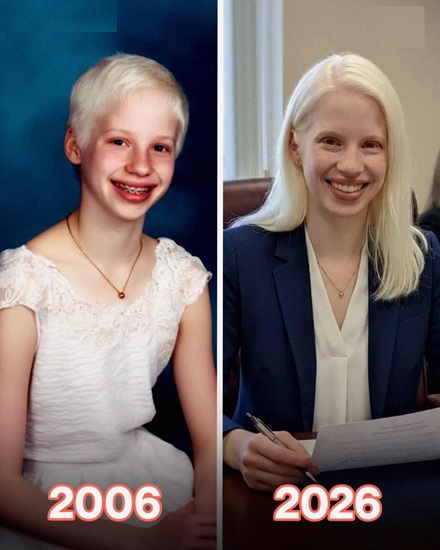
Even after twenty years, I can still remember the exact smell of that classroom. It was a strange mixture of industrial wood glue, overheated lab equipment, and something faintly burnt drifting beneath the hum of fluorescent lights.
I was sixteen then, a quiet sophomore who believed survival in high school meant invisibility. I sat near the back of chemistry class, kept my answers brief, and avoided drawing attention from anyone.
Unfortunately, the boy seated behind me had no interest in letting me remain unnoticed. Mark Harlan was everything high school rewarded: athletic, confident, loud, and surrounded by laughter wherever he walked.
He wore his varsity football jacket like armor, the bright school colors announcing his status before he even spoke. Teachers tolerated him, students admired him, and few people ever challenged anything he did.
That semester he chose the desk directly behind mine. At first it seemed like coincidence, but I quickly realized I had become convenient entertainment for someone who enjoyed an audience.
The day that changed everything began like any other ordinary Tuesday. Mr. Jensen stood at the front of the classroom, explaining chemical bonds while chalk dust floated lazily in the air.
He spoke in a slow, steady voice about electrons sharing space between atoms, drawing diagrams on the board with the patience of someone who truly loved his subject.
Most students listened halfway while scribbling notes or whispering to friends. I concentrated carefully, determined to keep my grades high enough to escape our small town someday.
Halfway through the lecture, I felt a quick tug at the braid hanging down my back. I turned slightly but saw nothing unusual behind me except Mark leaning casually in his chair.
I assumed it had been accidental, maybe a backpack shifting or someone passing behind the desks. Moments later the class bell rang, releasing everyone into the loud chaos of passing period.
Students jumped up immediately, chairs scraping across the tiled floor. I gathered my books and pushed my chair back, expecting to leave like everyone else.
But when I stood up, a sharp pull yanked my head backward.
Pain shot across my scalp so suddenly that I gasped aloud. My body jerked forward again, confused by the resistance holding me in place.
For a second I didn’t understand what had happened. Then laughter erupted across the classroom, spreading like wildfire from desk to desk.

Mark leaned back in his chair, grinning broadly as several students pointed at me. Only then did I notice the thick strand of hardened glue binding my braid to the metal frame of the desk behind me.
The teacher hadn’t noticed yet. Most students were too busy laughing.
My cheeks burned with embarrassment as I tried carefully to free the braid without tearing my hair out. The glue had already hardened completely.
When Mr. Jensen finally realized something was wrong, the class had grown quiet again. He hurried over, confusion turning into concern when he saw what had been done.
Within minutes the school nurse arrived carrying scissors.
There was no way to dissolve the glue quickly enough without causing more pain. The only solution was cutting my braid free from the desk.
As the scissors sliced through my hair, I stared down at the floor tiles, trying not to cry while a room full of teenagers watched the humiliation unfold.
When it was over, a jagged bald patch remained near the back of my head, about the size of a baseball.
The nurse tried to reassure me it would grow back quickly, but teenagers notice everything that looks different. By the next morning, the nickname had already spread.
They called me “Patch.”
Some said it jokingly. Others used it with open cruelty. Even students who had never spoken to me before suddenly felt comfortable pointing and whispering.
Mark never apologized. In fact, he seemed pleased by the attention his prank had created.
Every time someone repeated the nickname, it reminded me of that moment in chemistry class when laughter filled the room while my hair fell to the floor.
Humiliation like that doesn’t disappear quickly.
It hardens into something heavier over time, shaping how you see yourself and the world around you.
I learned an important lesson during those years: if I couldn’t control what people said about me, I could at least control my future.
While others focused on parties, sports, and popularity, I focused on grades, scholarships, and every opportunity that could carry me somewhere beyond our town.
High school ended, and I left with little interest in looking back.
College demanded everything I had: long nights studying finance, working part-time jobs, and building a reputation for discipline and careful decision-making.
I wasn’t trying to prove anything to my former classmates anymore. I was simply building a life that felt stable and independent.
Years passed quickly after graduation.
I entered the banking industry at a junior level, learning how lending decisions shaped businesses, families, and entire communities. Every financial file represented a story hidden behind numbers.
Some stories ended with growth and opportunity. Others ended with foreclosure notices and difficult conversations.
I learned to read financial histories the way some people read novels, identifying patterns of risk, responsibility, and resilience.

Over time I moved steadily upward through the organization.
Managers noticed that I rarely made impulsive decisions. I evaluated risk carefully and documented every conclusion with clear reasoning.
Eventually I became a senior loan officer responsible for reviewing complex applications.
A decade later, when the aging owner of our regional community bank began considering retirement, a group of investors approached me with an unexpected proposal.
They believed the bank needed new leadership focused on responsible lending and community investment.
With their financial backing, I purchased a controlling share of the institution.
It still surprises people when they learn I now run the same bank where I once worked entry-level shifts balancing paperwork and learning regulations.
Leadership changed my daily routine completely.
Instead of reviewing dozens of small loans, I now focused on high-risk applications requiring careful judgment. These cases often involved difficult circumstances and incomplete financial histories.
My assistant, Daniel, handled most preliminary reviews.
He organized files, flagged unusual details, and scheduled meetings with applicants whose situations required personal evaluation.
Two weeks before everything changed, Daniel knocked lightly on my office door one quiet afternoon.
“You’ll want to look at this one personally,” he said, placing a folder on my desk.
His tone carried the kind of curiosity that meant something unusual had appeared in the paperwork.
I glanced down at the application summary printed across the front page.
The name immediately caught my attention.
Mark Harlan.
The letters felt strangely familiar, though it took a second for the connection to fully register.
Same hometown. Same graduation year.
My fingers paused on the edge of the folder as memories resurfaced unexpectedly.
I opened the file slowly.
The financial details were discouraging at first glance. His credit score had dropped significantly over the past few years. Several credit cards were nearly maxed out.
Two recent car payments had been missed.
He owned a small construction company, but the business financials showed declining revenue following pandemic-related project cancellations.
On paper, the loan request was simple to evaluate.
He was asking for fifty thousand dollars.
Without sufficient collateral or stable income documentation, the application normally would have received an automatic denial from any standard banking system.
But one detail on the purpose line stopped me from closing the folder.
Emergency pediatric cardiac surgery.
The words sat quietly on the page, stark and undeniable.
I read further.
The surgery was scheduled in two weeks. The patient listed was his eight-year-old daughter, Lily, diagnosed with a congenital heart defect requiring urgent corrective treatment.

The hospital documentation confirmed the estimated cost.
Insurance coverage was limited. The remaining amount matched the loan request almost exactly.
I leaned back in my chair and stared at the ceiling for a moment, letting the weight of the situation settle.
Two decades earlier, Mark had humiliated a teenage girl in a chemistry classroom.
Now that same boy had grown into a desperate father trying to save his child’s life.
Life has a way of presenting moments like this when you least expect them.
I closed the folder carefully and pressed the intercom button on my desk.
“Daniel,” I said, keeping my voice calm, “please ask Mr. Harlan to come in.”
There was a brief pause before his reply.
“Right away.”
As I waited, I glanced again at the two stamps resting beside the paperwork.
One read Approved in bold green ink.
The other read Denied in red.
Both sat within easy reach, waiting for the decision that only I could make.
A soft knock sounded at the door a few minutes later.
“Come in,” I said.
The man who entered didn’t resemble the confident teenager I remembered.
The broad-shouldered linebacker from my memories had been replaced by someone thinner, older, and visibly exhausted.
His suit jacket looked slightly oversized, as though purchased years earlier when his body carried more muscle and confidence.
Dark circles shadowed his eyes, and worry seemed etched into every line of his face.
He stepped inside cautiously and closed the door behind him.
“Thank you for seeing me,” he said politely, lowering himself into the chair across from my desk.
For a moment he didn’t recognize me.
And I realized the balance of power in the room had shifted completely since that afternoon in chemistry class.
I leaned back slightly, studying him before speaking.
“Sophomore chemistry was a long time ago,” I said quietly.
Mark froze.
Slowly his eyes moved from the nameplate on my desk to my face.
Recognition spread across his expression like a shadow passing over sunlight.
Color drained from his cheeks.
“I… didn’t know,” he whispered.
Then he stood abruptly, clearly shaken.
“I’m sorry to waste your time,” he said quickly. “I’ll go.”
But the conversation that had been twenty years in the making was only just beginning.

I gestured toward the chair, my voice firm yet calm. “Sit down, Mark. We’re not here to rehash the past. We’re here to save your daughter’s life, and that means making choices now.”
He hesitated, hands fidgeting in his lap. The tension in his shoulders suggested years of buried pride and unresolved shame, all colliding in the quiet office space.
“I know what I did to you,” he murmured, voice barely above a whisper. “I was cruel. Thought it was funny. I didn’t realize how much damage I caused. Please… don’t punish Lily for my mistakes.”
His eyes were pleading, haunted by the weight of memory and fear of judgment. The man before me was unrecognizable from the bully I remembered, yet still human and deeply flawed.
I nodded slowly, letting the silence stretch a few moments. “I’m not here to punish anyone. But truth has consequences, Mark. If we’re going to help Lily, there’s one condition.”
He looked up, hope flickering in his exhausted gaze. “Condition?” he asked warily, dread creeping into his tone. “Anything. I’ll do whatever it takes.”
I slid the folder across the desk to him, opening it to reveal a handwritten addendum at the bottom of the page. Legalese aside, it was simple: he had to publicly acknowledge his past cruelty at the school’s anti-bullying assembly.
Every detail had to be included. The glue, the nickname, the humiliation, and my name in full. He had to tell the truth, unvarnished, to students, parents, and faculty alike.
His mouth opened, closed, then he swallowed hard. “You want me to humiliate myself in front of everyone?” he asked, voice trembling. “After all these years?”
“Yes,” I said quietly, meeting his gaze. “You have a chance to take responsibility, to make amends, and to save your daughter. It’s time the truth comes out.”
He stood abruptly, pacing once across the room. “I… I don’t have time for this. Surgery’s in two weeks. I can’t risk public shame. There has to be another way.”
I leaned forward, hands clasped on the desk. “Mark, the only way forward is accountability. You can’t change the past, but you can influence the future. Lily depends on it. You’re choosing between denial and action.”
His shoulders slumped. “And if I refuse?” he asked quietly, almost to himself. “The loan won’t go through?”
I nodded. “Correct. No signature, no funds. You understand the stakes. This isn’t punishment—it’s responsibility. And responsibility is something you’ll carry your entire life.”
Mark took a deep breath and finally looked up at me. His eyes reflected desperation and reflection in equal measure. “If I do this… we’re finished?”
“Yes,” I said firmly. “Once you sign, you fulfill your obligation and nothing else is owed. This is a path to redemption, not revenge. Are you ready?”
He hesitated again, trembling as he lifted the pen. For a moment, I could see the boy from my memories wrestling with the man he had become.
Then, with a shaky exhale, he signed. The pen scratched across the paper, binding him to truth, accountability, and the promise of healing for his daughter.
“Good,” I said softly, returning the folder to him. “Funds will be released once you complete the assembly. Remember, honesty is essential. No excuses, no omissions.”
He nodded, visibly swallowing his pride. “I’ll be there. I promise. I’ll tell the truth.”
The next morning, I arrived at the high school before the assembly, nerves buzzing despite the years of experience I had. The hallways smelled of polished wood and fresh paint, a familiar mix that sent a wave of nostalgia through me.
The principal, Mrs. Dalton, greeted me warmly near the auditorium doors. “We appreciate your participation in today’s event,” she said, smiling. “It sets a powerful example for the students.”
“I’m glad to help,” I said, keeping my tone neutral. I wasn’t here for appearances—I was here to see Mark own his actions fully.
Inside, the auditorium buzzed with energy. Students, parents, and faculty filled the seats, the annual assembly growing larger and more formal than when I had attended.
The banner above the stage read, Words Have Weight, stretching proudly across the wall. Every detail of the room reminded me of how far we had come, and how far he had to go.
I stood near the back, arms crossed, watching him pace offstage. His posture betrayed nerves, exhaustion, and fear, every movement measured and deliberate.
For a brief moment, I wondered if he would walk away, unable to confront the shame he had carried for decades.
Then Mrs. Dalton’s voice cut through the chatter. “Today we welcome a guest speaker who will share a story about accountability, bullying, and the impact of actions. Please welcome Mark Harlan.”
Polite applause echoed as he stepped onto the stage. Each footfall sounded heavier than the last, and I noticed the tight grip he had on the podium.
He cleared his throat, scanning the audience, then began his introduction, carefully avoiding specifics at first. He spoke of his past popularity, his perceived importance, and the arrogance of youth.
Then his eyes landed on me at the back of the room. Recognition flickered across his face, a mixture of dread and resolve shining in his gaze.
“I was in sophomore chemistry,” he said finally, voice steady despite the tremor underneath. “I glued a classmate’s braid to her desk, thinking it was funny. I called her ‘Patch,’ and I encouraged others to laugh. I humiliated her in front of the entire class.”
The room fell silent. Gasps rippled through the crowd as students and parents absorbed the gravity of his admission.
“I thought it was a joke. I was wrong. That was cruelty, pure and simple. And for decades, I ignored the harm I caused. I am truly sorry.”
He paused, lowering his eyes briefly, then lifted them to meet mine. The apology was raw, genuine, unpolished—everything I had needed to hear.
“I have a daughter,” he continued, voice shaking. “She’s eight years old. I cannot imagine anyone treating her the way I treated Claire. This understanding has changed me. I want to be better.”
Murmurs passed through the audience, a collective recognition of honesty and accountability. The man who had once tormented me was dismantling himself publicly for the sake of truth and love.
When he finished, applause erupted, a wave of acknowledgment from everyone present. He had faced his past and refused to let it define his future.
As students filed out, several approached him, hesitant but curious. I watched a teenage boy linger near the stage, and Mark knelt down to speak quietly, his body language patient and genuine.
I waited until the auditorium emptied, then approached him. “You did it,” I said softly, pride and relief mixing in my voice.
He exhaled shakily, shoulders finally beginning to relax. “I almost didn’t. But seeing you… made me remember what real accountability looks like.”
“You’ve given your daughter a chance she might not have had otherwise,” I said. “And you’ve shown the next generation the courage it takes to own their mistakes.”
He nodded, and for the first time since he entered the office, the tension seemed to lift. The man before me was no longer the bully or the desperate father—he was someone transformed by truth.
I guided him back to my car, paperwork in hand. “Funds will be transferred to the hospital immediately,” I reminded him. “Then we return to the bank. I’ll help you rebuild your finances, and you’ll have a chance to start fresh.”
He glanced at me, uncertainty still lingering. “You’d do all that?”
“For Lily. And because growth follows accountability,” I said firmly. “This is your path forward. Own it fully, or lose it entirely. The choice is yours.”
Tears ran down his face as relief and gratitude collided. “I don’t deserve this,” he said softly.
“You do now,” I replied. “For taking responsibility and for fighting for what matters most.”
He hugged me, a gesture that didn’t erase the past but acknowledged it, creating space for healing.
As we left the school, I felt a profound sense of closure. The memory of humiliation from decades ago no longer held power over me. Instead, it had become a tool to forge justice, accountability, and redemption.
Back at the bank, Mark followed me into my office, still visibly shaken but upright, a new weight of responsibility in his posture. The folders on my desk awaited him, symbolizing both accountability and opportunity.
I gestured to the chairs. “Sit. Let’s review your finances step by step. Every detail matters. Transparency now will ensure you regain control and set a foundation for Lily’s future without hidden pitfalls.”
Mark sank into the chair, fingers entwined nervously. His eyes darted over the spreadsheets, bank statements, and debt summaries. Each figure reminded him of past mistakes, missed opportunities, and the pressure of fatherhood.
I started methodically, explaining how we would consolidate his high-interest credit card debts into one manageable monthly payment. Every late payment and default would be addressed with careful restructuring.
“This plan gives you a 12-month timeline to rebuild your credit,” I said. “Interest will be recalculated fairly, and no further penalties will accrue. You’ll regain financial stability step by step.”
He nodded slowly, absorbing each word. I could see a flicker of hope in his eyes, tempered with disbelief. It was rare for someone to experience forgiveness combined with such structured support.
“Next,” I continued, “we’ll negotiate with contractors and clients who haven’t paid you. These debts have compounded unnecessarily. Clearing them will free cash flow and reduce stress, which is critical before Lily’s surgery.”
Mark exhaled deeply, the first sign of relief cracking through his exhaustion. “I… I didn’t expect this. Not from anyone, really. Especially not you,” he said quietly, voice thick with emotion.
“You’ve done the hard part,” I said firmly. “Facing the truth publicly. Owning your past. Now it’s time to rebuild your present. The financial recovery is just part of that journey.”
We spent the next hour reviewing every account, marking priorities, and setting achievable monthly goals. Mark asked questions I had anticipated, showing a genuine commitment to learning and accountability this time.
He paused at the last page, staring at the final calculations. “If I follow this exactly, I can get my credit back in a year?” he asked, a tremor of disbelief in his voice.
“Yes,” I replied. “If you follow the plan diligently, track progress monthly, and stay honest with me, your credit score will improve dramatically. Lily’s future is secure, and you’ll regain confidence too.”
Mark’s gaze softened as he absorbed the weight of those words. For decades, he had avoided responsibility, but now he could see tangible steps forward. Hope replaced the dread that had consumed him for years.
“I don’t know how to thank you,” he whispered. “Not just for Lily… for me. For giving me a chance to be better, to be accountable, to start over.”
“You don’t need to thank me,” I said gently. “You earned it by being honest and taking responsibility. That’s the true work. The rest is just guidance.”
He leaned back, eyes closed briefly, the tension in his jaw and shoulders finally easing. The man who once bullied me now faced life with humility, and I felt pride in witnessing his transformation.
I handed him the final paperwork for signature. “Once this is completed, the funds will transfer immediately to the hospital. Lily’s surgery is secured, and you can focus entirely on being her father without distraction.”
Mark signed, hands steady this time, exhaling with quiet relief. “It feels… surreal. But good surreal. I don’t think I’ve ever felt this kind of peace.”
I smiled, feeling a rush of closure for both of us. “Peace is earned, Mark. Today, you earned it by owning your mistakes and prioritizing what matters most. Lily will know her father is brave and accountable.”
He stood, brushing imaginary dust from his suit, and extended a hand. “I owe you more than words. Not just for Lily, but for showing me that redemption is possible even after decades of failure.”
I shook his hand firmly. “Consider it paid forward. You’ll honor the lessons learned and carry them forward for the right reasons. That’s all that matters now.”
As he left the office, there was a lightness in his step I had never seen before. He walked into a future shaped by truth, accountability, and the love he had fought to preserve for his daughter.
I sat back in my chair, letting a quiet satisfaction wash over me. The past no longer held dominion over either of us. What once brought shame now created redemption and understanding.
For the first time in twenty years, I could revisit that memory of humiliation and see it transformed—not as pain, but as a catalyst for justice, accountability, and new beginnings.
Mark had faced his past, acknowledged his failures, and embraced responsibility. And in doing so, he not only saved his daughter but also repaired the fractured threads of his own character.
I knew this was the beginning of a different life for him, one where honesty, courage, and love guided decisions instead of fear, pride, and avoidance.
And as I watched him leave, I realized I had found closure too—not in revenge, not in retribution, but in witnessing the power of accountability and the transformative impact of courage.
The school assembly, the signed contract, and the structured financial plan were more than steps—they were milestones marking the path from cruelty to redemption, from silence to truth, from despair to hope.
When the sun set that evening, I felt a quiet serenity. The memory of glue, laughter, and embarrassment had lost its sting, replaced by the profound knowledge that we can always choose how to respond to past wrongs.
Mark would carry the lessons forward, teach his daughter, and demonstrate that even those who once caused harm can grow, evolve, and make amends.
And for me, Claire, the woman who held the power to forgive, I realized that justice and compassion can coexist—and that strength comes not from punishment, but from enabling transformation.
