
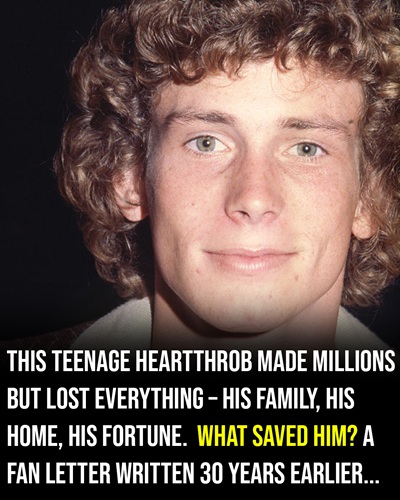
He was America’s golden boy at nineteen — a familiar face on television screens, adored by millions of fans, and earning more money than most adults could imagine.
Yet the glittering façade of Hollywood obscured the complex realities of his life, including profound loss, personal struggle, and challenges that would shape his later years.
Willie Aames’ story is one of dramatic highs and lows — from child actor to teen idol, from financial ruin to homelessness, and eventually, to personal reinvention and love. His journey stands as a testament to resilience, transformation, and the extraordinary ways life can redirect itself.
Early Life and Beginnings in Hollywood
Willie Aames was born Albert William Upton on July 15, 1960, in Newport Beach, California. From the very start, entertainment seemed woven into the fabric of his life. Growing up in a supportive family environment, he displayed remarkable talent and charisma as a child. His parents, recognizing his early aptitude for performance, encouraged him to pursue acting. By the age of nine, Willie had landed his first television commercial, signaling the beginning of a career that would eventually span over four decades.
Raised in Southern California, Willie attended Edison High School, where he participated actively in choir, drama, and school performances. But while his classmates were focused on normal teenage experiences, Willie’s professional path was already taking shape, and by his early teens, he was a recognizable face in Hollywood circles.

During the 1970s, Willie began building a substantial résumé of guest appearances on some of the era’s most popular television shows. He appeared in episodes of Gunsmoke, Adam-12, The Odd Couple, and The Courtship of Eddie’s Father, demonstrating a natural ease in front of the camera. These roles, though brief, offered critical experience and exposure, preparing him for the breakout opportunity that would change the trajectory of his life.
Breakthrough Role: Eight Is Enough
In 1977, Willie’s career reached a defining milestone when he was cast as Tommy Bradford in the ABC family drama Eight Is Enough. The series followed the lives of the large Bradford family, capturing the hearts of American viewers with its heartfelt storytelling, humor, and relatable family dynamics. Willie’s portrayal of the spirited, charming middle child quickly made him a household name, propelling him into teen idol status.
At the height of the show’s popularity, Willie became one of the most recognizable young actors in the country. His infectious smile, sparkling green eyes, and engaging personality led to a tidal wave of fan mail — reportedly thousands of letters each week — and his image adorned posters and magazines across the United States. By the time he reached nineteen, he was earning over a million dollars a year, a remarkable figure for any actor, let alone one so young.
The success of Eight Is Enough also opened doors beyond acting. Willie pursued music, forming a band called Willie Aames & Paradise and securing a recording contract. The band performed at events and promotional appearances connected to the show, further entrenching Willie in the fabric of 1970s pop culture. His involvement in merchandising, television appearances, and music created a multi-faceted brand that kept him in the public eye at an extraordinary level for someone so young.
Behind the Spotlight: The Hidden Struggles
However, the glittering world of Hollywood came with a steep price. While the public saw a confident, charismatic teenager, behind the scenes, Willie was grappling with pressures that many young actors face but few discuss openly. The entertainment industry of the late 1970s and early 1980s was rife with parties, easy access to alcohol, and exposure to drugs. Despite his public image, Willie struggled privately with substance use — including alcohol, marijuana, and cocaine — during the height of his fame.
In 1979, Willie married Vicki Weatherman, and the couple welcomed a son, Christopher, later that year. While fatherhood brought joy, it also added pressure. Balancing a young family with a demanding acting career proved challenging, and the strains of Hollywood life began to take a toll. By 1984, Willie’s first marriage ended, marking the beginning of a series of personal upheavals that would follow him for decades.
Despite personal challenges, Willie continued his career, taking on roles in films such as Zapped! (1982) and Paradise, and later as Buddy Lembeck on the 1980s sitcom Charles in Charge, opposite Scott Baio. Though these roles provided ongoing work, the golden stability of his earlier success was beginning to wane. The trajectory from child star to teen idol had left him with fame, yes, but also with significant pressure, emotional strain, and the early seeds of challenges that would become more pronounced in the coming years.

The Second Marriage and Family Life
In 1986, Willie married Maylo McCaslin, an actress whose presence seemed to promise a new chapter. Together, they had a daughter, Harleigh Jean, and for a time, life appeared more balanced. However, lingering struggles — including ongoing battles with addiction and difficulties managing finances — continued to cast a shadow over his life. While his career remained visible, with roles in television and smaller film projects, the underlying instability foreshadowed the crises that would eventually reshape his life entirely.
Willie’s experience during this period reflects a common narrative among child actors: the early success and public adoration often conceal private struggles, and without the proper support and coping mechanisms, the pressures of fame can quickly become overwhelming. Though he continued to work and remained in the public eye, cracks were beginning to show beneath the surface of his Hollywood persona.
By the late 1980s and early 1990s, Willie Aames’ career, though still active, no longer carried the same momentum as during his Eight Is Enough years. His iconic status as a teen heartthrob had slowly faded from the public spotlight, and with the decline in high-profile roles, his personal challenges intensified.
Willie’s early exposure to Hollywood’s party culture had left him vulnerable to substance abuse. Though he had experimented with alcohol, marijuana, and even cocaine during his teen idol years, these habits began to have a lasting impact on his health, relationships, and financial stability. As he later recounted in interviews, navigating fame at such a young age, combined with intense public scrutiny, left him seeking comfort in ways that were ultimately destructive.
In an industry where support systems were scarce for young actors transitioning into adulthood, Willie’s struggles mirrored a familiar narrative: the difficulty of sustaining personal stability when public adoration disappears. Even as he continued acting in projects such as Charles in Charge, the combination of inconsistent work, personal disappointment, and ongoing substance use slowly eroded the life he had built.
Financial Ruin: Bankruptcy and Loss
By the mid-2000s, Willie’s challenges had escalated into severe financial difficulties. After years of mismanaged income, combined with the costs of maintaining a lifestyle shaped by Hollywood, he faced mounting debt. Savings that had once been considerable had been depleted, leaving him vulnerable to the unforgiving realities of property foreclosures and bankruptcy proceedings.

In 2009, the situation reached a public and dramatic climax. His home in Olathe, Kansas, was foreclosed upon, and in a widely reported move, Willie organized a garage sale. This was not a casual neighborhood sale; it was a desperate effort to reclaim some financial footing. He sold scripts, awards, memorabilia, and personal items, many of which were treasured by fans who had followed his career for decades. Despite this effort, the sale could not cover his financial obligations, and the house was ultimately lost.
The financial collapse was deeply intertwined with emotional and psychological strain. In interviews reflecting on this period, Willie described the profound humiliation of losing not only material possessions but also the sense of identity and accomplishment that had once defined his life. The contrast between his golden years as a teen idol and the precariousness of his midlife reality was stark.
Homelessness and the Depths of Despair
After losing his home, Willie Aames faced the harsh reality of homelessness — an experience few in Hollywood ever publicly confront. At his lowest points, he slept wherever he could find safety: under bushes, in parking garages, or in quiet corners of public spaces. These nights were marked by fear, shame, and a profound sense of dislocation from the life he had once known.
In candid interviews, he later admitted that he would lie awake wondering whether this was truly how his life would end — a stark and humbling contrast to earlier years of fame, extravagant parties, and celebrity recognition. Friends and family were understandably concerned for his safety, recognizing that the combination of financial strain, personal isolation, and past substance use put him at considerable risk.
Willie’s story during this period is particularly compelling because it illustrates the fragile boundary between fame and misfortune, and the human vulnerability that lies beneath the glamour of Hollywood. Unlike stories sensationalized in tabloids, his journey was not about scandal, but about survival, resilience, and the painful work of rebuilding a life from scratch.
A Turning Point: The Decision to Rebuild
The trajectory of Willie’s life began to shift when he reached age 48. After years of struggle, he made a conscious and deliberate decision to rebuild — not through Hollywood, but through humble, grounded work. He accepted a position with Dish Network, installing satellite systems. The work, physically demanding and far removed from the red carpet and television sets, was described by Willie as humbling but necessary. It allowed him to start accumulating “little wins,” restoring confidence and independence one day at a time.
This period of hands-on labor also helped him reconnect with a sense of discipline and structure that had been missing from his life for decades. Each successful installation, each satisfied customer, and each small achievement contributed to the slow, deliberate process of rebuilding both his self-esteem and his financial stability.
Life on the Seas: Cruise Director and Reinvention
Willie’s reinvention took another dramatic turn when he found work on luxury cruise lines, including Regent Seven Seas Cruises and Oceania Cruises. Starting in entry-level positions — managing games like shuffleboard, ping-pong, and other passenger activities, cleaning public areas, and assisting guests — he gradually worked his way up to the role of cruise director.
This new career path provided more than financial security. It offered purpose, routine, and an opportunity to travel the world. Willie visited dozens of countries, experienced diverse cultures, and developed interpersonal skills that had little to do with acting but everything to do with human connection and leadership. He rediscovered joy in service, responsibility, and the simple satisfaction of building a day-to-day life from the ground up.

A Connection That Lasted Decades: The Story of Winnie Hung
During the peak of his fame in the late 1970s and early 1980s, Willie received thousands of fan letters each week. Among them was a letter from a young fan named Winnie Hung, whose heartfelt admiration and encouragement left a lasting impression on him. Unlike many fleeting fan interactions, Winnie’s letters continued for years, reflecting a genuine connection based on empathy and shared understanding.
At some point, Willie decided to reach out personally. He randomly selected one letter and called the number included in it, reaching Winnie at her home. At first, she thought it was a prank. Yet, as he continued to call and they began exchanging conversations, a long-lasting friendship formed.
Their connection wasn’t immediate or romantic in its early stages. Over nearly three decades, they became pen pals, exchanging letters and occasional phone calls through periods of marriages, divorces, career highs and lows, and personal struggles. This slow, steady bond would eventually evolve into one of the most enduring and transformative relationships of Willie’s life — a testament to the power of patience, loyalty, and consistent human connection.
Decades after their initial pen-pal relationship, social media and modern communication brought Willie and Winnie Hung back into each other’s lives. By this point, Willie had undergone immense personal transformation: he had rebuilt his financial footing, gained professional stability through his work on luxury cruise lines, and developed a renewed sense of purpose and humility.
When they reconnected, the bond that had begun through decades of letters, phone calls, and shared encouragement finally had the opportunity to blossom in person. During one of Willie’s stops as a cruise director in Vancouver, Canada, he arranged to meet Winnie face-to-face for the first time. For Willie, the moment carried the weight of years of life experience — a life that had included fame, loss, and reinvention. He later described the encounter as a profound realization that their long-standing connection was not only genuine but also destined to evolve into something more.
To commemorate the occasion, Willie gifted Winnie a Pandora charm engraved with the word “Fairytale”, a symbolic gesture representing the culmination of years of patience, loyalty, and enduring affection. Their bond, cultivated over nearly 30 years of correspondence and intermittent communication, demonstrated that true connection transcends distance, time, and even life’s most challenging obstacles.
Marriage and a Life Rebuilt
On March 21, 2014, Willie Aames and Winnie Hung were married, fulfilling a relationship that had been decades in the making. Their marriage represented more than personal happiness; it was a testament to resilience, patience, and the power of human connection. For Willie, it was a remarkable full-circle moment: from the heartthrob adored by millions to a man who had faced the lowest points of life, including homelessness, addiction struggles, and financial ruin, he had found a stable, loving partnership built on respect, trust, and enduring friendship.
This union also strengthened his commitment to family. Willie reconciled with his children, particularly his son Christopher, whose steadfast support had never wavered even through years of difficulty. He also maintained a strong relationship with his daughter Harleigh Jean, building connections grounded in mutual respect and understanding. These relationships became the foundation of the stability and fulfillment that had eluded him for so much of his adult life.

Return to Entertainment: A Second Act
With personal stability established, Willie Aames began returning to the entertainment world, this time on his own terms. In the mid-2010s, he appeared in several Hallmark Channel films, including Every Christmas Has a Story, Dater’s Handbook, and Love on the Menu. These projects allowed him to reconnect with audiences who had remembered him fondly from Eight Is Enough and Charles in Charge, while also demonstrating the depth, nuance, and emotional resonance he had developed through life’s challenges.
Willie’s return to acting was less about reclaiming fame and more about purpose. Each role he undertook reflected a performer who had endured profound hardship and returned not only as an actor but as a human being enriched by life experience. His performances resonated with audiences because they were informed by authenticity — by someone who had faced failure, rebuilt his life, and embraced personal growth.
Advocacy, Openness, and Helping Others
Beyond acting, Willie became increasingly open about his personal journey, including struggles with addiction, financial collapse, and mental health. By sharing his experiences publicly, he sought to inspire others facing similar challenges, emphasizing that recovery, resilience, and reinvention are possible at any stage of life.
He spoke candidly about the emotional toll of fame, the pitfalls of child stardom, and the importance of building a support network that prioritizes both personal and professional health. His story, rooted in lived experience, became a beacon for others navigating addiction, career setbacks, or personal loss, demonstrating that life can be rebuilt even after its darkest chapters.
Legacy of Resilience and Renewal
Now in his mid-60s, Willie Aames embodies the principle that success is measured not solely by wealth or public recognition, but by courage, humility, and the ability to rebuild. From his early years as a child star in Southern California to his ascent as a teen heartthrob on Eight Is Enough, to the depths of financial ruin and homelessness, and finally to a life marked by love, stability, and purpose, Willie’s journey illustrates the human capacity for resilience.
His life’s arc underscores the extraordinary potential of second chances. Through his marriage to Winnie Hung, the rekindling of family relationships, his return to acting, and advocacy for mental health and recovery, he demonstrates that new beginnings are always possible, even after long periods of adversity. Willie’s story resonates not only because of its dramatic highs and lows but because of its authenticity and the enduring message it carries: that transformation and happiness are achievable when coupled with perseverance, connection, and self-reflection.
Lessons from a Life Fully Lived
Willie Aames’ life story teaches multiple lessons:
- Resilience is built through adversity: Personal struggles, including addiction and financial collapse, can be catalysts for growth and self-awareness when met with conscious effort.
- True connection transcends time: The decades-long bond with Winnie Hung shows that patience, loyalty, and empathy can eventually lead to profound love and partnership.
- Reinvention is always possible: From installing satellite systems to managing luxury cruises, and later returning to acting, Willie exemplifies the power of redefining oneself and embracing new paths.
- Sharing your story can inspire others: By openly discussing his challenges and triumphs, Willie provides guidance and hope to those facing similar difficulties.
Ultimately, Willie Aames is remembered not merely as a child star or teen heartthrob, but as a figure of resilience, transformation, and authenticity. His journey from Hollywood fame to personal hardship, and eventually to love and self-fulfillment, serves as a living example of what can be achieved through perseverance, empathy, and an unwavering belief in new beginnings.

