
Released on March 8, 1985, Mask stands as one of the most emotionally impactful and socially meaningful dramas of its time, blending authentic storytelling with performances that continue to resonate with audiences decades later.
Directed by Peter Bogdanovich and written by Anna Hamilton Phelan, the film carefully balances realism and emotional depth, offering a compassionate portrayal of a life shaped by extraordinary challenges.
At the center of the story is Roy L. Dennis, whose real-life journey inspired the narrative and gave the film its powerful emotional foundation grounded in truth rather than fiction.
Rocky Dennis was born with Craniodiaphyseal dysplasia, an extremely rare condition characterized by abnormal bone growth that significantly affected his skull and facial structure throughout his life.

Medical professionals initially believed Rocky would not survive beyond early childhood, making his eventual lifespan of sixteen years a remarkable example of resilience and human determination against overwhelming odds.
Rather than allowing his condition to define his limitations, Rocky developed a strong sense of identity, intellectual curiosity, and emotional awareness that left a lasting impression on those around him.
The film portrays Rocky not as a figure of pity, but as a fully realized individual whose personality, humor, and intelligence challenge societal assumptions about physical appearance and perceived limitations.
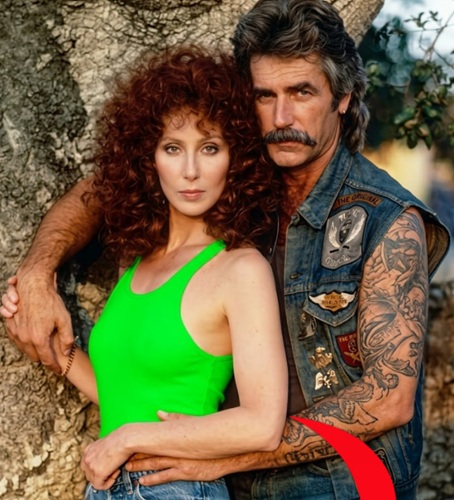
Cher delivers a deeply committed performance as Florence “Rusty” Dennis, Rocky’s mother, capturing both her strength and vulnerability with remarkable authenticity and emotional honesty.
Rusty is depicted as unconventional, independent, and fiercely protective, refusing to hide her son from the world and instead encouraging him to engage fully with life despite its challenges.

Her parenting style emphasizes dignity, inclusion, and personal freedom, reflecting a broader message about the importance of acceptance and equal opportunity for individuals with visible differences.
Eric Stoltz brings extraordinary depth to the role of Rocky, using both physical transformation and emotional nuance to create a performance that feels genuine and respectful.
The prosthetic makeup used to portray Rocky’s condition was groundbreaking for its time, contributing significantly to the film’s realism and earning the Academy Award for Best Makeup.
This level of detail helped ensure that Rocky’s portrayal was not exaggerated or sensationalized, but instead grounded in an effort to reflect his real-life experience as accurately as possible.
Sam Elliott appears as Gar, a calm and supportive presence who provides stability within Rocky and Rusty’s often unpredictable environment, reinforcing the theme of chosen family and loyalty.
Gar’s role highlights the importance of supportive relationships beyond immediate family, demonstrating how compassion and understanding from others can positively influence a person’s life.

The film also features Laura Dern as Diana, a visually impaired young woman whose connection with Rocky is built on mutual respect and emotional insight rather than physical appearance.
Their relationship underscores one of the film’s key messages: that meaningful human connections are formed through empathy, understanding, and shared experience rather than superficial judgments.
A central theme throughout Mask is society’s reaction to visible difference, examining both the prejudice Rocky encounters and the gradual acceptance he earns through his character and intelligence.
Rocky’s experiences at school illustrate the challenges faced by individuals who look different, including curiosity, misunderstanding, and moments of exclusion that reflect broader societal attitudes.
At the same time, the film emphasizes positive change, showing how exposure, education, and personal interaction can lead to greater acceptance and empathy over time.
Rusty’s decision to send Rocky to a public school rather than isolate him plays a critical role in shaping his experiences, reinforcing the importance of inclusion in everyday environments.
This choice reflects a broader belief that individuals should not be defined or limited by their differences, but instead given the opportunity to participate fully in society.
The film also explores the complexities of Rusty’s personal life, portraying her as a multidimensional character whose imperfections add depth and realism to her role as a mother.
Her struggles and choices are presented with nuance, allowing audiences to understand the challenges she faces while appreciating her unwavering commitment to her son’s well-being.
Behind the scenes, the production aimed to maintain authenticity by drawing inspiration from real locations and environments associated with Rocky’s life.
This attention to detail contributes to the film’s grounded tone, helping audiences connect more deeply with the story and its characters.
The music associated with Mask has its own unique history, reflecting both creative intentions and practical challenges during the film’s production and release.
Originally, the filmmakers intended to include songs by Bruce Springsteen, whose music was reportedly meaningful to Rocky Dennis in real life.
Due to licensing limitations at the time, the theatrical release instead featured music by Bob Seger, which still complemented the film’s emotional tone.
In later years, a director’s cut restored the inclusion of Springsteen’s music, aligning more closely with the original vision and adding another layer of authenticity to the film.

Upon its release, Mask received widespread critical acclaim, with reviewers praising its emotional depth, strong performances, and respectful approach to sensitive subject matter.
Cher’s performance earned her the Best Actress award at the Cannes Film Festival, marking a significant achievement in her acting career and broadening her recognition beyond music.
Both Cher and Eric Stoltz also received Golden Globe nominations, further highlighting the film’s impact and the strength of its performances.
While the film remains faithful to the spirit of Rocky’s life, it is important to acknowledge that certain elements were adapted for narrative clarity and emotional emphasis.
Some scenes and timelines were adjusted, and certain characters were simplified or combined to create a more cohesive and engaging cinematic story.
These changes are typical in biographical films and do not diminish the authenticity of the core message or the respect shown toward the real individuals involved.
At its core, Mask is a story about resilience, identity, and the universal desire to be accepted and understood regardless of outward appearance.
The relationship between Rocky and Rusty serves as the emotional anchor of the film, illustrating the profound strength of unconditional love between parent and child.
Their bond is portrayed with honesty and depth, capturing both moments of struggle and moments of joy that define their shared experience.
The film also encourages viewers to reflect on their own perceptions, challenging assumptions about beauty, normalcy, and what it means to live a meaningful life.
By focusing on Rocky’s personality, intelligence, and emotional insight, the narrative shifts attention away from physical differences and toward the qualities that truly matter.
Over time, Mask has maintained its relevance as a film that addresses important social themes while remaining accessible and emotionally engaging.
Its message continues to resonate in modern discussions about inclusion, representation, and the importance of empathy in diverse communities.
The film’s enduring legacy is supported by its ability to connect with audiences on a deeply human level, transcending the specific details of its story.
It remains a significant example of how cinema can tell meaningful stories that inspire understanding and compassion without relying on sensationalism.
Even decades after its release, Mask is frequently revisited by viewers and critics who appreciate its thoughtful approach and lasting emotional impact.
Its place in film history is secured not only by its awards and recognition, but also by its continued relevance in conversations about human dignity and acceptance.
Ultimately, Mask is more than a film about a medical condition; it is a celebration of individuality, resilience, and the power of love to overcome adversity.
It reminds us that every person has a story worth telling, and that true understanding begins when we look beyond appearances to see the humanity within.
