
Our personalities profoundly shape how we perceive the world, respond to challenges, and relate to others. Beyond strengths, subtle habits, emotional patterns, and small flaws influence both personal growth and daily interactions.
Flaws are natural human characteristics, not moral shortcomings. Recognizing them provides an opportunity to improve self-awareness, communication, and empathy.
Curiosity and reflection, rather than judgment, allow personal growth and more meaningful connections with others.
Pretending to be flawless often limits self-discovery. By noticing habitual tendencies that might create conflict or self-doubt, we can make intentional choices, enhance emotional intelligence, and develop healthier relationships with friends, family, and colleagues.
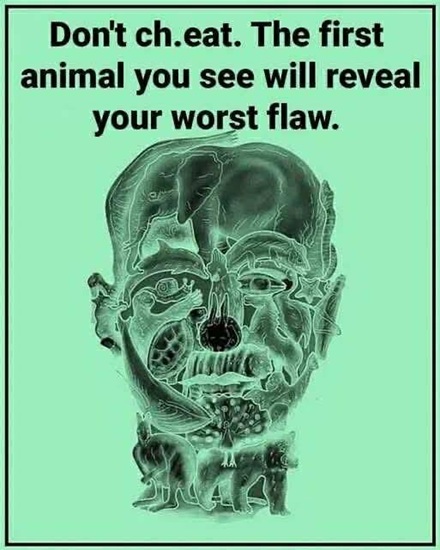
This playful visual test offers an imaginative approach to exploring personal flaws. It is not grounded in clinical psychology, nor does it diagnose behavior, but it provides symbolic insight into personality traits in an intuitive, reflective way.

At first glance, the illustration appears as a single human face. On closer inspection, multiple overlapping animals emerge, each symbolizing a specific behavioral tendency, habit, or personality trait for participants to explore and reflect upon.
The test is simple: observe the image briefly and note the first animal that captures your attention. Your initial response offers a subtle hint about patterns, traits, or tendencies that may unconsciously influence your behavior.
Each animal in the illustration represents specific qualities. For instance, the elephant symbolizes stubbornness, resistance to change, and difficulty yielding even when adaptation could improve outcomes in life or relationships.
The iguana reflects emotional detachment, distance, or reluctance to openly share feelings. Individuals drawn to this animal may prefer caution in interpersonal connections, often as a protective mechanism against potential vulnerability or rejection.
The pig indicates indulgence and challenges with moderation. Those noticing it first may have difficulty controlling impulses, overcommit to pleasure, or prioritize short-term satisfaction over long-term goals, highlighting areas for balanced growth.
The cricket represents anxiety, restlessness, and heightened mental activity. Participants drawn to it may experience racing thoughts, overthinking, or nervous energy, which can also reflect attentiveness, heightened sensitivity, and awareness of their surroundings.

The horse embodies pride, ambition, and determination. While admirable, excessive focus may lead to isolation or challenges in collaboration. Recognizing this tendency can help maintain a healthy balance between personal goals and social connections.
The dolphin symbolizes impulsiveness and acting before full consideration. Individuals noticing this animal may be energetic and spontaneous, yet they benefit from mindfulness and reflection to align instinct with thoughtful, intentional decision-making.
The bear represents rigidity, discomfort with change, and attachment to routine. Awareness of this tendency encourages flexibility and adaptation, highlighting the importance of embracing new experiences while preserving stability and resilience.
Additional symbols provide a richer emotional map. The fox reflects avoidance and subtle conflict evasion, pointing to areas where openness and direct communication may improve relationships and personal accountability.
The rabbit embodies insecurity, hesitation, and fear of occupying space. Recognition of this trait can guide the development of self-confidence, assertiveness, and comfort in expressing opinions or claiming personal boundaries.
The toucan represents attention-seeking and desire for external validation. Individuals drawn to it may benefit from cultivating intrinsic self-worth while still enjoying social recognition without over-reliance on others’ approval.

The kangaroo symbolizes inconsistency, scattered focus, and abrupt directional changes. Awareness encourages grounding, prioritization, and mindful planning to transform energy into sustained action, rather than diffusion across competing priorities.
The peacock highlights vanity and concern with outward appearance. While self-expression is valuable, excessive focus on aesthetics may limit authenticity or deepen dependency on external judgment, requiring self-reflection and balance.
The turtle reflects excessive caution, deliberation, and reluctance to take risks. While careful planning supports safety, over-caution can prevent opportunities for growth, experience, and exploration of new environments or challenges.
The whale embodies emotional introspection, isolation, and sensitivity. Participants noticing it first may feel deeply, reflect internally, and experience empathy, yet may require external support to avoid feelings of invisibility or social detachment.
Subtle secondary symbols further enrich interpretation. The snake represents strategic thinking, indirect communication, or manipulation, signaling the importance of cultivating transparency and trust in interactions with others to maintain healthy relationships.
The sloth bear reflects procrastination, avoidance, and delayed responsibility. Recognizing this tendency allows individuals to address habits of deferral, build discipline, and create actionable steps toward long-term personal or professional goals.
The bird represents instability or scattered focus. Participants noticing it may explore curiosity, adaptability, and openness to change, while also learning techniques to improve concentration, organization, and follow-through in daily tasks.

The snail symbolizes resistance to change, attachment to routine, and preference for familiar habits. Awareness encourages intentional adaptation, learning flexibility, and making gradual adjustments without abandoning stability or comfort.
The visual test’s simplicity makes it highly effective. Subconscious attention often reveals resonances with certain traits, offering a starting point for reflection. The process emphasizes intuition, curiosity, and self-awareness over judgment or rigid assessment.
Interpretation is flexible. Sometimes the first animal noticed aligns perfectly with personal tendencies, while other times it prompts useful questions about behavior, habits, or emotional patterns. The key is reflection, not definitive labeling.
No single trait defines a person. Flaws fluctuate depending on context, stress, age, and life circumstances. Recognizing their fluid nature allows individuals to balance strengths and weaknesses, adapt behaviors, and grow over time.
Stubbornness, reflected by the elephant, may simultaneously foster resilience and leadership. Sensitivity, represented by the rabbit or cricket, can cultivate empathy and creativity. Awareness allows these traits to be harnessed positively.
Impulsiveness, indecision, or anxiety are not inherently negative. With conscious reflection, they can become decisiveness, curiosity, or heightened attentiveness, demonstrating the potential of perceived flaws to fuel constructive personal growth.
Reflection questions deepen insight. Observers can ask whether traits appear in professional settings, personal relationships, or self-perception. Even partial acknowledgment strengthens self-awareness and encourages intentional behavioral adjustments over time.
This test enhances emotional literacy by mapping subconscious tendencies to symbolic animals. Using visual representation makes abstract qualities tangible, promoting intuitive engagement, introspection, and understanding of internal motivations.
Symbolic representation also reduces defensiveness. Direct critique often provokes resistance, whereas visual, playful tools like this allow reflection in a non-threatening, enjoyable way, increasing openness to self-awareness and thoughtful inquiry.
Exploring tendencies through symbolic animals encourages mindful observation, introspection, and curiosity. By connecting habits to symbolic imagery, individuals gain insight into recurring patterns, relational dynamics, and personal challenges without judgment or shame.
Flaws carry potential energy. Recognizing tendencies enables conscious redirection, turning impulsivity into measured action, distraction into creativity, and hesitation into strategic planning. Awareness transforms perceived weaknesses into strengths over time.
Even small reflective exercises can catalyze growth. Recognizing subtle patterns, habits, or recurring behaviors helps individuals develop emotional intelligence, communication skills, and intentional approaches to navigating personal and professional interactions.
The visual animal test encourages playful, meaningful engagement with the self. It demonstrates how curiosity, observation, and reflection can illuminate personality traits, behavioral tendencies, and emotional patterns while fostering self-compassion and acceptance.
By participating in the exercise, individuals build awareness, insight, and understanding of subconscious behaviors. Reflection nurtures self-compassion, resilience, and adaptability, supporting personal growth and enhancing interpersonal relationships through mindful observation.
Ultimately, the goal is exploration rather than judgment. Flaws are part of human nature, and awareness allows intentional shaping of behaviors. This test provides a fun, reflective, and insightful way to better understand oneself and grow.
Through mindful reflection and observation, individuals can cultivate curiosity, emotional intelligence, and balanced self-perception. The symbolic framework creates a bridge between subconscious patterns and conscious awareness, encouraging thoughtful personal development and self-improvement.
