Florida’s wildlife is renowned for its diversity, but sometimes its creatures find themselves in unexpected situations, wandering into human neighborhoods in search of food or shelter, creating tense and potentially dangerous encounters.
In one dramatic incident in 2008, a 400-pound black bear was spotted near a residential area close to Alligator Point, prompting concerned neighbors to call local authorities about the massive animal’s unusual intrusion.
Wildlife officers with the Florida Fish and Wildlife Conservation Commission (FWC) quickly responded to the call, recognizing that the bear needed to be safely removed to prevent harm to both residents and the animal itself.
Given the bear’s size and potential for aggression, the team decided the safest course of action was to sedate it with a tranquilizer dart, a common practice in wildlife management to facilitate safe relocation.
The dart struck its mark initially, and officers believed the procedure would go smoothly, as sedation typically calms animals enough to allow safe handling and transport without risk to the humans involved.
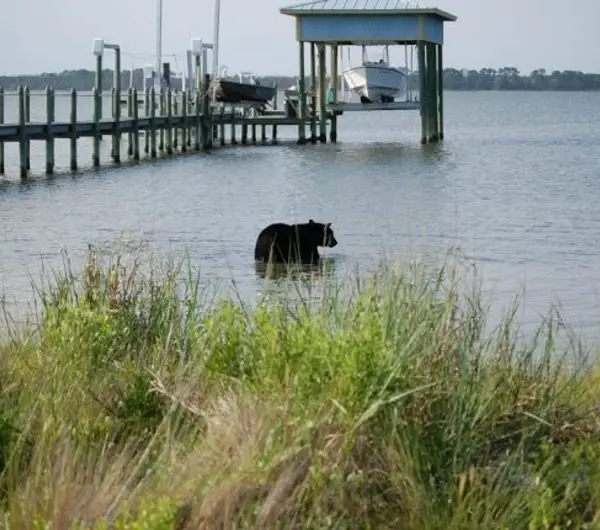
However, the bear reacted unpredictably, panicking at the sudden pain and stimulus of the dart, and bolted at full speed, moving directly toward the ocean, creating a tense and dangerous situation for everyone on site.
Once the bear entered the water, the tranquilizer began to take effect, causing the massive animal to become groggy and disoriented, struggling to maintain buoyancy in a body of water unfamiliar and challenging to its large frame.
It quickly became evident that the bear was in serious danger, as its sedation prevented normal swimming behavior, leaving it at risk of drowning mere moments after the tranquilizer began to impair its coordination.
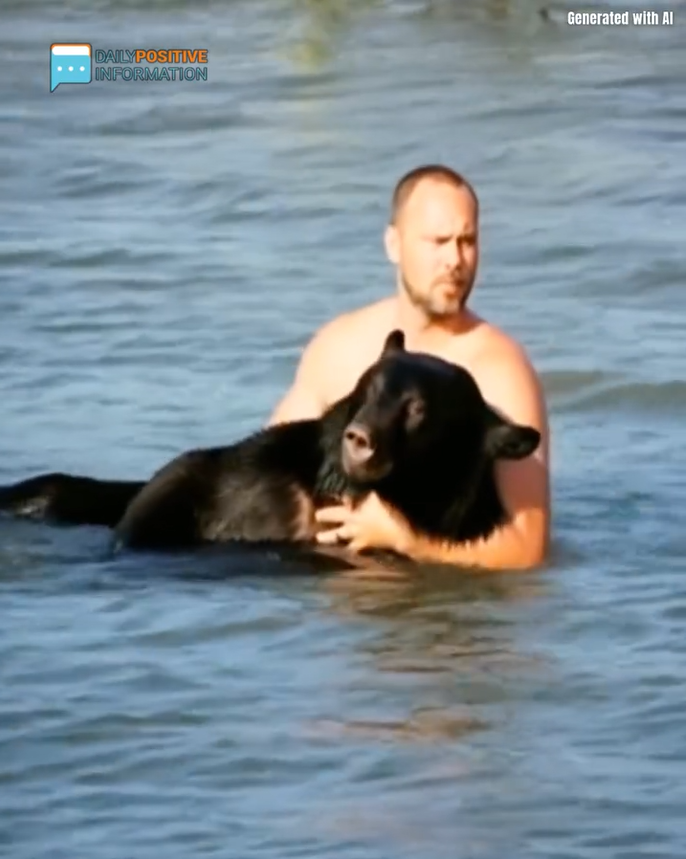
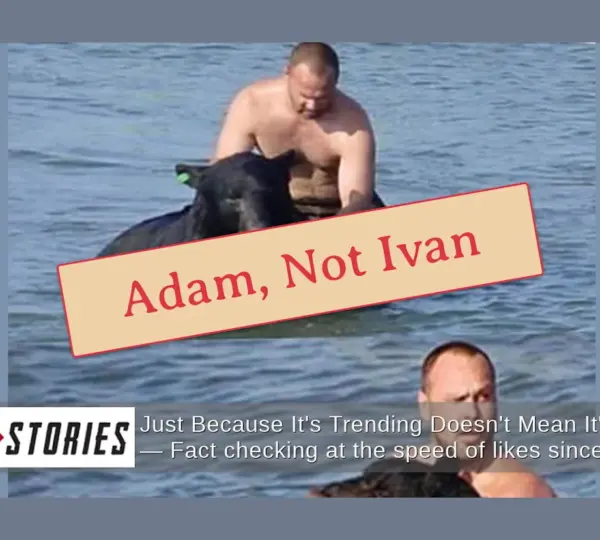
Witnessing the bear’s plight, Adam Warwick, a biologist with the FWC, made an immediate and courageous decision to intervene, knowing the risks associated with entering the water alongside a panicked, drugged 400-pound predator.
“It was a spur-of-the-moment decision,” Warwick later explained. “Adrenaline was pumping, and I knew I had to act quickly to prevent a tragedy before it happened,” reflecting the intense pressure of the moment.
Fully aware of the dangers, including the possibility that the bear could suddenly regain strength and lash out, Warwick nonetheless dove into the water, prioritizing the animal’s life over his own safety in a remarkable act of bravery.
Amazingly, the bear seemed to respond to his presence with a sense of calm, allowing Warwick to position himself alongside the massive animal without triggering panic or aggression, a rare occurrence in wildlife rescue situations.
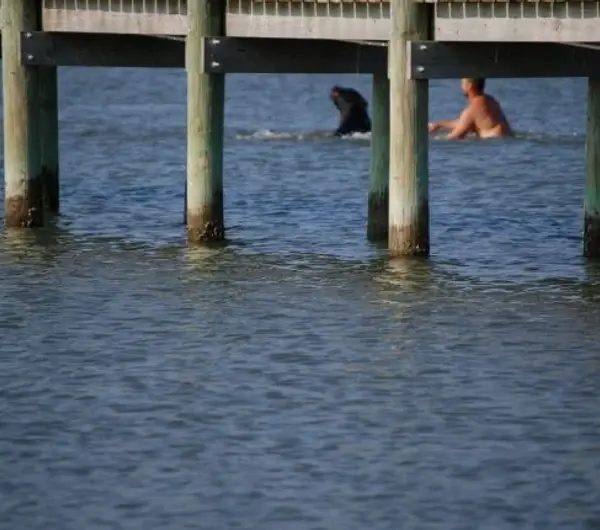
Warwick carefully guided the bear, keeping its head above water, slowly moving it toward shallower areas, relying on strength, timing, and intuition to prevent the situation from escalating into a fatal encounter.
The combination of Warwick’s experience, composure, and physical effort allowed the bear to maintain flotation and gradually reach safety, demonstrating both the technical skill and courage required in high-risk wildlife interventions.
By the time they reached land, Warwick had only sustained a minor scratch, an astonishing outcome considering the potential dangers posed by a panicked, tranquilized black bear weighing several hundred pounds.
Once onshore, additional FWC team members quickly mobilized to assist, recognizing the need to safely secure the exhausted bear for relocation without further stressing the animal or endangering themselves.
Together, the team improvised a practical solution, employing a tractor’s bucket to lift and transport the bear, demonstrating how resourcefulness and teamwork are critical components of successful wildlife management operations.
The operation worked seamlessly, allowing the bear to be contained safely while minimizing further risk, and ensuring that it could be transported to a protected area without causing harm to nearby residents or wildlife officers.
Warwick accompanied the bear during the short journey to its new habitat in the Osceola National Forest, a vast and secure ecosystem designed to sustain black bears and other Florida wildlife in their natural environment.
This protected area offers ample resources, including food, water, and shelter, allowing relocated bears to reestablish natural behaviors and reducing the likelihood of future human-wildlife conflicts in nearby residential areas.
Thanks to Adam Warwick’s quick thinking, courage, and decisive action, what could have been a tragic incident turned into a successful rescue, preserving the life of a large black bear and preventing potential human injury.
The bear’s safe relocation also highlighted the critical role of the FWC and its biologists, who routinely risk personal safety to manage wildlife-human interactions with professionalism and expertise.
Incidents like these illustrate the challenges of wildlife management in Florida, where rapid urban expansion increasingly places humans and large animals in proximity, creating situations that require skill, courage, and careful planning.
Warwick’s intervention serves as a reminder that heroes are not always recognized with public accolades; sometimes they are quiet professionals committed to preserving life, stepping into danger simply because it is the right thing to do.
The bear’s survival underscores the importance of emergency preparedness, appropriate sedation techniques, and rapid response by trained professionals when wild animals enter urban or suburban areas unexpectedly.
Public awareness of such rescues also fosters appreciation for the complexity and unpredictability of wildlife management, emphasizing the careful balance between human safety and animal welfare.
In the aftermath of the rescue, Warwick received recognition among colleagues and wildlife enthusiasts, though he maintained humility, consistently highlighting that the operation was a team effort and the bear’s safety was the paramount concern.
The bear’s return to the Osceola National Forest ensured that it could resume its natural behaviors, including foraging, territory establishment, and social interaction with other black bears in a safe and protected environment.

Such relocations are essential to reducing future risks, as bears accustomed to human food sources can become problematic, highlighting the importance of maintaining a respectful boundary between human habitats and wildlife ecosystems.
Incidents like the 2008 Alligator Point bear also reinforce the need for public education regarding wildlife safety, including keeping garbage secure, avoiding direct contact, and contacting professionals when large animals enter residential areas.
Warwick’s quick reaction illustrates the combination of physical courage, wildlife knowledge, and composure under pressure that distinguishes effective biologists and field officers from less experienced personnel in critical moments.
The rescue demonstrates that human intervention, when conducted responsibly, can preserve life without causing harm to either humans or animals, balancing ethics, safety, and conservation priorities in dynamic field conditions.
In addition to saving the bear, the story highlights the dedication of the FWC in managing Florida’s increasingly complex interactions between wildlife and growing human populations in coastal and inland communities alike.
Each step of the operation, from darting and sedation to ocean rescue and eventual relocation, required careful assessment, split-second decision-making, and collaboration among all team members to ensure success under unpredictable circumstances.
Warwick’s experience and familiarity with black bear behavior proved instrumental, allowing him to anticipate the animal’s reactions and adapt his approach to prevent panic, injury, or escalation during the rescue effort.
The incident also reinforces the value of training, situational awareness, and emergency preparedness for wildlife officers, as even seemingly routine calls can rapidly become life-threatening scenarios requiring immediate action.
Following the bear’s successful relocation, FWC continued monitoring bear populations, tracking interactions with humans, and promoting safety campaigns to reduce encounters and ensure the well-being of both people and wildlife across the state.
Stories like these serve as educational tools, helping the public understand the realities of human-wildlife conflict, the courage of field officers, and the complex logistics required to manage large and potentially dangerous animals safely.
For Adam Warwick, the rescue is remembered not as a moment of personal heroism but as an affirmation of the responsibility wildlife professionals carry to protect animals and humans alike in delicate, high-risk situations.
The 400-pound black bear, now safely integrated into the Osceola National Forest ecosystem, continues its life free from human threat, demonstrating how effective intervention can restore safety and balance for urban and wild environments.
Warwick’s courage is an example for biologists, students, and the general public, showcasing the importance of calm decisiveness, risk assessment, and respect for wildlife when confronting unpredictable and high-stakes scenarios.
Ultimately, the Alligator Point bear rescue highlights the intersection of human responsibility, wildlife management, and ethical conservation, emphasizing that timely intervention and expert knowledge can prevent tragedy while preserving natural behaviors.
The incident also reminds us that interactions with large wildlife require respect, preparedness, and the presence of trained professionals capable of responding effectively, reinforcing the broader need for conservation awareness in Florida and beyond.
Through Adam Warwick’s bravery, careful planning, and dedication to animal welfare, a potentially fatal encounter became a story of triumph, illustrating the profound impact a single individual can have on preserving life in challenging circumstances.
The success of this rescue continues to inspire those in wildlife management, reminding us that courage, skill, and commitment are as vital as equipment and protocols when human and animal lives are intertwined.
It remains a striking example of the unpredictable challenges Florida’s wildlife officers face daily, and of the extraordinary measures sometimes necessary to ensure the safety of both human communities and the animals that share their environment.