
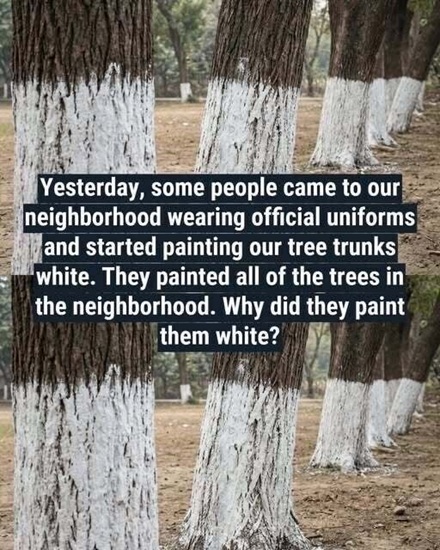
Many people notice trees with white-painted trunks and immediately assume it is purely decorative or a stylistic choice meant to create visual uniformity in gardens, streets, or parks.
At first glance, the bright white coating can appear artificial, almost ornamental, giving landscapes a polished, intentional look. However, this seemingly aesthetic treatment is deeply rooted in practical science and arboricultural tradition.
Far from being mere decoration, white-painted tree trunks serve a highly functional purpose: they protect the tree from environmental stressors, help prevent long-term damage, and improve overall tree health.
The Origins of Trunk Painting
The practice of painting tree trunks white is not a modern invention. Historical records indicate that arborists, farmers, and orchard managers in Europe and North America have been using white paint on trees for decades, particularly in regions with extreme seasonal temperature variation.

The practice gained prominence in the 19th and early 20th centuries, coinciding with the rise of commercial fruit orchards.
Farmers observed that young fruit trees, when left untreated, were especially vulnerable to winter injury. Early agricultural manuals recommended lime-based whitewash or diluted white paint as a protective coating.
Lime-based washes served two purposes: the alkaline nature of lime helped deter certain insects, while the white color reflected sunlight.
Over time, modern latex-based paints replaced lime washes for ease of application and long-lasting adhesion, but the principles remain the same: reflect sunlight, regulate temperature, and protect the tree’s delicate outer layers.
Understanding Sunscald and Why Trees Are Vulnerable
To appreciate the importance of painting tree trunks white, it is necessary to understand the physiological phenomenon known as sunscald.
Sunscald is a type of winter damage that affects the bark and cambium layer of trees. It occurs when the exposed side of a tree warms up during bright, sunny winter days and then experiences rapid cooling as the sun sets.
This sudden cycle of heating and cooling can cause the bark to expand and contract too quickly, leading to cracking, splitting, and tissue injury.
Young trees are particularly susceptible because their bark is thin and lacks the natural insulation present in mature trees. Newly planted trees, fruit trees, and ornamental species are at heightened risk.
If left unprotected, repeated sunscald can expose the cambium—the living tissue beneath the bark responsible for nutrient and water transport—to damage, increasing susceptibility to insects, fungi, and bacterial infection.
Over time, severe sunscald can stunt growth, compromise structural integrity, and even contribute to premature death.

Even mature trees can benefit from protective painting in regions with large daily temperature fluctuations. For example, in open areas with reflective snow or direct winter sunlight, trees of all ages may experience stress due to excessive heating of dark bark surfaces.
How White Paint Protects Trees
White paint is effective because it reflects sunlight, preventing the bark from heating excessively during the day. Dark bark absorbs solar radiation, which raises surface temperatures and accelerates the expansion and contraction cycle that causes cracking. By applying white paint, the bark remains cooler, reducing thermal stress and stabilizing the tree’s outer layers.
Arborists recommend applying paint primarily from the base of the trunk up to the first set of major branches. This area is most exposed to direct sunlight and temperature extremes, making it the most vulnerable.
The reflective effect is particularly critical in the morning, when sunlight hits east-facing trunks after cold overnight temperatures. White paint essentially moderates microclimatic fluctuations on the bark surface, offering a simple yet highly effective form of thermal regulation.
Choosing the Right Paint
Not all paints are suitable for tree trunks. Experts strongly advise against oil-based paints, which can suffocate the bark, block essential gas exchange, and potentially harm the tree. Instead, water-based white latex paint is recommended, often diluted with water in roughly a 50:50 ratio.
Dilution ensures that the paint provides coverage without creating a thick barrier that interferes with the tree’s natural respiration.
Latex paint is breathable, non-toxic once dry, and flexible enough to expand and contract with the bark. The application is typically performed once a year, usually in late fall before the onset of freezing temperatures.
Some arborists also suggest minor touch-ups in mid-winter if the paint begins to flake due to moisture or frost. Proper application requires a thin, even coat applied with a brush or sprayer, avoiding pooling at the base, which can promote fungal growth or water retention.
Tree Species That Benefit Most
While many trees can benefit from white trunk painting, certain types are more commonly treated due to vulnerability or economic value. These include:
- Young deciduous trees: Newly planted maples, oaks, and birches often have thin bark that offers minimal natural insulation.
- Fruit trees: Apple, peach, pear, and citrus trees are highly susceptible to sunscald, especially in orchards exposed to winter sun.
- Transplanted or stressed trees: Trees recently moved or pruned are more vulnerable to temperature fluctuations.
- Trees in urban or open areas: Trees without shade, or those surrounded by reflective surfaces like snow, pavement, or buildings, experience intensified solar exposure.
Mature trees with thick bark are generally more resilient, as their natural layers provide insulation. However, even these trees can benefit from protective painting in extreme climates or on newly exposed surfaces following pruning or storm damage.

Differentiating White Paint From Other Tree Markings
It is important to distinguish white-painted trunks from other colored tree markings. While white paint is protective, orange, red, or purple markings often have administrative or legal significance.
- Orange markings: Typically used by forestry workers or municipal crews to indicate trees scheduled for removal, trimming, or construction purposes.
- Purple markings: Common in the United States as a legal signal, marking private property boundaries or “no trespassing” zones.
- Blue or green markings: Often denote waterlines, survey points, or utility-related identification.
Unlike these markings, white paint is not a warning, property indicator, or maintenance signal—it is purely protective, aimed at safeguarding the tree from environmental damage.
Secondary Benefits of White Trunk Painting
While preventing sunscald is the primary goal, white-painted trunks offer additional benefits:
- Pest deterrence: Some insects are less likely to lay eggs on lighter surfaces, reducing early infestations.
- Rodent protection: During winter, rodents often target dark bark for warmth. White paint reflects sunlight, reducing heat buildup and making trunks less attractive.
- Stress reduction across orchards: In commercial orchards, painting provides uniform protection across multiple trees, promoting consistent growth and yield.
- Visual monitoring: Painted trunks make it easier for arborists to identify damage, fungal growth, or physical injury during inspections.
These benefits combine to create healthier trees that grow more robustly, resist disease more effectively, and contribute to resilient ecosystems.
Urban Applications
In cities and suburban neighborhoods, white trunk painting has become part of routine municipal tree care. Urban trees face unique stresses, including heat reflection from pavement, limited soil space, pollution, and mechanical damage.
Winter sunscald can be more pronounced in these settings, as reflected heat increases the day-night temperature swing on exposed bark.
Municipal arborists apply white paint as part of a comprehensive urban forestry strategy designed to maintain healthy tree canopies.
Trees in parks, streets, and residential areas provide shade, improve air quality, mitigate noise pollution, and enhance residents’ quality of life. Protecting these trees during vulnerable seasons is an investment in public well-being as well as environmental stewardship.

Practical Guidelines for Homeowners
Homeowners interested in implementing this practice should follow some key guidelines:
- Use only water-based, non-toxic latex paint.
- Dilute the paint 50:50 with water to maintain breathability.
- Apply a thin, even coat from the base to the first set of branches.
- Avoid excessive layers; thick paint can trap moisture and cause fungal issues.
- Time application in late fall before freezing temperatures.
- Monitor trees throughout winter and touch up areas where paint has worn off.
- Consider local climate, tree species, and sun exposure before painting.
This straightforward practice exemplifies how low-cost, simple interventions can have long-term benefits for plant health, ecosystem stability, and landscape longevity.
While painting tree trunks is effective, timing and technique play crucial roles in maximizing protection. The ideal time to apply white paint is during late fall, just before the onset of freezing temperatures and harsh winter conditions.
At this point, trees have typically entered dormancy, meaning their metabolic activity has slowed and they are less sensitive to minor surface disruptions. Applying paint too early in the fall can interfere with late-season growth, while applying it too late risks exposure to freezing conditions before protection is in place.
Homeowners and arborists often use a combination of brushing and spraying techniques to ensure even coverage. Brushing is precise and allows careful attention to crevices and irregular bark surfaces, whereas spraying can cover larger areas more quickly, particularly in orchards or parks with many trees.
The paint is applied from the base of the trunk up to the first major branch unions, which are most exposed to sun and wind. For young trees, which have thinner bark, the painted area may extend slightly higher to provide additional protection.
A thin, uniform coat is critical. Overly thick applications can trap moisture, creating an environment favorable to fungal growth or bacteria. Some arborists also recommend a second light coat after the first has dried, particularly for trees with rough or flaky bark that absorbs more paint.
Alternative Methods and Modern Adaptations
While white latex paint remains the standard, there are alternative methods used to protect trees from sunscald and winter injury.

One traditional approach is using white tree wraps, typically made of breathable plastic, fabric, or paper. These wraps reflect sunlight, provide insulation, and protect against mechanical damage from wind, snow, and animals. However, wraps require careful monitoring: if left on too long, moisture can accumulate, promoting rot or attracting insects.
In some orchards, farmers use a combination of paint and tree guards. Tree guards, often made of plastic or mesh, offer physical protection against rodents and equipment damage while painted surfaces mitigate thermal stress.
This integrated approach is particularly common in commercial fruit production, where every tree represents a financial investment and maintaining consistent health and yield is essential.
Modern research has also explored reflective coatings with UV-inhibiting additives, improving sunlight reflection without altering bark breathability.
Some experimental formulations include naturally derived compounds that may further deter pests or enhance bark resilience. Though not yet widespread in residential gardening, these innovations demonstrate that tree trunk protection is an active field of study with ongoing improvements.
Ecological and Agricultural Benefits
Painting tree trunks white offers significant ecological advantages beyond individual tree protection. In orchards, healthy trees maintain productivity and reduce the need for chemical interventions. By preventing sunscald and related stress, farmers can avoid losses caused by weakened branches, premature fruit drop, or disease susceptibility.
Urban forestry also benefits from this practice. Healthy urban trees improve air quality, reduce urban heat island effects, provide shade, and support wildlife habitats.
By mitigating winter injury through trunk painting, cities preserve the aesthetic and functional value of public trees, maintaining environmental services that would otherwise require costly replacements or interventions.
Additionally, white-painted trees can indirectly support biodiversity. A stable tree population ensures habitat continuity for birds, insects, and small mammals that depend on bark and branches. When trees survive winter without injury, they maintain their structural integrity and can support nesting, foraging, and pollination activities throughout the year.
Pest and Rodent Management
Another critical reason for painting tree trunks is pest and rodent deterrence. Many insects, such as bark beetles and egg-laying moths, prefer darker surfaces, where warmth accelerates egg development and larval survival. White-painted surfaces remain cooler, making them less attractive for laying eggs. This subtle effect reduces early-season pest pressure, giving trees a healthier start in spring.
Rodents, particularly in temperate climates, can damage bark during winter months as they search for warmth or food. Painted trunks reflect sunlight and reduce heat accumulation, discouraging rodents from chewing bark. Combining painting with tree guards or fencing offers a comprehensive defense against small mammals while maintaining tree health.
Community and Educational Aspects
In many communities, white-painted trees serve as a visible sign of environmental stewardship. Municipal arborists often engage local residents, schools, and gardening clubs in seasonal trunk painting activities. These programs educate the public about tree biology, seasonal care practices, and the importance of urban green spaces.
For children and young gardeners, painting tree trunks is an accessible hands-on learning experience. They can observe the seasonal impact of sunlight on bark, understand how trees respond to environmental stress, and witness the tangible benefits of proactive care.
Over time, these practices cultivate an appreciation for trees, sustainability, and ecological responsibility, encouraging the next generation of arborists and environmental advocates.
Case Studies From Orchards and Parks
Example 1: Apple Orchards in the Northeastern United States
In regions like New York and Vermont, apple growers regularly paint trunks of young apple trees with a 50:50 latex-to-water mixture. Orchard managers have reported a measurable reduction in winter bark splitting, fewer frost-related injuries, and improved sap flow in the spring.
The consistent appearance of white trunks also aids in visual inspections, allowing farmworkers to quickly identify anomalies, pest activity, or mechanical damage.
Example 2: Citrus Trees in Florida
Citrus trees face intense sun exposure even in mild winters. Florida growers have adopted white-painted trunks not only for sunscald prevention but also to mitigate temperature shock during sudden cold snaps.
Studies indicate that treated trees exhibit lower mortality rates during winter, better flowering rates in spring, and increased fruit yield consistency.
Example 3: Urban Tree Programs in Suburban California
Municipal arborists in cities such as Sacramento and Los Angeles have implemented annual trunk painting as part of broader urban tree management.
By combining painting with irrigation schedules, pruning, and mulch application, city foresters have maintained higher tree survival rates, improved canopy coverage, and reduced infrastructure damage caused by weakened trees falling during storms.
Addressing Common Misconceptions
Despite its long history and clear benefits, tree trunk painting is sometimes misunderstood. Common misconceptions include:
- “White paint is purely decorative.”
While it may improve visual uniformity, the primary purpose is thermal protection and pest deterrence. - “Only young trees need protection.”
Although young trees are more vulnerable, mature trees in extreme climates or newly exposed areas also benefit. - “All paints are safe for trees.”
Only water-based, breathable latex paints are appropriate. Oil-based or thick coatings can suffocate bark, trap moisture, and promote disease. - “Painting once is enough for life.”
Reapplication is generally needed annually to maintain protection, particularly for young trees or trees with rough bark.
By understanding and addressing these misconceptions, homeowners, farmers, and municipal arborists can maximize tree health while avoiding unintended damage.
Environmental Responsibility
Tree trunk painting also highlights a broader commitment to environmental responsibility. Using non-toxic, water-based paints ensures that surrounding soil, microorganisms, and nearby plants remain unharmed. Avoiding overapplication reduces runoff into local water systems, supporting broader ecosystem health.
Moreover, the practice is an example of low-impact, preventive care that reduces the need for chemical treatments, supplemental irrigation, or replacement plantings.
Healthy, protected trees contribute to carbon sequestration, air purification, and urban cooling, making trunk painting a small but meaningful act of sustainability.
A Symbol of Care and Stewardship
Beyond practical benefits, white-painted tree trunks serve as a visible symbol of stewardship. When walking through an orchard, park, or neighborhood with white-painted trees, one can immediately recognize the effort invested in preserving tree health. These white trunks reflect deliberate, informed care rather than random aesthetic choices.
They are a reminder that small, thoughtful interventions can prevent long-term damage, maintain biodiversity, and support ecosystems. Every painted trunk represents a conscious choice to engage with nature responsibly, combining scientific knowledge with hands-on care.
Conclusion: A Small Detail With Lasting Impact
What may appear as a simple cosmetic treatment—a tree with a white-painted trunk—is, in reality, a sophisticated and historically grounded protective strategy.
White paint shields bark from winter sunscald, stabilizes temperature fluctuations, deters pests and rodents, and supports overall tree resilience. It is a practice supported by decades of agricultural research, horticultural expertise, and practical experience in both urban and rural settings.
Proper application, including seasonal timing, paint type, and coverage technique, ensures maximum benefit while preserving the tree’s natural functions. For homeowners, municipal arborists, and orchard managers, this low-cost intervention represents preventive care that pays dividends in tree health, longevity, and ecological stability.
From orchards to urban parks, white-painted tree trunks demonstrate how a small, visible action can produce profound environmental and practical benefits.
Far from a mere aesthetic choice, the white coating is an investment in the tree’s survival, community well-being, and the long-term health of our shared ecosystems. By understanding its purpose and applying it responsibly, we can ensure that trees thrive for decades, providing shade, beauty, and life to the world around them.
Community and Educational Aspects
In many communities, white-painted trees serve as a visible sign of environmental stewardship. Municipal arborists often engage local residents, schools, and gardening clubs in seasonal trunk painting activities. These programs educate the public about tree biology, seasonal care practices, and the importance of urban green spaces.
For children and young gardeners, painting tree trunks is an accessible hands-on learning experience. They can observe the seasonal impact of sunlight on bark, understand how trees respond to environmental stress, and witness the tangible benefits of proactive care.
Over time, these practices cultivate an appreciation for trees, sustainability, and ecological responsibility, encouraging the next generation of arborists and environmental advocates.
Case Studies From Orchards and Parks
Example 1: Apple Orchards in the Northeastern United States
In regions like New York and Vermont, apple growers regularly paint trunks of young apple trees with a 50:50 latex-to-water mixture.
Orchard managers have reported a measurable reduction in winter bark splitting, fewer frost-related injuries, and improved sap flow in the spring. The consistent appearance of white trunks also aids in visual inspections, allowing farmworkers to quickly identify anomalies, pest activity, or mechanical damage.
Example 2: Citrus Trees in Florida
Citrus trees face intense sun exposure even in mild winters. Florida growers have adopted white-painted trunks not only for sunscald prevention but also to mitigate temperature shock during sudden cold snaps. Studies indicate that treated trees exhibit lower mortality rates during winter, better flowering rates in spring, and increased fruit yield consistency.
Example 3: Urban Tree Programs in Suburban California
Municipal arborists in cities such as Sacramento and Los Angeles have implemented annual trunk painting as part of broader urban tree management.
By combining painting with irrigation schedules, pruning, and mulch application, city foresters have maintained higher tree survival rates, improved canopy coverage, and reduced infrastructure damage caused by weakened trees falling during storms.
Addressing Common Misconceptions
Despite its long history and clear benefits, tree trunk painting is sometimes misunderstood. Common misconceptions include:
- “White paint is purely decorative.”
While it may improve visual uniformity, the primary purpose is thermal protection and pest deterrence. - “Only young trees need protection.”
Although young trees are more vulnerable, mature trees in extreme climates or newly exposed areas also benefit. - “All paints are safe for trees.”
Only water-based, breathable latex paints are appropriate. Oil-based or thick coatings can suffocate bark, trap moisture, and promote disease. - “Painting once is enough for life.”
Reapplication is generally needed annually to maintain protection, particularly for young trees or trees with rough bark.
By understanding and addressing these misconceptions, homeowners, farmers,
