
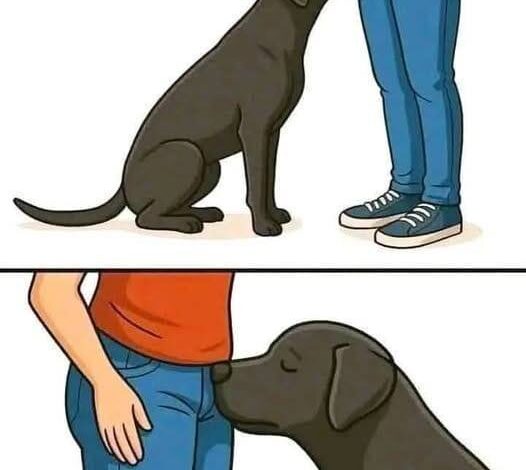
The relationship between humans and their canine companions is one of the most intricate and enduring forms of interspecies communication.
While often framed as companionship or pet ownership, the reality is far deeper: it is a continuous exchange of sensory, emotional, and behavioral information.
By 2026, our understanding of this dynamic has evolved significantly, not just in terms of observable behavior but also in the molecular and neurological mechanisms that underpin it. Among these behaviors, one that consistently generates both curiosity and discomfort is the dog’s tendency to sniff human genital regions. Although this act is frequently misinterpreted through the lens of human social norms, a closer examination reveals it as a complex biological behavior with profound evolutionary roots.
At the heart of this behavior lies the canine olfactory system, arguably one of the most sophisticated sensory networks in the animal kingdom. A dog’s sense of smell is estimated to be between 10,000 and 100,000 times more sensitive than that of a human.
This extraordinary ability is not limited to detecting odors; it enables dogs to perceive intricate chemical compositions, subtle hormonal fluctuations, and even changes in emotional state. For humans, vision and sound dominate our perception of the world, but for dogs, olfaction is the primary tool through which they navigate reality.
Every interaction, every environment, and every living being is decoded primarily through scent. When a dog approaches a person’s midsection, it is not an expression of rudeness but a precise and instinctive act of information gathering—a biological “investigation” executed with centuries of evolutionary refinement.
Human skin contains two primary types of sweat glands: eccrine glands, which are widespread and primarily regulate temperature, and apocrine glands, which are concentrated in specific areas such as the armpits, the groin, and around the nipples. Apocrine glands secrete a complex mixture of proteins, lipids, and pheromones—chemical compounds that convey highly detailed information about an individual’s physiological and emotional state.
Pheromones provide insight into a person’s age, sex, reproductive status, and even subtle indicators of stress or illness. In the canine perception, these chemical signals are a direct channel into understanding a human in a manner far more precise than visual cues or verbal communication can ever achieve. Because apocrine glands in the armpits are generally inaccessible to a dog without assistance, the genital area naturally becomes a primary site for olfactory assessment, effectively serving as an information-rich hub for canine greeting behaviors.
This behavior is comparable, in canine social language, to a firm handshake, an exchange of business cards, and a polite introduction all at once. It represents a method of identification and reassurance, confirming the presence of a familiar or safe individual. Puppies begin to practice similar behaviors within their litters, sniffing one another’s genitals as a primary mode of social investigation. This practice continues into adulthood, extending naturally into interactions with humans and other animals. The sniffing behavior is therefore not an isolated curiosity but a deeply rooted element of canine social cognition.
However, the intersection of canine instinct and human social norms often generates discomfort, sometimes leading to scolding or punitive reactions. Scientific research in canine behavior has shown that negative reinforcement in this context can produce confusion, fear, or anxiety in dogs, disrupting their sense of security within the household. Dogs lack the conceptual framework to interpret “taboo” behavior in human society.
From a biological perspective, they are simply fulfilling an instinctual need to gather critical information about their social environment. Instead of reprimand, the most effective approach is structured redirection and consistent training. By teaching commands such as “sit,” “stay,” or “gentle,” caregivers can guide dogs toward behaviors that satisfy their instinctive curiosity while maintaining social decorum. Rewarding calm, controlled interactions reinforces the link between polite behavior and positive outcomes, allowing dogs to express their instincts in ways compatible with human expectations.
Beyond the social dimension, sniffing behavior can provide subtle, early indicators of changes in human health. Dogs possess an extraordinary capacity to detect chemical and hormonal changes that precede observable illness. Studies have demonstrated that dogs can identify conditions ranging from low blood sugar and infections to early stages of cancer and pregnancy, often before the person becomes aware of any symptoms.
When sniffing behavior intensifies or becomes obsessive, particularly if accompanied by shifts in the dog’s appetite, sleep patterns, or elimination habits, it may be signaling an unusual physiological change in their human companion. In this sense, the dog functions as a “sentinel,” providing a biologically grounded alert system that can enhance human well-being when carefully observed and interpreted.
Understanding the sniffing behavior also highlights the invisible yet constant flow of information in the shared human-canine ecosystem. Every person carries a unique chemical signature, and every interaction is a data exchange in which the dog is highly attuned to patterns, anomalies, and shifts. While humans may become absorbed in the abstractions of media narratives, geopolitical uncertainty, or the pressures of daily life, dogs remain focused on the immediacy of sensory reality. They thrive on predictability, routine, and positive reinforcement, relying on their human caregivers to provide structured environments in which their instincts can be safely and appropriately expressed.
By framing canine sniffing through a lens of scientific understanding and compassionate realism, humans can reorient their perspective from embarrassment or frustration to curiosity and respect. Rather than interpreting the behavior as a challenge to decorum, it becomes a window into the dog’s perceptual world, revealing the sophistication of a system refined by evolution for communication, identification, and social bonding. Recognizing this can enhance the human-animal bond, creating a space where instinct and etiquette coexist, and where dogs are empowered to express their nature safely and responsibly.
Once we appreciate that sniffing is an instinctive and biologically meaningful behavior, the next step for caregivers is understanding how to manage it effectively while preserving the dog’s well-being. Training in this context is not about suppression but translation—helping a dog express its natural instincts in ways that are socially acceptable and safe for the household.
Understanding Motivation and Context
Dogs approach sniffing with varying intensity depending on multiple factors: age, breed, socialization history, and individual personality. For example, breeds like beagles, bloodhounds, and German shepherds possess highly developed olfactory acuity, and their motivation to investigate scents can be nearly constant. Even within a breed, individual temperament plays a significant role; some dogs exhibit calm curiosity, while others display hyper-focused or obsessive behavior. Caregivers should observe the timing, frequency, and context of sniffing behaviors to discern patterns.
A crucial concept here is that sniffing is often linked to emotional states. Dogs experiencing stress, anxiety, or uncertainty may increase sniffing as a coping mechanism, similar to how humans fidget or pace. Conversely, a calm, well-adjusted dog uses sniffing primarily for information-gathering and social interaction. By distinguishing these states, caregivers can tailor interventions to address the root cause rather than the symptom.
Structured Redirection Techniques
Effective management begins with redirection: guiding a dog toward alternative behaviors that satisfy the same instinctive need. Redirection is most effective when implemented consistently, immediately, and with positive reinforcement. For example:
- Command-Based Redirection: Teaching commands like “sit,” “stay,” or “leave it” provides a structured outlet for curiosity. When a dog approaches a human midsection, a clear command paired with calm guidance can interrupt the behavior without causing fear or confusion. Consistency is key—commands must be repeated in every instance, accompanied by calm body language and a steady tone of voice.
- Reward Systems: Positive reinforcement strengthens the connection between desired behaviors and reward. Treats, verbal praise, or tactile reassurance (like gentle petting) communicate that calm, controlled interactions are preferred. Dogs learn quickly that polite greetings earn rewards, creating a voluntary and joyful pattern of behavior rather than a coerced one.
- Environmental Management: Sometimes, physical cues can assist training. Using baby gates, leash control, or temporary barriers can help prevent unwanted sniffing while the dog practices new behaviors. Over time, these environmental controls can be gradually reduced as the dog internalizes acceptable social routines.
- Structured Socialization: Dogs raised in households with clear routines and frequent positive social interactions often display more controlled greeting behavior. Introducing a dog to a variety of humans in a structured, calm setting allows them to practice sniffing, greeting, and social assessment safely. Socialization also helps reduce hyper-focused or anxious sniffing by reinforcing that the world is predictable and safe.
Behavioral Interpretation: When to Pay Attention
While sniffing is generally a normal behavior, caregivers must recognize signals that may indicate deeper issues. Intensified or obsessive sniffing, especially if paired with changes in appetite, sleep, elimination habits, or energy levels, can signify that a dog is detecting shifts in human physiology. Dogs are capable of sensing hormonal fluctuations, metabolic changes, and even early signs of illness, often before humans recognize any symptoms themselves. For instance:
- Pregnancy Detection: Dogs can sense changes in hormones such as progesterone and estrogen, often adjusting their attention and behavior toward the expecting individual. Increased sniffing may be a form of monitoring or reassurance.
- Illness Detection: Certain diseases, like infections, diabetes, or even early-stage cancers, can subtly alter chemical markers in sweat and skin. Dogs may exhibit prolonged or repeated sniffing near affected areas, alerting caregivers to investigate further.
- Emotional Sensitivity: Dogs are highly attuned to cortisol, the human stress hormone. Elevated stress levels may trigger curiosity or concern-driven sniffing as the dog attempts to “read” the emotional state of their human companion.
By paying attention to these patterns, caregivers can integrate canine observations into holistic health monitoring. While dogs are not diagnostic tools, their behavior can provide early-warning cues, prompting humans to seek medical consultation or adjust lifestyle factors.
Advanced Training and Enrichment
For dogs exhibiting particularly high olfactory drive, advanced training techniques can transform instinct into structured activity. Scent-based enrichment provides mental stimulation while satisfying natural impulses:
- Nose Work: Activities that encourage a dog to locate hidden treats or scent-marked objects harness the power of their olfactory system. This satisfies curiosity and sharpens cognitive skills, reducing the need for socially intrusive sniffing.
- Target Training: Teaching a dog to “target” a mat, object, or hand can redirect sniffing behavior away from inappropriate areas while maintaining engagement with scent cues.
- Interactive Play: Structured play involving toys that emit scents or contain treats engages both body and mind, allowing dogs to channel investigative behavior in socially acceptable ways.
Enrichment not only improves behavior but also strengthens the human-animal bond. Dogs who are mentally and emotionally stimulated are calmer, more confident, and less likely to engage in intrusive sniffing or other unwanted behaviors.
Integrating Compassionate Realism
The overarching principle in managing sniffing behavior is what we might call “compassionate realism.” This involves acknowledging the biological imperatives driving the dog’s behavior while applying consistent, humane guidance that aligns with human social norms. Caregivers must resist the instinct to shame or punish, instead focusing on education, redirection, and observation. By creating an environment where instinct and etiquette coexist, dogs are allowed to maintain their natural curiosity without compromising household harmony.
Importantly, compassionate realism also recognizes the dog’s role as a social sentinel. Dogs do not act solely on whim—they actively gather data about their environment and the humans within it. Understanding this transforms the perception of sniffing from a socially awkward nuisance into a meaningful communication channel. Humans who approach the behavior with curiosity and structured guidance can reinforce trust, deepen connection, and even benefit from subtle health insights provided by their companion’s acute senses.
To fully appreciate the act of canine sniffing, especially in sensitive areas such as the human genital region, it is essential to consider the behavior within the broader context of evolution, social intelligence, and cross-species communication. Dogs (Canis lupus familiaris) have co-evolved alongside humans for tens of thousands of years. During this time, selective pressures favored animals that could accurately interpret human emotional and physiological cues, respond to social hierarchies, and contribute to group survival. Sniffing behaviors are not arbitrary—they are a manifestation of this finely tuned evolutionary toolkit.
Evolutionary Roots of Olfactory Communication
In the wild, wolves and early canine ancestors relied extensively on scent to communicate with pack members. Pheromones provided crucial information about reproductive status, health, stress, and territorial boundaries. Young wolves learn through genital sniffing and grooming behaviors that these chemical signals dictate social interactions, conflict avoidance, and mating opportunities. Domestication has preserved these instincts, even as dogs have adapted to living in human environments. The fundamental purpose remains: information gathering through chemical signatures.
Humans, though visually and verbally oriented, emit a complex chemical tapestry via sweat, sebum, and other bodily secretions. A dog’s nose can detect and interpret these compounds at extraordinary sensitivity. To a dog, the human body is an encyclopedia of biological data; each sniff is an entry point into understanding the “who,” “what,” and “how” of a person’s current state. The genital region, rich in apocrine glands, naturally becomes a primary site for this olfactory survey. By viewing sniffing behavior through an evolutionary lens, it is clear that this is an act of cognitive and social sophistication, not impropriety.
Emotional Bonding Through Olfactory Interaction
Sniffing is also a critical vehicle for emotional bonding between dogs and humans. While humans bond through verbal affirmation, eye contact, and shared experiences, dogs integrate chemical cues to gauge trustworthiness, emotional stability, and receptiveness to interaction. When a dog sniffs a human’s scent profile, they are performing a complex assessment: confirming identity, monitoring emotional state, and establishing comfort within the domestic hierarchy. A dog that is allowed to engage in this instinctive behavior under structured guidance often exhibits greater attachment, reduced anxiety, and enhanced responsiveness to commands and social cues.
Interestingly, sniffing can also function as a communication bridge in times of emotional stress. Dogs are highly empathetic creatures, capable of detecting subtle changes in human physiology, including increases in cortisol, changes in pheromone profiles associated with fear or stress, and even shifts in hormone balance during illness or recovery. When a dog intensifies sniffing during these moments, it is not merely a curiosity—it can be interpreted as a form of attentive monitoring, an evolved behavior to ensure the safety and well-being of the pack.
Cross-Species Communication and Understanding
One of the most profound lessons of canine sniffing is the insight it provides into cross-species communication. Humans often misinterpret instinctive canine behaviors through anthropomorphic lenses, applying human cultural norms where biological imperatives dominate. By reframing our perspective, sniffing becomes less an embarrassment and more a demonstration of the dog’s commitment to accurate social intelligence. In other words, the dog is offering an unfiltered, biologically grounded method of “understanding” humans that transcends language and cognitive complexity.
This reframing also enhances the human caregiver’s observational skills. By studying when, how, and why dogs engage in sniffing, humans can gain insight into their own physiological and emotional states as well. Anecdotal evidence and scientific studies indicate that dogs can detect conditions as diverse as:
- Early stages of infectious diseases, including viral or bacterial infections.
- Hormonal changes, such as those associated with pregnancy, menstruation, or stress.
- Emotional shifts, including anxiety, grief, or joy.
By paying attention to these cues, caregivers engage in a form of collaborative monitoring, leveraging the dog’s sensory capabilities to complement their own awareness and health vigilance.
Practical Implications for Caregivers
For the modern pet owner, managing sniffing behavior effectively requires a balance of structure, enrichment, and observation:
- Structured Guidance: Reinforcing commands like “sit,” “stay,” and “gentle” ensures that the dog’s instinctive behaviors are expressed safely.
- Scent Enrichment: Nose work games, interactive scent toys, and controlled exploration allow dogs to engage their olfactory skills in ways that are socially appropriate and mentally stimulating.
- Observation for Health Indicators: Paying attention to sudden changes in sniffing patterns can alert caregivers to possible physiological or emotional changes in either the dog or the human.
- Consistent Positive Reinforcement: Rewarding calm, polite greetings strengthens desirable behavior and fosters a harmonious human-canine relationship.
By integrating these practices, caregivers create an environment where instinct and etiquette coexist harmoniously, allowing dogs to express themselves fully while maintaining household norms.
The Philosophical Perspective: Trust, Honesty, and Biological Truth
Finally, the act of canine sniffing serves as a reminder of the value of biological honesty and trust in human-animal relationships. Dogs operate on a framework of instinctive clarity—what they perceive, they react to; what they sense, they communicate. Unlike humans, they do not operate on deception, societal pressure, or cultural pretense. Every sniff, every investigation, is a data-driven, instinctual expression of engagement. By understanding this, humans gain a profound perspective on transparency, trust, and the power of non-verbal communication.
Dogs, in their own way, teach us lessons about connection: that the deepest bonds are often built on attentiveness, mutual respect, and the acknowledgment of fundamental truths. Even when the behavior is socially awkward or seemingly uncomfortable, it is an honest form of interaction, a way for the dog to fully integrate into human social life while maintaining its evolutionary identity.
Conclusion: Celebrating the Canine Nose
In the world of 2026, where human life is increasingly mediated by screens, schedules, and abstract pressures, the dog’s nose remains a tangible connection to the present moment. Sniffing is a biologically precise, socially significant, and emotionally resonant behavior that reinforces the bond between humans and their canine companions. It is a bridge between instinct and etiquette, a channel of communication that transcends species, and a reminder of the incredible sensory and emotional capacities of our pets.
When approached with understanding, structure, and compassionate realism, sniffing transforms from a source of discomfort into a profound testament of trust, curiosity, and biological sophistication. It reminds humans that while we navigate complex social, political, and technological landscapes, the simplest, most honest connections are often rooted in instinct, attention, and care. By respecting and interpreting the dog’s olfactory signals, caregivers not only enhance their pet’s well-being but also deepen their own awareness, creating a partnership built on mutual respect, intelligence, and the timeless language of scent.
Ultimately, the story of the sniffing dog is a celebration of cross-species communication, the beauty of instinctive honesty, and the remarkable depth of human-animal bonds. It is a narrative that teaches patience, empathy, and respect, highlighting that the most meaningful connections are often grounded in the silent, biological truths that have shaped life on Earth for millennia.
