
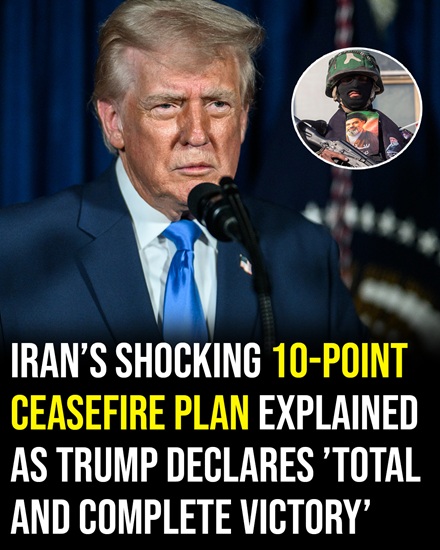
President Donald Trump characterized Iran’s recently unveiled 10‑point ceasefire proposal as a “workable foundation for negotiation,” signaling a potential opening for dialogue after weeks of mounting tensions between Washington and Tehran.
The statement appeared to indicate that both nations might have found common ground, though the details of Iran’s plan immediately prompted a range of reactions from analysts, diplomats, and foreign policy experts.
When elements of the Iranian proposal became public, many observers expressed surprise and, in some instances, skepticism over the ambitious list of demands reportedly included.
The timing of the proposal was critical: it emerged just hours before Trump’s self-imposed deadline to escalate military operations against Iran, at a moment when U.S.–Iran tensions were peaking.
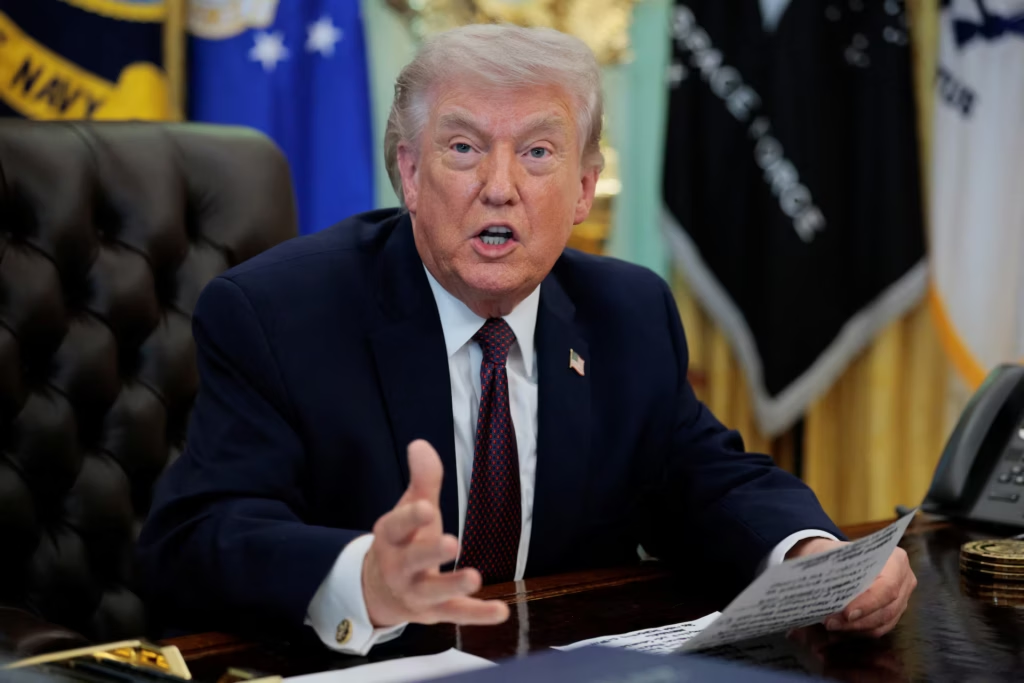
In public statements, Trump warned that failure to comply could expose Iran’s nearly 90 million citizens to potentially devastating consequences, emphasizing the stakes of the unfolding diplomatic scenario.
Late Tuesday, roughly an hour before the deadline, U.S. and Iranian officials reached agreement on a temporary two‑week ceasefire.
This conditional pause in hostilities was widely described by analysts as fragile and heavily reliant on continued diplomatic engagement. Several nations played an important role behind the scenes in securing the truce, with Pakistan emerging as a key mediator.
Other governments reportedly encouraged dialogue and compromise over direct military confrontation, while China applied pressure on Tehran to demonstrate flexibility, citing concerns about the wider economic repercussions of an extended conflict.
Trump framed the ceasefire as a notable diplomatic success, declaring that Iran had agreed to present a “workable basis” for further negotiations.
International observers offered differing interpretations of this statement, with some emphasizing its symbolic nature rather than concrete policy outcomes.
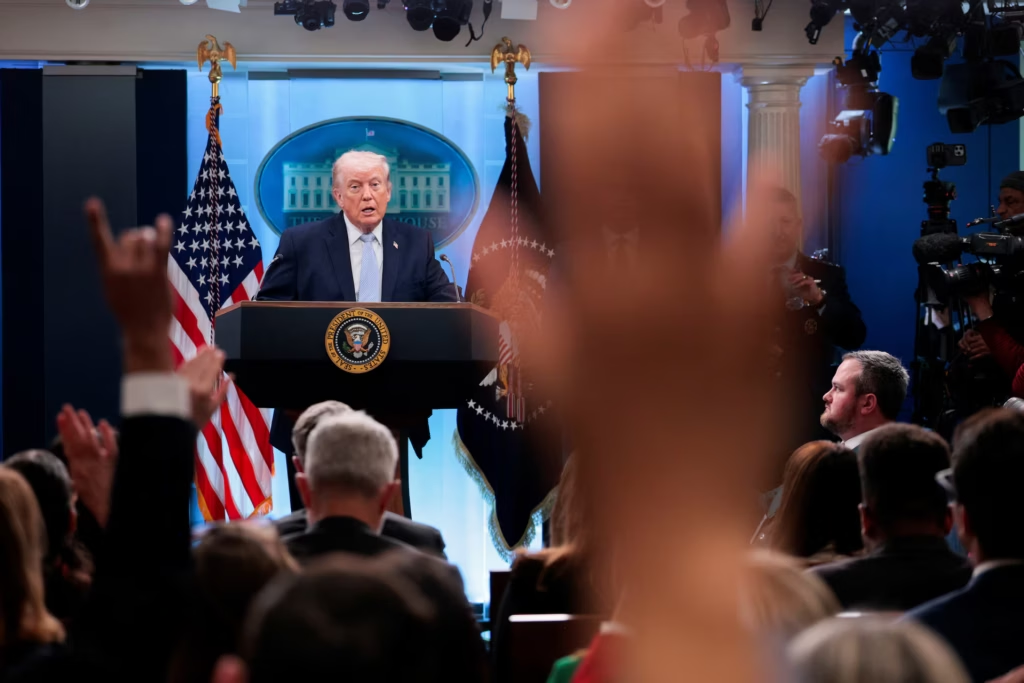
The specifics of Iran’s 10‑point proposal, as reported by multiple sources including state media and international outlets, included several demands historically opposed by Washington.
Among the reportedly central points were a permanent non‑aggression agreement, recognition of Iran’s right to continue nuclear enrichment, the lifting of primary and secondary U.S. sanctions, and withdrawal of American military forces from the broader Middle East.
Tehran also reportedly called for continued control over the strategic Strait of Hormuz, compensation for wartime damages, termination of UN and IAEA resolutions against the country, and the formal cessation of conflict across multiple theaters.
While these points reflect Iran’s stated objectives, analysts caution that the U.S. may be willing to negotiate only on select items, and the ultimate terms of any agreement remain highly uncertain.
The Strait of Hormuz, a chokepoint crucial to the global oil supply, became a focal point of the ceasefire. Under the agreement, Iran consented to maintain controlled passage for maritime traffic for the two-week period, helping to reduce immediate concerns about disruptions to energy markets.
In exchange, the United States agreed to suspend offensive military operations, including previously discussed plans to expand strikes on Iranian infrastructure.
White House Press Secretary Karoline Leavitt praised the ceasefire as a major accomplishment, describing it as a “victory for the United States.”
She emphasized that U.S. forces completed the objectives of the campaign, dubbed Operation Epic Fury, in 38 days—well ahead of the original 4–6 week projection. Leavitt attributed the expedited results to the administration’s military strategy and capabilities.
Despite the White House’s celebratory tone, some observers interpreted the ceasefire as a strategic retreat. Media correspondents, including Sky News U.S.’s Mark Stone, suggested that by accepting a truce, the administration temporarily delayed confrontation while granting Iran diplomatic leverage.
Just hours earlier, Trump had warned that failure to meet conditions could result in widespread devastation, raising legal and ethical questions about potential attacks on civilian infrastructure.
Legal scholars worldwide expressed concern that targeting energy grids or transportation systems might constitute violations of international law.
The ceasefire prevented immediate escalation and shifted the focus to diplomacy, though critical points in Iran’s proposal remain contested.
Discrepancies between Persian and English-language versions, particularly regarding nuclear enrichment rights, have sparked debate over how negotiators will reconcile differences.
Israel expressed cautious support for the truce but clarified that the deal did not affect ongoing Israeli military operations against Hezbollah in Lebanon, leaving some regional tensions unresolved.
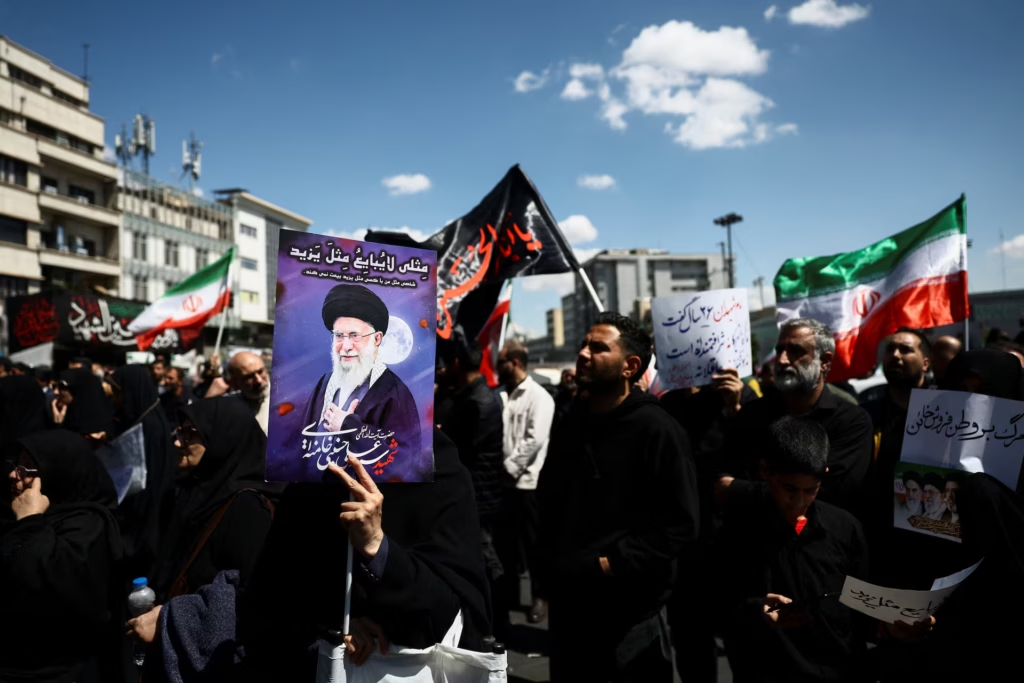
Meanwhile, negotiations are underway in Islamabad, where Pakistani Prime Minister Shehbaz Sharif and other mediators are working to develop a broader path toward lasting peace.
Skepticism remains about how much of Iran’s proposal the U.S. will accept, particularly on issues of sanctions, troop withdrawals, and territorial control.
Experts suggest that the list of demands may serve more as a starting point for negotiation than a definitive settlement, with both sides expected to compromise over time.
Supporters argue the ceasefire is a necessary step in preventing a broader conflict at a moment of global instability, offering a temporary pause that could evolve into a long-term agreement if talks continue constructively.
Critics warn that a short-term truce may merely delay deeper disagreements, with underlying tensions still unresolved.
The economic implications are significant. Given the critical role of the Strait of Hormuz in global energy transport, even a temporary closure could destabilize oil markets and supply chains.
Shipping companies remain cautious, aware that the truce may not guarantee long-term security.
Key issues—including sanctions relief, U.S. military presence in the region, and nuclear oversight—remain open. Members of the U.S. Congress from both parties have called for clearer guidance on foreign policy, emphasizing the need for oversight and a transparent framework for future diplomatic or military actions.
Officials have also questioned whether Iran’s demands on territorial control align with long-term U.S. interests in freedom of navigation and regional stability.
Although the ceasefire represents a conditional peace, its durability depends on continued diplomatic engagement, reciprocal compliance, and political will from both sides.
Humanitarian groups have welcomed the pause in fighting, noting that reduced violence allows better access for aid and assistance to civilians impacted by years of regional instability.
As negotiations continue in Islamabad, the world watches carefully. Analysts hope for substantive progress, mindful that unresolved issues could reignite hostilities.
For now, the ceasefire provides a temporary reprieve, offering a window for diplomacy to prevent immediate conflict while the broader strategic questions remain unresolved. Whether the “workable basis” described by Trump will evolve into a sustainable peace or remain a brief interlude in an ongoing conflict is yet to be determined.
