
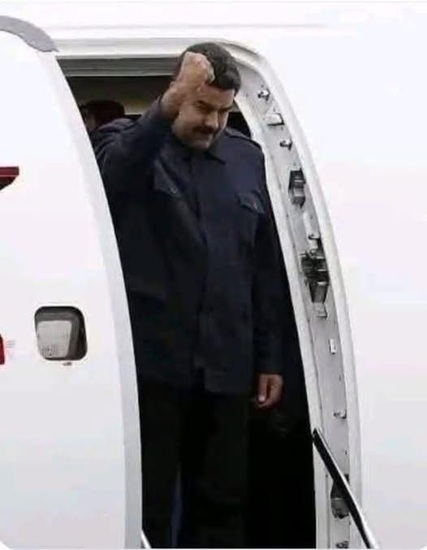
In recent weeks, a variety of viral posts and attention-grabbing headlines have circulated online, claiming that Venezuelan leader Nicolás Maduro is preparing to “return to his homeland” or is undergoing a sudden political shift.
These claims have spread rapidly across social media platforms, leaving many users uncertain about what is actually happening in Venezuela and whether the reports reflect reality or are based on unverified information.
At first glance, the headlines seem urgent and credible, often using sensational language designed to capture attention instantly, prompting readers to share the content before confirming whether the information is accurate.
However, when one examines reporting from established international media outlets, these claims do not align with verified facts. There is no evidence that Maduro has been detained, removed from power, or transferred abroad under extraordinary circumstances.

As of today, Nicolás Maduro continues to exercise authority in Venezuela, overseeing governmental functions while facing long-standing economic, social, and political challenges that have defined his presidency.
Any suggestion that a foreign government, including the United States, has conducted a military operation within Venezuela to remove Maduro is entirely unfounded. Such an event would be major international news and widely reported by multiple credible sources worldwide.
The spread of these rumors highlights a common feature of social media: information often travels faster than verification processes. Content that evokes strong emotions, such as political upheaval, naturally gains attention and shares quickly.
Many viral headlines are deliberately designed to trigger urgency. Phrases such as “breaking news,” “unexpected return,” or “you won’t believe what happened next” encourage readers to react immediately, regardless of factual accuracy.
This environment makes it easy for misinformation to spread. Users often encounter similar claims repeatedly, creating a perception that they are verified even when they originate from a single unsubstantiated source.
The political situation in Venezuela is indeed complex, with longstanding economic instability, governmental challenges, and international attention, which makes the country particularly prone to online speculation and viral rumors.

Because of these complexities, any assertion of sudden leadership change naturally attracts attention, but it is critical to distinguish between rumor and confirmed fact before drawing conclusions.
Social media amplifies engagement-driven content, often prioritizing emotional response over factual accuracy. As a result, sensationalized or incomplete information may appear in trending feeds more frequently than verified reports.
Emotional reactions play a key role in how such rumors propagate. Posts involving arrests, leadership changes, or international conflict trigger strong feelings, prompting users to share without investigating the accuracy of the claims.
It is also important to understand that Venezuela’s political system continues to operate, with Nicolás Maduro as the elected head of state, while governance challenges remain visible domestically and internationally.
Delcy Rodríguez plays a prominent role in the administration but has not assumed full presidential authority as a result of any alleged removal or capture of Maduro.
International reactions to Venezuela primarily involve diplomatic engagement, economic policy discussions, and humanitarian concerns rather than direct military interventions, contrary to the narratives circulating online.

In reality, credible reports continue to focus on Maduro’s domestic leadership, the country’s economic conditions, and Venezuela’s relations with other nations, particularly the United States and regional partners.
The absence of widespread reporting on any extraordinary detention event strongly indicates that viral claims suggesting such an occurrence are false or based on speculation, rather than reliable facts.
Social media platforms facilitate rapid information sharing but also increase the risk of misinformation reaching large audiences quickly. Content that provokes curiosity, surprise, or outrage often spreads faster than content that is verified and measured.
Viral posts often rely on incomplete context, misinterpretation, or exaggeration. Users who encounter them without cross-referencing with credible sources may unintentionally contribute to spreading false narratives.
Reliable information regarding Venezuela is best obtained from established news organizations, official government communications, and reputable international agencies. These sources provide context, verification, and a balanced perspective that is often missing in viral posts.
When assessing news claims, readers should always check multiple sources. If a significant development occurs, it will typically be covered consistently across a wide range of established media outlets, not limited to one viral post or social media page.

Examining the language of headlines is also crucial. Emotionally charged phrases or dramatic punctuation can indicate that the content is designed more for clicks and shares than for providing accurate context.
By approaching such claims critically, readers can better separate speculation from verified events, reducing the likelihood of being misled and promoting more accurate understanding of global political situations.
The political landscape in Venezuela remains dynamic, with ongoing discussions about governance, economic challenges, and the country’s long-term trajectory. These discussions are nuanced and reflect multiple perspectives among citizens and policymakers.
Public opinion in Venezuela is diverse, with some citizens supporting Maduro and others advocating for change. These internal dynamics contribute to the complexity of online narratives and the frequent spread of unverified information.
Global interest in Venezuela ensures that any major, verified developments will be widely reported. This allows readers to compare sources and evaluate credibility before accepting extraordinary claims.
Misinformation often persists because online algorithms amplify posts that generate engagement, regardless of their factual accuracy. This makes discerning truth from rumor a critical skill in the digital age.

By understanding how rumors spread, readers can approach viral content more critically, verify information before sharing, and maintain a more accurate understanding of ongoing international events.
It is essential to remember that sensationalized claims about Maduro’s capture or return to Venezuela are currently unverified and should not be taken at face value. Relying on credible sources prevents unnecessary confusion.
Venezuela’s ongoing challenges—including economic instability, social concerns, and political debates—continue to dominate both domestic and international reporting. These issues are real and verifiable, in contrast to exaggerated claims about sudden leadership changes.
The situation underscores the importance of careful media literacy. Readers must distinguish between engagement-driven content and factual reporting to make informed decisions about what to trust and share online.
Adopting a thoughtful approach to information consumption helps individuals understand complex events more accurately and reduces the impact of misinformation on public perception.
In conclusion, while viral posts about Nicolás Maduro may suggest dramatic developments, verified reporting confirms that he remains in Venezuela, continuing his role as president amid ongoing political and economic challenges.
The lesson in today’s media environment is clear: not every post labeled “breaking news” reflects reality. Critical thinking, source verification, and careful analysis are essential for understanding global events.
By applying these principles, readers can navigate information responsibly, avoid misinformation, and gain a more accurate understanding of Venezuela’s political situation and Maduro’s leadership.
