

On Wednesday, the U.S. House of Representatives approved a controversial bill criminalizing gender transition treatments for minors, marking one of the most polarizing legislative debates in recent memory.
The vote, which concluded at 216 in favor and 211 opposed, revealed a sharp partisan divide that reflected broader cultural, political.
And ideological battles currently shaping national discourse. Supporters framed the legislation as a protective measure for children, while opponents characterized it as a legally and ethically extreme attack on the rights of transgender youth and their families.
The proposed law, if enacted, would make performing or facilitating gender-affirming medical procedures on minors—such as hormone therapy or surgical interventions—a federal crime.

Providers could face penalties of up to ten years in prison, while parents and guardians might be exposed to legal scrutiny if implicated.
Civil rights organizations, medical professionals, and LGBTQ advocacy groups quickly denounced the bill as one of the most aggressive anti-trans measures ever considered by Congress, highlighting concerns over its far-reaching effects on parental rights, medical confidentiality, and access to necessary care.
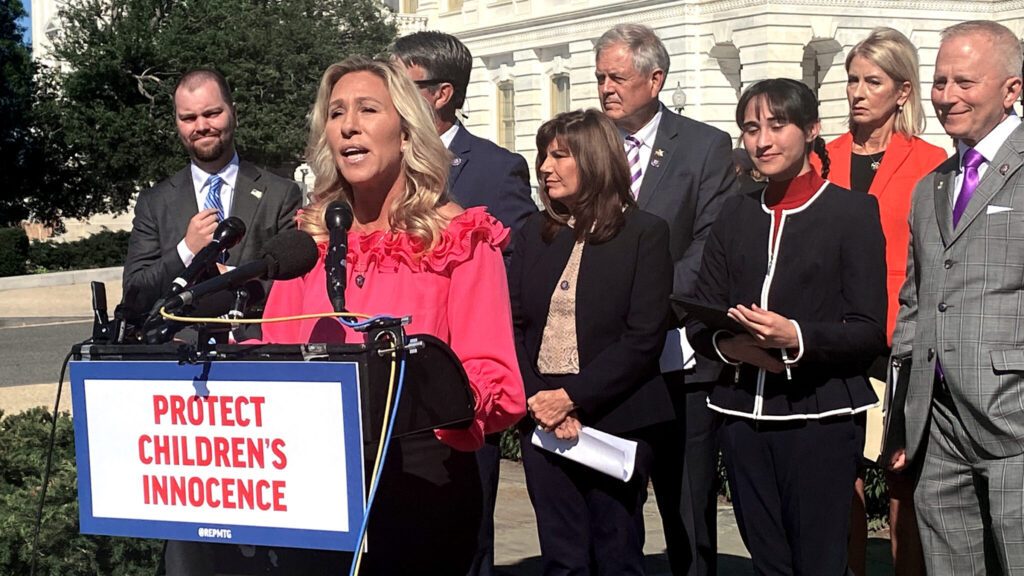
The legislation’s path through the House was largely driven by the ultraconservative faction of the Republican Party. Representative Marjorie Taylor Greene of Georgia emerged as a central figure in moving the bill forward.
Greene, leveraging her influence in the House and the broader Freedom Caucus, insisted on the bill’s floor consideration in exchange for supporting a key defense policy measure.
In doing so, she positioned the legislation as part of President Trump’s ongoing political agenda, citing a prior executive order that banned gender-affirming procedures for minors.
According to Greene, this legislation represented a fulfillment of Trump’s 2024 campaign promise to restrict such treatments.
Greene’s rhetoric during House floor debates underscored a familiar framing strategy: portraying gender transition interventions as “radical” and potentially harmful to children.
In one widely noted exchange, she held a poster depicting a minor who had undergone surgery, claiming that such procedures were inherently premature and unsafe. She argued that most Americans believe children should “grow up before they do anything radical, like a mastectomy on a 15-year-old girl.”
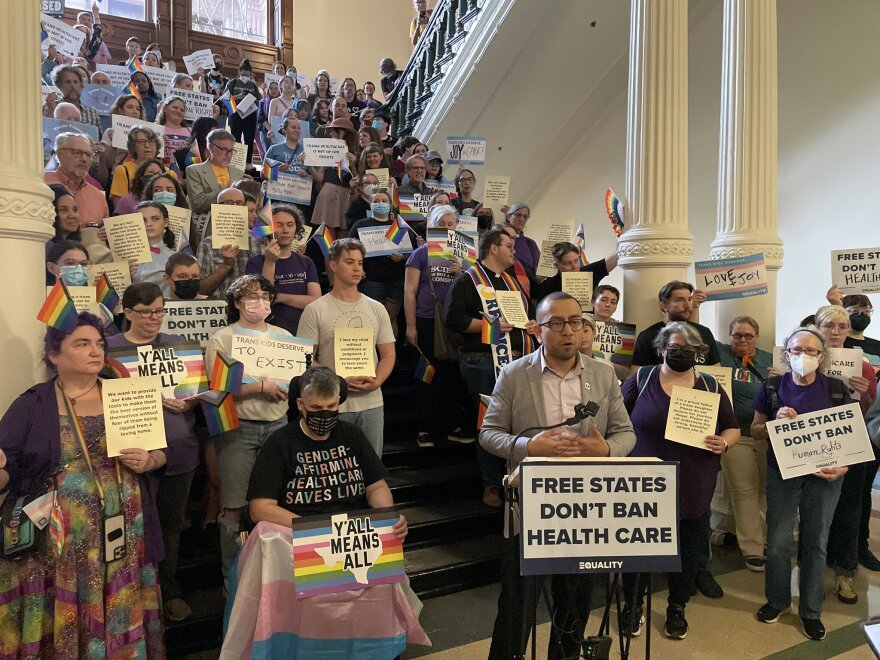
This framing, while resonant with some conservative constituencies, was immediately challenged by Democrats and medical experts as a misrepresentation of the evidence regarding gender-affirming care.
Several Republican lawmakers, including Barry Moore of Alabama, amplified this perspective, claiming that medical procedures for transgender minors were not only unnecessary but akin to abuse.
Moore’s statements emphasized the role of parental oversight and the perceived ideological influence of progressive medical frameworks, suggesting that framing these procedures as “lifesaving care” constituted indoctrination rather than therapeutic intervention.
In contrast, Democrats characterized the bill as an overreach of government authority into private family decisions.
Representative Jamie Raskin of Maryland criticized the measure for substituting political ideology for professional medical guidance, asking rhetorically whether the Freedom Caucus and President Trump “love America’s children more than their parents do.”
Medical experts and advocacy groups have consistently noted that gender-affirming procedures for minors are rare and carefully considered interventions.
California Democratic Representative Mark Takano emphasized this point during debate, asserting that procedures referenced in Greene’s discussion were exceptional cases rather than a widespread practice.
Takano argued that the legislation, if enacted, would effectively restrict access to safe and effective medical treatments for an entire group of children, potentially exacerbating mental health challenges for vulnerable populations.

Furthermore, he warned that the law could infringe upon parental rights, expose sensitive medical data to investigation, and create legal liability for families acting in consultation with licensed healthcare providers.
The bill’s passage also highlighted the complex dynamics of party loyalty, ideological alignment, and personal convictions. Voting largely along party lines, the measure nonetheless saw limited cross-party support.
Three Democrats—Henry Cuellar, Vicente Gonzalez, and Don Davis—voted in favor, citing a combination of constituent pressures, local political dynamics, or personal beliefs.
Conversely, four Republicans—Gabe Evans, Brian Fitzpatrick, Mike Lawler, and Mike Kennedy—voted against the measure, signaling that intra-party dissent persists even among conservative ranks. This combination of votes illustrates the tension between political solidarity and individual judgment, reflecting broader ideological debates within the House.
Beyond the procedural and partisan elements, the legislative push illustrates the intersection of policy, symbolism, and political strategy.
Advocates framed the bill as a necessary codification of executive action, seeking to embed restrictions into law rather than rely solely on temporary administrative directives.
Critics argue that this move converts a public health issue into a political weapon, granting elected officials unprecedented authority to intervene in deeply personal family decisions. Both perspectives, however, underscore how policy choices are increasingly intertwined with electoral and partisan calculations.
The legislation has yet to be considered by the Senate, where a different political calculus applies. Given the requirement for bipartisan support to advance, analysts predict that the bill faces an uphill battle in that chamber.
The discussion in the House nevertheless signals the priorities of a vocal faction within the Republican majority and the Trump-aligned policy agenda, reinforcing the broader cultural and political stakes surrounding gender-affirming care for minors.
Equally important is the impact on public discourse and social perception. By centering debate on a highly visible, emotionally charged subset of the population—transgender youth—the legislation has intensified national conversations about parental authority, medical ethics, and the role of government in personal health decisions.
It has also prompted advocacy groups, educators, and medical professionals to engage more actively in public education, emphasizing evidence-based approaches to care and highlighting the potential consequences of criminalizing medical interventions.
In addition to its legal and political dimensions, the bill’s passage underscores how legislative processes serve both as instruments of governance and vehicles for symbolic messaging.
The attention garnered by the vote, the rhetoric employed, and the partisan divisions all contribute to shaping public understanding of federal priorities, societal norms, and the perceived boundaries of acceptable governmental intervention.
While the House vote represented a major legislative milestone for proponents, the broader consequences of criminalizing gender-affirming care for minors extend far beyond Capitol Hill.
Experts across medicine, law, and social sciences have expressed concern that enacting such legislation could have sweeping social, psychological, and legal repercussions, affecting not only transgender youth but also their families, healthcare providers, and broader societal trust in public institutions.
Impact on Transgender Youth and Families
Transgender youth are among the most vulnerable populations in terms of mental health, social acceptance, and access to supportive care. Studies have consistently shown that access to gender-affirming treatments, whether social, hormonal, or surgical, significantly reduces risks of depression, anxiety, and suicidal ideation.
By potentially criminalizing medically supervised procedures, the bill threatens to remove critical pathways of care for minors whose wellbeing depends on professional guidance and parental support.
Families of transgender minors may face unprecedented legal and ethical dilemmas. Parents who previously acted in accordance with medical advice could suddenly find themselves under threat of prosecution.
Legal experts warn that the ambiguity inherent in defining what constitutes “gender transition treatment” could expose guardians to investigations, even when seeking care through licensed professionals.
This dynamic has the potential to erode trust between families and medical providers, creating a chilling effect that discourages open communication about health, identity, and support for children navigating gender dysphoria.
Healthcare Providers and Medical Ethics
The legislation would directly affect pediatric endocrinologists, surgeons, and mental health professionals. By imposing federal criminal penalties, it risks transforming routine clinical care into a legal liability.
Medical organizations, including the American Academy of Pediatrics and the American Medical Association, have emphasized that gender-affirming care is evidence-based, safe when administered according to established guidelines, and recognized as medically necessary for some minors.
Criminalization may discourage qualified providers from offering care, forcing families to travel out-of-state, seek informal treatments, or delay interventions until adulthood, potentially exacerbating mental health crises. Professional ethics could clash with legal mandates, leaving healthcare practitioners in a position where they must choose between following best practices for patient health and avoiding severe legal consequences.
The resulting tension could fundamentally alter the doctor-patient relationship, particularly for minors whose autonomy and safety are highly dependent on trusted medical guidance.
Legal Precedent and Parental Rights
One of the most contested aspects of the bill lies in its implications for parental rights. By granting federal authority to criminalize decisions traditionally made within families, the legislation raises questions about the limits of governmental intervention in private life.
Legal scholars argue that it could establish a precedent allowing lawmakers to exert control over intimate family and healthcare decisions, potentially extending beyond gender-affirming care to other areas of pediatric medical decision-making.
Opponents assert that the law would infringe upon the constitutional rights of parents to make informed choices about their child’s welfare. They emphasize that while society has a role in protecting children from abuse, creating criminal liability for medically advised procedures conflates evidence-based care with harm.
As a result, the bill may invite challenges on constitutional grounds, particularly under the due process clauses and rights to privacy, raising the likelihood of prolonged litigation that could reach federal courts and, eventually, the Supreme Court.
Societal and Cultural Considerations
The debate over this legislation reflects broader cultural tensions in the United States. Supporters frame it as a moral imperative to “protect children” and prevent what they consider irreversible harm.
Critics, including many Democrats, civil rights organizations, and medical professionals, frame it as ideological interference with science-based medicine, emphasizing that transgender youth comprise a small but vulnerable segment of the population.
This legislation also raises questions about societal messaging. By focusing political and media attention on gender transition treatments, lawmakers may inadvertently stigmatize transgender youth, portraying their identities as inherently controversial or harmful.
Social scientists warn that such stigma can increase bullying, social isolation, and psychological distress, further heightening the risks that the legislation purports to mitigate.
Political Strategy and Partisan Dynamics
The bill’s passage in the House also illustrates strategic maneuvering within Congress. Marjorie Taylor Greene leveraged the measure as part of a broader negotiation over defense policy and legislative priorities, demonstrating how contentious social issues can become bargaining chips in larger partisan agendas.
Meanwhile, bipartisan dissent within both parties highlights that even within ideologically aligned caucuses, lawmakers weigh constituent perspectives, medical evidence, and political optics differently.
The upcoming Senate deliberations will likely involve additional negotiation and scrutiny. Given the necessity of bipartisan support in that chamber, it is uncertain whether the legislation can advance further. Yet the House vote itself signals the political priorities of a vocal segment of the Republican majority and underscores the role of highly visible, socially charged legislation as a tool for messaging and mobilization.
Looking Ahead: Implications for Policy and Public Trust
Even if the bill fails to pass the Senate, its symbolic and political impact is likely to resonate. Advocates have framed the House vote as a statement of intent and cultural positioning, reinforcing the perception of a legislative agenda focused on social conservatism.
For opponents, the legislation has galvanized advocacy efforts, public awareness campaigns, and lobbying for protections of LGBTQ+ youth and parental rights.
The discussion also illuminates a broader challenge for American democracy: balancing protection of vulnerable populations, respect for parental and professional judgment, and adherence to evidence-based medical practices.
How lawmakers, courts, and the public navigate these tensions will shape not only this policy debate but also future considerations of family autonomy, healthcare access, and minority rights.
Ultimately, the House vote on criminalizing gender-affirming care for minors is more than a legislative event—it is a focal point for ongoing societal, ethical, and legal debates.
It raises enduring questions about the role of government in private life, the responsibilities of elected officials in shaping health policy, and the capacity of democratic systems to accommodate deeply contested moral and scientific issues without undermining trust, safety, or individual rights.
