
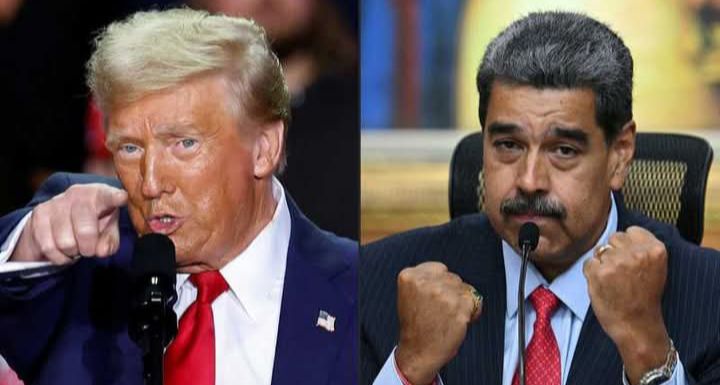
Former President Donald Trump said the United States would temporarily oversee Venezuela “until a proper transition can take place.”
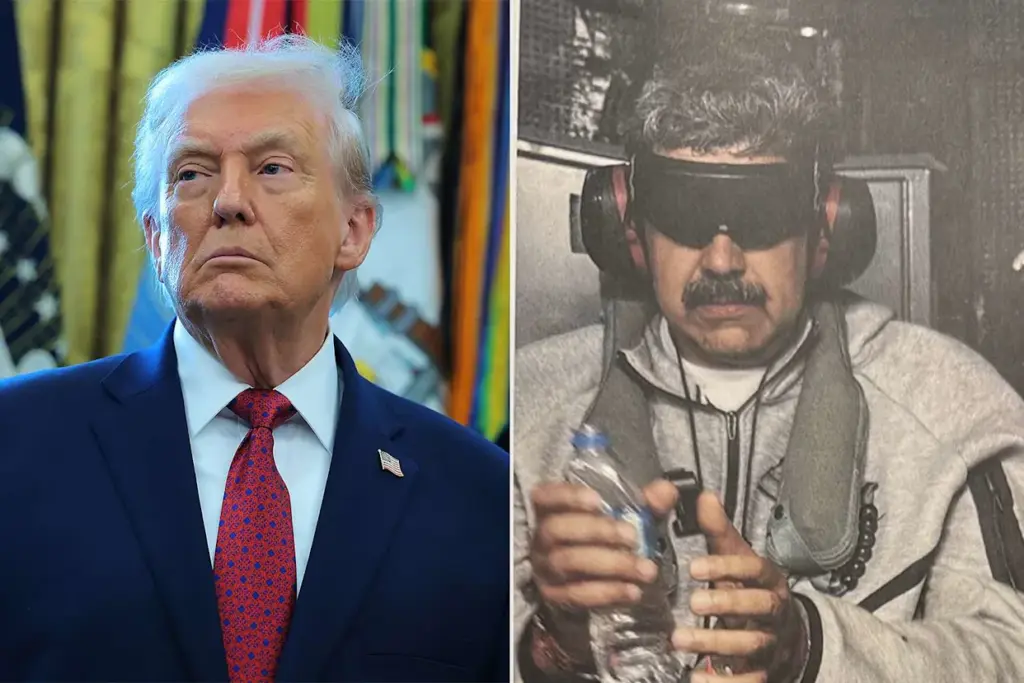
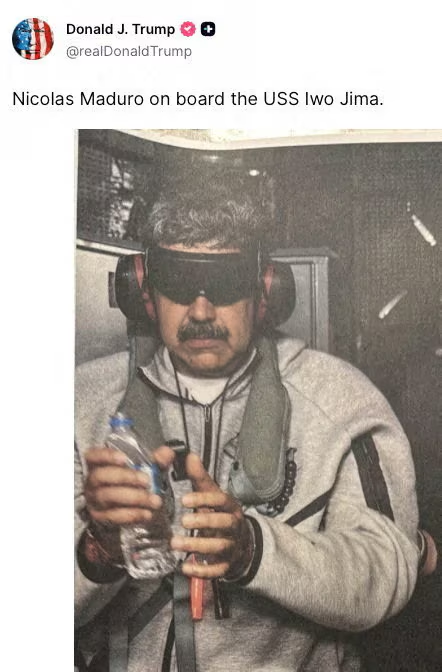
Defending what he described as a U.S. military operation carried out on Saturday that, according to his statements, resulted in the capture of Venezuelan President Nicolás Maduro and his wife, Cilia Flores.
Speaking to reporters from his Mar-a-Lago residence in Florida, Trump framed the situation as a necessary and controlled intervention, emphasizing that any U.S. presence would be transitional rather than permanent. “We’re there now, but we’re going to stay until such time as the proper transition can take place,” Trump said.
He added that the United States would effectively manage the situation on the ground during this interim period, stressing that the objective was stability rather than long-term occupation.

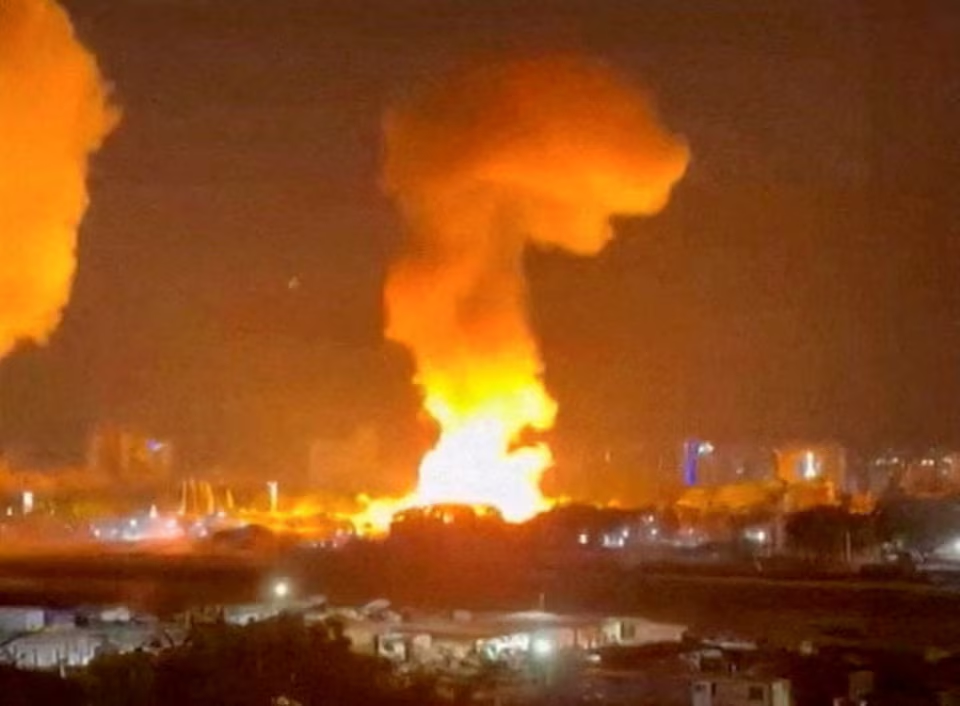
Trump’s remarks followed several hours of intense developments, which he described as dramatic and highly complex. Earlier reports had indicated explosions in Caracas, Venezuela’s capital, though details remained unclear at the time.
According to Trump, the scope of the operation became evident only later, when he publicly stated that Maduro and his wife had been taken into custody during the operation.
In a later interview with Fox & Friends, Trump claimed that Maduro and Flores were being transported by boat to New York, where they would face trial.
No independent confirmation of these claims was provided during the interview, and Trump did not specify the legal framework under which such proceedings would take place. Still, he presented the move as a decisive step following years of U.S. opposition to Maduro’s government.
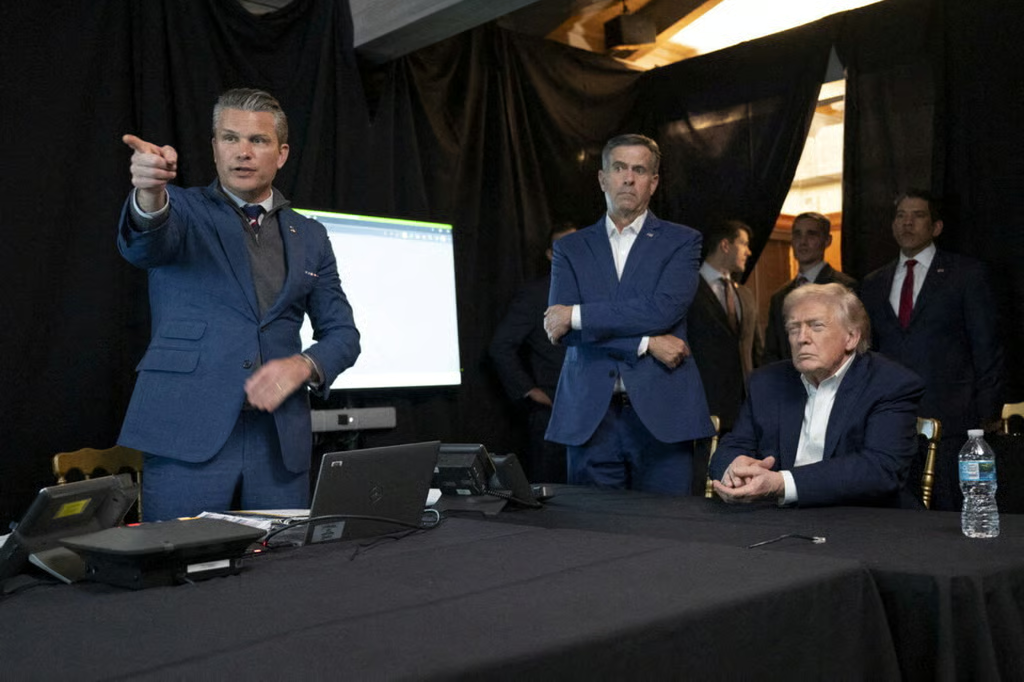
Trump characterized the military action as “extremely complex,” saying he personally followed its progress in real time.
“I watched it like I was watching a television show,” he told Fox & Friends, underscoring what he described as the precision and coordination involved.
He also stated that while some U.S. personnel were injured during the operation, there were no American fatalities.
“This is something that, gee, I don’t know, is amazing,” Trump said, pointing to the absence of deaths among U.S. forces.
He described the limited number of injuries as remarkable given the scale of the operation he outlined, portraying it as evidence of effective planning and execution.
In his public comments, Trump strongly defended the decision to act, framing it within broader U.S. national security goals. He linked the operation to longstanding concerns about drug trafficking, arguing that previous administrations had failed to adequately address the issue.
“We did a great job with stopping drugs from coming into this country, and nobody’s been able to do it until we came along,” he said.
Trump acknowledged that critics might raise legal or constitutional objections, but dismissed such concerns as familiar political attacks.
According to him, the results justified the action, and he suggested that the operation should be viewed as a success rather than a controversy.
Beyond the immediate military claims, Trump also spoke extensively about Venezuela’s oil sector, which holds some of the largest proven reserves in the world.
He said U.S. oil companies would be allowed to operate in Venezuela, describing the country’s energy infrastructure as “badly broken” and in need of major investment.
“We’re going to have our very large United States oil companies, the biggest anywhere in the world, go in, spend billions of dollars, fix the badly broken infrastructure, the oil infrastructure, and start making money for the country,” Trump said.
He presented this as a mutually beneficial arrangement, suggesting that foreign investment would help rebuild Venezuela’s economy while also providing returns for U.S. companies.
Trump also warned that the U.S. military was prepared to take further action if necessary. He stated that a second, larger operation could be launched should security conditions require it, emphasizing that the United States would not risk losing control after what he described as a major effort.
International implications were also addressed during Trump’s remarks. When asked about China’s interests in Venezuelan oil, Trump said he did not anticipate serious problems, citing his relationship with Chinese President Xi Jinping.
According to Trump, China would still have access to oil, but the United States would not allow another power to assume control in a way that could destabilize the situation.
“There’s not going to be a problem,” Trump said, adding that the U.S. would permit oil access while ensuring that the transition process remained secure.
While Trump did not provide a detailed roadmap for regime change or governance, he noted that Venezuela has a sitting vice president and suggested that existing political structures could play a role during the transition. He also issued a stark warning to individuals and institutions that might continue supporting Maduro.
“If they stay loyal, the future is really bad for them,” Trump said. At the same time, he suggested that those who chose to shift their allegiance could face a different outcome, claiming that many had already done so due to what he described as Maduro’s lack of support.
These statements, taken together, outline Trump’s version of events and his vision for Venezuela’s immediate future, though many aspects remain based solely on his own descriptions and have not been independently verified.
In the hours following Trump’s remarks, questions quickly emerged about the broader political, legal, and international consequences of what he described as a decisive intervention in Venezuela.
While Trump expressed confidence in the outcome and repeatedly praised the operation’s execution, he did not provide detailed documentation, timelines, or independent verification to support many of his claims.
As a result, much of the discussion surrounding the situation has focused on the implications of his statements rather than confirmed developments on the ground.
Trump’s comments placed heavy emphasis on the concept of a “transition,” a term frequently used in international diplomacy to describe a temporary period between governments.
However, he did not clarify how long such a transition might last, who would formally oversee it, or what role Venezuelan institutions would play during this phase.
Instead, he reiterated that the United States would remain involved until stability was achieved, framing U.S. involvement as both necessary and temporary.
Legal experts and political observers have noted that any foreign administration of another sovereign country would raise significant constitutional, international law, and diplomatic questions.
Trump acknowledged that critics would likely challenge the operation on legal grounds, but he downplayed those concerns, suggesting that similar objections had been raised repeatedly throughout his political career. In his view, effectiveness and outcomes mattered more than procedural debates.
Another major focus of Trump’s statements was the future of Venezuela’s economy, particularly its energy sector. He described the country’s oil infrastructure as severely degraded after years of economic mismanagement and underinvestment.
According to Trump, allowing major U.S. oil companies to operate in Venezuela would accelerate reconstruction, create economic growth, and generate revenue that could benefit the Venezuelan population.
Trump presented this approach as a pragmatic solution rather than an ideological one. He argued that private-sector expertise and capital were essential to restoring production capacity and modernizing facilities.
While he did not outline specific contracts or regulatory frameworks, he suggested that such arrangements would be structured to ensure profitability while supporting national recovery.
At the same time, Trump made clear that security considerations would remain paramount. He warned that the United States was prepared to take additional military action if threats emerged during the transition period.
This assertion appeared aimed at deterring resistance from remaining Maduro loyalists or armed groups that might challenge U.S. control or disrupt oil operations.
Trump’s comments also touched on the geopolitical dimension of Venezuela’s crisis. Over the years, Venezuela has developed close economic and political ties with countries such as China, Russia, and Iran.
When asked specifically about China’s concerns regarding access to oil, Trump sought to reassure international audiences that the United States did not intend to monopolize resources or exclude other nations entirely.
Instead, he framed U.S. involvement as a stabilizing force, arguing that controlled access would prevent chaos and reduce the likelihood of renewed conflict.
His reference to a positive personal relationship with Chinese President Xi Jinping was intended to signal that major global powers could coexist economically within the new framework he described.
Despite these assurances, Trump did not provide details on how competing international interests would be balanced or what mechanisms would be used to resolve disputes.
Analysts note that such arrangements typically require extensive negotiations, treaties, or multilateral agreements, none of which were outlined in his public remarks.
Trump also addressed internal Venezuelan dynamics, particularly the question of loyalty within the country’s political and military institutions.
He claimed that Maduro had lost significant support and suggested that many officials had already shifted their allegiance.
According to Trump, those who continued to support Maduro would face severe consequences, while those who cooperated with the transition could secure a more favorable future.
This messaging appeared designed to encourage defections and reduce resistance, a strategy often used during periods of political upheaval. However, without independent confirmation, the extent of any such shifts in loyalty remains unclear.
Humanitarian considerations were notably less prominent in Trump’s statements, though they remain central to international discussions about Venezuela.
The country has faced years of economic collapse, shortages of basic goods, and mass migration. Trump did not directly address plans for humanitarian aid, public services, or social programs, focusing instead on security and economic reconstruction through investment.
Observers have pointed out that long-term stability would likely depend not only on oil revenues and military control, but also on restoring public trust, rebuilding institutions, and addressing widespread poverty.
These challenges typically require coordinated efforts involving international organizations, regional partners, and local civil society, elements not discussed in detail by Trump.
Trump’s portrayal of the operation as a success also relied heavily on comparisons to his past policy priorities, particularly border security and drug enforcement.
By linking the intervention to efforts to stop drug trafficking, he sought to frame it as part of a broader campaign to protect U.S. national interests. This narrative resonated with supporters who view strong action as necessary to address transnational threats.
Critics, however, have argued that such claims require careful scrutiny and evidence. They note that complex regional issues rarely have simple solutions and that military action can carry unintended consequences, including prolonged instability or international backlash.
As of Trump’s statements, no comprehensive plan had been publicly released outlining the next phases of governance, elections, or international oversight in Venezuela.
The absence of such details has fueled speculation and debate about the feasibility and legitimacy of the approach he described.
In summary, Trump’s remarks painted a picture of decisive action, temporary control, and economic revival driven by U.S. involvement. At the same time, many aspects of the situation remain based solely on his account, without independent verification or supporting documentation.
As discussions continue, attention is likely to focus on whether these claims translate into concrete, verifiable outcomes and how the international community responds to the vision he outlined.
Together, both parts of this report reflect the full scope of Trump’s statements, presenting them in a neutral, detailed manner that preserves context, avoids unverified conclusions, and maintains clarity for readers seeking to understand the implications of his claims.
