
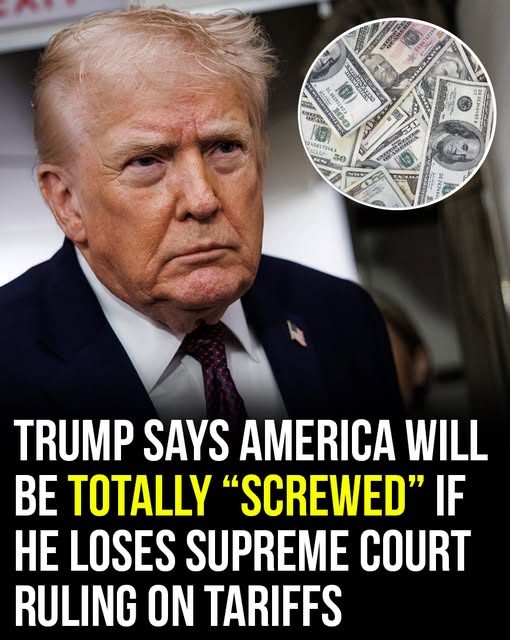
President Donald Trump has issued one of his starkest warnings yet, cautioning that the United States could face what he described as a “complete mess” if the Supreme Court of the United States ultimately strikes down his sweeping tariff policy.
The remarks underscore just how central tariffs have become to Trump’s broader economic vision—and how high the stakes are as the nation’s highest court prepares to weigh in on their legality.
Since returning to office for a second term, Trump has placed extraordinary political and personal capital behind the use of tariffs as a tool to reshape global trade.
He has repeatedly argued that tariffs are not merely a negotiating tactic, but a foundational solution to what he sees as decades of unfair trade practices, chronic trade deficits, and the hollowing out of American manufacturing.
According to Trump, tariffs serve multiple purposes at once: they pressure foreign governments to renegotiate trade terms, encourage companies to relocate production back to U.S. soil, generate substantial federal revenue, and ultimately strengthen national security.
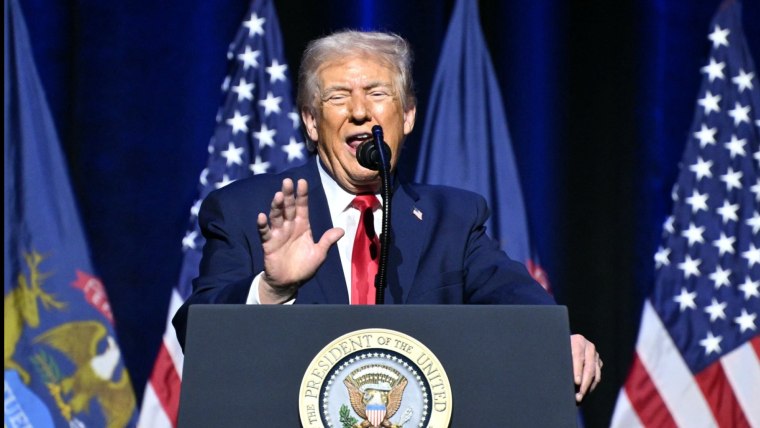
In his view, undoing this strategy would not simply reverse a policy—it would unravel a carefully constructed economic framework.
Tariffs as the Cornerstone of Trump’s Economic Strategy
From the earliest days of his political career, Trump has framed tariffs as a corrective measure against what he describes as lopsided trade relationships.
He has consistently argued that previous administrations allowed foreign countries to benefit at America’s expense, resulting in factory closures, job losses, and long-term economic vulnerability.
In recent months, Trump has gone further, tying tariff revenue directly to potential financial relief for American households.
He has publicly suggested that the money generated by these trade measures could be used to fund direct payments of at least $2,000 per person, targeted primarily at low- and middle-income Americans.
While details of such payments remain undefined, the promise itself has heightened public attention on the outcome of the legal battle surrounding the tariffs.
This linkage between tariffs and direct economic benefits has raised the stakes significantly. A ruling against the administration would not only challenge Trump’s authority, but could also undercut expectations among millions of Americans who have been told that tariff revenue could translate into tangible financial relief.
The Legal Battle at the Heart of the Dispute
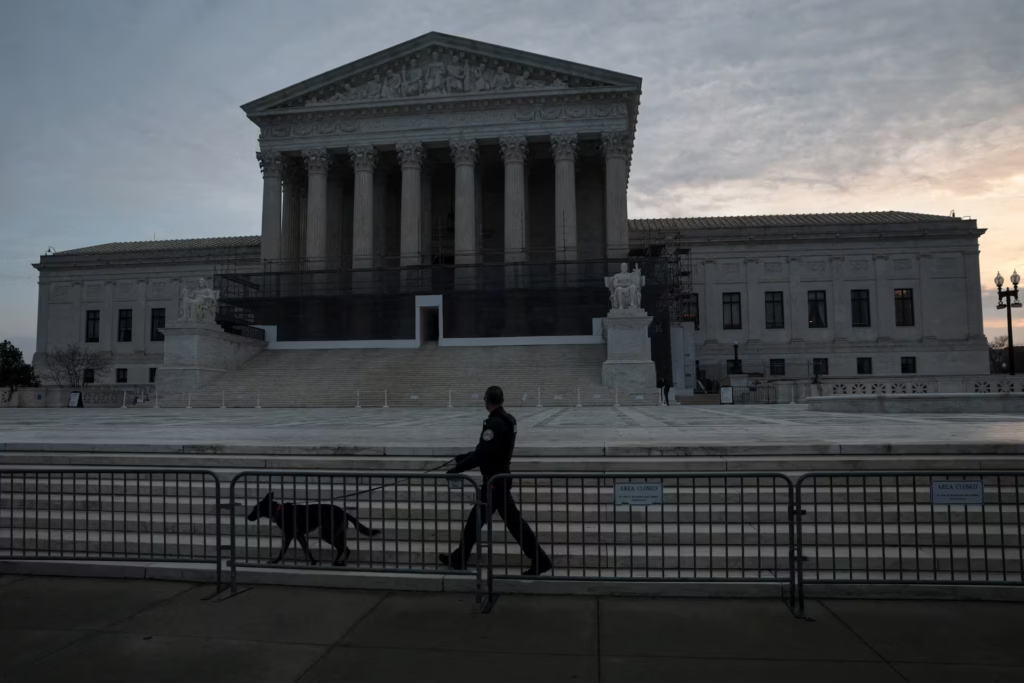
At the center of the controversy is a fundamental legal question: does the president have the authority to impose broad, global tariffs without explicit approval from Congress?
To justify the policy, Trump has relied on the International Emergency Economic Powers Act (IEEPA), a law passed in 1977 that grants the president wide-ranging authority to regulate economic transactions during declared national emergencies.
Trump invoked the statute after declaring a national emergency linked to persistent U.S. trade deficits, arguing that these deficits pose a threat to national security and economic stability.
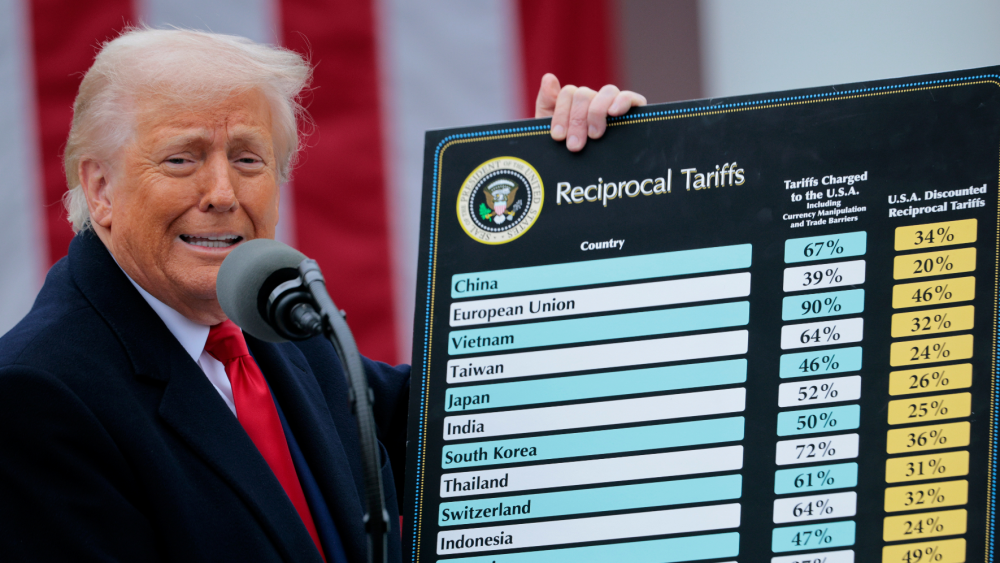
Under this justification, the administration imposed tariffs on more than $150 billion worth of imports, affecting major trading partners including China, India, Canada, and the European Union.
The White House characterized the measures as “reciprocal” tariffs—designed to mirror the barriers American goods face abroad and compel foreign governments to negotiate fairer trade terms.
Critics, however, argue that trade deficits do not constitute the type of emergency envisioned by the law, and that the use of IEEPA in this context represents an unprecedented expansion of executive power.
These concerns formed the basis of multiple legal challenges soon after the tariffs were introduced.
Lower Courts Push Back
Last year, the U.S. Court of International Trade ruled that the tariffs were unlawful, finding that the administration had exceeded its authority under existing statutes.
That decision was later upheld by the Federal Circuit Court of Appeals, setting the stage for a final showdown at the Supreme Court.
Although the Supreme Court was widely expected to issue a ruling earlier this year, it ultimately declined to do so, leaving the policy—and the uncertainty surrounding it—intact for now.
The delay has only intensified speculation and anxiety, particularly given the scale of the tariffs and their far-reaching economic implications.
Trump has made clear that he views the case as existential for his trade agenda. In a lengthy and emphatic post on Truth Social, the president outlined what he believes would be the catastrophic consequences of an adverse ruling.
Trump’s Warning: The Financial Fallout Could Be Enormous
In his post, Trump argued that striking down the tariffs would force the United States to refund enormous sums of money already collected.
According to his assessment, the immediate repayment obligations alone could amount to hundreds of billions of dollars.
But Trump emphasized that this figure represents only part of the picture.
He warned that companies and foreign governments have already made substantial investments—building factories, purchasing equipment, and restructuring supply chains—in response to the tariffs.
If the policy were overturned, Trump suggested, these entities could seek compensation for losses incurred while adapting to the tariff regime.
“When these investments are added,” Trump wrote, “we are talking about trillions of dollars.”
In his view, the combination of direct refunds and potential claims tied to long-term investments would create a financial burden so massive that it would be nearly impossible for the country to absorb.
He described such a scenario as a “complete mess,” warning that the consequences would reverberate throughout the economy for years.
Beyond Dollars: Prestige, Power, and Precedent
The dispute is not only about money. It is also about presidential authority and institutional power. A ruling against the administration would set a precedent limiting how future presidents can respond to perceived economic threats without congressional approval.
For Trump, who has consistently argued for a strong executive role in economic policy, such a decision would represent a profound setback.
It would challenge the idea that the president can act decisively in the face of global economic pressures and could reshape the balance of power between the executive and legislative branches.
Supporters of the tariffs argue that speed and flexibility are essential in global trade disputes, where negotiations can stall and competitors can exploit delays. Opponents counter that bypassing Congress undermines democratic oversight and risks destabilizing the global trading system.
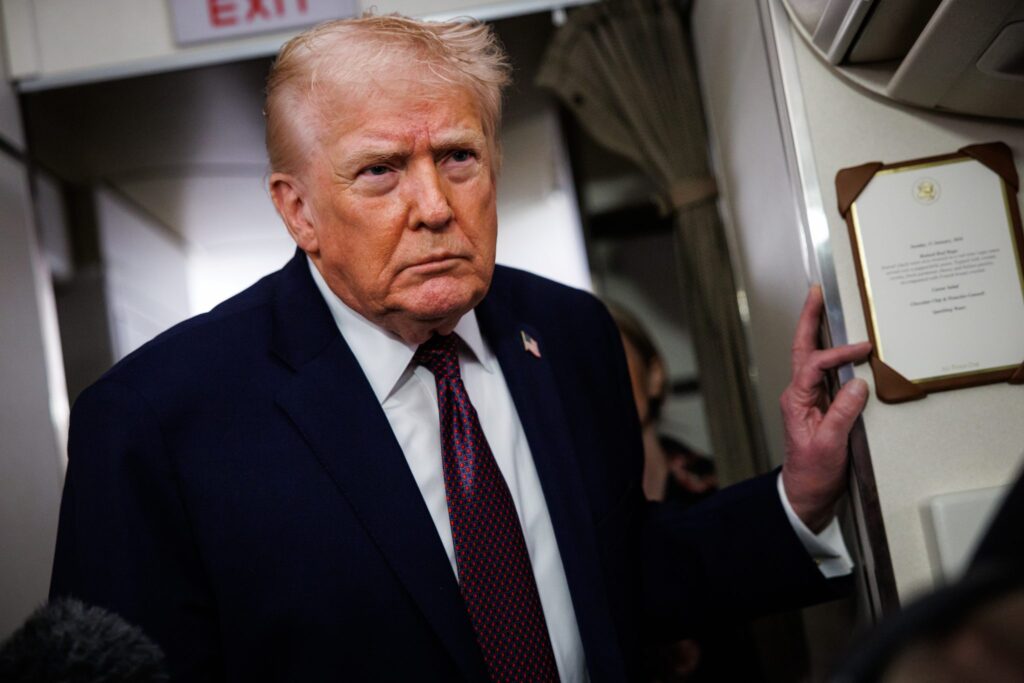
Public Reaction and Growing Uncertainty
As the legal uncertainty drags on, businesses, investors, and consumers remain caught in the middle. Importers face fluctuating costs, manufacturers must constantly reassess supply chains, and consumers experience higher prices on certain goods.
Meanwhile, the possibility of refunds or policy reversals complicates long-term planning across multiple sectors.
The administration’s position—that reversing the tariffs would be extraordinarily complex and time-consuming—has added another layer of concern.
Trump has warned that even calculating who should be paid, how much, and when would be an overwhelming task, potentially taking years to resolve.
This uncertainty has become a defining feature of the current trade environment, reinforcing how deeply intertwined the tariff policy has become with broader questions about governance, economic stability, and America’s role in the global economy.
As the legal battle over sweeping tariffs continues, President Donald Trump has doubled down on his trade-first strategy by unveiling another aggressive measure—one that underscores both the breadth of his tariff agenda and the geopolitical risks tied to its potential collapse.
The latest move expands the scope of U.S. trade pressure beyond traditional rivals, placing economic strain on countries with commercial ties to Iran and reinforcing Trump’s claim that tariffs are a central pillar of national security.
A New Front: Tariffs Targeting Iran-Linked Trade
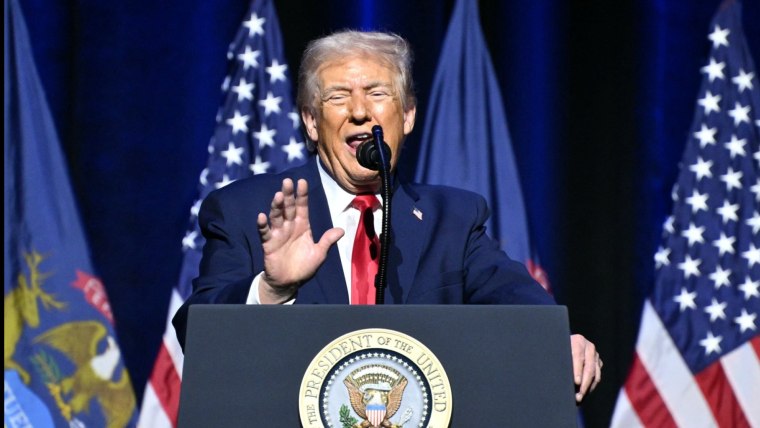
In a recent announcement posted on Truth Social, Trump declared a 25% tariff on goods imported from any country maintaining commercial relationships with Iran, stating that the policy would take effect immediately and was “final and conclusive.”
The announcement marked a significant escalation. Unlike previous tariffs focused on bilateral trade imbalances, this measure targets indirect economic relationships, effectively pressuring third-party countries to choose between access to U.S. markets and continued trade with Iran.
Iran is already under extensive U.S. sanctions, and its economy has been struggling with a sharply devalued currency, high inflation, and rising living costs.
Food prices, in particular, have surged dramatically in recent years, and with food accounting for roughly one-third of Iran’s imports, any additional disruption risks deepening shortages and worsening economic hardship for ordinary citizens.
Trump’s policy, however, is aimed less at Iran itself and more at its trading partners—countries that include China, Iraq, the United Arab Emirates, Turkey, and India.
By imposing tariffs on goods connected to Iran-linked commerce, the administration seeks to further isolate Tehran while amplifying U.S. leverage in global trade negotiations.
Global Reaction and Growing Backlash
The scale and reach of these tariffs have drawn criticism from economists, foreign governments, and business leaders alike. Critics argue that smaller nations could be disproportionately affected, especially those whose economies depend heavily on regional trade networks.
For many countries, maintaining trade ties with both the United States and Iran is not a political statement but an economic necessity.
U.S. businesses have also raised concerns. Importers face higher costs, complex compliance requirements, and increased uncertainty about future trade rules.
Manufacturers reliant on global supply chains must continuously adjust sourcing strategies, often at significant expense. For consumers, the impact is felt through higher prices and reduced product availability in certain categories.
Opposition to the tariffs has not been limited to public criticism. Since their introduction, more than 1,000 lawsuits have been filed against the federal government, including challenges brought by some of the nation’s largest importers.
These lawsuits argue that the tariffs exceed presidential authority, disrupt commerce, and impose unfair burdens without proper legislative oversight.
Congressional Bypass and Constitutional Concerns
One of the most contentious aspects of Trump’s tariff policy is the way it was enacted. By invoking emergency powers, the administration bypassed Congress, raising alarms among lawmakers from both parties.
Critics warn that allowing such sweeping economic measures without congressional approval sets a dangerous precedent.
Supporters counter that Congress has long delegated significant authority to the executive branch in matters of national security and foreign policy, and that trade deficits—when persistent and severe—pose a legitimate threat to economic stability.
They argue that requiring congressional approval for every major trade action would weaken the United States’ ability to respond quickly in a competitive global environment.
This tension lies at the heart of the case now before the Supreme Court of the United States. The ruling will not only determine the fate of the current tariffs but could redefine the balance of power between the presidency and Congress for decades to come.
Lower Court Rulings and Legal Uncertainty
The legal path to the Supreme Court has already been turbulent. Last May, the U.S. Court of International Trade ruled that the tariffs were unlawful, concluding that the administration had stretched emergency powers beyond their intended scope.
That decision was upheld by the Federal Circuit Court of Appeals, intensifying pressure on the White House.
When the Supreme Court declined to issue an immediate ruling, uncertainty deepened. Businesses were left without clarity, foreign governments hesitated to adjust trade policies, and financial markets watched closely for signs of disruption.
Trump has repeatedly emphasized that reversing the tariffs would not be quick or simple. In public statements, he warned that even determining the financial fallout—who should be reimbursed, how much, and under what conditions—would be an enormous undertaking.
“WE’RE SCREWED!”: Trump’s Stark Warning
In one of his most blunt messages yet, Trump described the potential consequences of a negative ruling in unmistakable terms.
“Anybody who says that it can be quickly and easily done would be making a false, inaccurate, or totally misunderstood answer to this very large and complex question,” he wrote.
According to Trump, the financial calculations alone could take years, with costs so large that assigning responsibility for repayment would be extraordinarily difficult.
He ended his message with a dramatic warning:
“Remember, when America shines brightly, the World shines brightly. In other words, if the Supreme Court rules against the United States of America on this National Security bonanza, WE’RE SCREWED!”
The language, while provocative, reflects the depth of Trump’s conviction that tariffs are not merely an economic tool but a strategic necessity.
The Economic Debate: Revenue vs. Reality
Central to Trump’s argument is the claim that tariffs generate substantial revenue—enough to fund tax relief, deficit reduction, or even direct payments to Americans.
He has previously asserted that tariff income could reach into the trillions, although independent analyses estimate revenues closer to tens of billions annually.
Economists caution that tariffs function as a tax on imports, often passed on to consumers and businesses. While they can generate government revenue, they may also slow economic growth, raise prices, and provoke retaliatory measures from trading partners.
Treasury officials and Republican lawmakers have also expressed concern about inflationary effects. Distributing large sums of money—whether through direct payments or tax cuts—could stimulate demand at a time when inflation remains a sensitive issue.
What Happens Next
The Supreme Court’s eventual decision will have far-reaching implications. If the tariffs are upheld, Trump’s trade strategy will gain judicial validation, strengthening executive authority in economic emergencies.
If they are struck down, the administration may be forced to unwind years of policy, refund billions, and rethink its approach to global trade.
Either outcome will shape U.S. economic policy, international relations, and domestic politics well beyond the current administration.
Conclusion: A Defining Moment for Trade and Power
Trump’s warning of a “complete mess” is more than political rhetoric. It reflects a genuine fear that undoing the tariff regime could destabilize markets, strain public finances, and weaken America’s negotiating position abroad.
At the same time, critics argue that unchecked executive power poses its own risks to democratic accountability and economic stability.
As the nation waits for the Supreme Court’s decision, one thing is clear: this case represents a defining moment.
The outcome will determine not only the future of Trump’s tariffs but also how far presidential power can extend in shaping the U.S. economy.
Whether viewed as a bold defense of national interests or an overreach with unintended consequences, the tariff battle underscores the complex intersection of law, economics, and global politics—an intersection now under the scrutiny of the highest court in the land.
