In the early morning hours of 28 February 2026, a coordinated set of military operations involving the United States and the State of Israel struck deep into the territory of the Islamic Republic of Iran.
Marking the most direct confrontation between these powers in decades and a dramatic escalation of regional tensions.
These strikes, consisting of long‑range air and missile attacks against military and strategic infrastructure in cities including Tehran, represented a significant departure from the proxy engagements, skirmishes, and political pressure that had characterized Middle East hostilities for years.
Strategic Context and Official Justifications
The offensive was launched after months of unresolved diplomatic friction over Iran’s ballistic missile programs, nuclear ambitions, and support for armed groups across the region. Israeli authorities publicly termed their part of the operation “Operation Lion’s Roar,” asserting that it was a pre‑emptive response to what they described as imminent threats posed by Iran’s military capabilities. U.S. leadership framed its involvement — often referred to by some analysts as Operation Epic Fury — as part of a strategic campaign to neutralize Iranian systems that Washington warned could endanger allied nations and destabilize the region further.

Israeli officials later confirmed that the ultimate objective of this operation was not merely tactical disruption of capabilities but the dismantling of structures seen as core to Iran’s ability to project power, including its nuclear infrastructure, ballistic missile networks, and high‑level command facilities.
Iranian authorities, for their part, condemned the strikes as a blatant violation of Iranian sovereignty and described them as unprovoked aggression. Tehran swiftly vowed retaliation on multiple fronts, characterizing the campaign as an act of belligerence against the Iranian state and people.
Scope and Execution of the Joint Strikes
In terms of scale, U.S. military sources reported that in the first days of the campaign nearly 2,000 targets across Iran’s strategic and military infrastructure were struck, including air defense systems, missile batteries, radar arrays, naval assets, and command‑and‑control nodes. Many of these installations were located deep within urban centers such as Tehran, Isfahan, Qom, Karaj, and Kermanshah, signaling both the breadth and depth of the operation.
Israeli air forces utilized large numbers of aircraft in daytime and nighttime sorties, striking with precision munitions designed to reduce risk to non‑combatants where possible. The offensive also employed cruise missiles launched from naval assets in the Sea of Oman and strategic bases across the Middle East, demonstrating the complexity and integration of the campaign.
Among the reported targets were:
- Iran’s ballistic missile launchers and storage facilities, which Israel claims could be used for long‑range attacks against its territory.
- Command centers and leadership compounds in Tehran, linked to senior Iranian government and military figures.
- Air defense networks and radar installations designed to repel foreign attacks and preserve Iranian airspace integrity.
- Logistics hubs and military depots spread throughout the Iranian interior, including bases near the Strait of Hormuz.
Death of Iran’s Supreme Leader and High‑Level Targets
One of the most consequential developments came when Iranian state media and international outlets confirmed that Supreme Leader Ayatollah Ali Khamenei, Iran’s highest authority, was killed during the strike on his compound in Tehran. According to multiple reports, his death occurred amidst coordinated attacks on several senior officials and was followed by an announcement of national mourning and the formation of an interim leadership council.
Reports also indicated that other senior Iranian officials, including key commanders and members of national security councils, were killed or injured in coordinated strikes on legislative and advisory facilities across the capital.
Iran’s Immediate Retaliation
Within hours of the initial attack, Iran responded with waves of ballistic missiles and armed drones. These were launched toward Israeli territory, U.S. military bases in the Gulf region, and allied states hosting Western forces. Systems in Jordan, Kuwait, Qatar, Bahrain, Iraq, the United Arab Emirates, and Saudi Arabia were among those targeted, leading to extended air defense engagements across multiple fronts.

Iranian forces also engaged in operations targeting civilian and commercial aviation infrastructure, and airspace closures were widely implemented as a precautionary measure. Qatar’s air defenses reportedly downed Iranian Su‑24 aircraft during this phase, underscoring the conflict’s expansion beyond simple bilateral hostilities.
Regional Escalation and Broader Conflict Dynamics
The conflict did not remain confined to direct exchanges between Iran, Israel, and the United States. Militant groups allied with Tehran, including Hezbollah, became involved in hostilities. Exchanges of rocket and missile fire occurred along the Lebanon–Israel border, prompting increased troop mobilizations and reserve call‑ups by the Israeli Defense Forces.
Neighbouring states heightened their military readiness. Civilian air traffic was restricted or suspended across the Gulf, and several governments issued travel advisories urging caution, evacuation planning, or alternative routing for citizens and foreign nationals. The closure of the Strait of Hormuz — a crucial artery for global oil shipments — was threatened and partially enacted, resulting in immediate increases in global energy prices and disruption of regional trade.
Humanitarian Toll: Civilians Caught in the Crossfire
As the military campaign intensified, reports of civilian casualties and infrastructure damage grew. Iranian health officials — including semiofficial emergency agencies — reported significant deaths and injuries nationwide, although precise figures remain difficult to independently verify in the midst of ongoing conflict.
One of the deadliest single incidents involved a strike on Shajareh Tayebeh primary school in the southern port city of Minab, where official reports stated that at least 148 schoolchildren were killed, most of them girls, with the total death toll later rising to 153. Iran’s Red Crescent and local authorities reported at least 201 fatalities and over 747 injuries across the country on the first days of the conflict. The United States Central Command acknowledged ongoing investigations into civilian harm resulting from the strikes.
Beyond direct casualties, essential services such as electricity, water, and health care were disrupted in several major urban areas as infrastructure damage compounded the challenges faced by civilians. Mass displacement occurred as residents fled active combat zones, seeking shelter in safer regions or across international borders. Psychological trauma and community disruption became widespread as families faced uncertainty about immediate security and long‑term stability.
The immediate international response to the U.S.–Israel strikes on Iran was sharply polarized, reflecting the deep geopolitical fault lines that characterize the Middle East. Western allies, including the United Kingdom, France, and Germany, issued statements recognizing the perceived threats posed by Iran’s military capabilities but emphasized the importance of restraint and civilian protection. French and German diplomats, in particular, called for urgent emergency sessions at the United Nations Security Council (UNSC) to prevent further escalation.
Conversely, Russia and China condemned the attacks as violations of international law, highlighting that unilateral strikes on sovereign territory without UNSC approval undermined the global rules‑based order. Beijing and Moscow called for immediate cessation of hostilities and demanded that all parties engage in direct negotiations under international oversight.

Several Middle Eastern states issued mixed statements. Countries such as Saudi Arabia, Qatar, and the United Arab Emirates reinforced defensive postures along borders, deployed additional anti‑air and missile defense systems, and began precautionary evacuations of diplomatic staff. Bahrain temporarily closed certain commercial ports after debris from Iranian missile strikes near the U.S. Fifth Fleet threatened civilian areas. The Kuwaiti government restricted its airspace in response to missile activity over the Persian Gulf, highlighting the broader ripple effects of the conflict on regional security and civil aviation.
United Nations and Humanitarian Appeals
The United Nations Office for the Coordination of Humanitarian Affairs (OCHA) and other UN agencies immediately issued warnings emphasizing civilian protection. Reports from UN representatives highlighted that the strike on the Minab school constituted a grave violation of international humanitarian law, and calls were made for an independent investigation to determine accountability for attacks causing large-scale civilian casualties.
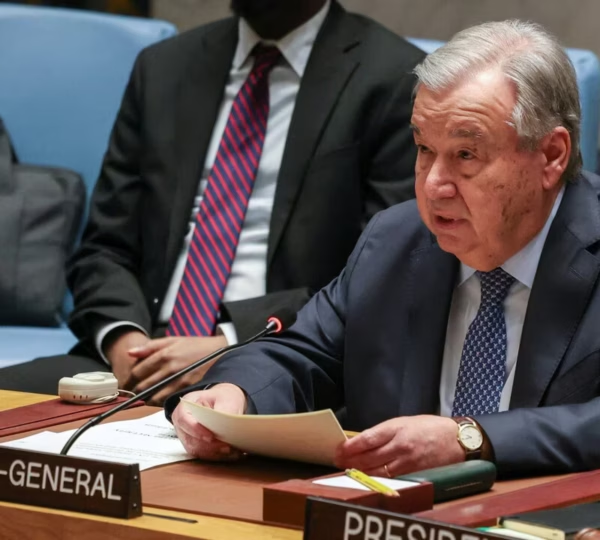
UN Secretary-General statements stressed:
- Respect for principles of proportionality and distinction in military operations.
- The urgent need to establish humanitarian corridors to deliver essential food, water, and medical supplies to affected cities like Tehran, Isfahan, and Minab.
- The potential for the conflict to trigger regional displacement crises, given the number of civilians fleeing combat zones.
Multiple international NGOs, including Médecins Sans Frontières and the Red Cross, reported emergency deployments to border regions and urban centers to provide medical assistance, highlighting the strain on healthcare infrastructure already disrupted by strikes on hospitals, electricity grids, and transportation networks.
Economic and Global Market Repercussions
The military confrontation immediately reverberated across global markets. Crude oil prices surged by over 15% within 48 hours, reflecting the strategic significance of the Persian Gulf, which accounts for nearly one-third of the world’s daily oil exports.
Key economic developments included:
- Energy Supply Threats: Iranian missile and drone activity near the Strait of Hormuz caused fears of temporary blockages to one of the world’s most critical oil transit chokepoints. Shipping companies began rerouting tankers through longer, alternative paths, increasing transit costs.
- Airline Disruptions: Major carriers suspended flights over Iran, Iraq, and parts of the Gulf. Emirates, Qatar Airways, and Turkish Airlines temporarily rerouted international routes, resulting in travel delays and economic losses estimated in the hundreds of millions USD.
- Commodity Market Volatility: Beyond crude oil, prices for natural gas, refined petroleum products, and strategic metals like copper and aluminum fluctuated sharply due to concerns about supply chain disruptions.
- Investor Uncertainty: Stock markets in Europe, North America, and Asia experienced short-term declines as traders assessed geopolitical risk, particularly affecting defense contractors and energy companies with regional exposure.
Regional Escalation and Proxy Networks
As the conflict unfolded, Iran leveraged its alliances with non-state actors and proxy groups in the region:
- Hezbollah in Lebanon launched rockets into northern Israel, prompting defensive countermeasures and raising fears of a two-front war for Israel.
- Shiite militias in Iraq attempted strikes on U.S. and allied positions, particularly near Baghdad and Basra, forcing an intensification of security protocols.
- In Yemen, Iranian-backed Houthi forces launched drones targeting strategic facilities in Saudi Arabia and the UAE, demonstrating Iran’s use of regional proxies to exert pressure.
This expansion of conflict illustrated the “escalation ladder” concept in practice: each side’s military actions, whether state or non-state actors, signaled higher-intensity responses and the potential for cascading regional instability.
Civilian Displacement and Human Security Concerns
Humanitarian monitoring agencies reported hundreds of thousands of displaced civilians, both internally and across international borders. Key patterns included:
- Urban populations moving from Tehran, Isfahan, and Qom to smaller towns or border regions considered safer.
- Significant disruptions in public services, including closures of schools, hospitals, and government offices.
- Psychological trauma among children and families, compounded by sudden loss of homes, infrastructure, and basic utilities.
Neighboring countries like Turkey and Iraq began registering refugees, while humanitarian corridors were coordinated by UN agencies and local authorities to allow safe passage. These movements created additional logistical challenges and humanitarian burdens for already strained host states.
Diplomatic Channels and Attempts at De‑escalation
Despite escalating military operations, multiple back-channel diplomatic efforts were underway:
- Neutral countries, including Switzerland, Norway, and Sweden, facilitated quiet communications between U.S., Israeli, and Iranian intermediaries.
- The European Union convened emergency summits with Middle Eastern partners to discuss ceasefire arrangements, although no formal agreements were reached in the first week.
- Regional powers, such as Saudi Arabia, Qatar, and Egypt, sought to prevent the conflict from expanding to their territories, offering to host mediation talks while simultaneously reinforcing defensive deployments.
Diplomatic observers noted that historical mistrust, entrenched security postures, and the high stakes of national prestige and regime survival were likely to slow progress. Analysts cautioned that without sustained and credible multilateral pressure, the potential for further escalation — including additional strikes, proxy engagements, and attacks on strategic infrastructure — remained high.
Strategic Implications for Regional Stability
The conflict has already reshaped regional security considerations:
Global Geopolitical Fractures: The crisis has highlighted divisions among Western allies, and between major powers, regarding the appropriate level of intervention, potentially complicating future multilateral conflict resolution efforts.

By early March 2026, the joint U.S.–Israel strikes had significantly altered the geopolitical landscape in the Middle East. Analysts and diplomats widely agreed that the weeks following the initial offensive would be decisive in determining whether the conflict would remain limited or escalate into a broader regional war.
Multiple diplomatic avenues were explored:
- Back-channel communications: Neutral countries such as Switzerland, Norway, and Oman facilitated discreet negotiations aimed at establishing temporary ceasefire arrangements and humanitarian pauses. Reports indicated that both Tehran and Washington were willing to explore limited confidence-building measures, but mutual mistrust slowed any formal progress.
- United Nations mediation: The UN Security Council convened multiple emergency sessions. While consensus on concrete resolutions remained elusive due to the divisions between permanent members, there was broad support for measures to protect civilians and ensure access for humanitarian aid. The UN Secretary-General highlighted that the conflict’s intensity had exceeded previously established thresholds for regional engagement, warning of potential cascading crises if action was not taken promptly.
- Regional frameworks: Gulf Cooperation Council (GCC) states and Egypt proposed hosting high-level meetings to de-escalate tensions, offering neutral ground for dialogue. These efforts were complicated by security concerns, as missile strikes and drone activities near borders heightened the risk of cross-border incidents during negotiations.
Analysts noted that achieving a sustainable settlement would likely require multiple interlocking agreements addressing military de-escalation, civilian protection, economic stabilization, and political guarantees. Without coordinated pressure and credible guarantees, the potential for renewed hostilities remained significant.
Humanitarian Recovery and Civilian Needs
The human toll of the conflict was profound. In addition to the immediate casualties from strikes in Tehran, Isfahan, Minab, and other cities, the wider civilian population faced severe disruption of basic services and long-term trauma. UN and NGO assessments indicated:
- Displacement crises: Over 500,000 civilians were displaced within Iran, with tens of thousands seeking refuge in neighboring countries including Turkey, Iraq, and Pakistan. Many displaced individuals faced overcrowded shelters and limited access to food, clean water, and medical care.
- Infrastructure damage: Widespread destruction of electricity grids, water supply systems, hospitals, and transportation networks compounded the humanitarian emergency. Restoration of essential services was projected to take months or longer, particularly in heavily targeted urban centers.
- Healthcare strain: Hospitals faced unprecedented surges in patients suffering from trauma, burns, and injuries from collapsed buildings. Shortages of medical staff, equipment, and essential medications posed severe challenges for both urban and rural healthcare providers.
- Psychosocial impact: UN agencies and local NGOs reported significant psychological trauma among children and families, including PTSD, anxiety, and grief-related disorders, especially among survivors of the Minab school strike and other civilian-targeted incidents.
Humanitarian aid coordination became a priority. International Red Cross and Red Crescent societies, along with UN agencies, began deploying rapid-response teams to border crossings and urban shelters. These efforts included: establishing temporary clinics, delivering emergency food and water, and providing trauma counseling. Long-term reconstruction planning also began, with emphasis on rebuilding schools, hospitals, and water infrastructure damaged by airstrikes.
Economic and Global Implications
The strikes’ economic repercussions were felt far beyond the Middle East. Analysts observed several immediate and medium-term consequences:
- Energy markets: Crude oil prices surged above $120 per barrel, reflecting the risk of disruptions in the Persian Gulf, which handles nearly 30% of global seaborne oil exports. Key chokepoints, including the Strait of Hormuz, remained vulnerable, prompting increased global stockpiling of oil and the acceleration of alternative energy strategies by import-dependent nations.
- Trade disruptions: Commercial shipping routes were disrupted by missile threats and drone surveillance near the Gulf, compelling many shipping firms to reroute vessels through longer, less secure routes. These adjustments increased operational costs and slowed delivery of raw materials and goods.
- Global markets: Equity markets in the U.S., Europe, and Asia experienced volatility due to uncertainty over the conflict’s duration. Defense, energy, and logistics sectors saw sharp fluctuations, while investors in consumer goods and tourism sectors faced indirect losses.
- Regional economies: GCC countries, heavily reliant on trade and foreign investment, faced potential economic slowdowns due to heightened insurance costs, risk premiums, and disrupted tourism. Iran’s domestic economy was severely affected by damage to industry, transportation networks, and the disruption of oil and gas exports.
Security and Military Implications
The joint strikes and subsequent retaliation underscored the evolving nature of modern conflict, particularly in regions with dense urban centers, strategic chokepoints, and extensive proxy networks. Key military implications included:
- Escalation through proxies: Iranian-affiliated groups in Iraq, Syria, Lebanon, and Yemen became active participants in the conflict, conducting strikes against allied or civilian targets. These activities illustrated the complex entanglement of state and non-state actors in modern warfare.
- Missile defense and airpower importance: Israel and Gulf states relied heavily on advanced missile defense systems to counter Iranian missile and drone threats, highlighting the growing strategic importance of integrated air defense networks.
- Cyber operations: Both Iran and its adversaries reportedly engaged in cyber operations targeting critical infrastructure and communications, signaling the expanding multi-domain nature of contemporary conflict.
- Deterrence recalibration: Regional powers began reassessing military postures and strategic deterrence frameworks, incorporating lessons learned about vulnerability, rapid retaliation, and the risks of escalation.
Geopolitical Implications and Strategic Calculations
The U.S.–Israel strike on Iran shifted the geopolitical calculus in multiple ways:
- Power vacuums and leadership transitions: The death of Supreme Leader Ali Khamenei introduced uncertainty in Tehran, potentially destabilizing Iran’s internal political structure and opening avenues for both moderation and hardline consolidation.
- Regional realignments: Countries in the Gulf and Levant reassessed alliances and military coordination, with some deepening security cooperation with the U.S. and Israel, while others sought neutrality to avoid being drawn into escalating hostilities.
- Global diplomacy: The conflict exacerbated divisions between major powers. While the U.S. and its closest allies supported military action against Iran, Russia, China, and several non-aligned states emphasized diplomacy and international law, signaling a possible bifurcation of global influence in Middle Eastern security affairs.
- Long-term deterrence narratives: Analysts suggested that the scale and intensity of the strikes would redefine deterrence doctrines across the region, particularly regarding pre-emptive operations and the role of advanced missile systems in strategic calculations.
Prospects for Reconstruction and Stabilization
Even if hostilities subside, rebuilding the affected regions in Iran and restoring regional stability poses a monumental challenge:
- Infrastructure restoration: Utilities, hospitals, schools, and transportation networks require both immediate repairs and long-term resilience planning against future conflicts.
- Economic rehabilitation: Iran’s domestic economy and trade networks will need substantial support to recover, including foreign investment, reconstruction aid, and restoration of energy exports.
- Societal rebuilding: Communities affected by displacement, trauma, and loss of life will require coordinated social services, mental health support, and educational rebuilding.
- International oversight: Reconstruction efforts may require multinational monitoring to ensure civilian protection, equitable distribution of aid, and adherence to international standards.
Strategic Outlook
The 2026 U.S.–Israel strikes on Iran marked a turning point in Middle Eastern geopolitics, shifting the region from indirect confrontations and proxy wars to direct, high-intensity interstate conflict. Moving forward:
- The trajectory of the conflict will depend on leadership decisions, international diplomatic pressure, and the capacity for multilateral negotiation.
- Regional actors must weigh the risks of escalation against the imperatives of civilian protection, economic stability, and political legitimacy.
- Global powers are likely to play a decisive role in shaping the post-conflict order, whether through economic leverage, diplomatic initiatives, or security guarantees.
Ultimately, the 2026 escalation underscores the delicate balance between security imperatives and human costs, highlighting how a single strategic decision can reshape humanitarian, economic, and geopolitical landscapes for years. The immediate weeks and months will be critical in defining whether the conflict resolves into negotiated de-escalation or continues into a prolonged regional confrontation with cascading global repercussions.
Military Posture Adjustments: Gulf states accelerated deployments of missile defense batteries and coordination with NATO and U.S. forces. Israel expanded its missile interception readiness and cyber defense operations.
Energy Security Calculations: Countries dependent on Gulf oil and gas supplies began diversifying energy routes and seeking contingency measures to mitigate future blockades.
Proxy Warfare Intensification: Non-state actors, emboldened by initial Iranian retaliation, may increasingly engage in attacks, further destabilizing Iraq, Syria, Lebanon, and Yemen.