
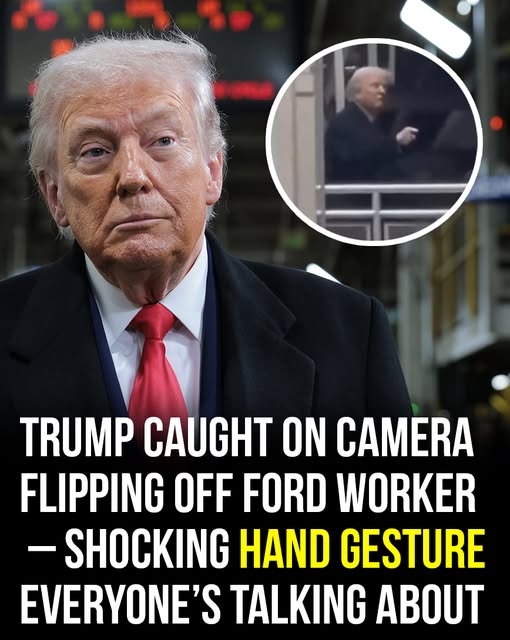
Not everyone in the United States—or the world, for that matter—is a fan of Donald Trump. The former president has long been a polarizing figure in American politics, attracting both fervent supporters and outspoken critics with his unfiltered remarks, unconventional style, and high-profile controversies.
This divide became strikingly clear during his recent visit to a Ford manufacturing facility in Dearborn, Michigan, where a public confrontation left observers shocked by the intensity of his reaction to a heckler in the crowd.
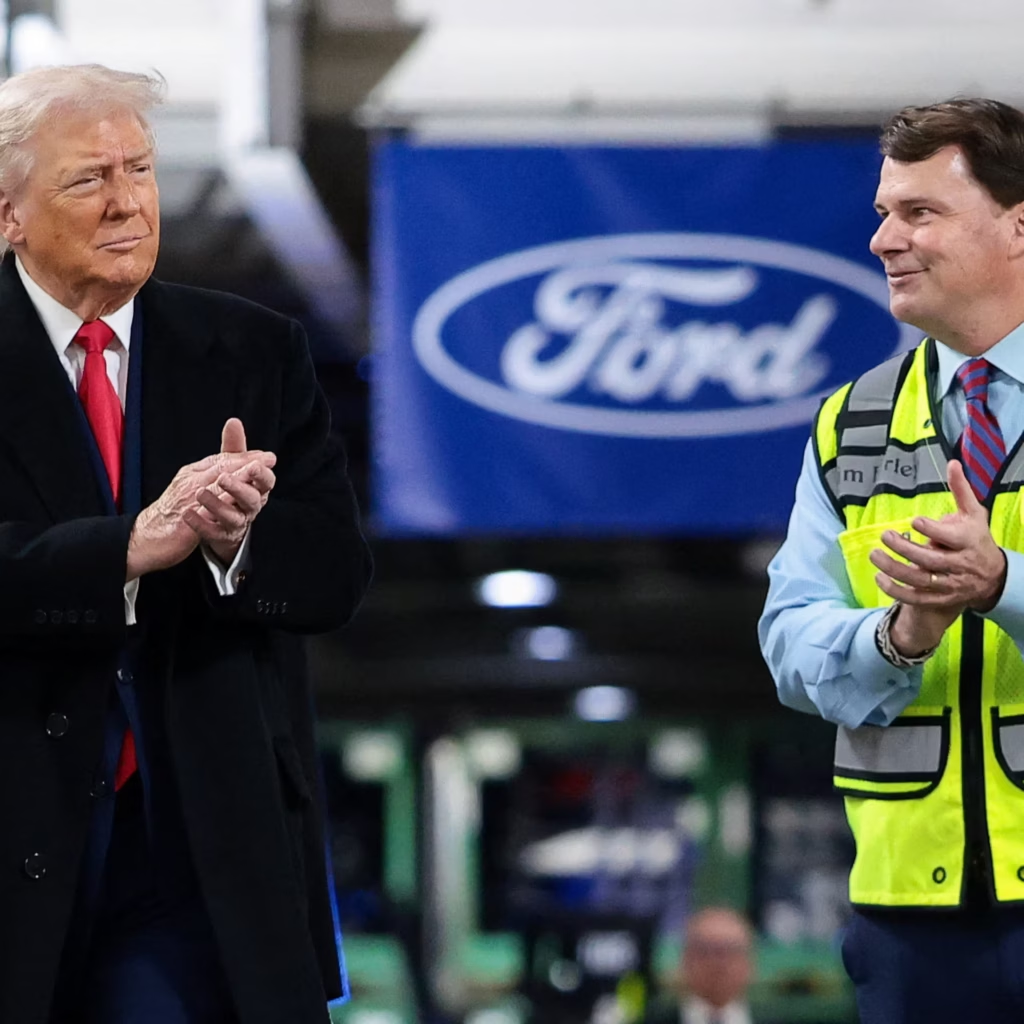
The incident occurred on a chilly Tuesday morning at Ford’s iconic River Rouge complex, a site with deep historical significance in American automotive history.
The sprawling plant, which has been operational for decades, symbolizes the industrial backbone of the United States, employing thousands of workers and producing vehicles that have become household names.
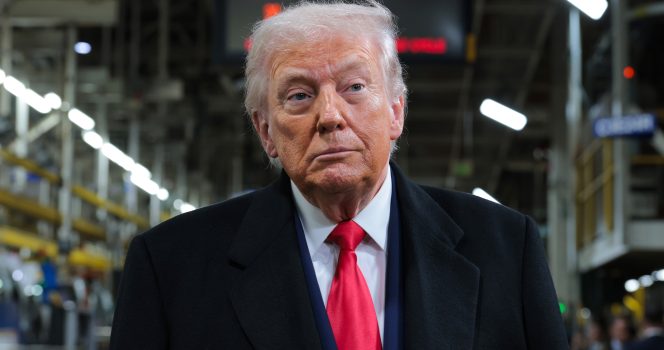
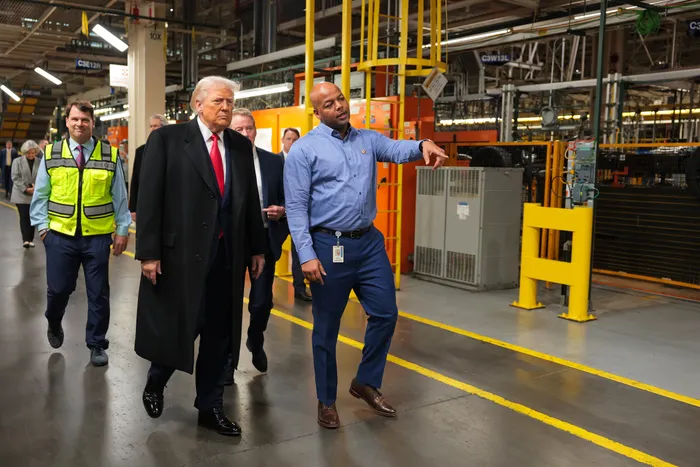
Trump, donning a black peacoat, made his way through the factory floor to address employees, intending to highlight the accomplishments of American industry under his administration, and to promote policies designed to strengthen domestic manufacturing.
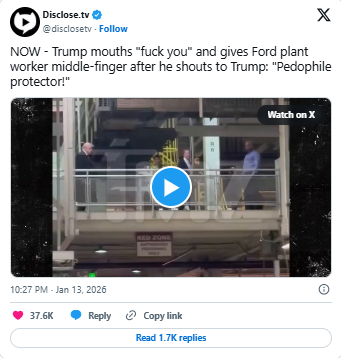
However, what was expected to be a routine visit quickly escalated. According to multiple media reports, a worker in the crowd shouted a pointed and inflammatory remark at the president, calling him a “pedophile protector.”
This label is likely a reference to Trump’s long-standing associations with the late financier Jeffrey Epstein, who was accused of sexually exploiting minors over many years, as well as Trump’s attempts—both during and after his presidency—to influence the release of related Justice Department files.
Video footage of the encounter shows Trump standing on a walkway overlooking the factory floor. His expression, initially composed, quickly shifted as he reacted to the heckler’s words.
Witnesses described the moment as tense, with a clear escalation of emotions. According to observers, Trump raised his hand, pointed downward toward the individual, and mouthed an expletive-laden response, “Fuck you,” while continuing to gesture as he moved away.
At another point in the interaction, he appeared to say “you’re fired” in a remark that mirrored the signature phrase from his television career, before ending the confrontation by flipping off the crowd with his middle finger once more.
The reaction sparked immediate attention across social media platforms and national news outlets. Video clips of the incident circulated rapidly, with commentators from across the political spectrum weighing in on both the appropriateness and implications of Trump’s conduct.
Some supporters defended his actions, arguing that he was responding to provocation in a high-pressure environment and that his response was consistent with his straightforward style.
Others criticized the president, suggesting that such language and gestures were unbecoming of a public official and set a poor example for civility in public discourse.
The White House was quick to respond. Steven Cheung, a spokesperson for the administration, described Trump’s actions as “appropriate and unambiguous,” framing them as a measured response to an individual in a state of extreme agitation.
Cheung stated, “A lunatic was wildly screaming expletives in a complete fit of rage, and the President gave an appropriate and unambiguous response,” emphasizing that the president’s actions were intended to maintain control of the situation rather than escalate it further.
Meanwhile, Ford representatives issued a separate statement emphasizing that, while they were proud of their employees’ professionalism during the event, the company does not condone inappropriate or disruptive behavior within its facilities.
A spokesperson for the automaker noted, “When that happens, we have a process to deal with it, but we don’t get into specific personnel matters,” underlining the company’s commitment to workplace order and safety while remaining neutral on political disputes.
The incident occurred amid a broader national conversation surrounding Trump’s connections to Epstein and the ongoing controversy regarding the so-called Epstein files.
Federal law mandated the release of documents related to Epstein’s activities by mid-December, but as of early January, less than 1% of the records had been made publicly available.
This delay has drawn criticism from both sides of the political aisle, with Democrats and some Republicans alike arguing that the full release of the documents is essential to ensuring transparency and justice for Epstein’s victims.
California Democrat Ro Khanna and Kentucky Republican Thomas Massie recently petitioned a federal judge to compel the release of the files in full.
Attorney General Pam Bondi, tasked with overseeing the process, has indicated that the release has been slowed to protect the identities of victims, highlighting the legal and ethical complexities of making sensitive information public.
Nevertheless, the few documents that have been released were heavily redacted, leading critics to argue that significant details remain hidden and that the public is being denied a full understanding of the case.
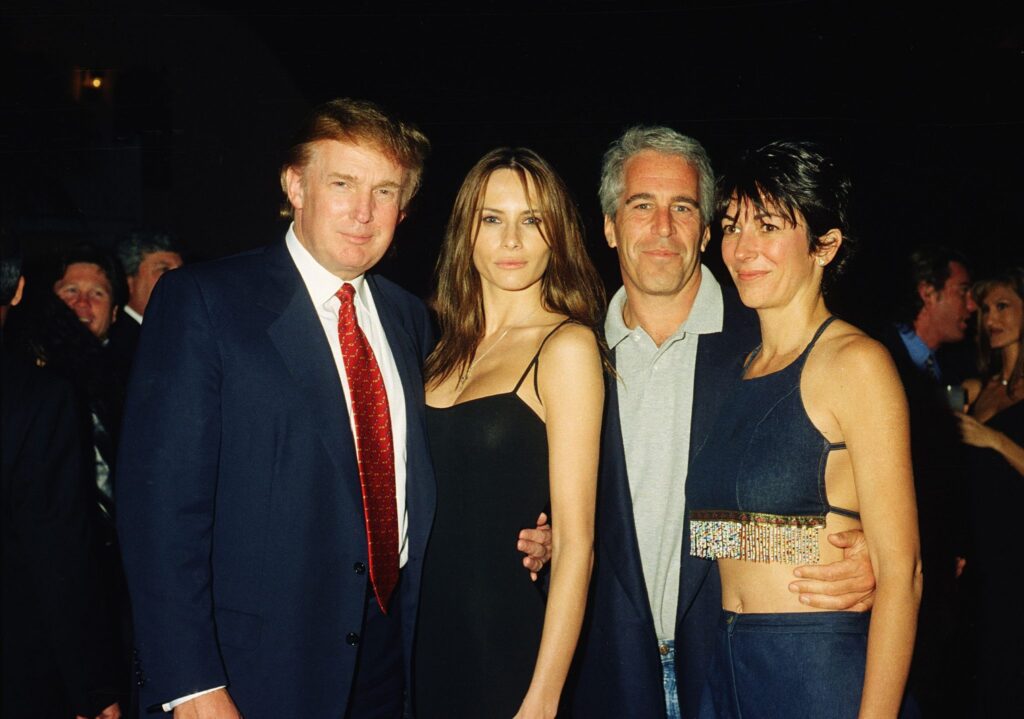
Trump’s relationship with Epstein has been widely documented. He was photographed with Epstein on multiple occasions and had a long social and business association with the financier.
Over the years, Trump has repeatedly described the controversy surrounding Epstein as overblown or a “hoax,” statements that have fueled further debate and controversy.
Critics argue that his repeated dismissals undermine accountability and transparency, while supporters assert that he has been unfairly targeted by media narratives.
Observers noted that the Dearborn incident is emblematic of Trump’s broader communication style: confrontational, unapologetic, and highly reactive to perceived personal attacks.
Analysts suggest that these interactions serve to reinforce his image among loyal supporters as a fighter unafraid to speak his mind, while simultaneously deepening opposition among detractors who view such conduct as evidence of poor judgment or temperament unsuited for political leadership.
The Dearborn incident did not occur in isolation; it unfolded against the backdrop of a highly polarized political climate in the United States, where interactions between public officials and the general public are scrutinized extensively by traditional and social media alike.
Social media platforms were flooded within hours of the event with clips of Trump’s reaction, each edited, shared, and commented upon thousands of times, reflecting the instantaneous nature of news dissemination in the digital age.
Analysts noted that the video served as a microcosm of Trump’s presidency: a combination of confrontation, unpredictability, and a willingness to challenge norms of political decorum.
The incident also raised questions about the role of public relations and crisis management in modern politics. The White House’s immediate defense of the president’s reaction, framing it as measured and appropriate, highlights a strategic approach to narrative control.
Spokesperson Steven Cheung’s remarks emphasized that the president was responding to extreme provocation, seeking to reassure supporters and neutral observers that the encounter did not escalate beyond what was necessary.
Meanwhile, critics argued that the White House’s framing of the event as justified overlooks broader implications for public conduct, particularly in high-profile, professional environments.
Political commentators and analysts offered differing perspectives on the potential long-term impact of the incident. Some suggested that Trump’s unfiltered reaction could strengthen his base, portraying him as a leader unafraid to confront adversaries directly.
For supporters, moments like this reinforce an image of authenticity and personal courage in the face of public criticism.
Others, however, contended that such actions may alienate undecided voters and fuel narratives that Trump lacks the temperament required for responsible public leadership.
This tension exemplifies the broader divide in American political culture, where actions are interpreted very differently depending on one’s ideological lens.
The confrontation at the Ford plant also intensified ongoing debates about Trump’s relationship with Jeffrey Epstein. Epstein, who died in 2019 while awaiting trial on charges of sex trafficking minors, remains a figure of intense public interest due to the high-profile individuals connected to his social and financial networks.
Trump’s repeated assertions that the allegations surrounding Epstein were exaggerated or politically motivated have not quelled public concern, especially as the release of Justice Department documents related to Epstein’s activities remains slow and heavily redacted.
The so-called Epstein files contain information that legal experts, journalists, and activists argue is critical to understanding the scope of Epstein’s criminal network and the involvement of influential figures.
The legal efforts to release these documents have drawn bipartisan attention. Representatives Ro Khanna and Thomas Massie’s petition to a federal judge underscores the demand for transparency and accountability, reflecting a rare instance of cross-party collaboration on an issue of public interest.
While Attorney General Pam Bondi cited the need to protect victims’ identities as justification for the limited release, critics have raised concerns that excessive redactions undermine the purpose of disclosure, leaving the public with an incomplete picture of events.
This ongoing tension contributes to a broader perception of opacity in matters involving high-profile figures, including Trump, further complicating the public’s understanding of accountability and justice.
Media coverage of the Dearborn incident reflected the polarized nature of contemporary reporting. Conservative outlets tended to emphasize the provocation by the heckler and framed Trump’s response as direct, decisive, and authentic.
Liberal-leaning media, by contrast, highlighted the obscenity of the gesture and language, portraying the encounter as evidence of unprofessional behavior.
Social media users echoed these divides, with hashtags supporting or condemning the president trending immediately following the event.
Viral posts and commentary often focused on the visual aspects of the encounter—Trump’s hand gestures, his facial expressions, and his movement through the factory—as much as on the verbal exchange itself, demonstrating how digital media amplifies symbolic actions in modern political discourse.
Public reaction, particularly among employees and local residents in Dearborn, was also varied. Interviews conducted with workers at the River Rouge facility revealed a spectrum of responses: some expressed discomfort at witnessing the confrontation, noting that such behavior was unexpected in a professional setting; others defended Trump’s reaction as a justified retort to a disruptive individual.
Observers noted that the presence of a large media contingent may have influenced the behavior of both the president and members of the crowd, creating an environment in which tensions could escalate rapidly.
The incident also sparked broader discussions about civility, respect, and freedom of speech in the United States. While citizens have the right to express dissent, questions arise about the methods used and the potential consequences of inflammatory language in public settings.
Analysts pointed out that political figures often face a delicate balance between addressing criticism and maintaining decorum, especially in high-stakes environments such as factory visits, town halls, or campaign rallies.
Trump’s response, combining gestures, expletives, and verbal retorts, has been interpreted as a case study in the challenges leaders face when navigating provocation in real-time.
Experts in political communication noted that Trump’s style leverages direct confrontation to command attention and reinforce loyalty among his base.
By responding openly and emotionally, he signals authenticity to supporters who perceive him as unfiltered and courageous, while simultaneously challenging media narratives and political opponents.
Critics argue, however, that this approach risks normalizing aggressive public behavior and contributing to a broader culture of polarization and incivility.
In addition to political ramifications, the Dearborn incident has cultural and symbolic significance. Ford’s River Rouge complex represents a historical nexus of American industry, labor, and innovation.
A confrontation occurring in this space underscores the intersection of politics, economics, and social dynamics, highlighting how public figures navigate complex environments while under intense scrutiny.
It also serves as a reminder that the relationship between political leaders and working-class citizens is nuanced, involving both symbolic gestures and substantive policy impacts.
Looking ahead, the incident is likely to remain a point of discussion in media coverage, political analysis, and public debate.
The slow release of Epstein-related files, combined with Trump’s continued defense of his relationship with Epstein, ensures that public interest in this story will persist.
The interplay between media, social platforms, and political commentary will shape how the event is remembered, interpreted, and leveraged by different stakeholders in the political landscape.
Ultimately, the Dearborn confrontation highlights the complexities of modern political life, where public figures are constantly under observation, actions are rapidly amplified online, and the boundaries between personal expression and professional decorum are continually tested.
For Donald Trump, the incident is both a reflection of his longstanding approach to criticism and a vivid illustration of the challenges inherent in maintaining composure under scrutiny.
As the Epstein files continue to draw attention and public debate remains heated, the interaction at Ford serves as a focal point for broader discussions about accountability, transparency, and the nature of political leadership in contemporary America.
