
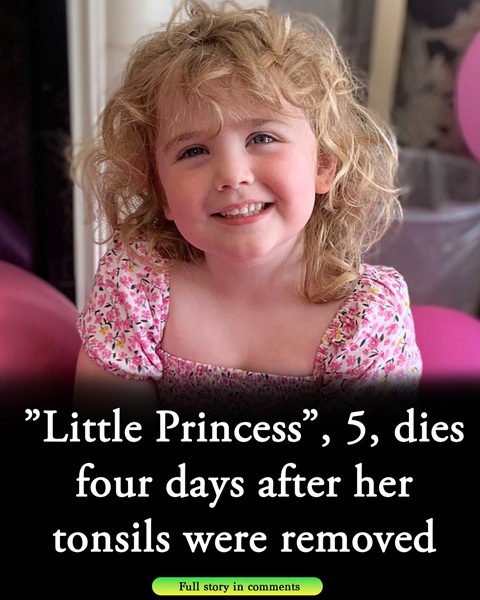
In April 2023, what should have been a routine, relatively low-risk surgical procedure turned into an unimaginable tragedy for the Milnes family of St Just in Roseland, Cornwall. Amber Milnes, just five years old, was described by her parents, Sereta and Lewis Milnes, as their “magical little princess,” a bright, joyful child whose laughter and imagination could light up any room.
Her parents painted a picture of a loving, musical girl who adored singing, playing with dolls, and pretending to be princesses. Even in the face of repeated medical challenges, Amber’s bravery and cheerful spirit were consistently highlighted by those who knew her.
Amber’s health history, however, was complex. She suffered from obstructive sleep apnoea (OSA), a condition in which the airway collapses or becomes blocked during sleep, causing repeated interruptions in breathing.
OSA in children can lead to poor growth, developmental delays, irritability, fatigue, and behavioral challenges. While treatments vary depending on severity, one of the most common interventions is adenotonsillectomy, the surgical removal of the tonsils and adenoids. This procedure is widely regarded as routine, with the vast majority of pediatric patients recovering safely and returning home the same day.

Amber also had another significant health condition: cyclical vomiting syndrome (CVS). CVS is a rare disorder characterized by recurrent, severe episodes of nausea and vomiting, sometimes accompanied by dehydration, abdominal pain, or electrolyte imbalances.
These episodes are unpredictable, often last hours to days, and frequently necessitate hospitalization for supportive care, including intravenous fluids and anti-nausea medication. For children like Amber, CVS increases both the complexity and the risks of any surgical procedure, requiring careful planning, monitoring, and post-operative support.
The Day of Surgery: 5 April 2023
On 5 April 2023, Amber underwent a planned adenotonsillectomy at Royal Cornwall Hospital, Truro. Her parents had discussed Amber’s medical history with the clinical team, emphasizing her CVS and expressing concern that she should ideally be observed overnight following surgery, given the risk of post-operative vomiting, dehydration, and complications.
The surgery itself lasted approximately 38 minutes and was described by the operating surgeon, Kel Anyanwu, as “uncomplicated” and “uneventful.” There were no immediate concerns regarding infection, bleeding, or anesthesia during the procedure. From a purely technical standpoint, the operation was a success.
Yet despite Amber’s complex medical background, she was discharged the same day. She arrived at the hospital in the morning and, following routine post-operative recovery, returned home around 9 p.m. Her parents were initially surprised by the decision, having expected that her known risk factors might warrant at least one night of observation in a controlled hospital setting.
Early Post-Operative Symptoms
Amber’s initial hours at home seemed stable, but in the early hours of 6 April, she began to vomit. Her vomiting quickly became relentless, reportedly occurring around 20 times throughout the day. Her parents immediately contacted the hospital for guidance. They were told to monitor her condition closely and call back if symptoms did not improve.
Despite their vigilance, Amber’s symptoms persisted and worsened. By approximately 10 p.m., Sereta and Lewis decided to return to the hospital, recognizing that Amber’s ongoing vomiting, combined with her underlying CVS, could escalate into a medical emergency.
Hospital Readmission and Complications
Upon readmission, Amber received intravenous fluids, medications for nausea, pain relief, and antibiotics to treat a chest infection, which had been identified during evaluation. Unfortunately, her treatment encountered a severe complication.

Evidence presented during the inquest in November 2025 revealed that the IV line, critical for delivering medications and hydration, failed around midnight, leaving Amber without vital fluids, antibiotics, pain relief, or anti-nausea medication for up to 14 hours.
During this period, she was unable to take medications orally due to continued vomiting. The intravenous treatment was not re-established until the afternoon of 8 April, leaving Amber in a state of prolonged dehydration, untreated infection, and severe discomfort. This extended delay significantly complicated her post-operative recovery and exposed her to additional risk.
The Fatal Event: 9 April 2023
Tragically, in the early hours of 9 April 2023, Amber suffered a massive haemorrhage — a catastrophic bleed from the surgical site in her throat. Despite immediate resuscitation attempts by hospital staff, Amber could not be saved and was pronounced dead at 4:37 a.m.
A post-mortem examination revealed that Amber had developed a surgical-site infection, which in turn eroded an artery in her throat, ultimately causing the haemorrhage. The death was not due to an error during surgery but rather to a post-operative complication, a rare but recognized risk following adenotonsillectomy.
The official cause of death was listed as:
- Massive haemorrhage with aspiration of blood
- Surgical site infection
- Enlarged tonsils
- Complications following adenotonsillectomy
The combination of these factors demonstrated how a known but extremely rare post-operative complication could become fatal, particularly in a child with additional health concerns like CVS.
Inquest Findings: November 2025
A two-day inquest was held at Cornwall Coroner’s Court in November 2025. Senior Coroner Andrew Cox delivered a narrative conclusion, confirming that Amber’s death resulted from “catastrophic haemorrhage caused by infection after a surgical procedure (adenotonsillectomy).”
The inquest highlighted several key points:
- Surgery itself was uneventful: The operation showed no unusual bleeding or immediate post-operative issues.
- Underlying health conditions: Amber’s CVS increased her vulnerability and should have been considered more heavily in post-operative planning.
- Parental input: Her parents’ concerns about overnight observation were communicated but not fully acted upon.
- Informed consent: The consent form signed by Amber’s parents did not explicitly mention the risk of death, which the coroner noted as significant.
- Expert review: An ENT surgeon who reviewed the case found no definitive failures in care that would have certainly changed the outcome, but affirmed that increased risk awareness and discussion regarding CVS should have occurred.
The inquest underscored the complexity of post-operative care for children with rare disorders, and the importance of individualized planning, communication, and vigilant monitoring.

Amber’s Legacy and Family Tribute
Amber’s parents have consistently spoken of their daughter’s courage, love, and infectious joy. Throughout the inquest and in public statements, Sereta and Lewis emphasized the importance of trusting parental instincts, being informed, and advocating for children undergoing surgery.
Their message resonates broadly:
“If surgery is needed then do go ahead, but if you are worried, don’t be afraid to trust your instincts, ask questions, and work with the doctors. Remember that no operation is risk-free, however common it may be.”
Amber’s story is a reminder that even routine medical procedures can carry rare but life-threatening risks, particularly in children with complex medical backgrounds. Her life, though tragically short, continues to inspire awareness, caution, and advocacy for improved post-operative care in pediatric patients.
Hospital Trust Response and Systemic Changes
Following the inquest in November 2025, the Royal Cornwall Hospitals NHS Trust issued a formal statement expressing profound condolences to Amber’s family. The Trust acknowledged that the death of a child is “utterly devastating” and confirmed full acceptance of the coroner’s findings.
In addition to expressing sympathy, the Trust highlighted steps taken to improve pediatric post-operative care. These included:
- Updated clinical guidelines for children undergoing adenotonsillectomy, particularly those with complex or rare coexisting conditions such as CVS, which may increase risk of post-operative complications.
- Enhanced pre-operative assessment procedures, ensuring that underlying health issues are clearly documented and communicated among all members of the surgical and anesthetic team.
- Increased monitoring and observation protocols, particularly for children with conditions predisposing them to dehydration, vomiting, or immunological vulnerability.
- Improved staff training and awareness, emphasizing the importance of considering parental input in post-operative planning and discharge decisions.
The Trust also extended a personal invitation to Amber’s parents to meet with a pediatrician to discuss ongoing pediatric care policies and to ensure their concerns contribute to future safety improvements. These measures reflect a commitment not only to address procedural gaps but also to build trust and transparency with families navigating complex pediatric care.

Adenotonsillectomy in Children: Risks and Realities
Adenotonsillectomy is one of the most frequently performed surgeries in children, particularly for conditions such as obstructive sleep apnoea or recurrent tonsillitis. In the United Kingdom and the United States, hundreds of thousands of these procedures are conducted annually. Most children experience a smooth recovery, often being discharged the same day with minimal complications.
However, no surgery is without risk. Complications, while rare, can include:
- Post-operative hemorrhage – occurs in approximately 1–2% of cases. Primary hemorrhage occurs within 24 hours of surgery, while secondary hemorrhage typically arises several days later due to infection or tissue breakdown.
- Infection at the surgical site, which can compromise tissue integrity and, in extremely rare cases, erode arteries, as tragically happened with Amber.
- Adverse reactions to anesthesia, including respiratory complications or sensitivity to medications.
- Dehydration and electrolyte imbalances, particularly in children with vomiting disorders or poor oral intake post-operatively.
Children with underlying medical conditions, such as cyclical vomiting syndrome, neurological disorders, or immunodeficiency, require personalized surgical planning, including potentially extended hospital observation and proactive strategies for fluid and electrolyte management. Amber’s case illustrates how even a common procedure can become life-threatening when rare vulnerabilities intersect with unexpected complications.
Clinical and Parental Communication: Lessons Learned
One of the most critical findings from Amber’s inquest was the importance of open, detailed communication between clinicians and families. Parents often have a unique, intimate understanding of their child’s medical needs. In Amber’s situation, her parents had repeatedly emphasized the need for overnight observation due to her CVS.
The inquest highlighted several key communication takeaways:
- Parental insight matters: Families should be encouraged to share detailed histories of rare conditions and triggers for complications.
- Informed consent must be thorough: Consent forms should clearly outline even extremely rare but potentially fatal complications, so families can make fully informed decisions.
- Post-operative planning must be individualized: Standard discharge protocols may be insufficient for children with complex health profiles. Hospitals should develop flexible monitoring strategies to accommodate unique patient risks.
Amber’s parents have shared their hope that her story will serve as a teaching example for clinicians, emphasizing vigilance, empathy, and collaboration. They advocate for families to be active participants in care decisions and to feel empowered to challenge or question discharge plans when concerns exist.

Broader Implications for Pediatric Surgery
Amber’s case has resonated beyond Cornwall, highlighting systemic issues relevant to pediatric care globally. Several areas for clinical improvement have emerged from her story:
- Enhanced risk stratification: Children with rare or chronic conditions should undergo individualized risk assessment before surgery. Tools to categorize risk based on medical complexity, dehydration susceptibility, and potential post-operative complications can guide decisions about hospital stay duration.
- Emergency response readiness: Hospitals must ensure rapid access to IV therapy and interventions when children cannot tolerate oral medications. Amber’s 14-hour gap in IV therapy underscores the need for robust contingency protocols.
- Multidisciplinary communication: Effective care requires seamless collaboration between surgeons, anesthetists, pediatricians, and nursing staff, ensuring all team members are aware of nuanced medical histories.
- Education on rare complications: While catastrophic hemorrhage after adenotonsillectomy is extremely rare, continued medical education can prepare staff to recognize early warning signs, reducing response delays in emergencies.
Amber’s inquest has catalyzed discussion across pediatric surgery departments about how to balance efficiency with individualized care, ensuring that routine procedures remain safe for all children, including those with rare health conditions.
Advocacy, Awareness, and Public Health Lessons
Beyond hospital systems, Amber’s story carries lessons for families, advocacy groups, and policymakers:
- Vigilance in pediatric care: Parents should be informed of potential post-operative risks, particularly when children have rare or chronic medical conditions.
- Empowering families to advocate: Parents should feel confident to request additional observation or clarification on discharge plans. Healthcare providers should actively encourage this dialogue.
- Supporting families through tragedy: Bereavement support services and counseling are essential when rare complications occur, helping families navigate the aftermath of loss.
- Policy refinement: Amber’s case has inspired NHS Trusts and medical oversight bodies to review guidelines for children with comorbidities, particularly regarding discharge planning and post-operative observation.
Remembering Amber: A Life of Light
Amber’s life, though tragically short, continues to inspire reflection and change. Her parents describe her as courageous and full of joy, even in the face of ongoing medical challenges. They hope that by sharing their story, other families will be empowered to ask questions, raise concerns, and participate actively in medical decision-making.
Amber’s story also emphasizes the delicate interplay between medical science and human experience: how routine procedures, rigorous protocols, and clinical expertise can intersect with the unpredictability of rare medical conditions. Her life and death highlight the importance of empathy, vigilance, and systemic learning in pediatric medicine.
In the months and years following her passing, Royal Cornwall Hospitals NHS Trust and other pediatric care providers have taken steps to ensure that children like Amber receive the care, monitoring, and attention they require, even when undergoing common surgical procedures. While the loss cannot be undone, her legacy has contributed to improving safety, awareness, and communication for countless children and families across the UK.
Final Reflections: A Rare Tragedy, A Lasting Impact
Amber Milnes’ story underscores that no surgical procedure is without risk — however routine it may seem. The intersection of common procedures with rare complications requires a heightened sense of vigilance and individualized patient care planning.
Her parents’ advocacy, the inquest’s findings, and the hospital’s subsequent policy changes illustrate the profound impact that one tragic case can have on improving pediatric care standards. Amber’s life reminds clinicians, families, and the wider public that even the most ordinary surgeries demand extraordinary attention, especially for vulnerable children.
Amber’s legacy is twofold: she is remembered as a joyful, brave, and beloved child, and her story serves as a catalyst for change in pediatric surgical care, fostering safer practices, clearer communication, and greater parental involvement in care decisions. While her family’s grief is immeasurable, their efforts ensure that Amber’s life continues to protect and inform other children, leaving an enduring impact on healthcare systems and the broader community.
Hospital Trust Response and Systemic Changes
Following the inquest in November 2025, the Royal Cornwall Hospitals NHS Trust issued a formal statement expressing profound condolences to Amber’s family. The Trust acknowledged that the death of a child is “utterly devastating” and confirmed full acceptance of the coroner’s findings.
In addition to expressing sympathy, the Trust highlighted steps taken to improve pediatric post-operative care. These included:
- Updated clinical guidelines for children undergoing adenotonsillectomy, particularly those with complex or rare coexisting conditions such as CVS, which may increase risk of post-operative complications.
- Enhanced pre-operative assessment procedures, ensuring that underlying health issues are clearly documented and communicated among all members of the surgical and anesthetic team.
- Increased monitoring and observation protocols, particularly for children with conditions predisposing them to dehydration, vomiting, or immunological vulnerability.
- Improved staff training and awareness, emphasizing the importance of considering parental input in post-operative planning and discharge decisions.
The Trust also extended a personal invitation to Amber’s parents to meet with a pediatrician to discuss ongoing pediatric care policies and to ensure their concerns contribute to future safety improvements. These measures reflect a commitment not only to address procedural gaps but also to build trust and transparency with families navigating complex pediatric care.
Adenotonsillectomy in Children: Risks and Realities
Adenotonsillectomy is one of the most frequently performed surgeries in children, particularly for conditions such as obstructive sleep apnoea or recurrent tonsillitis. In the United Kingdom and the United States, hundreds of thousands of these procedures are conducted annually. Most children experience a smooth recovery, often being discharged the same day with minimal complications.
However, no surgery is without risk. Complications, while rare, can include:
- Post-operative hemorrhage – occurs in approximately 1–2% of cases. Primary hemorrhage occurs within 24 hours of surgery, while secondary hemorrhage typically arises several days later due to infection or tissue breakdown.
- Infection at the surgical site, which can compromise tissue integrity and, in extremely rare cases, erode arteries, as tragically happened with Amber.
- Adverse reactions to anesthesia, including respiratory complications or sensitivity to medications.
- Dehydration and electrolyte imbalances, particularly in children with vomiting disorders or poor oral intake post-operatively.
Children with underlying medical conditions, such as cyclical vomiting syndrome, neurological disorders, or immunodeficiency, require personalized surgical planning, including potentially extended hospital observation and proactive strategies for fluid and electrolyte management. Amber’s case illustrates how even a common procedure can become life-threatening when rare vulnerabilities intersect with unexpected complications.
Clinical and Parental Communication: Lessons Learned
One of the most critical findings from Amber’s inquest was the importance of open, detailed communication between clinicians and families. Parents often have a unique, intimate understanding of their child’s medical needs. In Amber’s situation, her parents had repeatedly emphasized the need for overnight observation due to her CVS.
The inquest highlighted several key communication takeaways:
- Parental insight matters: Families should be encouraged to share detailed histories of rare conditions and triggers for complications.
- Informed consent must be thorough: Consent forms should clearly outline even extremely rare but potentially fatal complications, so families can make fully informed decisions.
- Post-operative planning must be individualized: Standard discharge protocols may be insufficient for children with complex health profiles. Hospitals should develop flexible monitoring strategies to accommodate unique patient risks.
Amber’s parents have shared their hope that her story will serve as a teaching example for clinicians, emphasizing vigilance, empathy, and collaboration. They advocate for families to be active participants in care decisions and to feel empowered to challenge or question discharge plans when concerns exist.
Broader Implications for Pediatric Surgery
Amber’s case has resonated beyond Cornwall, highlighting systemic issues relevant to pediatric care globally. Several areas for clinical improvement have emerged from her story:
- Enhanced risk stratification: Children with rare or chronic conditions should undergo individualized risk assessment before surgery. Tools to categorize risk based on medical complexity, dehydration susceptibility, and potential post-operative complications can guide decisions about hospital stay duration.
- Emergency response readiness: Hospitals must ensure rapid access to IV therapy and interventions when children cannot tolerate oral medications. Amber’s 14-hour gap in IV therapy underscores the need for robust contingency protocols.
- Multidisciplinary communication: Effective care requires seamless collaboration between surgeons, anesthetists, pediatricians, and nursing staff, ensuring all team members are aware of nuanced medical histories.
- Education on rare complications: While catastrophic hemorrhage after adenotonsillectomy is extremely rare, continued medical education can prepare staff to recognize early warning signs, reducing response delays in emergencies.
Amber’s inquest has catalyzed discussion across pediatric surgery departments about how to balance efficiency with individualized care, ensuring that routine procedures remain safe for all children, including those with rare health conditions.
Advocacy, Awareness, and Public Health Lessons
Beyond hospital systems, Amber’s story carries lessons for families, advocacy groups, and policymakers:
- Vigilance in pediatric care: Parents should be informed of potential post-operative risks, particularly when children have rare or chronic medical conditions.
- Empowering families to advocate: Parents should feel confident to request additional observation or clarification on discharge plans. Healthcare providers should actively encourage this dialogue.
- Supporting families through tragedy: Bereavement support services and counseling are essential when rare complications occur, helping families navigate the aftermath of loss.
- Policy refinement: Amber’s case has inspired NHS Trusts and medical oversight bodies to review guidelines for children with comorbidities, particularly regarding discharge planning and post-operative observation.
Remembering Amber: A Life of Light
Amber’s life, though tragically short, continues to inspire reflection and change. Her parents describe her as courageous and full of joy, even in the face of ongoing medical challenges. They hope that by sharing their story, other families will be empowered to ask questions, raise concerns, and participate actively in medical decision-making.
Amber’s story also emphasizes the delicate interplay between medical science and human experience: how routine procedures, rigorous protocols, and clinical expertise can intersect with the unpredictability of rare medical conditions. Her life and death highlight the importance of empathy, vigilance, and systemic learning in pediatric medicine.
In the months and years following her passing, Royal Cornwall Hospitals NHS Trust and other pediatric care providers have taken steps to ensure that children like Amber receive the care, monitoring, and attention they require, even when undergoing common surgical procedures. While the loss cannot be undone, her legacy has contributed to improving safety, awareness, and communication for countless children and families across the UK.
Final Reflections: A Rare Tragedy, A Lasting Impact
Amber Milnes’ story underscores that no surgical procedure is without risk — however routine it may seem. The intersection of common procedures with rare complications requires a heightened sense of vigilance and individualized patient care planning.
Her parents’ advocacy, the inquest’s findings, and the hospital’s subsequent policy changes illustrate the profound impact that one tragic case can have on improving pediatric care standards. Amber’s life reminds clinicians, families, and the wider public that even the most ordinary surgeries demand extraordinary attention, especially for vulnerable children.
Amber’s legacy is twofold: she is remembered as a joyful, brave, and beloved child, and her story serves as a catalyst for change in pediatric surgical care, fostering safer practices, clearer communication, and greater parental involvement in care decisions. While her family’s grief is immeasurable, their efforts ensure that Amber’s life continues to protect and inform other children, leaving an enduring impact on healthcare systems and the broader community.
