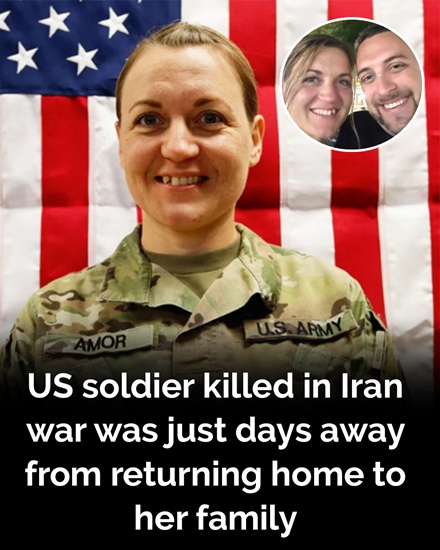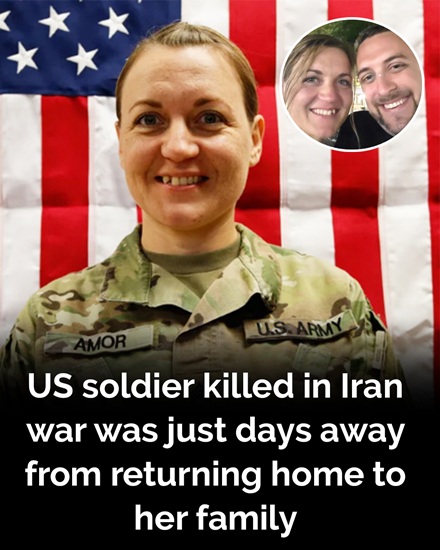
At the age of 39, Sgt. 1st Class Nicole M. Amor was among the six American service members killed in a devastating Iranian drone strike on March 1, 2026.
The attack struck a temporary operations hub at Port Shuaiba, Kuwait — a civilian seaport repurposed to support U.S. military logistics in the region.
The strike occurred during a tense period of escalating hostilities tied to Operation Epic Fury, a joint U.S.-Israeli campaign in response to rising regional threats and deteriorating diplomatic relations with Iran. For Amor, the attack came just days before she was scheduled to return home to her family in Minnesota, amplifying the profound shock felt by her loved ones, her unit, and communities across the United States.
Friends, colleagues, and fellow service members remembered Amor as a devoted mother, an exceptionally skilled logistician, and a professional whose sense of duty extended far beyond the call of service. In her hometown of White Bear Lake, Minnesota, tributes poured in from neighbors, civic leaders, and local organizations, each reflecting on her kindness, dedication, and the quiet heroism that marked both her military career and personal life.
Her story, like that of many service members, underscores the human dimension of modern military conflicts, where extraordinary dedication intersects with daily acts of love and care for family and community.
Final Days Before Returning Home
In the weeks leading up to the strike, Sgt. 1st Class Amor was preparing for the conclusion of a long overseas deployment. Stationed in Kuwait as part of the 103rd Sustainment Command (Expeditionary) — a U.S. Army Reserve logistics unit headquartered in Des Moines, Iowa — she was responsible for ensuring that critical supplies, transportation, and operational support reached American forces across the region. The deployment, like many of her previous missions, involved long hours, complex coordination, and high-stakes decision-making, often under challenging conditions.

Her husband, Joey Amor, recalled exchanging messages with her in the final hours before the strike. They discussed the small, ordinary details of daily life — including a note about Amor having tripped the night before — unaware that these would be their last exchanges. “She was almost home,” Joey told reporters, his voice heavy with grief. “We had joked about her making it back and taking a few weeks to relax, maybe catch up on gardening and spend time with the kids. That morning, when she didn’t reply, we feared something was wrong.” The profound loss experienced by her family, only days from a reunion, highlights the unpredictable and tragic realities faced by military families during times of conflict.
A Career of Commitment and Expertise
Nicole Amor’s military career spanned more than two decades, a testament to her dedication and professionalism. She enlisted in the Minnesota National Guard in 2005 as an automated logistics specialist, a role requiring both technical skill and meticulous attention to detail. Her early responsibilities included coordinating supply lines, managing inventories of essential equipment, and ensuring that operational units had timely access to critical resources.
In 2006, Amor transferred to the U.S. Army Reserve, where she continued her work in logistics while gaining additional leadership experience. Over the years, she deployed multiple times, including operations in Kuwait and Iraq in 2019. Each deployment presented unique challenges: extreme weather conditions, complex transportation networks, and the ever-present risk of enemy action. Despite these hurdles, Amor consistently demonstrated resourcefulness and a calm efficiency that earned her respect among peers and superiors alike.
Colleagues frequently described her as the kind of soldier whose work often went unseen but whose impact was felt across entire operations. Logistics, they noted, forms the backbone of military capability — without professionals like Amor ensuring the flow of supplies, even the best-equipped combat units cannot operate effectively.
Her leadership and expertise were recognized with numerous awards, including the Army Commendation Medal, the National Defense Service Medal, and the Army Reserve Component Achievement Medal. These honors reflected not only her competence but also her unwavering commitment to her country and fellow soldiers.
The Port Shuaiba Drone Strike
The attack that claimed Amor’s life occurred at Port Shuaiba, roughly ten miles from Camp Arifjan, the primary U.S. military base in Kuwait. The location struck was a temporary operations center, a cluster of modular structures designed to coordinate logistics, manage supplies, and oversee sustainment tasks. Unlike fortified military bases, this facility lacked significant overhead protection, making it vulnerable to aerial threats.

On the morning of March 1, 2026, Iranian unmanned aerial vehicles targeted the operations center. The strike caught personnel by surprise, and its precision inflicted significant casualties in a brief span of time. The U.S. Department of Defense confirmed that six American service members were killed. Four have been publicly identified: Sgt. 1st Class Nicole M. Amor; Capt. Cody A. Khork, 35, of Florida; Sgt. 1st Class Noah L. Tietjens, 42, of Nebraska; and Sgt. Declan J. Coady, 20, of Iowa. Two additional service members remain unnamed in early reports.
Military analysts have highlighted the strike as a stark reminder of the risks faced by forward-deployed logistical units. Temporary operations centers, while essential for sustaining military missions, are inherently exposed to emerging threats such as drone and missile attacks. Defense officials have stated that investigations remain ongoing, though complete operational details have not been publicly released.
Beyond her military uniform, Nicole M. Amor was a devoted mother, loving spouse, and active member of her local community. She leaves behind a high school senior son and a fourth-grade daughter, both of whom were central to her life. Those who knew her described a parent whose love for her children was evident in both small, everyday moments and in her commitment to creating lasting family memories.
Amor’s home life was filled with warmth, laughter, and hands-on engagement. She was known for her attentive parenting, attending school events, coaching extracurricular activities, and ensuring her children experienced a sense of stability despite her extended deployments.
Friends recall that she made it a point to keep traditions alive, from weekend family dinners to seasonal gardening projects that often included her children as eager helpers. Gardening, in particular, was a lifelong passion. Amor cultivated a variety of vegetables and herbs in her backyard, including tomatoes, peppers, and fresh greens. She often shared these with neighbors and friends, and she took particular pride in making homemade salsa using produce grown in her own garden — a skill she joyfully taught to her son.
Her bond with her daughter was similarly rich with shared activity. Rollerblading, bicycling, and outdoor exploration were staples of their weekends, offering both exercise and quality time. Family members recount that Amor cherished the opportunity to teach her children, whether guiding them through homework, sharing culinary skills, or taking them on spontaneous trips to local parks. Her ability to blend practical care with moments of fun and creativity left a lasting impression on both her family and her wider circle of friends.

Community members in White Bear Lake also spoke of Amor as someone who actively contributed to local life. She participated in neighborhood events, volunteered at school functions, and engaged in charitable activities supporting military families and local civic organizations. Her approachable, generous spirit made her a well-respected figure within her community — someone whose presence created a sense of connection and care.
Honoring a Life of Service: Grief and Tributes
News of Amor’s death reverberated quickly through Minnesota and across the nation, prompting an outpouring of grief and recognition. Local officials, neighbors, and community groups came together to honor her service, organizing vigils and memorial gatherings that reflected both sorrow and respect. Minnesota Governor Tim Walz expressed condolences via social media, acknowledging Amor’s commitment to her country and highlighting the state’s solidarity with her family during this tragic time.
U.S. Senators and national leaders, including Sen. Amy Klobuchar, also offered tributes, emphasizing the broader significance of Amor’s service and sacrifice. Their statements recognized the dedication of all members of the U.S. military, particularly those in reserve components, who balance civilian life with the demanding responsibilities of military service. These tributes served not only to honor Amor but also to highlight the sacrifices inherent in military duty — sacrifices that are often invisible to the general public yet essential to national security.
National media coverage amplified the human side of the story, moving beyond the tactical details of the Port Shuaiba strike to convey the personal dimensions of loss. Reporters highlighted Amor’s dual identity as a career soldier and devoted parent, painting a picture of someone who devoted her life to supporting others — both on the battlefield and at home. Her colleagues frequently emphasized that logistics personnel like Amor are the “unsung backbone” of military operations, whose work ensures the operational effectiveness of all deployed units.
Reflections from Colleagues and Military Leaders
Within the 103rd Sustainment Command (Expeditionary), Amor’s death was felt deeply. Leaders and fellow soldiers described her as a mentor, a steadying presence, and a professional whose work ethic set a standard for others. Her commitment to mission success was paired with genuine concern for the welfare of her team, making her both respected and beloved.
Several members of the unit recalled moments where Amor went above and beyond to ensure that her colleagues had the support they needed, whether organizing supply convoys, coordinating logistical schedules, or providing guidance to less experienced soldiers. Her professionalism, calm under pressure, and willingness to take responsibility for complex tasks were qualities that colleagues consistently praised.
Her story also served as a poignant reminder of the human cost of modern military operations. Logistics operations, while less visible than front-line combat, involve exposure to significant danger, especially in areas where temporary facilities are targeted by unmanned aerial vehicles or other hostile forces. Military analysts highlighted that Amor and her colleagues were performing critical duties that are essential to the overall success of operations like Epic Fury, underscoring the vulnerability and heroism inherent in these roles.

National and Military Recognition
In recognition of her service, multiple official honors and ceremonies were conducted to commemorate Amor’s contributions. In addition to the awards she earned during her career, her passing prompted formal acknowledgments from military leadership, including statements highlighting her exemplary performance and her embodiment of Army values such as loyalty, duty, and selfless service.
Her name was included in memorial observances at military installations across the United States, serving as a symbol of dedication and sacrifice. Local schools and organizations in White Bear Lake held moments of silence and tributes, allowing her community — including children she had influenced through volunteer work — to participate in honoring her life.
The broader military community recognized that her passing, like that of other service members, represents both a professional and personal loss. By sharing stories of her diligence, compassion, and mentorship, colleagues ensured that Amor’s legacy would extend beyond her immediate circle, providing inspiration for current and future soldiers.
Balancing Home and Duty
One of the most remarkable aspects of Nicole Amor’s life was her ability to balance the demands of military service with her dedication to family and community. This balance is often difficult to achieve, especially during multiple deployments spanning years and regions. Amor exemplified resilience, maintaining her personal life with the same care and focus that she applied to logistical operations.
Her story reminds us that behind every headline reporting military casualties, there is a network of loved ones — children, spouses, parents, and friends — whose lives are irreversibly affected. For Amor’s family, the heartbreak was compounded by the knowledge that she was only days from returning home. This proximity underscores the fragile nature of life in conflict zones and the sacrifices borne silently by both service members and their families.
The tragic death of Sgt. 1st Class Nicole M. Amor occurred against a backdrop of heightened geopolitical tensions in the Middle East. In late February 2026, the United States, in coordination with Israel, launched Operation Epic Fury, a military campaign aimed at neutralizing strategic targets in Iran following the collapse of international nuclear negotiations and escalating regional hostilities. The operation marked a significant escalation in U.S.-Israeli joint military engagement, and it underscored the complexities of balancing regional security, global diplomacy, and troop safety.
Iran responded swiftly with a series of retaliatory strikes, including missile and unmanned aerial vehicle (UAV) attacks targeting U.S. military positions, logistical hubs, and allied facilities in Kuwait, Qatar, Bahrain, and the United Arab Emirates. The Port Shuaiba strike — in which Amor and five fellow service members lost their lives — was the first publicly acknowledged incident resulting in fatalities among U.S. forces during these hostilities. The attack highlighted the increasing vulnerability of forward-deployed logistics centers, especially those situated in civilian port areas that lack the full fortifications of permanent military bases.
Defense officials emphasized that forward logistics hubs, such as the one at Port Shuaiba, are essential for maintaining operational momentum. These hubs coordinate transportation of food, equipment, ammunition, and medical supplies, ensuring that combat and support units remain effective. The strike, therefore, represented not only a loss of life but also a temporary disruption to critical sustainment operations — an aspect of modern warfare that demonstrates the interdependence of tactical and logistical planning.
Military analysts noted that temporary operations centers are particularly exposed to UAV attacks, which can bypass traditional air defense systems designed for larger-scale missile threats. The Port Shuaiba incident has prompted renewed scrutiny of defensive measures, including the potential expansion of counter-UAV capabilities and hardened sheltering for critical personnel and equipment. While investigations remain ongoing, officials have acknowledged that protecting forward-deployed logistical teams is an increasingly urgent priority.
The Role of the 103rd Sustainment Command (Expeditionary)
Sgt. 1st Class Amor and her colleagues served in the 103rd Sustainment Command (Expeditionary), a logistics-focused unit that is integral to U.S. Army operations both at home and abroad. The unit specializes in supply chain management, transportation coordination, maintenance support, and sustainment operations for deployed forces. Its members are responsible for ensuring that troops across diverse theaters have timely access to food, fuel, ammunition, medical supplies, and repair parts.
Within this context, Amor’s contributions were invaluable. Her expertise as an automated logistics specialist allowed her to coordinate complex supply networks under challenging conditions. The loss of Amor and her colleagues represented a tangible gap in operational capacity, emphasizing both their individual importance and the broader role of logistics personnel in modern military campaigns. Leadership within the 103rd Sustainment Command highlighted that the effectiveness of combat units depends entirely on the seamless functioning of these support networks. Amor’s dedication, therefore, was not peripheral but central to mission success.
Colleagues recalled her meticulous approach to planning supply routes, her ability to anticipate potential bottlenecks, and her unwavering commitment to the welfare of her fellow soldiers. She often stayed late into the night managing schedules, verifying inventories, and coordinating shipments, ensuring that units in the field received essential resources without delay. Her leadership was described as quiet yet influential, fostering a culture of reliability, discipline, and camaraderie among her team.
Operational and Tactical Implications
The Port Shuaiba drone strike underscored the challenges of modern conflict, where traditional front lines are blurred and logistics hubs can become high-value targets. Analysts highlighted that temporary installations, particularly those situated in mixed civilian-military areas, must balance operational functionality with security. The strike illustrated the evolving threats facing U.S. forces in the region, particularly the use of UAVs and other precision-guided technologies by state and non-state actors.
Defense Secretary Pete Hegseth publicly addressed the incident, reaffirming the United States’ commitment to protecting its personnel while maintaining operational objectives. Officials acknowledged that further threats were possible, emphasizing ongoing intelligence gathering, operational adjustments, and protective measures for deployed forces. The incident also prompted discussions in Congress regarding the allocation of additional resources to fortify temporary forward operations and enhance personnel safety, reflecting the high stakes involved in sustaining global military operations.
Remembering Sgt. 1st Class Nicole M. Amor
Amid the operational analysis and strategic discussions, the human story remained at the forefront. Sgt. 1st Class Amor’s life exemplifies the personal courage and professional dedication that underpin U.S. military service. Her two-decade career, marked by multiple deployments and numerous commendations, reflects a lifetime of commitment to the well-being of both her fellow soldiers and the broader mission.
Her sudden death, so close to returning home, magnified the sense of loss felt by family, friends, and the military community. In White Bear Lake, Minnesota, her children and spouse, Joey Amor, became the center of communal support, as neighbors, local officials, and fellow service members offered condolences, organized memorial services, and shared stories celebrating her life. Friends emphasized that Amor’s legacy is not solely defined by her military service but also by her capacity to nurture, teach, and inspire those around her — whether through gardening, cooking, or engaging with her children and community.
Military colleagues, recognizing her vital role in sustaining operations, reflected on how her presence elevated the unit’s morale and efficiency. Leaders noted that while combat actions often capture public attention, it is soldiers like Amor — ensuring the timely flow of supplies, maintaining logistical networks, and mentoring junior personnel — who form the backbone of military effectiveness. Her career serves as a reminder that heroism in the military encompasses a wide range of responsibilities, each critical to national security and troop readiness.
Enduring Legacy and Lessons
The story of Sgt. 1st Class Nicole M. Amor resonates far beyond the immediate circle of her family and unit. Her life illustrates the interconnected nature of military service, personal sacrifice, and community engagement. It demonstrates the profound costs that individuals and families bear during periods of conflict and highlights the often-unseen work of logistics personnel in sustaining global military operations.
Amor’s legacy also underscores the resilience required to balance duty and personal life. Her ability to nurture her children, contribute to her community, and perform demanding logistical work overseas offers a model of dedication and compassion. By sharing her story, the military and the public are reminded of the human dimensions behind strategic operations, the importance of safeguarding personnel, and the value of recognizing contributions beyond conventional combat roles.
As families, colleagues, and the broader community continue to honor her memory, Sgt. 1st Class Amor stands as a symbol of service, courage, and unwavering commitment. Her life — defined by practical support, personal warmth, and professional excellence — leaves an enduring impact. Communities and units alike remember her not only for her sacrifice but for the kindness, skill, and dedication she brought to every aspect of her life. In remembering her, we acknowledge the sacrifices of countless service members whose lives quietly uphold the security and effectiveness of their nation.