
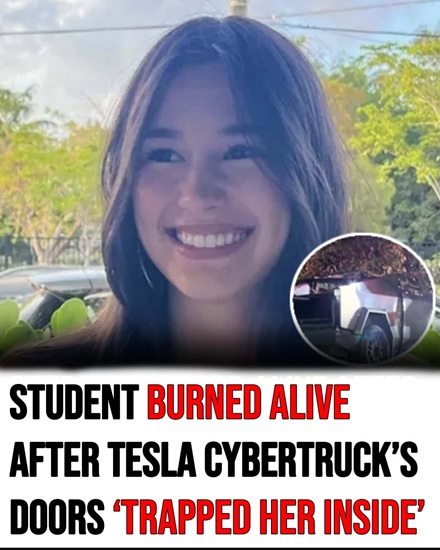
A devastating crash involving a Tesla Cybertruck in California has resulted in multiple deaths and has since triggered legal action, raising concerns about vehicle safety and emergency escape systems.
The incident took place on November 27, 2024, when a group of young adults were traveling together in a Cybertruck during the Thanksgiving holiday period.
According to early reports from local authorities, the vehicle collided with a roadside retaining wall before quickly catching fire after the impact.
Emergency services responded to the scene and confirmed that the vehicle was fully engulfed in flames when officers arrived at the location.
Officials stated that the crash resulted in multiple fatalities, while one passenger was later reported to have survived the incident after being rescued.

The individuals involved were identified as college-aged friends, including driver Soren Dixon, passenger Jack Nelson, and passenger Krysta Tsukahara, all around 19 to 20 years old.
A fourth individual, Jordan Miller, survived the incident after being pulled from the burning vehicle with the help of a passing driver who stopped to assist.
Reports indicate that the rescuer used a nearby object to break a window, allowing access to the vehicle despite rapidly spreading fire and heavy smoke conditions.
Authorities later noted that impairment may have played a role in the crash, with toxicology findings referenced in ongoing investigative reports.
According to those findings, alcohol and controlled substances were detected in some of the occupants, although official conclusions remain part of the broader investigation.

Krysta Tsukahara, a student at the Savannah College of Art and Design, initially survived the impact but was later unable to escape the vehicle, according to legal filings.
A wrongful death lawsuit filed by her family alleges that she became trapped inside the Cybertruck as fire conditions worsened rapidly after the collision.
The complaint claims that electrical system issues may have affected the vehicle’s door mechanisms, preventing normal exit functions after the crash.

It also states that attempts were made by a bystander to assist her escape, but extreme heat and structural damage made rescue efforts extremely difficult.
The lawsuit further alleges that Tsukahara ultimately died due to smoke inhalation and burn-related injuries while still inside the vehicle.
A separate wrongful death claim filed by another family presents similar concerns regarding emergency exits and post-crash entrapment risks.
Both lawsuits name Tesla and the estate of the vehicle’s owner, raising questions about design safety and emergency accessibility features.
The legal filings argue that electronic door systems dependent on low-voltage power may fail after severe collisions, potentially disabling critical escape functions.
They also raise concerns that manual release mechanisms may not be easily visible or accessible during emergencies involving smoke and low visibility.

Attorneys representing the families argue that emergency exits should remain intuitive and functional even when primary electrical systems are compromised.
Tesla, led by CEO Elon Musk, has not issued any public admission of fault regarding these specific allegations, and legal proceedings are ongoing.
The company has previously faced scrutiny over vehicle design choices, particularly in relation to advanced electronic systems and crash safety performance.
In statements provided by legal representatives, the families described the incident as a preventable tragedy and emphasized the emotional impact of their loss.
Krysta Tsukahara was remembered by her family as a talented and ambitious young woman with strong academic goals and a promising future ahead.
Her family expressed deep grief over the circumstances of her death, particularly focusing on concerns about the inability to exit the vehicle in time.
Similarly, the family of Jack Nelson has raised concerns about passenger safety in rear seating positions and emergency escape accessibility in modern vehicles.
Officials confirmed that speed and impaired driving were considered contributing factors in the crash, based on preliminary highway patrol findings.

However, the families involved argue that contributing causes of the collision do not eliminate concerns about post-impact survivability and vehicle safety design.
The case has drawn significant public attention, adding to ongoing debates about electric vehicle safety and the reliability of electronic door systems.
The Tesla Cybertruck, released in late 2023, has been widely discussed due to its unconventional design, advanced technology, and controversial safety discussions.
Since its launch, the vehicle has been subject to public scrutiny, including regulatory attention and discussions about emergency system performance.
This case has intensified those debates, especially regarding how modern vehicles should be designed to ensure safe escape in extreme crash scenarios.
As investigations and lawsuits continue, authorities and experts are expected to further examine all technical, mechanical, and human factors involved.
The outcome of these legal proceedings may influence future discussions on automotive safety standards and emergency design requirements for electric vehicles.
For now, the tragedy remains under active investigation, leaving families seeking answers and accountability while broader safety questions remain unresolved.
