

The ongoing military and political tensions involving the United States, Israel, and Iran have become one of the most closely monitored crises in contemporary geopolitics.
Since late February 2026, the situation has escalated sharply, attracting global attention from governments, analysts, and citizens alike.
The surge in news coverage, social media commentary, and online speculation has fueled fears in some quarters of a potential World War III scenario. However, careful analysis from defense experts, retired military officials, and seasoned geopolitical analysts emphasizes that while the conflict is serious, global powers remain focused on preventing an uncontrolled escalation into a full-scale world war.
Understanding the nuance of these developments is crucial for anyone seeking both situational awareness and practical steps to maintain personal and household readiness.
Background: What Has Actually Happened
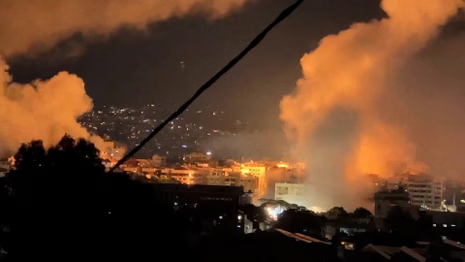
The recent military operations in the Middle East involve coordinated U.S. and Israeli strikes against select Iranian military installations and strategic infrastructure. These strikes, identified in some reporting as Operation Epic Fury, targeted missile launch sites, military research facilities, and key command centers.

According to verified sources, the goal of these operations is to reduce Iran’s capacity to carry out offensive operations against Israel, U.S. personnel, and regional allies. While the strikes are extensive, they are focused on degrading specific military capabilities rather than aiming for regime change or provoking a global conflict.
Iran has responded with missile and drone strikes, primarily targeting Israeli territory, U.S. military bases in the Persian Gulf, and allied nations in the region. These retaliatory actions have included limited drone incursions and short-range missile attacks, which, while disruptive, have not yet triggered broader international military commitments.
Furthermore, Iran’s strategic deployment of proxy groups, including Hezbollah in Lebanon and certain militias in Iraq and Syria, has added complexity to the conflict. Hezbollah has exchanged artillery fire with Israeli forces in southern Lebanon, but both sides have exercised caution to avoid large-scale ground invasions that could escalate the conflict beyond the immediate region.
Disruptions in the Strait of Hormuz, through which approximately 20% of the world’s oil supply passes, have been a major source of international concern.
While temporary closures and the threat of attacks on commercial shipping have increased global market volatility, these disruptions, though serious, remain contained to strategic chokepoints rather than indicating a global military escalation. Oil prices have surged in response to perceived risks, and inflationary concerns have been noted by analysts, but these are economic consequences rather than signs of a worldwide war.
Why World War III Fears Have Emerged
The rapid pace of events and the number of countries indirectly involved have contributed to public anxiety. Analysts note several factors that amplify these fears:
- Cross-border Military Activity – The conflict has involved strikes that extend beyond Iranian territory, including drone incursions near U.S. military installations in the Gulf region and coordinated airstrikes on militia positions in Iraq and Syria. These activities, while limited, highlight the interconnected nature of regional security and the potential for accidental escalation.
- Economic Ripple Effects – The partial disruption of oil transport through the Strait of Hormuz has caused spikes in global oil prices and contributed to short-term economic uncertainty. While media coverage sometimes frames this as evidence of a global conflict, experts emphasize that economic volatility does not equate to a declaration of war.
- Regional Diplomatic Measures – Countries such as Saudi Arabia, the United Arab Emirates, Qatar, and other Gulf nations have actively engaged in diplomatic mediation to prevent the conflict from spreading into their territories. These measures include back-channel negotiations, coordination with the U.N., and strategic communication with both Iranian and Israeli officials.
Experts warn that much of the public perception is shaped by alarmist reporting and social media speculation. High-traffic online narratives claiming that “World War III has begun” are often based on unverified or sensationalized sources. In reality, while the U.S.–Israel–Iran conflict is significant and volatile, global powers are generally pursuing containment strategies and diplomatic avenues to prevent uncontrolled escalation.
Separating Fact From Misconception
Understanding what is factual versus speculative is critical. Some common misconceptions include:
- No Official World War Declaration Exists – Despite frequent headlines claiming a global war scenario, no government has officially declared a world war. Statements from the U.N., NATO, or individual governments emphasize restraint and diplomacy rather than mobilization for global combat.
- Economic and Energy Disruptions Are Not Evidence of Global War – While oil price spikes and shipping disruptions are real, they do not indicate a world-scale conflict. They are measurable consequences of regional instability rather than triggers for a global conflagration.
- Global Powers Prioritize Controlled Escalation – Retired military leaders and defense analysts point out that countries with nuclear capabilities or large military assets prefer measured responses and often avoid full-scale confrontations unless national survival is at stake.
Being able to separate credible geopolitical reporting from unverified speculation is essential for maintaining an informed and rational perspective.
Emergency Preparedness: Practical Steps Everyone Can Take
Even though the risk of a global war is considered low, governments and emergency management authorities encourage individuals to adopt practical preparedness measures for a range of potential crises, including natural disasters, regional conflicts, or civil infrastructure failures. This approach focuses on resilience rather than fear.

One widely promoted concept is the “72-Hour Self-Sufficiency” standard. Governments in Europe and North America recommend that households maintain the ability to sustain themselves independently for at least three days. This guideline is not war-specific but applies broadly to scenarios such as hurricanes, earthquakes, chemical incidents, or temporary infrastructure outages.
Core Elements of a 72-Hour Emergency Kit
A practical emergency kit includes:
- Water – At least one gallon per person per day for three days.
- Food – Non-perishable items that require minimal preparation.
- Communication – Battery-powered or hand-crank radios to receive official alerts if power is lost.
- Lighting – Flashlights with extra batteries.
- First Aid – Essential medications, first-aid supplies, and personal hygiene items.
- Important Documents and Cash – Stored in a waterproof pouch.
- Clothing and Bedding – Warm clothing and blankets appropriate to local climate.
- Power – Solar chargers, power banks, or other backup power sources for mobile devices.
Countries such as Sweden, Finland, Denmark, and the Netherlands have developed public guides for citizens on emergency kits and crisis preparedness. These resources emphasize resilience and readiness without implying a direct war threat.
While the 72-hour self-sufficiency guideline provides a solid foundation for household readiness, many civil defense experts and survival planners advocate for a more comprehensive approach. Extending preparedness beyond three days can significantly increase resilience, particularly in cases where infrastructure disruptions last longer or regional crises escalate unexpectedly.
Water and Food Security
Water remains the most critical resource in any emergency. Beyond the initial three-day supply, households are advised to maintain additional water reserves and purification methods. Portable water filters, chlorine tablets, and collapsible water containers can supplement stored water in the event of extended outages. Experts note that while bottled water is convenient, it has a limited shelf life and can occupy significant storage space. Combining stored water with purification tools offers both flexibility and longevity.
For food, long-term strategies include a mix of non-perishable packaged foods, canned goods, freeze-dried meals, and high-calorie energy bars. Rotating stock regularly prevents spoilage, while including items that require minimal preparation ensures accessibility even if cooking resources are limited. Civil defense authorities also recommend keeping a manual can opener and multi-use kitchen tools in your emergency kit.
Shelter, Warmth, and Clothing
Even in temperate regions, weather conditions can change rapidly. Emergency shelters, tarps, and sturdy ropes allow households to create temporary protection if traditional structures are compromised. Layered clothing, insulated blankets, and rainproof outerwear can mitigate hypothermia risk during prolonged power outages or displacement scenarios.

In areas prone to natural disasters such as floods, wildfires, or earthquakes, additional protective measures are recommended. Waterproof storage for documents and electronics, fire-resistant containers for important items, and localized evacuation planning are essential components of a robust emergency strategy.
Energy, Power, and Communication
Maintaining reliable communication channels is crucial during any crisis. Battery-powered and hand-crank radios allow individuals to receive official updates even when digital networks fail. Solar-powered chargers, portable battery packs, and generators provide backup power for critical devices, including mobile phones, medical equipment, and lighting.
Civil defense planners emphasize the importance of redundancy. Having multiple ways to access information—radio, satellite alerts, community bulletin systems, and trusted local contacts—ensures that households are not entirely dependent on one source of communication.
Medical Preparedness
Medical readiness is often overlooked but is a cornerstone of emergency planning. Beyond a basic first-aid kit, individuals should maintain a reserve of prescription medications, over-the-counter pain relief, antiseptics, and bandages. Families with infants, elderly members, or individuals with chronic conditions should include specialized supplies, such as glucose monitors, mobility aids, or oxygen canisters, in their kits.
Training in basic first-aid, CPR, and wound care significantly enhances the effectiveness of your emergency response. Local Red Cross chapters and community health centers often offer certification courses that can be completed in a matter of days.
Planning for Diverse Scenarios
Preparedness is not limited to conflict-related threats. Civil defense experts stress the importance of planning for multiple scenarios:
- Natural Disasters: Hurricanes, earthquakes, floods, and wildfires can disrupt utilities, transportation, and supply chains.
- Civil Infrastructure Failures: Extended blackouts, water main breaks, or localized chemical accidents require the ability to operate independently for days or weeks.
- Public Health Emergencies: Epidemics or pandemics can necessitate quarantine measures, reduced mobility, and additional hygiene precautions.
- Regional Conflicts: Even if a global war is unlikely, localized conflicts may affect transportation, energy supplies, and regional safety.
Developing a household emergency plan should include evacuation routes, safe meeting points, and procedures for accounting for all family members during a crisis. Practicing these plans regularly builds confidence and ensures that everyone understands their role during an emergency.
Family and Community Coordination
Effective preparedness extends beyond the individual household. Coordinating with neighbors and community groups can improve resilience, especially in situations that overwhelm local resources. Community preparedness initiatives, such as neighborhood emergency response teams (CERT), provide training, equipment, and communication networks that can be invaluable in times of disruption.
Establishing a family communication plan is also essential. Designating an out-of-area contact who can relay information in case local communications are disrupted helps families stay connected. Backup copies of important documents, including identification, medical records, and insurance information, should be securely stored and easily accessible to all household members.
Psychological Preparedness and Maintaining Calm
While physical readiness is critical, psychological resilience is equally important. Uncertainty and fear can undermine effective decision-making during emergencies. Experts recommend:
- Staying Informed: Rely on verified sources such as government advisories, reputable news outlets, and international institutions. Avoid sensationalized social media narratives that amplify fear.
- Practicing Calm Decision-Making: Simulation exercises and routine reviews of emergency plans help maintain composure under stress.
- Developing Stress Management Strategies: Simple techniques like deep breathing, mindfulness, and maintaining routines can reduce anxiety during prolonged crises.
Preparedness should be framed as a confidence-building habit rather than a response rooted in panic. By focusing on practical, achievable steps, individuals can maintain a sense of control even in uncertain circumstances.
Lessons From International Civil Defense Practices
Many countries have long-standing civil defense frameworks that integrate public education, infrastructure readiness, and community-based response networks. For instance, Finland, Sweden, and Denmark regularly promote household readiness through national campaigns, school programs, and public service announcements. These programs emphasize the principles of resilience, adaptability, and self-sufficiency, ensuring that citizens are prepared for a variety of scenarios without assuming any single catastrophic event is inevitable.
Even the European Union encourages member states to maintain guidelines for water, food, and energy reserves, as well as coordination mechanisms for emergency services. Lessons from these programs highlight that preparedness is not about fear of war but about practical, everyday resilience that enhances safety during any unexpected event.
While the first two sections of this guide outlined the regional dynamics of the U.S.–Israel–Iran conflict and the fundamentals of emergency preparedness, the final component focuses on actionable steps, comprehensive risk management, and maintaining situational awareness. The goal is to equip individuals and families with a clear framework for resilience, rather than fostering panic or fear.

Understanding Regional Risks
Even though a global war remains highly unlikely, the ongoing conflict carries regional implications that require practical attention. Analysts emphasize that localized escalation could impact infrastructure, energy supplies, and transportation networks. Key areas to monitor include:
- Energy and Fuel Supply: Temporary closures in the Strait of Hormuz can lead to fuel shortages and price spikes. Households are encouraged to maintain an emergency reserve of gasoline or alternative fuel if applicable, along with energy-efficient appliances that reduce dependency.
- Transportation Disruptions: Flights, shipping, and public transit may be affected by geopolitical tensions. Having backup plans for commuting, access to maps, and knowledge of alternative routes is prudent.
- Communication Infrastructure: Cybersecurity threats and regional attacks can impact mobile and internet services. Maintaining multiple communication channels—cell phones, satellite phones, radios—is recommended.
- Supply Chain Interruptions: Stockpiling essentials such as food, water, medicine, and hygiene products ensures households remain resilient during temporary shortages.
By assessing these factors, individuals can plan for multiple layers of disruption and reduce reliance on uncertain supply chains.
Developing a Holistic Household Emergency Plan
A complete household plan integrates logistics, communication, and contingency strategies. Experts recommend the following key elements:
- Evacuation Planning: Identify primary and secondary evacuation routes, safe locations, and transportation options. Consider local hazards such as floods, fires, or infrastructure damage when planning routes.
- Shelter Arrangements: Know where local community shelters, public buildings, or reinforced areas are located. Ensure your emergency kit is portable in case relocation becomes necessary.
- Family Communication: Establish a contact point outside the immediate area who can relay information to family members if local networks fail. Include alternate methods of communication such as written messages or signal codes.
- Medical and Special Needs: Prepare for unique household requirements, including prescription medications, infant supplies, elder care items, and mobility aids. Include detailed instructions and emergency contacts for each member.
- Practice Drills: Conduct regular simulations for fire evacuation, power outages, or sudden shelter needs. Drills reduce panic, reinforce preparedness habits, and highlight any gaps in planning.
Financial Preparedness
Financial readiness is a critical but often overlooked component. Emergencies can disrupt banking services, ATMs, and electronic payment systems. Experts recommend:
- Maintaining a small emergency cash reserve in a secure, waterproof container.
- Keeping digital and physical copies of financial documents, including bank accounts, insurance policies, and identification.
- Understanding access to local support programs or community resources that may provide short-term aid during crises.
Financial planning ensures that households can manage short-term disruptions without relying on immediate external assistance.
Psychological Resilience
A key lesson from civil defense studies is that preparedness extends beyond physical resources. Mental and emotional readiness enhances decision-making and reduces the likelihood of panic. Recommendations include:
- Stay Informed, Not Overwhelmed: Focus on credible sources such as government advisories, international organizations, and reputable news outlets. Limit exposure to sensationalized content on social media.
- Practice Mindfulness and Stress Management: Techniques such as breathing exercises, meditation, and structured routines can reduce anxiety and support rational decision-making during emergencies.
- Community Engagement: Participating in neighborhood preparedness initiatives or local volunteer programs fosters a sense of control and social support.
Psychological resilience is as essential as material readiness, ensuring that individuals can respond calmly and effectively under pressure.
Civil Defense Lessons From Around the World
Several countries have developed advanced civil defense frameworks that integrate public education, infrastructure readiness, and community-level coordination. Key practices include:
- Sweden: National campaigns provide detailed instructions for citizens on household preparedness, water storage, and emergency kits, emphasizing personal responsibility and resilience.
- Finland: Schools incorporate civil preparedness lessons, teaching children basic first aid, fire safety, and survival skills.
- Netherlands: Government advisories include multi-scenario planning guides for floods, industrial accidents, and regional conflicts, with clear instructions on evacuation and emergency communication.
These programs highlight that preparedness is a civic responsibility, not a reactionary measure to a specific threat. Citizens are encouraged to develop adaptable plans applicable to a range of emergencies.
Staying Informed During a Crisis
Reliable information is the backbone of effective preparedness. Key recommendations for maintaining situational awareness include:
- Use official government channels for real-time updates. Many countries provide mobile alerts, websites, and local hotlines.
- Follow international organizations such as the United Nations, Red Cross, and World Health Organization for verified information.
- Cross-reference multiple sources before acting on any directive or news report.
- Avoid forwarding unverified social media content, as rumors can amplify panic and confusion.
Being well-informed reduces the likelihood of making decisions based on misinformation and ensures that actions are aligned with actual risk levels.
Practical Takeaways for Individuals and Families
- Understand the Situation Carefully: Recognize that the U.S.–Israel–Iran conflict is serious, but a global war is not imminent. Analysts emphasize regional escalation over worldwide military engagement.
- Separate Alarm from Facts: Avoid sensationalized headlines. Confirm reports through trusted news outlets, official government statements, and international institutions.
- Follow Government Preparedness Guidelines: Build a reliable 72-hour kit, extend supplies where possible, and maintain a comprehensive household plan.
- Plan for Multiple Scenarios: Prepare for natural disasters, infrastructure disruptions, or public health emergencies in addition to potential geopolitical crises.
- Maintain Psychological and Community Resilience: Engage with neighbors, practice drills, and utilize stress management techniques to remain calm and effective.
Conclusion
Preparedness is ultimately about empowerment. By combining verified information, practical resources, and structured planning, individuals and families can navigate uncertain times with confidence. Civil defense principles, extended emergency kits, communication strategies, and community coordination all work together to provide resilience against a range of potential crises, whether they stem from natural disasters, regional conflicts, or other emergencies.
The U.S.–Israel–Iran conflict serves as a reminder of the interconnectedness of modern geopolitics and the importance of readiness. While global war remains unlikely, practical measures rooted in fact and careful planning can significantly improve safety, security, and peace of mind. Ultimately, preparedness is a habit — one that turns uncertainty into action and fear into confidence, helping households remain secure, informed, and resilient in the face of any challenge.

