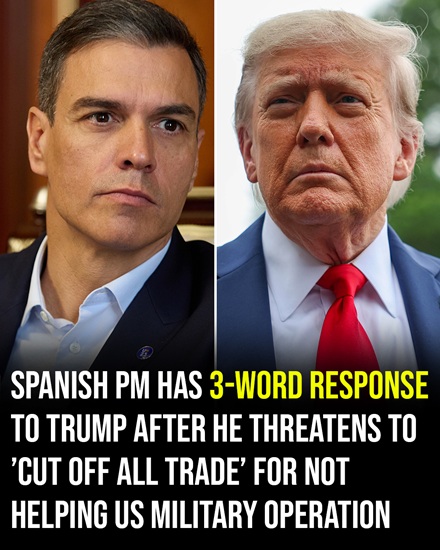
In early March 2026, relations between the United States and Spain entered an unusually tense and highly public phase, with disputes centered on military, economic, and diplomatic policies.
The crisis arose as a direct result of disagreements over U.S. military operations in the Middle East, specifically actions against Iran, and Spain’s sovereign decision to deny the United States use of its military bases for such operations.
This confrontation between two NATO allies has sparked international attention and raised questions about alliance cohesion, European Union trade governance, and the broader conduct of military interventions in the Middle East.
At the core of the conflict are two connected issues. First, Spain formally rejected U.S. requests to use Spanish bases for military strikes related to the ongoing U.S.–Israel campaign against Iran. Second, U.S. President Donald Trump responded to Spain’s refusal with public threats of sweeping economic measures, including the possibility of halting all trade between the two countries.
This situation represents a rare instance in which a U.S. president has directly threatened a long-standing ally with punitive economic action over military policy disagreements, and it has generated significant debate in both international diplomatic circles and European political forums.

Background: The Middle East Conflict and U.S.–Israel Military Operations
The dispute between Washington and Madrid cannot be understood in isolation from the broader context of escalating military operations in the Middle East. In late February 2026, the United States and Israel jointly launched large-scale strikes against strategic targets in Iran, which they described as necessary to counter Iran’s alleged military expansion and destabilizing regional actions.
While the U.S. administration framed these operations as defensive and preemptive measures to protect American forces and allies in the region, the strikes were criticized internationally for bypassing broader multilateral authorization and for potential violations of international law.
The attacks prompted a range of responses from governments outside the immediate conflict zone. Some nations expressed tacit support for U.S. security concerns, while others, particularly in Europe, voiced public concern about the risks of escalation and the precedent set by unilateral military interventions. Spain emerged as a notable voice in Europe challenging the approach, emphasizing adherence to international law, multilateral decision-making, and diplomatic solutions over unilateral military action.
Spanish leaders highlighted their distinction between opposing the policies of the Iranian government and supporting illegal or unilateral military strikes.
Prime Minister Pedro Sánchez and his cabinet emphasized that Spain’s position reflected a commitment to stability, international norms, and careful risk assessment rather than opposition to the United States as an ally. Sánchez publicly stressed that while Spain condemns any threat posed by Iran’s policies, the country could not condone military actions undertaken without clear United Nations or international authorization.
Spain’s Decision on Military Base Use
The immediate trigger for the diplomatic confrontation was Spain’s formal refusal to allow U.S. forces to use its military bases for strikes against Iran. Spain hosts several key U.S. installations, including Naval Station Rota in Cádiz and Morón Air Base in southern Spain.
These bases have historically been central to U.S. operations in Europe, the Mediterranean, and the Middle East, serving logistical, intelligence, and operational purposes. Under existing bilateral defense agreements, Spain retains sovereignty over these facilities and must approve specific operational uses.
On March 1, 2026, Spanish Foreign Minister José Manuel Albares issued a statement clarifying the government’s position: Spanish bases would not support operations against Iran that fell outside the scope of the bilateral agreement or violated the United Nations Charter.
Defense Minister Margarita Robles reinforced this stance, emphasizing that Spanish soil could only be used for military activities that are consistent with international law and formally sanctioned multilateral action.

This decision came after extensive internal debate and consultations with legal, military, and diplomatic advisors. Spanish officials cited the country’s constitutional and international obligations, including its commitments under NATO and the United Nations, as a framework guiding their decision. Additionally, public opinion in Spain was overwhelmingly cautious, with polls showing that a significant majority of citizens opposed the country becoming directly involved in military action in Iran.
U.S. Response: Trump’s Public Economic Threat
In an unprecedented public statement on March 3, 2026, President Donald Trump addressed the dispute directly. Speaking at the White House alongside German Chancellor Friedrich Merz, Trump sharply criticized Spain’s government and threatened severe economic repercussions, including the suspension of trade between the two nations. In his remarks, the president described Spain’s position as “terrible” and indicated that he believed unilateral action to cut trade would serve U.S. national security and economic interests.
Trump also framed the dispute in the context of broader NATO policy, criticizing Spain for not meeting proposed defense spending targets and contrasting its stance with other European allies who, according to him, were cooperating more fully with U.S. objectives.
The public and diplomatic tone of Trump’s remarks was unusually confrontational, breaking with traditional norms of private consultation among allies. Analysts noted that such direct threats of economic retaliation against a fellow NATO member represented a sharp escalation in both U.S.–Spain relations and broader transatlantic diplomacy.
Following President Trump’s public threat of economic measures, Spain’s leadership responded swiftly and decisively. Prime Minister Pedro Sánchez addressed the nation in a nationally televised broadcast, emphasizing that Spain would not alter its defense policy or permit its territory to be used for unilateral military operations in Iran, regardless of potential economic pressure. Sánchez repeatedly framed Spain’s position as principled and rooted in values, summing up the government’s stance with the simple yet powerful phrase: “No to war.”
In his address, Sánchez highlighted Spain’s commitment to international law, diplomacy, and multilateral conflict resolution. He stressed that yielding to economic threats from a foreign power would undermine Spain’s sovereignty, legal obligations, and credibility as a democratic state.
Sánchez drew historical parallels to past conflicts, notably the U.S.-led invasion of Iraq in 2003, warning that decisions made without broad international consensus often lead to long-term instability, humanitarian crises, and regional destabilization. By referencing these historical precedents, Sánchez positioned Spain’s refusal not merely as opposition to U.S. policy, but as a broader lesson in the consequences of unilateral military interventions.
Foreign Minister José Manuel Albares and Defense Minister Margarita Robles reinforced this message in subsequent briefings and interviews. Both officials rejected claims circulating in U.S. media and statements by the White House press secretary that suggested Spain had agreed to cooperate or soften its position.
They emphasized that Spain’s military bases remained under sovereign Spanish control, and any use beyond the bilateral agreements or UN mandates would be legally and politically unacceptable.
The Spanish government also initiated extensive internal communications with key domestic stakeholders, including the Congress of Deputies, regional governments, and military leadership. Officials sought to demonstrate the coherence and unity of Spain’s position, underscoring that it was backed not only by executive decision-making but also by legal and institutional frameworks designed to protect national sovereignty.

European Union Reaction: Solidarity and Collective Trade Authority
Spain’s firm stance quickly drew support from the European Union. The European Commission issued a statement underlining that threats to a member state’s trade relations by a third country are effectively threats to the entire EU.
Commission leadership emphasized that trade policy with the United States is negotiated collectively by Brussels, and no single EU member state can unilaterally alter or circumvent these agreements. Any attempt by the U.S. to impose unilateral trade sanctions against Spain would therefore be highly complex legally, requiring engagement with EU institutions and consideration of European trade law.
Key European leaders also expressed solidarity with Spain. French President Emmanuel Macron engaged in direct communication with Prime Minister Sánchez, affirming France’s support for Spain’s sovereign right to determine its own defense commitments.
German Chancellor Friedrich Merz, despite being present at the March 3 White House event, later reiterated the importance of respecting EU unity and multilateral decision-making. EU foreign policy analysts noted that the dispute highlighted the tension between U.S. unilateralism and Europe’s collective approach to foreign and defense policy.
The EU’s response also stressed economic implications. Brussels reminded Washington that Spain, as part of the EU, participates in trade agreements that cover tariffs, quotas, and regulatory standards across all member states. Any attempt to block trade with Spain unilaterally would require addressing complex issues, including EU competition law, rules on foreign direct investment, and legal protections for private companies operating across borders. These considerations make a straightforward embargo or trade cut-off far from simple, raising the risk of prolonged negotiations or even retaliatory EU measures in response to unilateral U.S. actions.
Economic Significance of U.S.–Spain Trade
Economic data underscore why a unilateral U.S. trade suspension would be complicated and potentially damaging for both parties. In 2025, Spain exported tens of billions of dollars’ worth of goods to the United States. Key Spanish exports include pharmaceuticals, automotive components, machinery, olive oil, wine, and renewable energy technologies.
Conversely, Spain imported slightly more in U.S. goods, such as agricultural products, technology, aerospace components, and industrial equipment. This trade relationship generated a modest U.S. trade surplus, reflecting mutual economic benefit and deep commercial integration.
Spain’s membership in the European Union further complicates the situation. EU trade policy operates on a collective basis, and any unilateral sanctions targeting one member could trigger disputes under World Trade Organization rules, EU internal law, and bilateral agreements with third countries. Spanish officials and Brussels stressed that companies engaged in transatlantic commerce are legally protected from arbitrary trade restrictions, adding an additional layer of complexity for Washington if it were to pursue economic threats.

Economic analysts also noted potential indirect impacts. Supply chains in sectors such as pharmaceuticals, automotive, and aerospace are tightly interconnected across the EU and U.S., meaning that disruptions in Spain could ripple across multiple markets, affecting production schedules, corporate revenues, and employment. These economic realities are likely to make any unilateral U.S. action both legally and commercially fraught, increasing pressure for diplomatic negotiation rather than direct coercion.
Political Dimensions and Broader Implications
The U.S.–Spain dispute also carries deeper political implications, particularly for NATO and transatlantic relations. NATO unity depends on shared commitments, including defense spending, operational cooperation, and alignment on strategic objectives.
Spain’s refusal to authorize U.S. military operations against Iran, combined with Trump’s public criticism of NATO spending, underscores the ongoing tension between U.S. expectations and European fiscal realities. Spain has maintained that its defense spending aligns with national priorities and EU economic constraints, highlighting the challenge of balancing alliance commitments with domestic responsibilities.
The situation also illuminates broader debates over European autonomy in foreign policy. European governments have increasingly sought to assert independent stances on military intervention, multilateral diplomacy, and conflict resolution, particularly when U.S. actions carry high risk of regional escalation.
Spain’s rejection of unilateral military use of its bases is emblematic of this trend, signaling that EU member states may resist pressure even from traditional allies if national and regional interests dictate caution.
Finally, the dispute has broader ramifications for international norms governing war, sovereignty, and economic coercion. By publicly threatening trade sanctions in response to policy disagreements, the U.S. administration has introduced a precedent with potential consequences for global diplomacy. Spain and the EU’s insistence on collective decision-making, adherence to international law, and protection of trade frameworks highlights the tension between unilateralism and multilateral governance in the 21st-century global order.

Potential Paths Toward Resolution
As of early March 2026, the dispute between the United States and Spain remains unresolved, and analysts are evaluating potential avenues for de-escalation. While the standoff is rooted in Spain’s refusal to allow U.S. military operations against Iran from its territory, several mechanisms exist that could facilitate a negotiated resolution:
- Diplomatic Engagement and Multilateral Forums:
Both Washington and Madrid have signaled a willingness to engage in formal and informal diplomatic discussions. While President Trump’s public threats complicate the atmosphere, career diplomats from both nations continue to communicate via established channels. Analysts suggest that neutral multilateral forums, such as NATO committees or EU–U.S. trade and security working groups, could serve as platforms for dialogue that avoids public confrontation while preserving each country’s strategic interests. - Legal and Institutional Frameworks:
Spain has emphasized that its decisions regarding military base usage are grounded in domestic law and international agreements. Any resolution would likely require careful legal analysis to ensure compliance with NATO agreements, UN charters, and bilateral treaties. This pathway could involve formal notifications to NATO, clarifying the limits of base use, while maintaining operational cooperation in areas not related to the Iran conflict. - Economic Negotiations within the EU Framework:
Given that trade relations between the United States and Spain are governed collectively by the European Union, potential economic disputes must navigate complex legal frameworks. Brussels could mediate discussions to prevent escalation, ensuring that any U.S. economic measures do not violate EU law or WTO commitments. By leveraging EU mechanisms, Spain strengthens its negotiating position, making unilateral U.S. actions both legally and politically challenging. - Public Diplomacy and Messaging:
Spain has actively engaged in international public diplomacy, framing its position as principled, lawful, and consistent with global norms. By reinforcing the narrative of peace, multilateralism, and legal compliance, Madrid seeks to build support from allies, international organizations, and global media. Such public diplomacy also serves as a counterbalance to unilateral threats, emphasizing that Spain’s policies are supported by broader European consensus and international law.
NATO Cohesion and Military Implications
The U.S.–Spain dispute underscores the delicate balance of NATO cohesion in a period of heightened global tensions. Spain has historically been a reliable NATO ally, contributing to joint exercises, intelligence sharing, and Mediterranean operations. However, this standoff highlights how disagreements over operational use and military engagement can strain alliance solidarity:
- Defense Spending and Strategic Commitments:
President Trump’s criticism of Spain’s defense spending has drawn attention to long-standing debates within NATO regarding burden-sharing. While Spain meets its minimum commitments, it has resisted rapid escalation of military expenditure beyond what is deemed fiscally and strategically feasible. This tension reflects broader issues across NATO, where member states vary in their economic capacity and strategic priorities. - Operational Flexibility and Base Use:
U.S. forces rely on Spanish bases for Mediterranean, North African, and Middle Eastern operations. Spain’s refusal to permit strikes against Iran sets a precedent for how host nations may assert sovereignty over military installations, potentially limiting U.S. operational flexibility in future conflicts. NATO planners must consider such scenarios, ensuring that contingency plans respect national sovereignty while maintaining alliance readiness. - Alliance Unity and Perceptions of Reliability:
The public nature of the dispute may impact perceptions of NATO unity. Allies and adversaries alike are closely observing the situation. For NATO members, the key concern is maintaining a cohesive strategy despite disagreements on specific conflicts. Spain’s position, while legally sound and widely supported in Europe, requires careful diplomatic management to avoid eroding confidence in collective defense commitments.
Transatlantic Relations and Global Diplomacy
Beyond NATO, the dispute has broader implications for U.S.–European relations and transatlantic diplomacy:
- European Strategic Autonomy:
Spain’s firm stance reflects a broader European trend toward strategic autonomy—where EU countries assert independent decision-making in military and foreign policy matters, particularly in conflicts outside Europe. The dispute highlights the tension between European sovereignty and U.S. expectations of alliance alignment. - Economic Interdependence and Trade Considerations:
The U.S. and EU share deeply interconnected trade relationships. Any attempt to impose unilateral sanctions against Spain could trigger legal challenges, retaliatory measures, and market disruptions. Analysts warn that escalating the economic dimension could undermine not only U.S.–Spain trade but also broader transatlantic commerce, affecting industries such as pharmaceuticals, renewable energy, automotive, and aerospace. - Norms of International Law and Conflict:
Spain’s emphasis on multilateral authorization and adherence to the United Nations Charter underscores the ongoing global debate over the legitimacy of unilateral military action. By resisting involvement in the Iran conflict, Spain reinforces the principle that sovereign nations must comply with international law and collective decision-making mechanisms when engaging in armed conflict.
Broader Political and Societal Repercussions
The dispute has resonated beyond the immediate corridors of power, influencing public opinion, media coverage, and political debates:
- Domestic Spanish Politics:
Sánchez’s government has leveraged the situation to reinforce its commitment to national sovereignty and principled foreign policy. Public polling indicates strong domestic support for the “No to war” message, which emphasizes diplomacy over military escalation and frames Spain as a responsible actor on the global stage. - U.S. Domestic Considerations:
Within the United States, Trump’s aggressive approach to Spain has elicited mixed reactions. Supporters may view the threats as a demonstration of decisive leadership, while critics argue that unilateral pressure on a NATO ally undermines long-term strategic relationships and risks alienating European partners. - European Solidarity and Messaging:
The European Union’s support for Spain sends a strong signal of collective unity. By reinforcing that trade negotiations and economic protections are handled at the EU level, Brussels underscores that unilateral coercion against one member is unacceptable, thereby strengthening institutional authority and reinforcing EU-wide norms.
Conclusion: A Complex Transatlantic Crisis
The U.S.–Spain dispute in early 2026 represents a convergence of military, economic, and diplomatic challenges. Spain’s refusal to permit U.S. military operations against Iran from its territory, combined with President Trump’s public economic threats, has created a rare and multifaceted crisis between NATO allies. The conflict underscores the complexity of alliance politics, the importance of multilateral decision-making, and the legal, economic, and strategic frameworks that govern international relations.
As of March 2026, Spain has maintained a principled stance rooted in sovereignty, adherence to international law, and public support, while the European Union has signaled unequivocal backing for Spain’s rights as a member state. For the United States, the dispute highlights the limits of unilateral pressure in an era of interconnected alliances and integrated economies.
Looking forward, the resolution of this crisis will likely involve a combination of diplomatic negotiation, multilateral legal frameworks, and careful management of alliance cohesion. Its outcome will set precedents not only for U.S.–Spain relations but also for NATO operations, EU strategic autonomy, and the norms governing international military intervention and transatlantic diplomacy.