
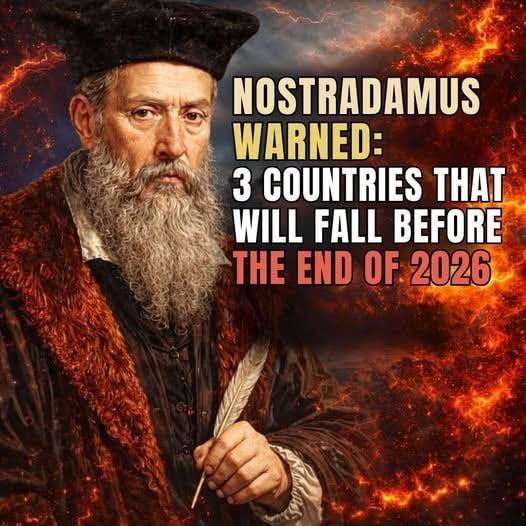
Nostradamus, born Michel de Nostredame in 1503 in Provence, France, became one of the most widely known figures in astrology and prophecy.
Though trained as a physician, he gained fame for his cryptic quatrains that have fascinated generations. His writings were initially intended for a limited audience, reflecting Renaissance-era concerns about politics, religion, and societal upheaval.
Over time, however, his prophecies reached a broader audience and became central to debates about foresight and prediction.
The enduring fascination with Nostradamus stems not from precise forecasting, but from his ability to frame potential futures in symbolic, ambiguous language. His quatrains combine metaphor, allegory, and coded imagery to evoke reflection rather than definitive events.
Among his most famous symbols are the weakened eagle, the cornered bear, and the fading lion. These animals have been interpreted as representations of modern nations, including the United States, Russia, and Great Britain, though interpretations remain flexible.

The eagle often symbolizes American power, influence, and global presence. Nostradamus’ depiction of a weakened eagle resonates in periods of political turmoil, leadership questions, or international uncertainty, reflecting public anxieties about governance and global responsibility.
The bear is commonly associated with Russia, embodying strength, strategic patience, and occasional isolation. Imagery of a cornered bear evokes scenarios of pressure, internal challenges, or international sanctions that historically reflect Russian political and economic cycles.
The fading lion traditionally represents Britain, emphasizing themes of shifting influence, national identity, and historical legacy. This imagery resonates during periods of uncertainty, such as debates over sovereignty, economic adaptation, or cultural transformation across centuries.
It is essential to recognize that Nostradamus’ quatrains are deliberately ambiguous. The archaic language, symbolic phrasing, and complex metaphors allow for multiple interpretations, giving readers freedom to reflect on both contemporary and historical events.
Rather than predicting specific outcomes, his writings illustrate patterns of human behavior and societal cycles. Empires rise and fall, alliances form and fracture, and ordinary citizens adapt in ways that are often mirrored in his symbolic descriptions.
This perspective emphasizes that the real significance of Nostradamus lies in observation, not literal prediction. His quatrains encourage awareness, reflection, and consideration of societal patterns rather than reliance on exact foresight.

Modern readers frequently project contemporary concerns onto these symbolic images. Political uncertainty, global conflict, or environmental issues are often interpreted through the lens of the eagle, bear, or lion, demonstrating the timeless resonance of his work.
The quatrains’ power also lies in their psychological dimension. Humans project anxieties, hopes, and expectations onto symbolic imagery, revealing how perception and interpretation can influence understanding of events and decision-making processes.
Historical reinterpretation further strengthens their relevance. Scholars and enthusiasts revisit Nostradamus’ quatrains during moments of global tension, linking metaphorical language to events retrospectively and demonstrating the flexibility of interpretation across eras.
For instance, the weakened eagle can prompt reflection on political division, economic instability, or diplomatic challenges affecting a nation’s global role. Similarly, the cornered bear evokes scenarios of strategic pressure or constrained options faced by a major power.
The fading lion illustrates the challenges of maintaining influence and identity in a rapidly changing world. It reflects historical patterns of empires navigating decline, transformation, and adaptation to new social, political, or economic realities.
Nostradamus’ work emphasizes that crises, conflict, and change are cyclical. By studying his quatrains, readers are reminded that societies repeatedly encounter challenges that require resilience, strategic thinking, and careful adaptation to evolving circumstances.

The symbolic imagery invites reflection on leadership, decision-making, and human behavior. While events may be unpredictable, human agency remains central, and societies can influence outcomes through deliberate action and thoughtful governance.
One important lesson is that power is never permanent. Even the most dominant empires face periods of vulnerability. Nostradamus’ quatrains highlight the transient nature of influence, reminding readers to consider both opportunity and risk.
Similarly, crisis is not immutable. Challenges such as political upheaval, social unrest, or economic instability create opportunities for adaptation and renewal. His symbolic imagery encourages preparation, awareness, and thoughtful response rather than passive acceptance.
Interpretation of the eagle, bear, and lion is also shaped by cultural context. Each generation brings new concerns, allowing the quatrains to remain relevant, offering insight into human fears, aspirations, and responses across centuries.
Historical cycles reflected in Nostradamus’ work demonstrate recurring patterns of alliance, conflict, and transformation. Recognizing these cycles allows societies to anticipate challenges, prepare responses, and reflect on the impact of leadership decisions on broader populations.
The ambiguity in Nostradamus’ writings is deliberate, fostering critical thinking and reflection. Readers are encouraged to consider symbolic meaning, historical precedent, and human behavior rather than seeking precise, literal predictions about the future.
His quatrains also highlight the interplay between perception and interpretation. The same symbolic image can elicit vastly different conclusions depending on historical context, cultural understanding, or personal perspective.

This interpretive flexibility ensures that Nostradamus’ work continues to captivate audiences, providing a framework for understanding patterns of human action and societal development over time.
Moreover, his quatrains explore psychological dimensions of fear, hope, and ambition. They reveal how societies respond to uncertainty, illustrating human tendencies to project expectations onto symbolic imagery and to seek meaning in complex situations.
Across centuries, his quatrains have served as mirrors for collective anxieties. Empires, governments, and individuals encounter recurring challenges, and the symbolic language of Nostradamus provides a tool for contemplation and reflection.
Modern analysis of Nostradamus emphasizes lessons rather than literal prediction. By studying historical parallels, observers can identify recurring patterns, evaluate strategic options, and understand the influence of leadership decisions on long-term outcomes.
The eagle, bear, and lion serve as archetypes of power, resilience, and vulnerability. Their symbolic representation encourages reflection on societal strengths, weaknesses, and the importance of strategy, preparation, and adaptability in periods of change.
The historical context of his writings reinforces the enduring relevance. Living during the Renaissance, Nostradamus witnessed social, religious, and political upheavals. His quatrains reflect awareness of uncertainty and the necessity of resilience amid shifting circumstances.
Interpreting his quatrains is an exercise in critical thought. Each symbol can be explored for multiple layers of meaning, drawing connections between historical precedent and contemporary global dynamics without relying on literal prediction.
The quatrains also demonstrate that human behavior is central to societal outcomes. Despite crises or instability, deliberate action, leadership, and informed decision-making can influence trajectories, emphasizing human agency over fatalistic interpretation.
Cultural, political, and social implications of his work remain significant. By studying the quatrains, societies gain insight into recurring challenges, including governance, conflict resolution, and the management of national identity in a complex, interconnected world.
In essence, Nostradamus’ power is interpretive, not predictive. His writings provide a lens for reflection, encouraging observation of historical patterns, consideration of human behavior, and strategic planning rather than adherence to deterministic fate.
The enduring appeal of his quatrains lies in their universality. Symbols like the eagle, bear, and lion can transcend time and geography, offering insight into human nature, societal cycles, and responses to uncertainty across different cultures.
By exploring Nostradamus’ work carefully, readers are reminded that crises, challenges, and decline are temporary. Societies possess the capacity for renewal, adaptation, and strategic decision-making, demonstrating resilience inherent in human history.
Ultimately, the quatrains illustrate that awareness, foresight, and reflection are more valuable than literal prophecy. Nostradamus’ symbolic imagery guides understanding, prompting societies to anticipate change, evaluate risk, and respond effectively to evolving circumstances.
The historical resonance of his quatrains ensures that they remain relevant today. By reflecting on cyclical patterns of power, conflict, and renewal, societies gain perspective, preparing for challenges while considering the consequences of human decisions.
In conclusion, Nostradamus’ quatrains serve as tools for reflection rather than prediction. Through symbolic imagery, historical context, and analysis of human behavior, they encourage awareness, resilience, and thoughtful engagement with uncertainty in global affairs.
The weakened eagle, cornered bear, and fading lion remain compelling archetypes, illustrating that while power and crises are temporary, human agency, strategy, and societal adaptation continue to shape history meaningfully.
