
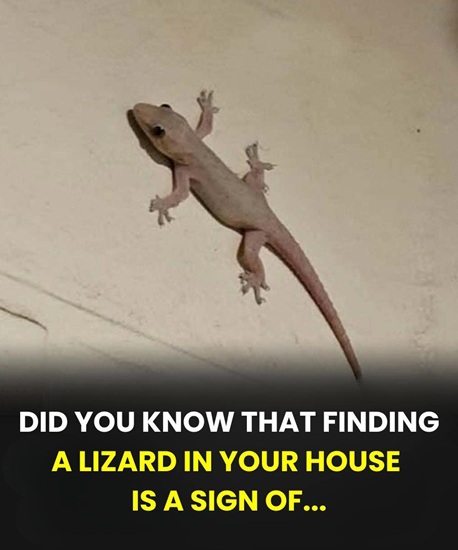
Seeing a small lizard silently glide across your wall may appear trivial at first glance, yet in many warm climates, these creatures are familiar, often unnoticed companions whose presence subtly affects daily life in homes worldwide.
In tropical regions, geckos and other small lizards serve a practical role, preying on mosquitoes, flies, and other insects.
Their diet naturally reduces pests without human intervention, offering both ecological balance and hygiene benefits indoors. Across Asia, lizards hold deeper symbolic meanings beyond pest control.
In Vietnam and Thailand, their presence is often interpreted as protective, guarding the home against unseen negative forces while maintaining harmony and balance in daily life.
The “tokay” gecko of Thailand is particularly revered. Its distinctive vocalizations are believed to convey messages: when the call is heard at certain times, it can indicate whether one should proceed confidently or exercise caution.

In India, traditional texts such as the Gauli Shastra interpret lizards as symbolic messengers. Their movements or even accidental contact with a human body are thought to forecast financial gains, personal success, or possible challenges.
Specific lizard interactions carry nuanced meanings. For instance, if a lizard falls on a left arm, it may symbolize future prosperity, whereas contact with the head might suggest caution is required in upcoming decisions.
In Japanese folklore, lizards are often considered lucky. Families leave them undisturbed in the home, believing that harming them could bring misfortune or disrupt the energy that ensures household protection and wellbeing.
The symbolism in many cultures emphasizes awareness. A lizard’s unexpected appearance is rarely seen as coincidental; rather, it is a subtle nudge to pay attention to personal choices, relationships, or emotional states requiring reflection.
Western interpretations focus less on omens and more on biological traits. Lizards are admired for their ability to regenerate lost tails, a characteristic symbolizing adaptability, resilience, and the human capacity for recovery and personal transformation.

The tail-regeneration process has inspired broader metaphors. Losing a tail and growing a new one reflects the necessity of letting go of what no longer serves, embracing change, and maintaining balance during periods of transition.
Scientifically, lizards are drawn to warmth, light, and insects. Walls, ceilings, and sunlit areas within homes provide ideal microenvironments for thermoregulation and hunting, explaining why they frequently appear in human dwellings without purposeful intention.
Nocturnal activity patterns further explain lizard behavior. Many species become active in the evening, moving along walls or ceilings to hunt insects, find mates, and explore territory. Their movement often coincides with human observation, giving the impression of deliberate presence.
In Balinese and other Southeast Asian beliefs, lizards are considered guardians absorbing negative energy. Their quiet movements are seen as reassurance, providing both ecological and spiritual benefits that foster household protection and peace of mind.
African folklore sometimes interprets lizards as omens, offering guidance or warning. Sudden appearances in specific areas may indicate caution is required, emphasizing attentiveness to both environment and personal circumstances without causing fear or alarm.

Their remarkable sensory abilities complement cultural interpretations. Lizards detect vibrations, air movements, and temperature changes, enabling them to respond quickly to threats or opportunities. These traits make them sensitive indicators of environmental changes humans may overlook.
In Middle Eastern traditions, lizards symbolize survival and resourcefulness, thriving in harsh environments and demonstrating adaptability. Their behaviors inspire lessons about patience, resilience, and the importance of observing subtle environmental cues.
Lizards also demonstrate complex social communication. They convey territorial claims, reproductive readiness, and emotional states through tail movements, body posture, and color changes, creating a nuanced system of interaction that humans can intuitively observe and interpret.
Species differences matter. Wall geckos, house lizards, and monitor lizards each have distinct behaviors, ecological roles, and cultural symbolism, reflecting both the biological diversity of reptiles and the nuanced ways humans interpret their presence.
The timing of appearances is significant in many traditional systems. Early morning sightings may suggest auspicious outcomes, while evening encounters may indicate caution or reflection, emphasizing the importance of context when interpreting these events.

Observing a lizard in a bedroom or private space often carries more personal significance. It may prompt self-reflection on emotions, relationships, or habits that require attention, offering gentle reminders for personal growth and awareness.
Scientific studies confirm lizards’ exceptional sensory capabilities. Their eyes can detect subtle light changes, while chemoreception allows them to assess environmental chemical cues, linking observed behavior to symbolic interpretations in folklore and cultural practices.
Humans often misinterpret these behaviors through cultural bias. What may appear as mischief or randomness is often deliberate exploration, hunting, or sensory investigation, illustrating the richness of lizard cognition and ecological intelligence.
Lizards’ ecological role reinforces their symbolic interpretation. Their presence naturally reduces insect populations, indirectly protecting human health, demonstrating the intersection of biology, symbolism, and practical significance in everyday observation.
Traditional belief systems often codify the meaning of lizard interactions. For example, sudden movements near a child may be viewed as protective, while repeated sightings at the kitchen window could symbolize abundance or nourishment.
Western symbolic interpretation frames lizards as teachers of adaptability. Their quiet resilience and ability to recover from injury highlight the value of observing, adjusting, and learning from environmental challenges and personal setbacks.

Observing lizards encourages mindfulness. Whether seen as symbolic messengers or ecological allies, they prompt humans to pause, notice details, and reflect on the subtle interconnections between personal life, environment, and cultural meaning.
Positive cultural interactions include non-harmful observation, leaving the lizard undisturbed, or guiding it outdoors. This respects ecological function while honoring spiritual or symbolic beliefs associated with protection, resilience, and awareness.
In many homes worldwide, lizards exist as subtle companions, blending biological function with cultural symbolism. Their quiet presence encourages attentiveness, ecological understanding, and reflection on personal and environmental balance.
Cultural symbolism often complements practical biology. Lizards are guardians, messengers, or symbols of resilience. Simultaneously, they control insect populations, representing harmony between human habitation and the natural world.
Their appearance can be interpreted as a nudge toward awareness, urging reflection on life decisions, relationships, and emotional states, demonstrating that observation of small creatures can inform mindfulness and personal insight.
Lizards’ behavior, ecological impact, and cultural significance converge, creating layers of meaning for humans who observe them. Each sighting can carry messages of protection, guidance, or personal growth depending on awareness and cultural framing.
Ultimately, the importance of a lizard in your space is not solely its physical presence, but the pause and reflection it generates. Observing its behavior fosters ecological literacy, mindfulness, and appreciation for life’s subtleties.
Across regions and traditions, lizards embody resilience, adaptability, and protection. They demonstrate ecological balance, spiritual symbolism, and subtle guidance, enriching human experience by linking biology, culture, and consciousness in an unobtrusive yet meaningful way.
The small moment of noticing a lizard moving across a wall can therefore hold layers of meaning, blending scientific reality, cultural interpretation, and psychological reflection, making it simultaneously ordinary, fascinating, and instructive.
In conclusion, whether considered an ecological helper, a symbolic messenger, or a quiet reminder of personal adaptability, lizards represent a bridge between the natural world and human awareness, encouraging observation, reflection, and respect.
